
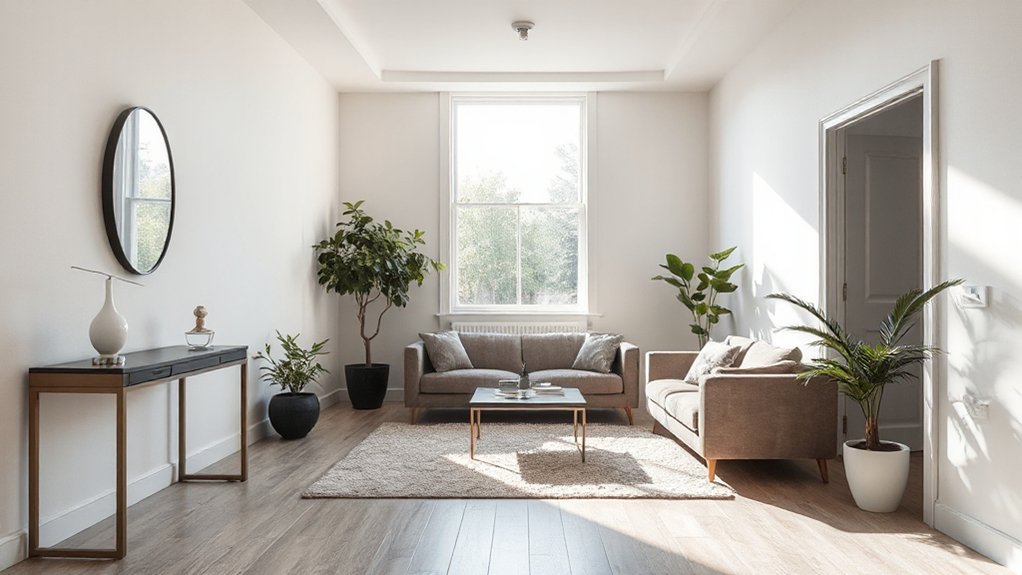
Use smart space planning to map fixed elements like doors, radiators, and windows, then map traffic flow and sightlines so furniture creates smooth, inviting zones. Choose long, slim furniture and built-in storage to maximize width without clutter, and define areas with rugs and lighting. Opt light, neutral colors, vertical patterns, and well-placed mirrors to visually widen the room. Layer lighting for mood and practicality, focusing on warm tones. Want more exact tactics tailored to your layout? You’ll find them here.
Define Your Narrow-Room Constraints
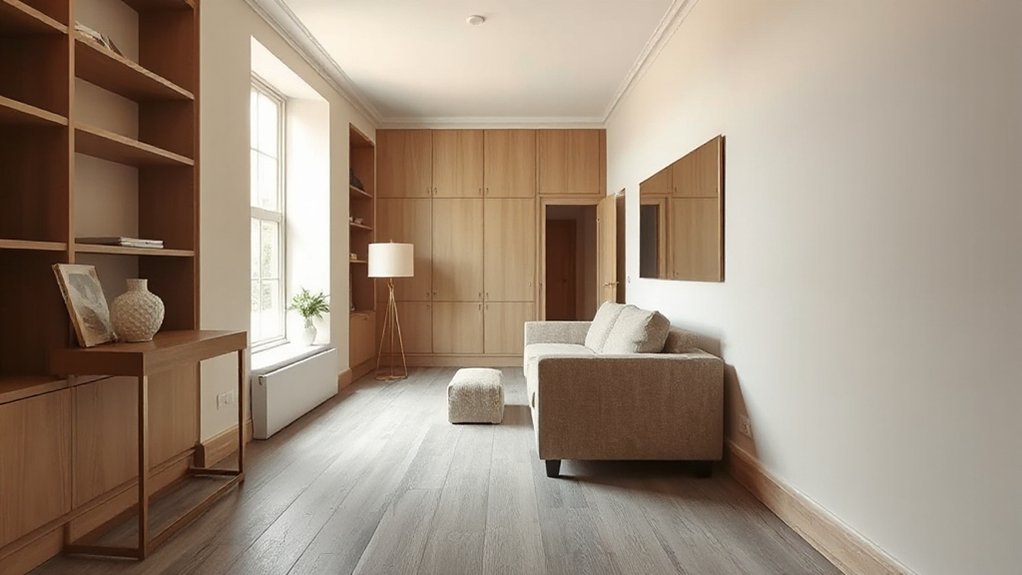
To define your narrow-room constraints, start by mapping the space and noting fixed elements like doors, windows, and radiators. You’ll then identify traffic flow, sightlines, and sunlight patterns to guide decisions.
Consider ceiling height and wall lengths to determine potential zones for living, dining, and storage without overcrowding. Color psychology becomes your ally: lighter tones widen, cooler hues calm, and accents help define areas without crowding.
When choosing furniture, prioritize scale, proportion, and multifunctionality to maximize footprint without sacrificing comfort. Think through door swing paths and access to electrical outlets, ensuring easy movement.
Your goal is cohesion that embraces belonging: a calm, connected space where each piece supports daily routines. This mindful approach informs furniture selection and sets a confident, inviting tone.
Key Layout Principles for Long, Narrow UK Rooms
Think about how the space reads from end to end, balancing proportions so each zone feels intentional rather than squeezed.
Aim for a smooth flow through the length of the room, guiding traffic and sightlines with furniture placement and clear pathways.
Use a clear focal point strategy to anchor the layout, whether a fireplace, artwork, or an architectural feature, and arrange supporting pieces to support that center.
Proportions From Ends
Use color contrast to emphasize the separation without shouting; a darker sofa against light walls at one end and a lighter chair cluster at the other helps the eye read the room in layers.
Plan furniture arrangement to guide movement toward the center, avoiding crowding at the thresholds.
Keep scale consistent so long walls feel cohesive, not corridor-like.
This approach supports belonging, invites conversation, and makes the room feel generous, not cramped.
Flow Through Space
Flow comes from guiding movement rather than letting furniture block it; place key zones so paths naturally thread down the room, not around obstacles.
In long, narrow spaces, coordinate furniture placement to create a clear rhythm: low-profile pieces, slim profiles, and sensible sightlines keep the route intuitive.
Define zones first, then link them with a continuous flow of floor space.
Choose color schemes that widen or verticalize, using lighter tones near entry points and cooler hues to recede walls.
Align seating and storage along one side where possible, avoiding cross-traffic clashes.
Maintain predictable distances between furniture and walls, so you never feel crowded.
With intentional arrangement, your room breathes, welcoming you and others to move, linger, and belong.
Focal Points Strategy
To make the most of a long, narrow UK room, identify a strong focal point early and arrange the layout to draw attention toward it from multiple entry points. Your goal is clear visual anchors that guide movement and create a welcoming flow for guests.
1) Position the focal point where you naturally enter the space, so it’s visible from at least two angles.
2) Use lighting and contrast to reinforce the focal point, keeping surrounding zones quieter but usable.
3) Keep furniture aligned to emphasize sightlines, avoiding clutter that distracts from the main feature.
Focal points and visual anchors help you feel grounded and connected, turning a challenging zone into a coherent, inviting home.
Visual Widening Tricks You Can Try Today
Light reflects brightness when you place lighter surfaces and strategic lighting across the room.
Opt for a mirror that’s appropriately sized to balance proportion with your wall and furniture, since size matters for widening the feel.
Try arranging reflections of windows or light sources to visually extend the space without crowding it.
Light Reflects Brightness
If you want your long, narrow UK room to feel brighter and more expansive, start by using light as a design tool. You’ll notice how natural sunlight and reflective surfaces push brightness through the space, helping it feel larger and more more welcoming.
- Choose pale, cool-toned paint and let natural sunlight bounce off walls and ceilings. Add soft, reflective accents like light woods and glass for depth.
- Use translucent window coverings and light-reflecting decor to diffuse daylight evenly, avoiding harsh shadows.
- Lay out furniture to create routes that maximize light pathways, keeping clutter low so reflective surfaces stay prominent.
Tip: embrace brightness as a shared value—a sign you belong in a brighter home.
Mirror Size Matters
Mirror size can dramatically widen a narrow room’s feel—so choosing the right scale is worth your attention. You’ll get the biggest impact from a tall, full-height mirror that stretches nearly to the ceiling, or a pair of vertically oriented panels flanking a doorway to draw the eye outward.
If space is tight, lean a generous mirror against a wall rather than mounting it, which adds depth without crowding your floor. Consider proportion: avoid mirrors that look like afterthoughts; they should feel integrated with your furniture and architectural lines.
Placement matters: mirror placement opposite a window doubles light, while reflective surfaces across from a console or artwork creates a balanced vignette. In small corridors, use mirrors to invite movement and brighten the route.
Lighting Ideas to Make Corridors Feel Expansive
Long corridors can feel expansive when you layer lighting to guide the eye and soften edges. You’ll achieve this with practical placement and clear intent, avoiding harsh shadows and clutter. Focus on ambient layering and targeted accents to create depth without crowding the mood.
1) Install a continuous cove or wall wash for soft, even ambient light that travels the length of the corridor.
2) Add Accent lighting at intervals—mini uplights or picture lights—to highlight art, trims, or architectural details.
3) Use dimmers and warm color temps (around 2700–3000K) to modulate mood and preserve a welcoming, belonging-filled vibe.
Warm Palettes and Textures for Space and Coziness
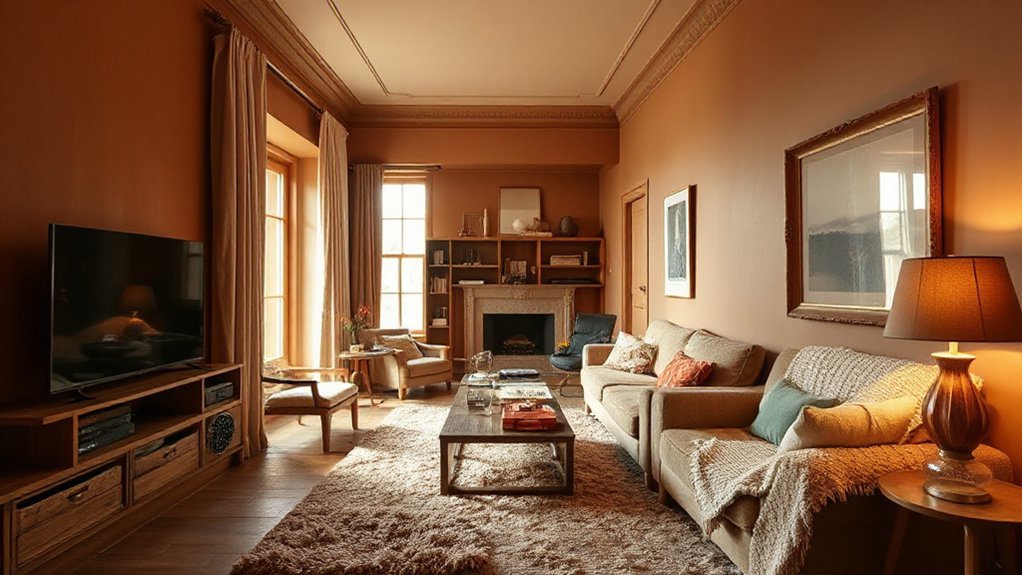
Warm palettes and textures anchor a long, narrow UK room by wrapping it in warmth and tactile interest. You’ll create a cozy corridor by choosing soft neutrals with a warm undertone and adding gentle color accents that repeat along the length for color harmony.
Introduce texture layering through woven rugs, matte plaster, and brushed woods to invite touch and soften edges. Keep pattern use subtle so the space reads calm rather than cluttered.
Use fabrics with a tactile finish—linen, velour, or boucle—in cushions, throws, or upholstery to enhance comfort without shrinking the sense of space. Balance shine with warmth; pair warm lighting with muted walls to sustain coziness and cohesion.
You’ll feel welcomed, connected, and grounded in a thoughtfully textured, harmonious path.
Case Studies: Practical Hallway and Living-Room Makeovers in UK Homes
From here, see how real UK homes tackle hallway and living-room challenges with practical, budget-conscious choices.
Case studies show you that small fixes can transform flow and feel. You’ll notice Artistic accents and color contrast guiding choices, making spaces welcoming rather than cramped.
- Repaint doors and skirting in a high-contrast shade to carve zones without reducing light.
- Add a slim console with a bold lamp or artwork to create a curated hallway that feels lived-in.
- Use multi-functional furniture and layered textiles to carry warmth from hall to living room.
These examples prove you belong in design decisions, balancing budget, personality, and practicality for long, narrow layouts.
Frequently Asked Questions
How Can I Maximize Storage Without Narrowing the Space Further?
To maximize storage without narrowing the space, choose Creative wall storage that sits flush and uses vertical space.
Opt for Multi functional furniture, like ottomans with hidden compartments or sofa beds with built-in drawers.
Prioritize slim, tall units, recessed shelves, and under-bed organizers.
Use multifunctional hall benches and mirrors to expand perceived depth.
Keep clutter down with a consistent, accessible system so you feel you belong in a tidy, well-ordered home.
What Flooring Choices Avoid Visual Clutter in Long Corridors?
You should choose flooring with subtle color differences and simple textures to avoid visual clutter in long corridors.
Opt for low-contrast colorways and broad, consistent planks that run lengthwise for a seamless flow.
Balance color contrast carefully and use restrained pattern selection; avoid busy tiles or rugs.
Pair with furniture in harmonizing tones, and add soft lighting to maintain a calm, welcoming feel.
This approach helps you belong while keeping the space visually calm and coherent.
Which Doorways or Transitions Work Best in Narrow UK Layouts?
Doorways matter: slim, bright passages feel wider, so use pocket or French doors to save space while preserving flow. You’ll notice fewer barriers in tight layouts when you choose doorway styles with glass panels or open arches.
Transition zones should be kept clear and evenly lit to widen perception. You’ll belong more when you pair doors with consistent trim and soft, neutral tones.
Trust practical passages—they truly shape comfort and cohesion in your home.
Can Furniture Placement Affect Acoustics in Tight Rooms?
Yes—furniture placement can affect acoustics in tight rooms. You’ll improve sound by strategic Acoustic treatment and careful Furniture arrangement.
Avoid hollow, reflective surfaces; place soft textiles, rugs, and seating to dampen echoes. Position seats away from parallel walls; use bookshelves as diffusers.
Keep pathways clear to prevent flutter echoes, and layer different materials for warmth. With thoughtful layout, you’ll feel more connected, comfortable, and in tune with the space.
Are There Seasonal Design Tweaks to Brighten the Space Quickly?
Brighten your space quickly with seasonal lighting and color adjustments. You can swap in warmer bulbs, add a dimmable lamp, and use light, reflective curtains to bounce daylight.
Introduce a seasonal color tweak via soft throws or cushions in warm tones, which creates a cozy, belonging feel.
Keep it simple: adjust lighting first, then layer color accents. You’ll feel more open and connected as the space shifts with the seasons.
Conclusion
You can make long, narrow UK rooms feel airier with smart layouts and thoughtful contrasts. Start with a clear plan, then use light colors, reflective surfaces, and horizontal but not overwhelming patterns to widen the space. If you fear it’ll look clinical, add warmth with textures—soft rugs, wool throws, timber accents. Don’t overthink perfect symmetry; gentle asymmetry keeps the flow. Ready to try; small tweaks yield big impact, and you’ll enjoy spaces that feel both spacious and inviting.