
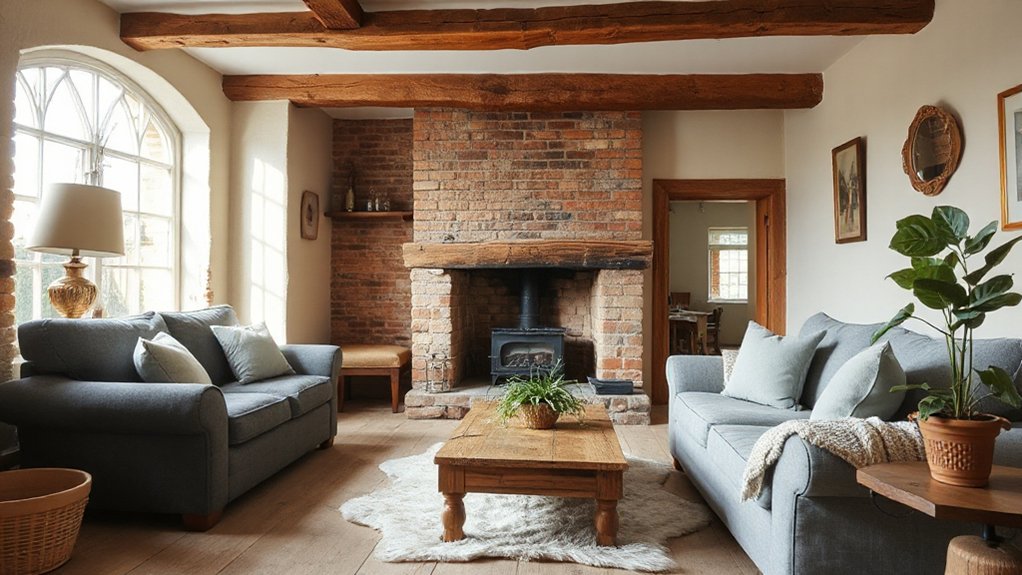
Create a practical cottage plan that blends traditional charm with modern comfort in tight UK spaces. Embrace an open, functional layout with dual-purpose rooms, smart storage, and under-stair solutions to reclaim floor space. Pair timber and stone with warm neutrals, layering textures for warmth without clutter. Maximise natural light with larger windows, light paints, and strategic reflections. Use durable materials, efficient heating, and discreet insulation. Finish with curb-appeal touches and tasteful exterior lighting to set the tone for what follows.
Design a Functional Cottage Floorplan for Small UK Homes
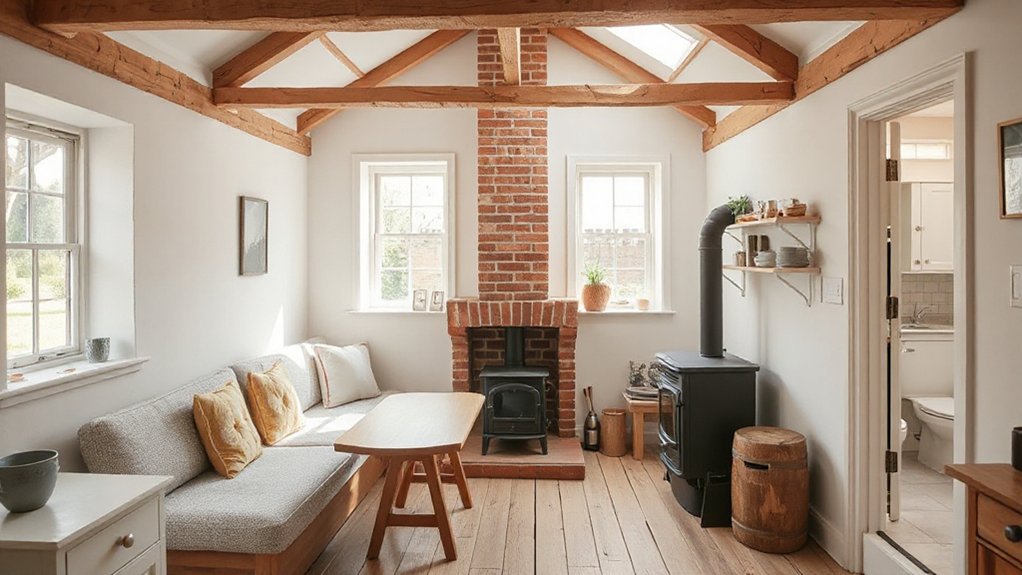
To design a functional cottage floorplan for a small UK home, start with a compact, open layout that zones living, cooking, and dining areas without walls, using clever furniture placement to read as separate spaces.
You’ll prioritize flow, daylight, and storage, so every square meter earns purpose.
Plan open plan living that invites conversation and easy movement between zones, with a sofa arrangement that defines seating while preserving sightlines.
Choose multi-functional spaces: a dining bench that doubles as a desk, underbench storage, and responsive lighting to shift moods.
Use compact appliances, wall-mounted cabinets, and foldaway surfaces to keep clutter minimal.
Finish with durable, warm textures and cohesive finishes to reinforce belonging and ease.
This approach delivers practical, stylish, and inclusive cottage living.
Integrate Traditional Features With Modern Comforts
Blending old and new comforts lets you keep cottage character while you upgrade daily living.
Start by layering textures and light to soften modern fixtures and highlight folk-style details.
This approach preserves cottage charm today and invites practical, timeless comfort into every room.
BlendingOldAndNew Comforts
Balancing old charm with modern practicality keeps a UK cottage feeling authentic while livable. You blend traditional features with everyday comforts by choosing purposefully placed updates that don’t overpower historic character.
Prioritize smooth transitions: pair sturdy timber beams with underfloor heating, or tuck a contemporary sofa into a timber-framed sitting nook. Antique decor spots lend depth, while modern lighting highlights architectural details without glare.
Use vintage textiles to soften rooms—layer faded quilts, wool throws, and braided rugs for warmth and texture. Choose a neutral palette as a unifying backdrop, then add purposeful accents that feel timeless rather than trendy.
Practical storage, durable fabrics, and quiet machinery ensure comfort after long country days, fostering a welcoming, lived-in atmosphere for gatherings and everyday moments.
PreservingCottageCharacter Today
Preserving cottage character today means weaving timeless traits with contemporary comforts in a way that respects history while serving daily life. You’ll balance low ceilings, timber beams, and quarry floors with efficient heating, modular storage, and quiet lighting.
Prioritize authentic materials that age gracefully, like lime plaster or brick, and let soft textures soften contrast rather than overwhelm it. Consider how architectural evolution has shaped your space: a modern kitchen tucked within traditional walls, or corner nooks that invite conversations.
Respect cultural significance by preserving original details—doors, hardware, or fireplaces—while upgrading insulation and safety. Choose furniture that echoes rural legacy without stiffness, and curate colors that calm the mind.
This approach creates belonging, practicality, and enduring charm.
LayeringTextures And Light
Layering textures and light is about weaving tactile warmth with practical illumination, so traditional features don’t read as relics but as living parts of daily life. You’ll blend classic stone or timber with modern fixtures, ensuring every surface feels welcoming.
Focus on cozy textiles—plush throws, woven rugs, and layered cushions—to soften edges and invite lingering moments by the fire or lamps. Pair ambient lighting with task sources, balancing warm hues and brightness to adapt from morning routines to twilight calm.
Keep curtains and blinds simple for natural daylight, then deepen atmosphere with lamps that highlight architectural details. This approach preserves character while delivering comfort, practicality, and belonging in equal measure, so your cottage becomes a tactile, luminous home you immediately recognize as yours.
Maximise Natural Light in Compact UK Cottages
Maximise window light by choosing larger or strategically positioned windows that frame the outdoors and flood rooms with daylight. Pair this with light-focused space planning—think open sightlines, light, reflective surfaces, and furniture that doesn’t block flows.
Together, these steps create brighter rooms in compact UK cottages while preserving coziness and character.
Maximize Window Light
Maximizing window light in compact UK cottages starts with treating every pane as a design asset. You’ll optimize angles, trim, and reflectivity to amplify ambient brightness without sacrificing warmth. Choose light-coloured walls and minimal, clean trim to frame daylight rather than crowd it.
Let outside views guide your approach: unobscured sightlines invite the sky and garden landscaping into the room, creating continuity between inside and out. Select low-profile furniture and smart storage that doesn’t encroach on windows.
For textiles, opt for light, breathable fabrics and subtle patterns that respond to changing light. Use window treatments that are easy to draw open fully or stack neatly; motorised or wand-operated options improve daily practicality.
Balance soft shadows with strategic lighting to maintain inviting, cohesive spaces.
Light-Focused Space Planning
Even in a compact cottage, you can orchestrate space to welcome daylight rather than fight for it. Light-focused planning starts with clear priorities: natural lighting should infuse daily life, not overwhelm rooms.
Configure zones so living, cooking, and work areas benefit from steady illumination, reducing glare and energy use. Favor open sightlines and minimal dividers to maximize perceived space and brightness.
Window placement is essential: position sofas, tables, and seating to face or mirror natural light, not block it. Use lighter finishes, reflective surfaces, and strategically placed mirrors to bounce soft daylight deeper into rooms.
Consider skylights or roof-light additions where eaves block wall windows, enhancing vertical brightness.
Finally, plan circulation to avoid shadowed corners; keep pathways clear and cohesive for a welcoming, belonging-filled home.
Warm Neutrals and Accent Colors for Cottage Interiors
Warm neutrals form a calm, flexible base for cottage interiors, and they pair beautifully with selective accents to keep spaces inviting. You’ll choose color palettes that feel timeless, not trendy, ensuring rooms breathe and relate to the countryside vibe.
Build a soft backdrop with warm whites, greige, and taupe, then layer in Accent hues with purpose—a chair, cushions, or a lamp—so each touch feels intentional. Use contrast sparingly: dark timber frames or charcoal textiles sharpen edges without overwhelming.
Consider paint sheens that reflect light, and test shades near windows to confirm warmth in different seasons. This approach creates cohesive rooms where you belong, moving easily from living to wake-space.
The result is calm, curated charm grounded in practical, lasting choices.
Texture From Timber, Stone, and Brick Without Overwhelm
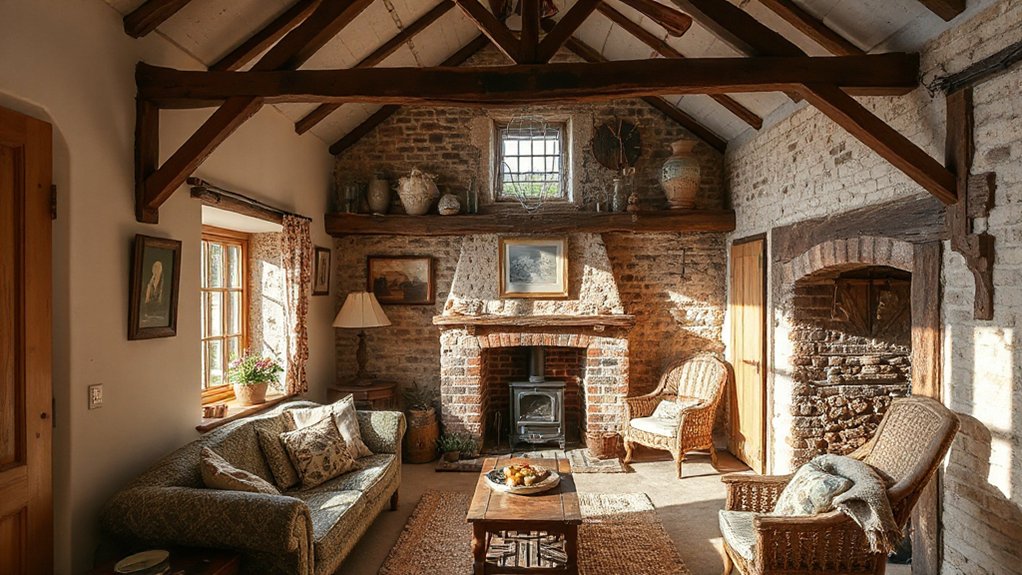
You’ll balance texture across timber, stone, and brick to avoid overwhelm, letting each material speak for itself.
Layer timber and stone thoughtfully while brick adds warmth, creating subtle contrast that stays cohesive.
Start with a restrained palette and scale, then build depth with tactful architectural details rather than excess.
Texture Balance Across Materials
Texture balance is key when mixing timber, stone, and brick in UK cottages and rural homes; done well, the materials complement each other without competing for attention.
You’ll achieve cohesion by aligning scale, tone, and texture across rooms, so no single surface dominates. Prioritise textural harmony: pair rough stone with smooth plaster, warm timber with cool brick, and use neutral grouts or paints to soften edges.
Maintain a purposeful rhythm: repeat a wood tone, a stone shade, and a brick hue in furniture, textiles, and lighting. Be mindful of material contrast, letting one material lead in each zone while others act as anchors.
Thoughtful balance creates inviting rooms where tradition feels contemporary, lived-in, and distinctly yours.
Layered Timber and Stone
- Rustic charm through combined textures
- Subtle timber accents against stone
- Quiet, cohesive contrast across spaces
Brick Warmth, Subtle Contrast
Brick warmth comes from a careful balance: introduce brick as a grounding element while letting timber and stone breathe around it. You’ll feel secure when brick grounds a room, yet it won’t overwhelm if you pair it with airy timber and soft stone textures.
Use brick for portals, chimneys, or a single feature wall, then balance with lighter plaster, grey-patinated stone, and dark wood furniture. This approach delivers rustic charm without heaviness, creating a living space that invites gathering.
Embrace subtle contrast: calibrate brick redness against cool whites, neutrals, or charcoal accents, so each texture reads clearly. Keep lines clean and materials tactile, so the room remains calm, cohesive, and unmistakably belonging to its countryside setting.
Space-Saving Layouts for Rural Homes
When space is at a premium in rural homes, smart layouts become your most valuable tool. You’ll prioritize multifunctional pieces, compact storage, and flow that minimizes wasted corridors. Think rooms that double: a dining nook becomes a desk by day, a bunk or sofa bed welcomes guests by night.
Use vertical storage and under stairs clever shelving to reclaim floor space without crowding you out. Plan sightlines to connect outdoors, so garden landscaping and natural light feel seamless from every corner.
Finish with well-placed lighting and mirrors to widen perceptions, and choose durable finishes that age gracefully with character.
- A corner dining nook that slides into a compact workspace
- A wall-mounted, fold-away system for seating and storage
- Coordinated outdoor lighting guiding pathways to the garden
Storage That Preserves Charm and Character
Choose timber chests, lidded baskets, and wall-mounted shelves that echo aged beams and plaster. Integrate vintage accessories like enamel tins or ceramic jars to cue memories without clutter.
Creative storage means multifunctional pieces: benches with hollow seats, sofas with covert cubbies, and corner cupboards that conceal daily necessities.
Label or group items by use to reduce visual noise while preserving character. Opt for soft, muted tones and natural textures to blend with stone, brick, and timber.
The result is a cohesive, inviting space where function supports belonging and charm endures.
Practical Luxury: Flooring and Rugs for UK Cottages
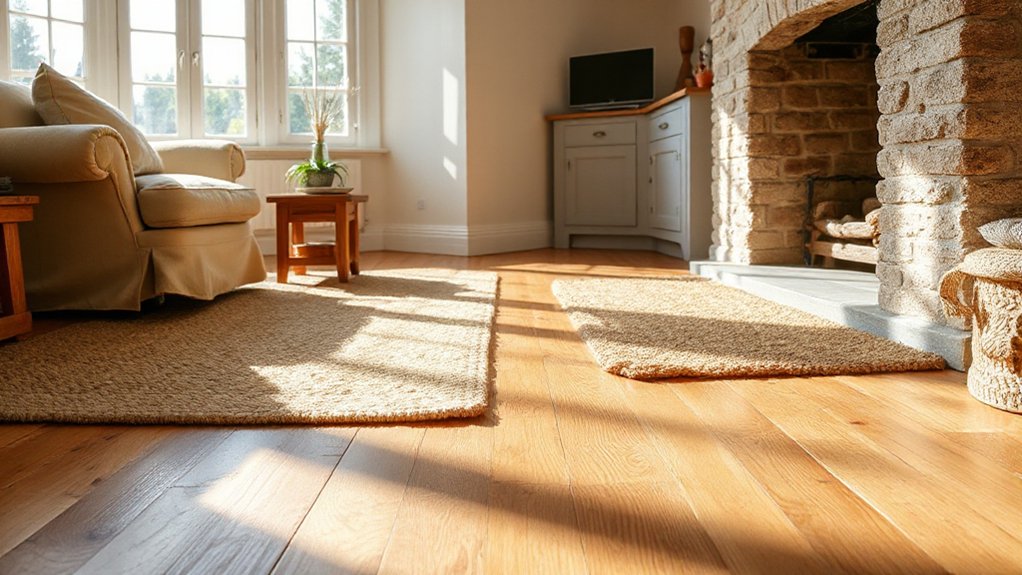
Practical luxury in UK cottages hinges on flooring and rugs that combine durability with understated elegance. You’ll feel grounded underfoot, yet unpretentious in every room, thanks to materials chosen for longevity and subtle charm.
Favor carpets and runners that hide wear while softening footsteps, and pair them with robust, eco-friendly flooring in protected tones that age gracefully. Antique-inspired rugs elevate spaces with storytelling texture, while modern bases provide practical resilience.
Keep progressions seamless between living areas and kitchens, using low-pinish finishes and natural fibers that invite lingering and gathering.
- Antique inspired rugs layered over warm, durable floors for a timeless focal point
- Low-pin, eco-friendly flooring that tolerates daily life without shouting
- Textured weaves and natural fibers to hide footprints and invite lingering
Efficient Heating and Insulation That Look Great
Efficient heating and insulation can transform a UK cottage from drafty to comfortable without sacrificing style. You’ll merge performance with charm, selecting solutions that blend with historic interiors.
Choose Eco friendly heating options that reduce energy use while keeping warmth steady, like intelligent radiators, underfloor mats, or heat pumps. Pair these with well-sealed fabrications that respect the building’s character.
For insulation, prioritize Vintage insulation in discreet, authentic forms—slim cavity fills, retro-style loft blankets, and breathable yet robust materials that prevent damp without bulky bulk.
Fit robust draught-proofing at doors and sashes, using low-profile strips that maintain lines.
Finish with complementary textures and warm colours to amplify coziness, ensuring modern efficiency while preserving the cottage’s timeless appeal.
Belonging follows comfort and purposeful design.
Curb Appeal and Entrance Makeovers to Set the Tone
A well-cared-for entrance sets the tone for your cottage’s entire look, so start with a thoughtful curb appeal plan that blends charm with durability. You’ll create a welcoming rhythm by aligning path, door, and small garden features, ensuring every element feels cohesive and breathable.
Prioritize practical choices that endure UK weather while inviting admiration from neighbours and guests alike. Focus on proportionality, texture, and subtle colour pops that highlight architectural quirks rather than overpower them. Use garden landscaping to frame the entry, and plan exterior lighting that guides and protects without glare.
Thoughtful detailing communicates belonging and care, making every arrival feel intentional and comforting.
- A winding path of stone slabs leads to a sturdy front door framed by evergreen borders.
- A lantern-style exterior light, warm-toned, casts inviting glow across a manicured step.
- Planter boxes with seasonal blooms enhance texture and colour without clutter.
Frequently Asked Questions
How Can I Insulate Without Losing Cottage Character?
Yes—you can insulate without losing cottage character by prioritizing authentic materials and visible craftsmanship. Use stone insulation where feasible, preserving external façades, and pair it with vintage charm inside.
Choose lime plaster, timber battens, and wool or hemp blends for insulation, keeping textures rich and breathable. Retain settles, beams, and nooks, and conceal pipes with historic fittings.
You’ll feel cozier, more authentic, and part of a timeless, belonging-filled home.
What Affordable Energy-Efficient Heating Works Best Here?
Solar panels and heat pumps are your strongest affordable, energy‑efficient bets. A heat pump delivers steady warmth with low running costs, while solar panels reduce bills by generating daytime power you can store or offset.
In cottages, combine underfloor or radiator-compatible heat pumps with a well‑sized panel array and an efficient hybrid control. You’ll feel confident, save money, and belong to a smarter, warmer community—without sacrificing charm.
Which Soft Furnishings Resist Wear in Busy Cottages?
Durable fabrics and stain resistant textiles are your best bet for busy cottages. Choose tight-weave upholstery, wipeable finishes, and performance blends that handle pets and kids.
You’ll want matte neutrals to hide wear, plus textured fabrics for disguise. Opt for machine-washable covers where possible, and treat high-traffic zones with protective throws.
With these choices, you feel confident, grounded, and connected to your space, knowing it stays welcoming, resilient, and easy to maintain.
How Do I Maximize Porch Storage Without Clutter?
We start by channeling the old garden’s quiet order, a nod to the shore you return to.
To maximize porch storage without clutter, declutter first, then designate zones for coats, shoes, and tools.
Use outdoor decor that’s dual-purpose: benches with hidden compartments, wall hooks, and weatherproof baskets.
Keep a slim bench for seating, add labeled containers, and rotate seasonal items.
Embrace porch organization to feel welcomed, practical, and part of your belonging.
Can I Retrofit Smart Home Tech Discreetly?
Yes, you can retrofit smart home tech discreetly. Start with a concrete plan for smart tech integration that hides hubs and cables, using wireless devices where possible.
Choose discreet sensors, low-profile switches, and fabric-friendly in-wall modules for discreet home automation. You’ll want professional setup for secure connections, but keep aesthetics calm and cohesive.
With careful placement and timeless finishes, you’ll enjoy seamless convenience that still feels personal and welcoming to your home.
Conclusion
You’ve got a solid blueprint: practical layouts, warm neutrals, and textures that whisper cottage charm. By pairing traditional features with modern comforts, you’ll maximize light, storage, and comfort without overcrowding. Choose durable flooring, smart rugs, and efficient heating that still looks right at home. Think of your cottage as a well-tuned instrument, each note—color, texture, storage—in harmony. With thoughtful curb appeal and effortless flow, your UK cottage becomes inviting, timeless, and quietly confident. The result? A cozy, enduring haven.