
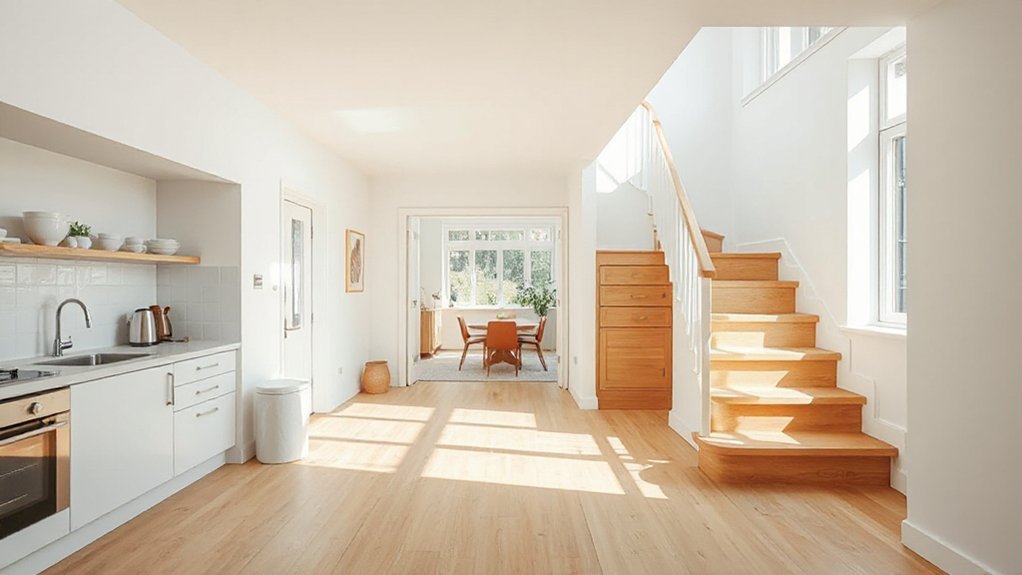
Interior layout changes that improve flow in terraced houses start with opening sightlines while preserving character. Move doors to align with natural paths, and consolidate redundant passages to reduce bottlenecks. Create an open-core living, dining, and compact kitchen, framed by partial walls, color, and lighting to define zones without walls. Treat stairs as hubs and add mudroom or pantry buffers for passages. Use layered lighting and cohesive palettes to unite spaces, hinting at more practical tactics to come.
Why Terraced Layouts Feel Cramped: And What Flow Can Achieve
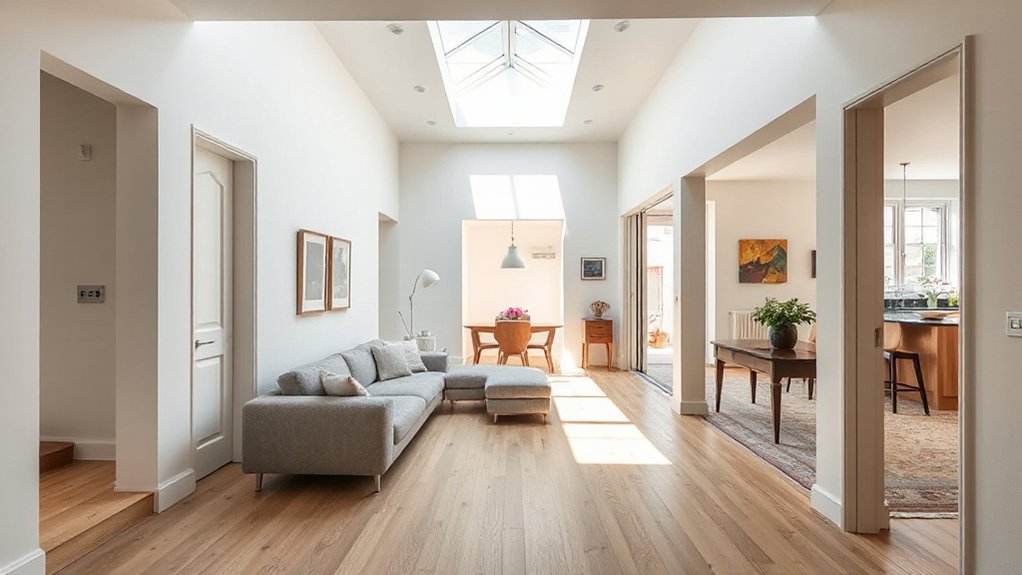
Terraced layouts often feel cramped because rooms line up in strict, narrow corridors that block sightlines and natural light. You feel it when you move from front hall to living room, and every step echoes the constraints.
The aim of flow isn’t starved space but smarter paths, purposeful openings, and zones you can own. Start with space optimization by rethinking circulation: soften long sightlines with partial partitions, drop unnecessary doors, and align furniture to guide feet and eyes toward gathering areas.
Use color, lighting, and texture to delineate zones without walls. For privacy enhancement, carve tucked nooks for work or retreat behind screens or shelving, preserving openness elsewhere.
When you design with intention, you’ll reclaim air, light, and a sense of belonging across the whole home.
Open Sightlines That Respect Character: Practical Wall Openings
You want open sightlines that feel intentional, so start with visible connections that respect the home’s character.
Use practical wall openings that hint at flow without erasing nuance, keeping each cut narrow enough to preserve room identity.
The goal is flow-friendly openings that reinforce connection while honoring the walls that define your terraced layout.
Visible Connections, Respectful
Visible connections rely on openings that read as intentional changes, not as afterthoughts. You shape sightlines to weave rooms together without erasing character. Start by aligning openings with architectural cues—corners, mantels, existing wall planes—to preserve visual harmony, while guiding movement.
Use proportionate widths that respect scale and don’t over-announce themselves. Maintain spatial rhythm by repeating a rhythm of openings—taller doorways, lower transoms, or partial vistas—that feels deliberate, not arbitrary.
Keep openings honest: no forcing, no abrupt shifts that break the house’s cadence. Framing becomes a quiet collaborator, offering a glimpse without dominating. Remember, respectful connections invite belonging: you see the whole, yet feel grounded in each room’s identity.
Wall Openings, Character
Wall openings should read as purposeful design choices that honor the home’s character while guiding sightlines. You balance visibility with privacy by choosing openings that frame views and retain intimate room relationships. Think about decorative accents and wall textures that reinforce a cohesive story rather than fragmenting spaces.
1) Select openings that align with existing architectural details.
2) Use decorative accents to emphasize proportion and rhythm.
3) Vary wall textures around openings to add depth, not distraction.
4) Keep sightlines open enough for warmth while preserving room identities.
These choices create open yet grounded transitions, inviting belonging without erasing personality. You’ll notice how purposeful openings reduce clutter, improve navigation, and maintain a human scale. When done well, openings feel inevitable, like a natural extension of the home’s character, not a generic modification.
Your space breathes, flows, and welcomes.
Flow-Friendly Openings
Prioritize ceiling height and proportion so openings feel intentional, not indiscriminate. Color contrast matters: keep a light wall tone on one side and a deeper, complementary hue beyond, strengthening circulation cues and highlighting architectural details.
This subtle distinction helps furniture placement read as a cohesive path, not a break in flow. Consider glazing or slim transoms to invite daylight while maintaining privacy.
Avoid oversized openings that erode charm; instead, treat openings as intentional, adaptable routes that welcome conversation, light, and belonging.
Move Doors for Smoother Movement (Which Ones to Relocate or Consolidate)
To improve movement through a terraced layout, start by evaluating which doors slow you down or create awkward bottlenecks.
1) Move doors to align with natural flow, reducing cross-traffic and stopping points.
2) Consolidate passageways by removing redundant doors between adjacent rooms where space allows.
3) Reconfigure doors to swing with the main corridor, enabling quick, unobstructed passages.
4) Prioritize door placement that enhances space efficiency, creating clear sight lines and fewer corners to navigate.
Create an Open-Plan Core: Living, Dining, and a Compact Kitchen That Works
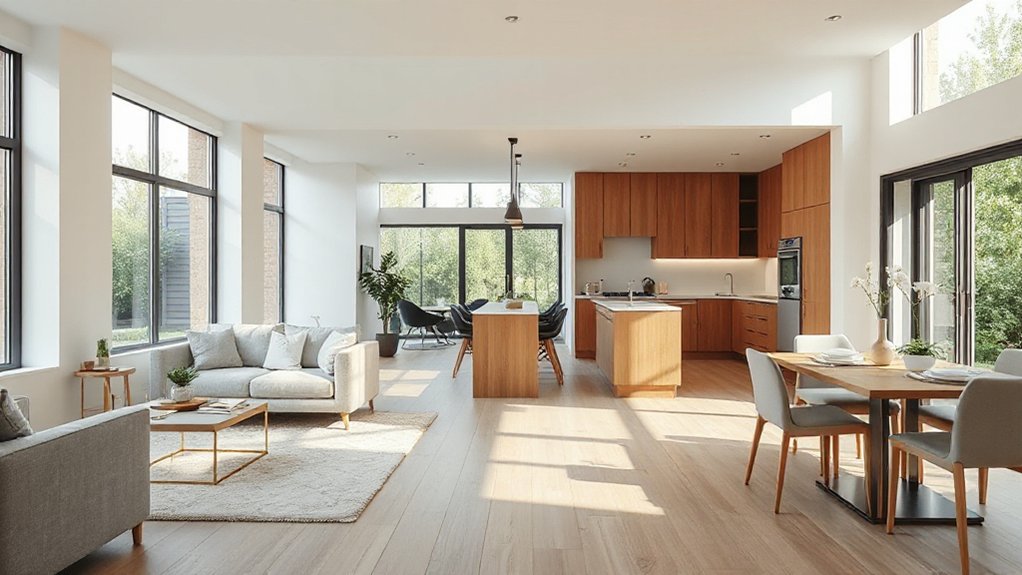
An open-plan core makes daily life easier by uniting living, dining, and a compact kitchen into one flexible zone. You shape daily routines here, so arrange furniture placement to encourage flow: keep pathways clear, define zones with rugs, and allow sightlines that invite conversation.
Choose color schemes that unify the space without overpowering it—soft neutrals for calm, with a bold accent wall or subtle textiles to add personality.
Prioritize practical kitchen work zones: prep, cook, and cleanup should flow toward dining and lounging without crossing traffic. Store essentials within arm’s reach, but avoid clutter that fragments the room.
Lighting matters—layer ambient, task, and accent lights to modulate mood and function. This approach builds belonging through cohesive sightlines, purposeful layout, and shared spaces.
Stairs as Hubs: Place for Best Vertical Connectivity
Stairs aren’t just connectors; they’re vertical shortcuts that can anchor daily movement. When you treat them as hubs, you create reliable routes that ease transitions between floors and rooms, strengthening your sense of home. Build intentional sightlines, landing spaces, and audible cues to reinforce vertical connectivity.
- Position a clear, well-lit landing that invites use and reduces hesitation.
- Use open risers or glass balustrades to keep sightlines fluid and welcoming.
- Integrate storage and seating at the base or top to support daily routines.
- Choose tactile materials and consistent step heights to enhance comfort and safety.
Stairs hubs become your quiet mentors, guiding traffic with confidence and belonging. Your home gains flow, practicality, and an unmistakable, shared rhythm.
Mudroom and Pantry as Flow Buffers You’ll Actually Use
Mudrooms and pantries act as flow buffers by absorbing daily chaos before it spreads into living spaces. You design these spaces to be efficient, welcoming anchors you actually use.
Start with a practical layout: a defined entry for coats and shoes, a cleaning zone, and a pantry with labeled zones for dry goods, snacks, and bulk items. This separation prevents clutter from migrating across thresholds, keeping your living rooms calmer.
Focus on storage optimization: tall shelving, adjustable bins, and hidden hampers so you don’t chase disorder. Color coordination helps you locate items quickly and creates a cohesive, comforting feel.
With thoughtful placement and clear organization, these buffers become natural, respected routines that support belonging and reduce decision fatigue throughout your day.
Light Strategies: Layering Natural and Artificial to Brighten Every Zone
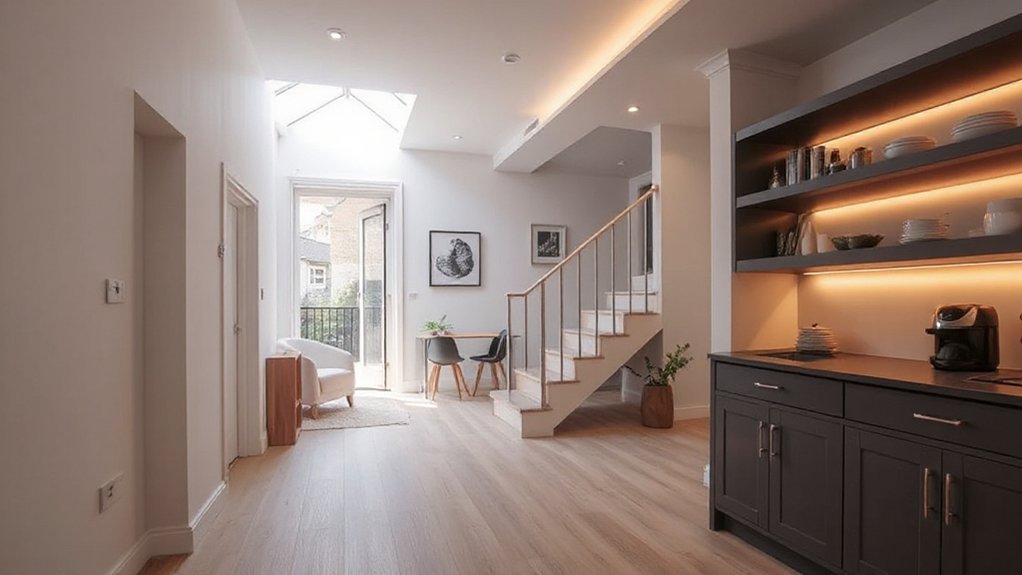
Natural light should be your baseline, then layered with strategic artificial lighting to cover every zone. You’ll create a bright, welcoming rhythm by pairing daylight with purposefully placed fixtures that respond to activity and mood.
- Map zones: entrance, living, dining, and work areas, then note peak daylight hours for each.
- Layer sources: large windows, skylights, wall sconces, and adjustable task lighting to balance glare and shadows.
- Use dimmers: smooth progressions from vibrant daytime to intimate evenings, preserving flow.
- Select color temperature: warm tones for coziness, cooler tones for focus, unified by consistent brightness.
Natural lighting and artificial layering align to elevate comfort, belonging, and clarity throughout your terraced home.
Flexible Zoning for Family Life: Adaptable Spaces With Clear Roles
Flexible zoning lets you tailor a terraced home to real life: you can create distinct zones that adapt as family routines shift, without sacrificing flow. You’ll design spaces with clear roles, so mornings, work, and downtime don’t collide.
Use multifunctional furniture to compress or expand function without adding clutter, keeping sightlines open and the rhythm steady. Flexible partitions let you reframe shared areas for privacy or sociability, preserving intimate connections while supporting separate tasks.
Establish zones by lighting, acoustics, and storage cues, not walls alone, so everyone instantly reads the space’s purpose. Invite input from every member, fostering belonging and responsibility.
The result is a home that grows with you, feeling cohesive, calm, and welcoming even as needs evolve.
Frequently Asked Questions
How Can I Measure Flow Changes After Layout Tweaks?
You measure flow changes by tracking traffic flow and spatial perception before and after tweaks. Start with a simple route map, then time how long you take to move between key zones.
Note hang-ups and crowding moments, and capture perceptions with quick surveys or a scale rating.
Use sensors or click counters for objective data, and compare color-coded zones for improvements.
You’ll see clearer paths, faster shifts, and a stronger sense of belonging in your space.
Which Materials Maximize Perceived Space in Tight Corridors?
You’ll want materials that feel spacious, not clingy, so you’ll choose reflective finishes, light woods, and pale tile. Use ideal lighting and bright color schemes to bounce visibility along tight corridors, widening perceived space.
Go for low-gloss floors, glass doors, and smooth, uninterrupted passageways. You’ll notice a calmer flow, easier navigation, and a sense of belonging as you move.
Practical, authoritative choices—paired with sincerity—help you feel included and confident in your space.
Can Stair Redesign Impact Home Ventilation and Light?
Yes, stair redesign can boost Natural light and Air circulation in your home. By widening landings, using open risers, and aligning stairs with windows, you invite more daylight deeper inside and create smoother airflow.
Consider light-colored treads and reflective surfaces to maximize brightness. A gentler, continuous slope reduces blocking walls, supporting ventilation paths.
You’ll feel more connected to your space, easier to breathe, and supported by practical, confident improvements you can share with others.
What Budget Ranges Are Typical for Terraced-House Revamps?
Kick things off with a solid rule of thumb: terraced-house revamps typically run from £20k to £60k for modest changes, £60k–£120k for full rehabs, and higher for premium finishes.
You’ll want smart Budget planning, adjust for structural work, and factor renovation costs beyond cosmetics.
You’ll save by batching trades, prioritizing layout, and choosing durable materials.
You’ll feel you belong when you see how coherent design elevates daily life and resale value.
How Long Does a Typical Terraced-House Reconfiguration Take?
A typical terraced-house reconfiguration takes a few weeks to a few months, depending on scope and approvals. You’ll plan furniture placement early to avoid wasted moves, and lock in color schemes that calm sightlines and define zones.
Expect permitting, trades, and inspections to shape the timeline. You’ll feel confident as crews coordinate around your daily life, minimizing disruption.
Stay communicative, flexible, and focused on practical, actionable steps that foster belonging and steady progress.
Conclusion
You’ll notice the subtle shifts—doors nudged, sightlines opened, rooms that breathe. It’s not about bigger spaces, it’s about better flow, so life moves with less friction and more intention. These tweaks can feel like quiet upgrades, hinting at a calmer rhythm without shouting for attention. Embrace flexible zones, smart light, and a welcoming core; little changes compound into everyday ease. With practical tweaks, you’ll enjoy spaces that adapt as you do, gracefully and reliably.