
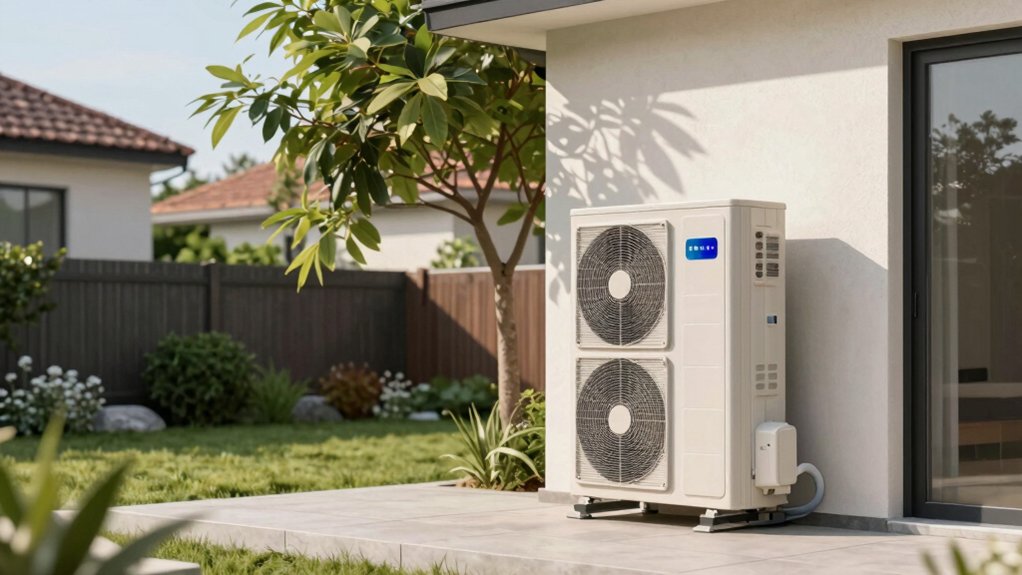
Heat pumps excel in moderate climates, delivering year‑round comfort with higher efficiency and lower operating costs when temperatures are mild. In colder or hotter extremes, performance depends on proper sizing, refrigerant charge, and controls; you may need supplemental heat or backups. Traditional HVAC offers robust dehumidification and steady output in extremes but at higher energy costs. Weigh upfront, operating, and maintenance costs alongside climate, electricity prices, and incentives. For a climate‑matched choice, more details await.
How Heat Pumps Work in Different Climates
Heat pumps differ in performance depending on climate due to changes in ambient temperature and humidity. In cool, dry environments, you’ll experience efficient heat extraction and stable thermal regulation, as the system maintains comfortable indoor temperatures with modest energy input.
When outdoor temperatures rise, you gain rapid cooling capability; you’ll notice strong dehumidification without excessive fan noise, supporting a pleasant indoor feel.
In hot, humid climates, condensation management becomes vital, and the system prioritizes climate adaptability to sustain steady comfort while balancing latent and sensible loads. You’ll benefit from modular controls that adjust compressor speed and reversing valve timing to maintain setpoints.
Across all conditions, reliability hinges on proper sizing, refrigerant charge, and outdoor unit protection to support consistent thermal regulation and long-term performance.
Choosing Between Heat Pumps and Traditional HVAC: A Quick Framework
When you choose between heat pumps and traditional HVAC, assess climate adaptation, efficiency tradeoffs, and total installation costs upfront.
You’ll weigh how weather patterns affect performance, long-term energy use, and maintenance needs against initial and ongoing expenses.
This framework guides clear tradeoffs so you can select a system that aligns with your climate, budget, and reliability targets.
Climate Adaptation Considerations
Climate adaptation is a practical lens for choosing between heat pumps and traditional HVAC, because the right system must perform reliably under your local climate, energy costs, and resilience needs. You assess climate intensity, peak demand, and seasonal variability to select equipment that maintains thermal comfort without oversizing.
Heat pumps excel in moderate and changing conditions, while auxiliary resistance or gas backup may be appropriate in extreme cold or heat corridors. Consider refrigerant performance, defrost cycles, and your region’s electricity reliability when estimating energy savings and comfort consistency.
Factor installation constraints, climate-informed zoning, and future climate projections to minimize operating disruptions. This framework supports belonging by aligning technology with your community’s needs while optimizing long-term energy, comfort, and resilience.
System Efficiency Tradeoffs
System efficiency tradeoffs hinge on matching up-front costs, operating costs, and performance reliability between heat pumps and traditional HVAC. You weigh annual energy use against purchase price, maintenance needs, and expected lifespan to choose a system aligned with your climate adaptability.
Heat pumps typically deliver higher system efficiency in moderate and milder seasons, reducing bills when temperatures aren’t extreme. In colder environments, performance reliability can vary, necessitating supplemental heat strategies that affect overall cost clarity.
Traditional HVAC often offers robust dehumidification and steady output in extreme cold, but at higher ongoing energy costs. Consider comfort consistency, controls sophistication, and your continuity of occupancy when evaluating efficiency gains.
The right choice reinforces climate adaptability while preserving predictable, transparent operating economics.
Installation and Costs Framework
Is it time to map installation steps and costs to your climate and usage patterns? You’ll evaluate the Installation and Costs Framework with precision, aligning system choice to local conditions and long‑term performance.
Start by estimating installation costs, including equipment, controls, and any site work, then compare heat pumps and traditional HVAC on total lifecycle expense. Factor energy efficiency, climate-specific performance, and anticipated usage to avoid over‑or under‑investment.
Retrofit challenges matter: existing ducts, electrical upgrades, or space constraints can shift feasibility and timing. Build a concise decision checklist that captures upfront, operating, and maintenance costs, plus potential rebates.
Use objective metrics, not guesswork, to justify your choice. This framework helps you belong to a community prioritizing reliable comfort and value.
How Temperature Affects Heating and Cooling Performance
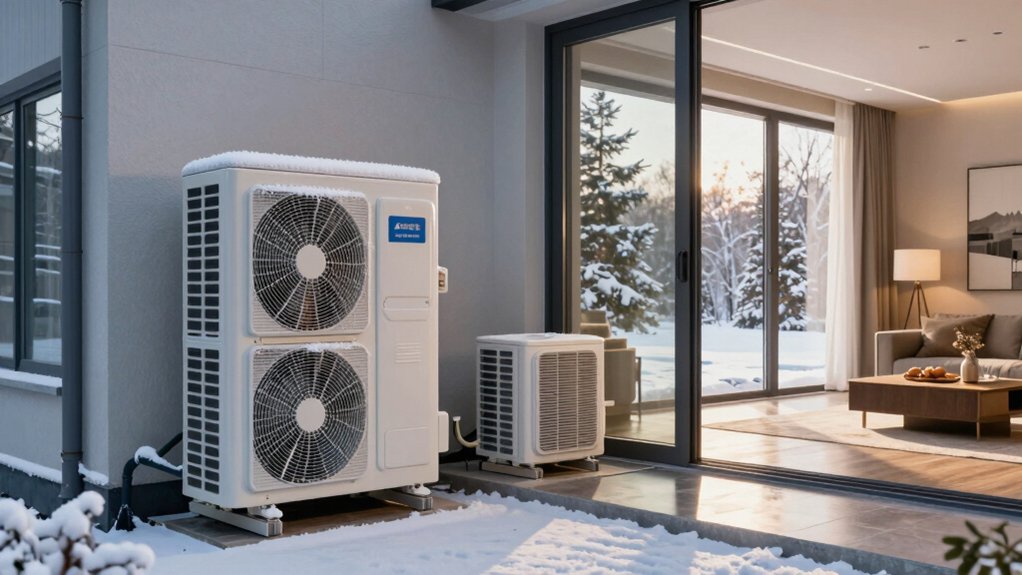
Temperature swings directly impact efficiency and performance, so your system responds differently as outdoor temps shift.
You’ll see temperature-dependent efficiency change both heating and cooling output, with cold conditions stressing heat pumps and extreme heat affecting cooling capacity.
Understanding climatic performance variations helps you size, select, and operate for consistent comfort.
Temperature-Dependent Efficiency
What happens to heat pump performance as outdoor temperatures change? As outdoor temps drop or rise, efficiency shifts due to refrigerant pressure, compressor workload, and heat transfer rates.
In heating mode, lower temperatures reduce the condenser’s temperature differential, increasing compressor current and diminishing coefficient of performance (COP).
In cooling mode, high outdoor temperatures can elevate ambient heat rejection losses, lowering SEER values.
Temperature variation also interacts with refrigerant charge, fan speed, and defrost cycles, altering steady-state efficiency.
You’ll see more pronounced efficiency changes near climate zone boundaries where typical operating temps stress systems differently.
Design and controls should account for these shifts, ensuring modulation strategies and auxiliary heat options preserve comfort and cost effectiveness.
Understanding temperature-dependent efficiency helps you compare heat pumps across climate zones.
Climatic Performance Variations
Climatic performance varies with outdoor temperature because heating and cooling loads, heat rejection, and refrigerant behavior shift across the operating range. You’ll notice efficiency and capacity respond to seasonals shifts and the climate zones you inhabit.
In milder climates, heat pumps maintain favorable COPs, while extreme cold or heat increases auxiliary demands and reduces effective seasonal performance.
Cooling load peaks align with high outdoor temperatures, stressing condensers and increasing fan power, yet modern controls optimize ramp rates and duty cycles.
In very cold conditions, supplemental resistance may briefly engage, influencing overall energy cost and comfort consistency.
Design choices tied to climate zones determine equipment sizing, refrigerant charge, and heat-rejection strategies.
Understanding these variations helps you compare options, optimize controls, and achieve reliable comfort across seasonal shifts.
Energy Metrics Explained: SEER, HSPF, and More
In cooling and heating systems, energy metrics like SEER and HSPF quantify efficiency and guide equipment selection. You’ll encounter energy ratings that summarize performance across conditions, enabling apples-to-apples comparisons.
SEER measures cooling efficiency, while HSPF gauges heating efficiency in climates that rely on heat pumps. COP and EER extend the picture, reflecting performance under specific loads and temperatures.
Seasonal metrics account for variability, helping you plan for real-world operation. Efficiency metrics influence sizing, battery of tests, and warranty expectations, so you can trust what you buy.
Higher values indicate better efficiency, but you’ll balance upfront costs against long-term savings. Use these ratings to evaluate equipment compatibility with your climate, energy profile, and comfort goals, ensuring you join others who prioritize reliable, efficient comfort.
energy ratings, efficiency metrics.
Cost Snapshot: Upfront, Operating, and Maintenance
Upfront costs set the baseline for comparing heat pump options, but total ownership costs hinge on operating and maintenance expenses over the system’s life.
In this cost snapshot, you’ll compare upfront investments against long-term bills, then factor in operating efficiency and utilization patterns. A properly sized, high-efficiency unit reduces annual energy use, improving your cost comparison over time, especially as electricity prices shift.
Maintenance costs stay relatively predictable when you schedule regular service, filter changes, and component checks. Expect lower ongoing fuel costs with heat pumps in moderate climates, but account for occasional refrigerant or coil servicing costs.
Consolidate these figures into a total cost of ownership model to judge value, reliability, and peer support, reinforcing your sense of belonging within a well-informed, financially prudent community.
How Heat Pumps Cool in Humid Climates
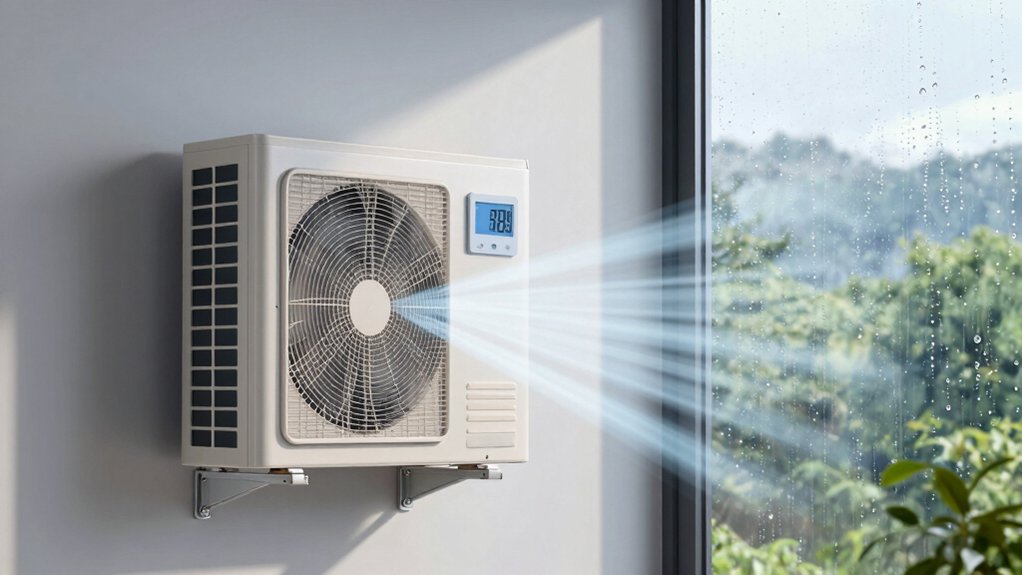
While heat pumps can efficiently cool homes in humid climates, their effectiveness hinges on latent cooling and humidity management beyond sensible cooling.
In humid climates, you rely on the heat pump’s dehumidification mode and variable-speed operation to remove moisture without overcooling. The outdoor unit transfers heat efficiently, while the indoor coil condenses water, reducing indoor humidity and improving comfort.
Cooling efficiency depends on proper refrigerant charge, airflow, and insulation, ensuring latent load is addressed as outdoor humidity rises. Use controls that optimize supply air temperature and dehumidification setpoints to maintain stable RH levels without excessive energy use.
With correct sizing and smart thermostats, you achieve consistent comfort, signaling to you that your system supports belonging through reliable, climate-appropriate performance.
Cold-Weather Heating: Can Heat Pumps Perform in Winter?
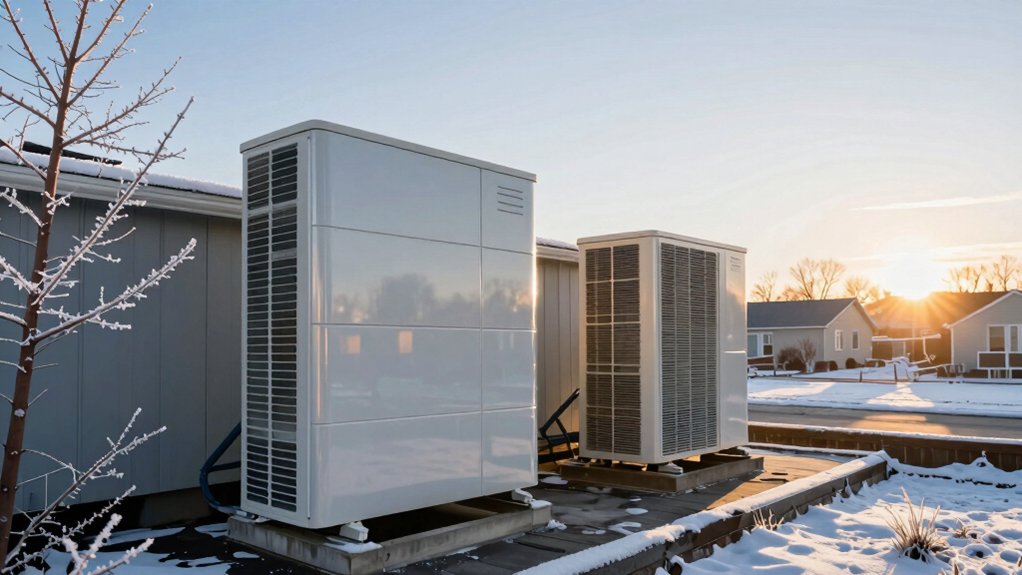
Can heat pumps reliably heat homes in cold winter conditions, or do freezing temperatures limit their performance? In cold weather, a heat pump’s frost resistance and snow performance matter most. Modern units maintain efficiency through advanced refrigerant cycles, defrost controls, and auxiliary heat options, preserving comfort without excessive energy use.
System design, though, should account for outdoor temperatures, air-source limits, and local climate nuances.
1) Frost resistance: low-temperature operation and defrost cycles minimize heat loss and protect efficiency.
2) Snow performance: robust outdoor components reduce blockage risk and maintain airflow.
3) Backup strategies: supplemental electric resistance or gas heat sustain comfort during extreme cold events.
With proper equipment selection and installation awareness, you stay confident in winter reliability and year-round comfort.
Sizing Your System, Installation Steps, and Local Incentives
Determining the right size for your heat pump system, outlining installation steps, and identifying local incentives require a coordinated approach that blends load calculations, space constraints, and program specifics. You’ll perform precise system sizing to balance capacity with efficiency.
Then follow a clear installation process that minimizes disruption and maximizes performance. In practice, this means verifying climate-appropriate performance, checking ductwork compatibility, and ensuring outdoor units, indoor air handlers, and controls align with your home’s layout.
Local incentives hinge on accurate compliance, so document efficiency ratings and installation details early. Expect a streamlined installation process: phased sequencing, system commissioning, and performance verification.
With disciplined planning, you gain reliable comfort, lower energy bills, and a stronger sense of belonging to a community prioritizing sustainable technology.
Debunking Myths About Heat Pumps and Traditional HVAC
You’ll see how common heat pump myths and traditional HVAC misconceptions can mislead decisions. We’ll expose the core myths, backed by performance data, efficiency metrics, and real-world results.
This discussion sets a precise, evidence-based framework for evaluating when each system excels.
Heat Pump Myths Debunked
Are heat pumps really less effective in cold weather, or is that a myth? You’ll find solid data showing modern systems perform reliably across climates, with efficiency gains that dominate traditional HVAC over time.
Below, you’ll see core myths debunked through precise metrics and real-world results.
- Myth: heat pumps stall in cold temps. Reality: advanced refrigerants and supplemental heating maintain comfort with minimal impact on energy savings.
- Myth: installation challenges ruin cost benefits. Reality: when sized and configured correctly, installation supports savings, reliability, and seamless integration.
- Myth: durability is compromised in winter. Reality: well-installed systems exhibit robust performance, long lifespans, and predictable operating costs.
Traditional HVAC Myths Busted
Traditional HVAC myths persist, but careful data and field results debunk them once and for all. You’ll find that heat pumps aren’t a fragile substitute; they’re designed for specific climates and used with appropriate limits and controls.
Some assumptions about energy savings overlook system matching, insulation, and usage patterns, yet real-world installations show comparable or superior efficiency when properly sized and deployed.
Noise levels vary by model, location, and installation, but modern units routinely meet or exceed occupant expectations in perimeter and indoor environments.
The belief that traditional systems always outperform heat pumps isn’t supported by contemporary testing, performance data, or lifecycle analyses.
With informed choices, you gain reliability, comfort, and a cohesive HVAC strategy that fosters belonging in your community.
Decision Framework: Pick Based on Climate and Budget
Choosing between a heat pump and a traditional HVAC system hinges on climate and budget, because efficiency and upfront costs vary with seasonal demand and local energy prices. You’ll want a clear decision framework that aligns with climate zones and budget planning, so you feel confident in your choice.
- Assess climate zones: heating versus cooling load, humidity, and extreme temperatures to determine system suitability.
- Compare lifetime costs: purchase price, installation, maintenance, and energy consumption over 10–15 years.
- Align with budget planning: factor incentives, financing options, and resale value into your decision.
This framework keeps you informed, collaborative, and secure in your selection, ensuring the final system matches both your climate realities and financial goals.
Frequently Asked Questions
Do Heat Pumps Work Offline During a Power Outage?
Yes, heat pumps don’t run offline during a power outage unless you have backup power; guarantee system reliability with a battery or generator, and plan for proper switching to maintain climate control and safety during outages.
How Do Noise Levels Compare Between Systems?
Noise levels vary by model, but heat pumps generally produce lower sound exposure than traditional systems, thanks to advanced compressors and inverter tech; expect a clear noise comparison showing sound levels in decibels at typical running points.
Can Heat Pumps Replace a Furnace Entirely?
Yes, heat pumps can substitute a furnace in some homes, but check furnace compatibility and your heating capacity. You must verify wiring, refrigerant zoning, and backup heat needs to guarantee seamless, reliable performance and community-approved installation.
What Maintenance Is Unique to Heat Pumps?
Heat pump maintenance unique to you includes checking refrigerant leaks and regular filter replacement. You should schedule professional inspections, monitor coil cleanliness, and verify refrigerant charge, ensuring airtight seals and peak performance for efficient, climate-appropriate comfort.
Do Cold-Start Inefficiencies Affect Monthly Bills?
Yes, cold-start inefficiencies slightly raise monthly bills, but energy efficiency features and proper sizing curb the impact, boosting cost savings. You’ll notice smoother starts, lower peak loads, and a sense of belonging to a reliable, technical system.