
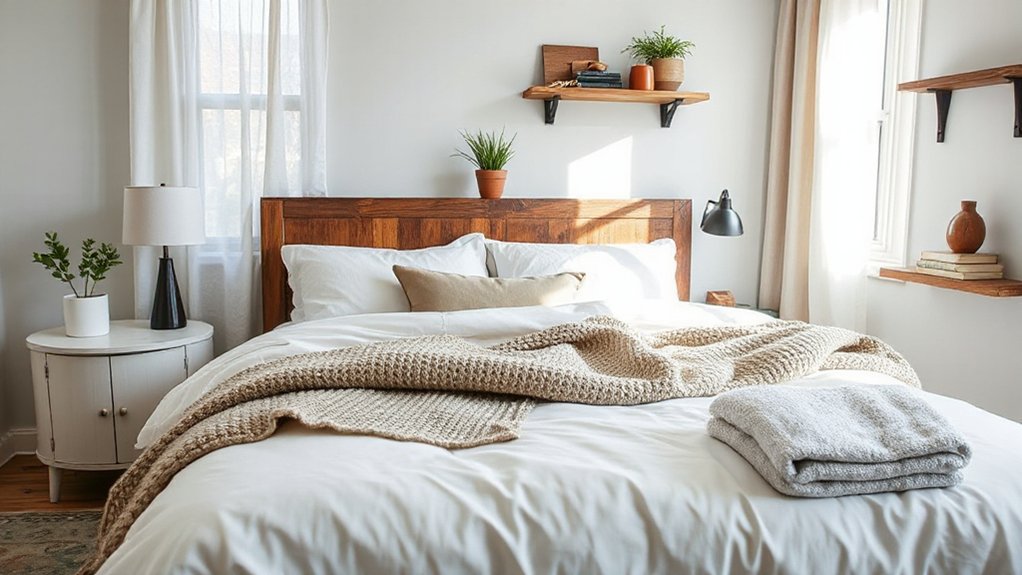
Want a stylish bedroom on a budget? Start with a clear plan: set a budget, map the room, and define a cohesive 2–3 color palette. Optimize space with smart storage, under-bed bins, and vertical shelving. Layer textures with affordable textiles, and boost atmosphere with layered lighting and dimmers. Add character with upcycled finds and secondhand pieces, then finish with affordable rugs to define zones. Small updates add up—keep going to uncover more practical, money‑wise tips.
Define Your Bedroom Budget Baseline and Goals
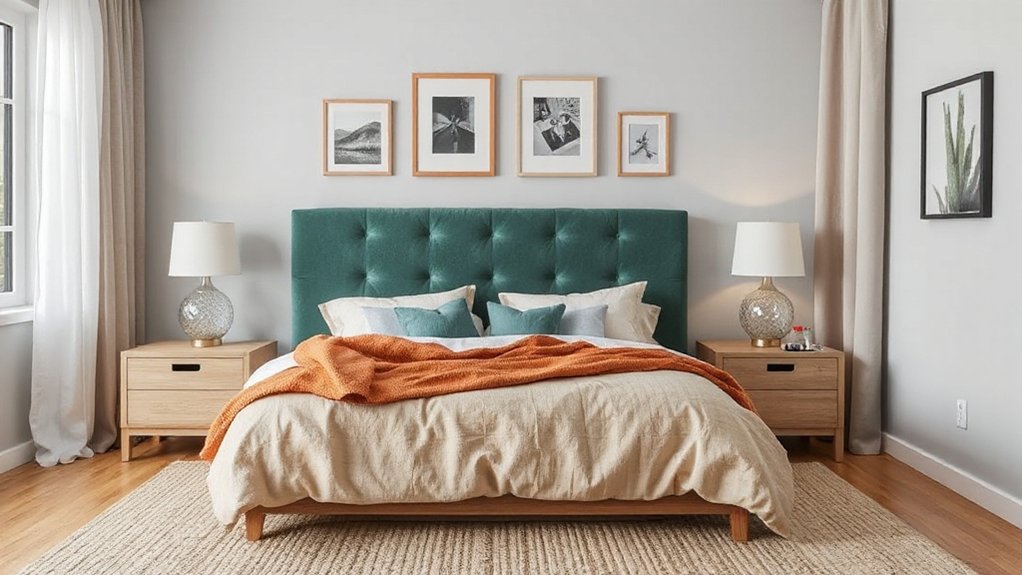
Setting a clear budget baseline and goals is essential before furniture and decor decisions begin. You’ll start by outlining your total spend, then allocate shares for essentials, like a mattress and lighting, and for mood-building touches, such as textiles.
Define a realistic timeframe and a cap for impulse purchases, so you stay disciplined. Clarify your priorities: will bedroom lighting set the mood, or is it precision in furniture arrangement that matters most to you? Note how much you’re willing to invest in quality versus multiples.
Track estimates for delivery or assembly. Revisit and adjust monthly as prices shift. This clarity builds belonging—neighbors and roommates understand your boundaries, and you’ll avoid buyer’s remorse while crafting a cohesive, budget-smart space.
Plan Your Layout: Measurements, Zones, and Flow
Before you bring in furniture, map out the room with precise measurements and clear zones so you can optimize every dollar. Plan a smart room layout by marking doorways, windows, outlets, and possible walking paths. Measure walls, ceiling height, and floor clearances to confirm furniture fits without crowding.
Create zones for sleeping, dressing, storage, and a small seating area, prioritizing essential pieces first. Consider traffic flow: leave at least 2 to 3 feet of clearance around beds and dressers, and ensure the path stays unobstructed.
Use budget-friendly layout tricks like floating essentials against walls or grouping items to maximize openness. Revisit your plan after testing with taped outlines to verify scale, accessibility, and a calm, inclusive feel.
Define a Cohesive Color and Style Palette
Lock in a cohesive color and style palette that fits your planned layout and rooms, using only a few versatile tones you’ll repeat across walls, textiles, and accents. Choose 2–3 core colors and 1 or 2 neutrals to ground the space.
Think about Color psychology: soft blues and greens feel calming, warm grays and earth tones feel cozy, bolder accents wake things up.
Define a simple style direction—modern minimal, timeless classic, or warm Bohemian—so every piece feels intentional.
Gather swatches, paint samples, and fabric chips to test in different lights.
Your palette should reflect how you want to feel daily, not just look.
Use your palette as style inspiration to guide purchases, avoiding mismatched buys and ensuring long-lasting harmony.
Upgrade With Affordable Fabrics and Linens
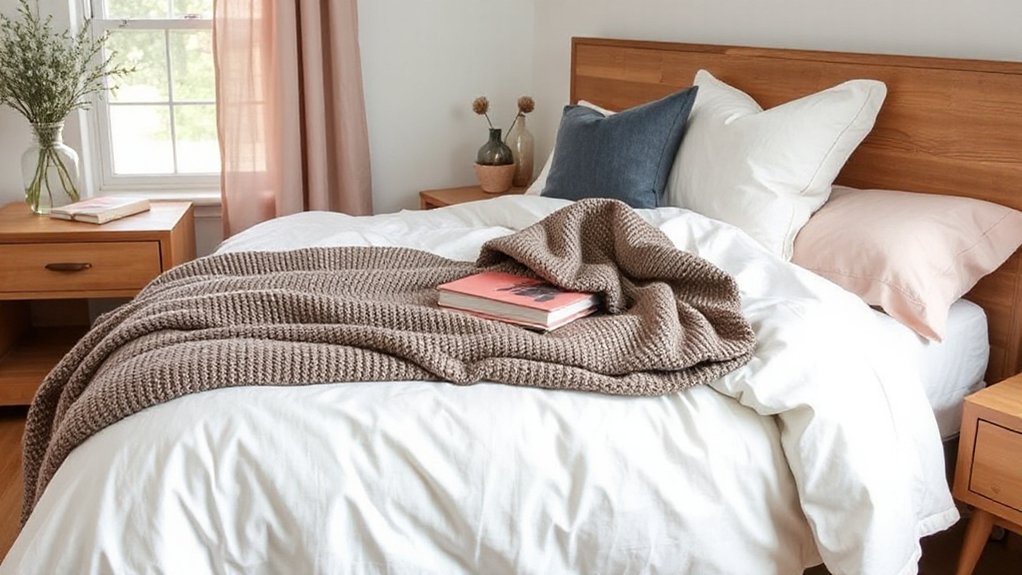
Shop affordable fabrics that still feel luxe by choosing cotton blends, linen-look finishes, and simple weaves that wash well and last. Layer textures with affordable options—think a crisp duvet, breathable sheets, and a lightweight throw—to add depth without breaking the bank.
Focus on color to tie pieces together and opt for multipurpose linens that switch with seasons.
Affordable Fabric Choices
Looking for a budget-friendly way to refresh your bedroom? Start with practical fabric choices that look luxe without breaking the bank. Choose budget textiles like cotton blends, microfiber, and poly-cotton mixes for durability, easy care, and color fastness.
Look for midweight fabrics with a tight weave; they hold seams well and drape cleanly on pillows and curtains. Seek versatile neutrals and two-season palettes to maximize mix-and-match options.
When considering luxury fabrics, reserve them for accents or statement pieces rather than large surfaces to stay within budget. Compare prices, check for sales, and buy in modest bundles to reduce waste.
Prioritize fabrics that resist wrinkling and fading, then complement with affordable trims and hidden linings for a polished, belonging-first bedroom aesthetic.
Layered Linen Textures
- Start with a solid base: opt for a lightweight duvet cover or quilt in a neutral linen blend.
- Add texture: layer a sham or pillow in a waffle or Jacquard linen for tactile interest.
- Mix weights: pair a crisp flat sheet with a softer quilt for contrast and comfort.
- Finish with accents: incorporate a linen throw, a few woven cushions, and natural wood elements for cohesion.
This approach keeps Linen textures affordable, practical, and inviting, fostering belonging.
Maximize Small Spaces With Smart Storage Solutions
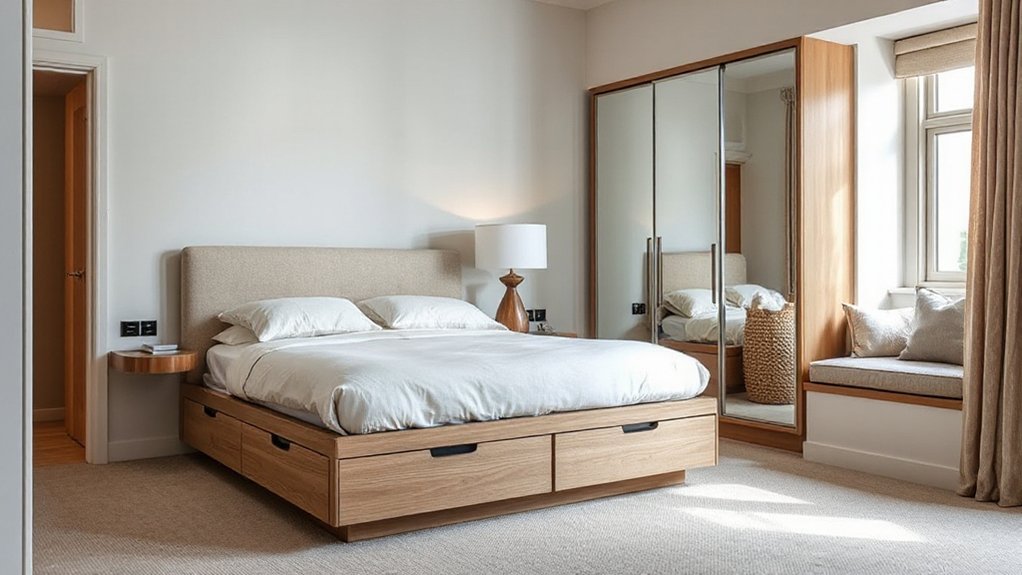
Maximize tiny rooms with smart storage that doesn’t pretend to be furniture soup. Use hidden storage hacks like under-bed bins, hollow ottomans, and bed frames with built-in drawers to reclaim floor space.
Tap vertical space—wall shelves, peg rails, and wall-mounted organizers—to keep essentials accessible without crowding the room.
Hidden Storage Hacks
Hidden storage isn’t about big spending—it’s about smart, practical placement that frees up floor space and keeps essentials handy.
Hidden compartments and under bed storage prove you don’t need extra furniture to gain organization. For a cohesive look, choose compact, uniform bins and label them.
- Use under bed drawers or slim totes to tuck seasonal items out of sight.
- Install shallow wall shelves with baskets at a reachable height for daily essentials.
- Place multi-purpose ottomans with hidden linings at the foot of the bed for seating and stash.
- Create a footboard or bed with built-in drawers to store small accessories and linens.
These moves maximize space, stay on budget, and reinforce a sense of belonging in your calm, organized space.
Vertical Space Utilization
Vertical space is a potent ally in small bedrooms, and smart hooks, shelves, and towers let you store more without crowding the floor. You’ll prioritize vertical organization by choosing wall-mounted cabinets, peg rails, and slim bookcases that don’t overwhelm the room.
Install floating shelves at eye level for easy access and use labeled bins to keep small items tidy. Opt for open shelving to reinforce a sense of airflow and budget-friendly shelf styling that reflects your taste without clutter.
Think modular tower units or stackable crates to adapt as needs change. Pair bright shapes with neutral backgrounds to keep the space feeling larger.
Source Budget-Friendly Furniture With a High-End Look
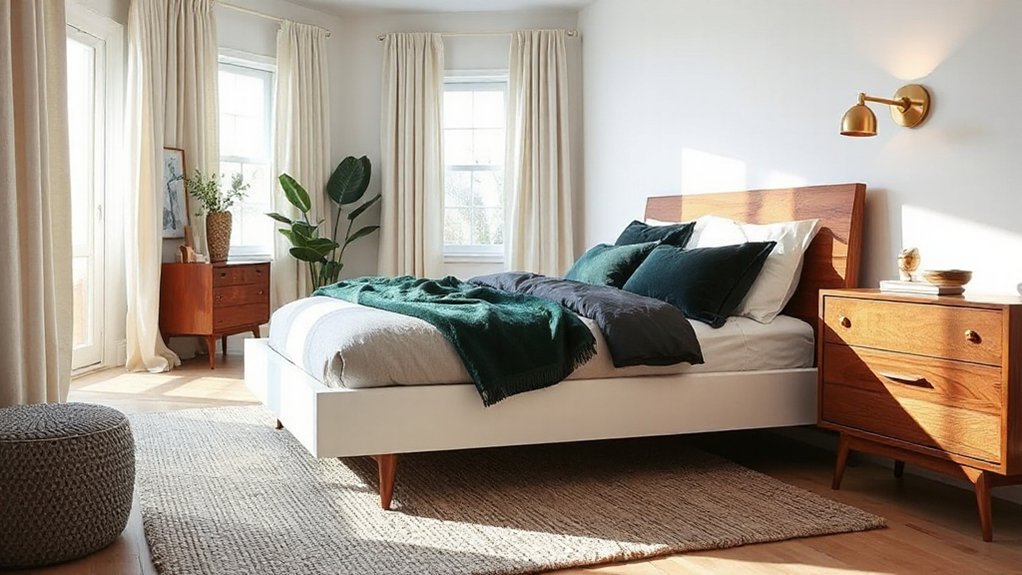
To get the look of luxury without breaking the bank, start by hunting for budget-friendly furniture with high-end details like soft-close drawers, tapered legs, and clean, straight lines. You’ll find pieces that feel expensive without emptying your wallet, especially when you mix vintage accents and statement lighting to anchor the room.
- Prioritize architecture over ornamentation, choosing consoles and dressers with solid frames.
- Seek retailers offering unfinished wood with clear finishes you can customize later.
- Combine affordable drawers with metal hardware for a luxe contrast.
- Add vintage accents through affordable, well-placed accessories that echo your style.
DIY Decor That Elevates the Room on a Dime
You can refresh your space with budget-friendly makeovers that punch above their price. Try simple DIY texture tricks—think layered textiles, wall embellishments, and tactile accents—to add depth without breaking the bank.
These ideas set the stage for practical, high-impact decor you can personalize today.
Budget-Friendly Makeovers
- Swap lamp shades and throw pillows for cohesive tones
- Rehang art at eye level and group pieces for a gallery feel
- Refresh hardware and fixtures with budget metal finishes
- Add a simple plant trio to improve air and ambiance
These moves are intentional, measurable, and inexpensive, helping you belong in a space that reflects you.
Track mood shifts after each change to confirm what truly works.
DIY Texture Tricks
Texture can transform a budget room without breaking the bank; start with simple, tactile upgrades that add depth and warmth. You’ll layer texture strategically to create invitation and comfort, not clutter.
Begin with textiles: swap pillow covers, throws, and a cozy rug in varied fibers for textural contrast that’s affordable and instant. Add dimension to walls with DIY wall art—fabric collages, pressed botanical frames, or hanging fiber art—graceful focal points that avoid costly framing.
Introduce subtle sheen with a linen or cotton duvet and matte ceramics for balance. Build height through multi-layered lighting and a few woven baskets for storage that doubles as decor.
Keep surfaces clean and cohesive, pairing rough textures with smooth, to ensure every element feels intentional and welcoming.
Lighting: Layered Effects for Warmth and Depth
Layered lighting creates warmth and depth without overspending. You’ll transform your bedroom by combining three practical layers: ambient, task, and accent. Each layer adds atmosphere without clutter and keeps your budget in check.
- Ambient: Use a ceiling fixture or soft-plugged lamps to wash the room in even light, creating an ambient glow.
- Task: Add a bedside lamp or wall sconce for reading, keeping surfaces clear and focused.
- Accent: Highlight architectural features or art with a small directional light to establish focal points.
- Control: Use dimmers or smart bulbs to shift mood from daily brightness to cozy evenings, preserving energy.
Keep a calm palette, and let the lighting guide the room’s rhythm.
Accent the Room With Upcycled and Secondhand Finds
Upcycled and secondhand finds let you personalize your space without breaking the bank. You’ll transform a room by choosing pieces that fit your vibe and budget, not trends alone.
Start with thrift shopping trips for staple items—nightstands, lamps, and mirrors—that can be refreshed with paint, new hardware, or fabric swaps. Look for vintage accents that echo your color scheme and add character without costing a fortune.
Inspect items for solid construction and easy updates, avoiding fragile details that won’t endure daily use. Plan styles that mix well with your existing furniture to create cohesion.
Don’t rush; negotiate price calmly and ask for damaged parts to be discounted or replaced. With thoughtful choices, your bedroom feels personal, intentional, and welcoming.
Flooring and Rugs: Impactful Yet Affordable Options
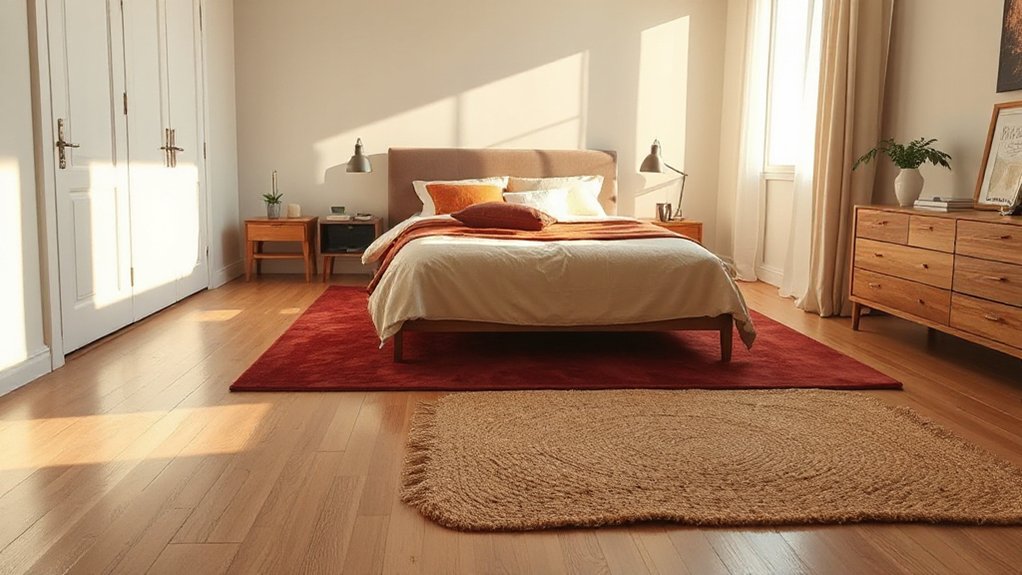
If you’re aiming for a big room feel without a big price tag, start with flooring and rugs that anchor the space and absorb sound. You’ll maximize impact with thoughtful choices that fit your budget, and you’ll feel a sense of belonging as the room folds around you. Use these practical steps:
- Choose affordable, durable flooring options (laminate, vinyl plank, or epoxy) that mimic luxury textures.
- Layer rugs strategically to define zones, using rug layering for depth and warmth.
- Mix patterns cautiously—combine a bold base with quieter accents for pattern mixing without chaos.
- Swap in secondhand finds or affordable runners to finish the look without overspending.
Refresh Wall Art and Personal Touches With Intent
To refresh your space without overspending, start with intentional wall art and personal touches that reflect your style. Choose a cohesive color palette you already own or can borrow from bedding and decor, and keep frames consistent for a polished look.
Prioritize high-impact pieces, like a single large print or a gallery wall built from thrifted finds. Update textiles or a DIY canvas to personalize ambiance without breaking the bank.
Rotate artwork seasonally to keep the room fresh, and swap out mementos—photos, travel souvenirs, or handwritten notes—so the space tells your story.
Keep clutter low and display items with meaning, not just filler. Personalize ambiance, showcase mementos, and you’ll create a welcoming, budget-smart retreat.
Frequently Asked Questions
How Can I Set a Realistic Budget for the Project?
You can set a realistic budget by starting with a clear total, then breaking it into categories.
Do budget planning for decor, furniture, and textiles first, allocating a bit for unexpected costs.
Use cost estimation by researching prices and comparing options before buying.
Set a cap for each item, track every purchase, and adjust as needed.
Stay flexible, involve your taste and needs, and share the goal with loved ones to feel supported and committed.
What Common Mistakes Blow up Budget Quickly?
Like a sparkler at a calm night, you’ll dodge budget blowups by planning first.
Common mistakes blow up budget quickly: chasing trendy color schemes that require costly repaint, buying oversized furniture, ignoring delivery fees, and remodeling before measuring.
Stick to practical color schemes, map out furniture placement, buy versatile pieces, and avoid impulse buys.
Track every expense, compare prices, and wait for sales.
Your space saves money and earns belonging when you stay disciplined and intentional.
Which Room Features Deliver the Biggest Visual Impact Cheapest?
The wall art and lighting fixtures deliver the biggest visual impact for the least cost. Choose bold, cohesive wall art you love, and rotate pieces over time to refresh the room.
Pair with statement lighting fixtures—think a bright ceiling pendant or a warm, layered lamp setup on a budget. You’ll feel instantly drawn in, because thoughtful art and lighting create mood and belonging without breaking your budget.
How Do I Repurpose Existing Items Effectively?
You can repurpose existing items effectively by focusing on scale, finish, and function. Upcycling furniture transforms old pieces into usable focal points, while creative decor ties the room together.
Start with a neutral base and assign new roles to generous items—like a dresser becomes a TV console, or a bench gains hidden storage. Seal with durable finishes, swap hardware, and add cohesive textiles.
You’ll feel belonging as you save money and express your style.
What Tools Help Me Measure and Plan Efficiently?
You’ll use a tape measure, a simple planner app, and a scribble pad to plan efficiently. A laser measure speeds up accuracy, while a framing square keeps lines true.
Note Room lighting goals and Color schemes early, so spacing and fixtures align with mood.
Keep budgets tight by sketching scale layouts and testing one change at a time. You’ll feel grounded, confident, and part of a shared space you helped shape.
Conclusion
You can transform a bedroom without breaking the bank by sticking to a clear plan: set a realistic budget, measure precisely, and choose a cohesive palette. Use multi-tasking furniture and smart storage to maximize space. Reuse fabrics, opt for affordable lighting, and add personality with thrifted art and plants. Fun tip: rooms with a cohesive palette feel 20–40% larger. Stay practical, track costs, and tweak as you go—your stylish retreat is closer than you think.