
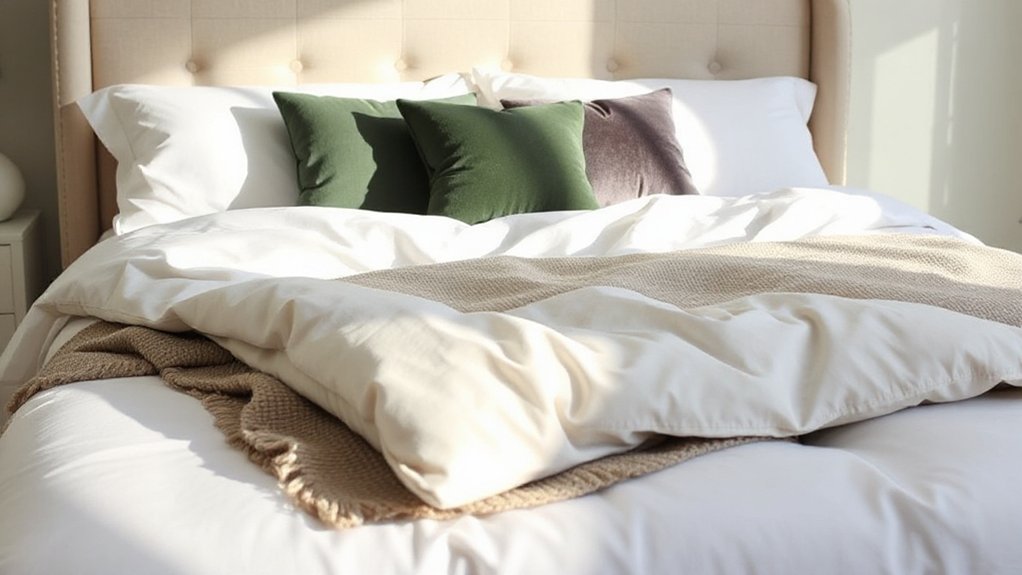
Refresh a bedroom with new bedding by first defining a clear goal—think mood, ease of care, and budget. Choose durable fabrics that feel inviting and are easy to wash. Coordinate a calming color palette across sheets, duvet, and accents, then layer basics: fitted sheet, flat sheet, duvet insert, and a duvet cover. Mix textures for depth without clutter, and guarantee sizing fits your bed. Quick upgrades like shams, throws, and a few statement pieces finish the look—and there’s more to explore.
Define Your Bedding Refresh Goal
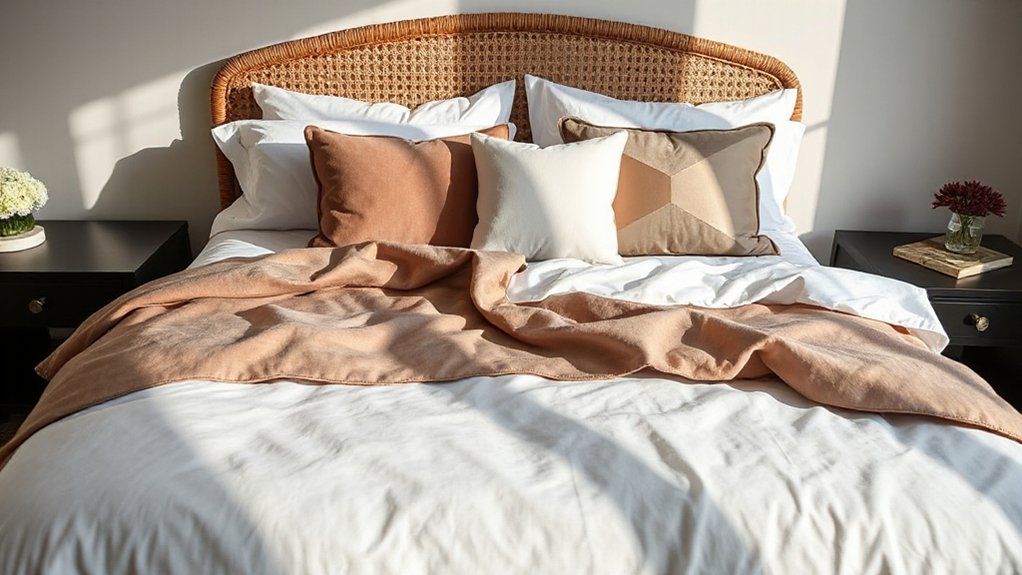
Setting a clear goal helps your bedding refresh stay focused and affordable. You start by picturing how the room should feel after a refresh and what you’ll actually use.
Define the purpose: a calmer vibe, easier care, or better sleep quality. Consider practical constraints like budget, closet space, and existing decor you love.
Translate those ideas into specific targets: thread count or fabric type, color palette, and must-have pieces.
Outline a simple plan for Bedding maintenance that fits your routine, so upkeep stays painless.
Mind eco-friendly fabrics and durability, ensuring your choices support long-term comfort.
Document your goal in a single, clear sentence to revisit during shopping. With a defined aim, you’ll choose thoughtfully and avoid impulse purchases that derail progress.
You belong here, making smarter, steadier updates.
Choose Fabrics for Comfort and Durability
When you pick fabrics, consider how they feel against your skin and how they hold up after nightly use. Look for a balance between soft comfort and durable structure, like fibers that resist pading or snagging.
Think about easy-care options that keep the bedding fresh wash after wash.
Fabric Feel and Comfort
Choosing the right fabrics for bedding means prioritizing both comfort and durability: soft textures that feel inviting, yet sturdy enough to withstand regular washing. You’ll notice fabric feel in every touch—cool cottons, silky sateen, and breathable linens—that support restful sleep without clinging.
Seek fabrics that soften with use but keep their shape, ensuring a neat look wash after wash. Consider fabric patterns that hide minor wear and coordinate with your room’s palette, then pair them with a comfortable thread count that matches your climate and preference.
Higher isn’t always better, so test flexibility and drape in-store or with swatches. Comfort comes from how the material moves with you, not from marketing buzzwords.
Choose textiles that invite you to linger and belong.
Durability in Daily Use
Choose materials that resist pilling and fading, and favor tighter weaves for longevity. Organic bedding often delivers a balanced mix of comfort and resilience, while eco-friendly fabrics can reduce wear without sacrificing touch.
Look for thread counts that favor structure over stiffness, and fibers like long-staple cotton or bamboo blends that soften with each wash. Consider blends that tolerate high temperatures for sanitation yet stay comfortable to the touch.
Prioritize practical care guidelines, and keep a consistent color palette to minimize visible wear over time.
Pick Color Palettes That Transform a Bedroom
A coherent color palette sets the mood for your bedroom, guiding everything from textiles to accents. You’ll choose a base, then add complementary notes that feel natural to your space.
Start with a neutral foundation—warm stone, soft taupe, or cool gray—that makes textures pop without shouting. Introduce a color family through bedding, curtains, and rug accents, aiming for harmony rather than matchy-matchy, so you still feel you.
Consider how the light shifts colors during the day and how you’ll use layers to create depth. Subtle ties to Garden decor or Kitchen accessories can unify the room’s vibe without overpowering it.
Keep the palette flexible enough to evolve with your tastes, so your bedroom stays inviting and yours.
Layer Bedding Basics: Sheets to Duvets
Layering starts with the basics: sheets, pillowcases, and a flat sheet, then builds up to blankets and a duvet. You’ll feel the difference the moment you touch fresh bed linen, crisp and smooth against your skin.
Begin with well-fitting sheets that stay tucked and don’t pull at night; choose a compatible pillowcase set for comfort and cohesion.
A flat sheet adds a clean buffer between you and the duvet, keeping things tidy as you make the bed.
When you reach the top layer, select a duvet insert that suits your warmth needs, then tuck or fold edges neatly for a hotel-like finish.
The result is inviting, easy to maintain, and creates a sense of belonging in your sleep space.
Mix Textures for Visual Depth

Layer textures by layering different fabric weights and weaves, so each surface catches light and shadow a bit differently.
Pair crisp cotton with soft brushed velvet or chunky knit throws to create tactile contrast that reads as depth.
Use varied sheens and patterns strategically to guide the eye without clutter.
Texture Layering Techniques
You’ll create warmth and a sense of belonging by pairing fabrics that contrast yet complement. Focus on two goals: texture contrast and fabric patterns that coordinate rather than match too literally.
Choose a dominant surface (a quilt or duvet) and layer supporting pieces that differ in weight and finish. Practical pairing keeps everything intentional.
- Mix velvet with cotton percale for tactile and visual interest.
- Add knit throws over smooth linens to soften lines.
- Introduce a woven rug or pillow for subtle texture repetition.
- Include a satin or sateen sheet edge for a slight sheen.
This approach favors cohesion, not chaos, helping you feel grounded and connected in your space.
Visual Depth With Fabrics
Mix textures to create visual depth by pairing fabrics with distinct weights and finishes. You’ll achieve dimension by layering a medium-weight duvet cover with a lighter cotton or linen sheet set. Then add a heavier velvet or jacquard pillow.
Contrast matte and sheen—think a satin euro sham against a matte quilt—so light plays across the bed. Keep color cohesive but allow subtle variation in undertones to read as depth rather than clutter.
Pay attention to scale: large blocks feel grounding, small patterns add liveliness without crowding. Consider practical fabric maintenance and textile sourcing when selecting pieces, choosing options that withstand daily use and easy care.
This approach invites belonging, making your retreat feel thoughtfully curated and comfortable.
Pattern Coordination: Avoiding Clashes

To keep patterns from clashing, start with a dominant print on the bedding and pull in supporting patterns that echo its colors and scale. You’ll create fabric harmony by balancing bold and subtle motifs, so the eye flows rather than fights. Keep the palette cohesive, and choose textures that read as a unit.
Avoid mixing too many motifs; instead, repeat a color or shape to unify different prints. When in doubt, test in natural light and step back to assess.
- Start with a primary print, then layer muted accents that repeat its hues
- Vary scale thoughtfully: large repeats + small motifs for contrast
- Consider fabric texture to enhance harmony, not complicate it
- Trust your instinct: if it feels cohesive, it’s pattern clashes-free
Spotlight: Statement Bedding Pieces
Bold patterns catch the eye and set the tone, so pick one statement piece that anchors the room.
Pair bold textiles with a calm space to emphasize layered textures and a subtle shine that pops without overpowering the bed.
Start with a centerpiece pairing that balances bold space, ensuring the look stays cohesive and focused.
Bold Patterns, Bold Space
Statement bedding pieces can instantly transform a bedroom because bold patterns draw the eye and set the mood.
- Choose one bold pattern as the room’s focal point, then pair with solid accents to prevent overload.
- Let bold space breathe by balancing color blocks with calm, neutral surroundings.
- Scale matters: large prints suit spacious beds; smaller motifs work in tighter spaces.
- Mix textures, not mismatched patterns, to keep the look cohesive and inviting.
You’ll feel a stronger sense of belonging when the bed reads intentional, not chaotic.
Embrace confidence with a single, striking pattern and let the rest support it.
This approach creates a curated, welcoming space where your personal style shines through without clutter.
Layered Textures, Subtle Shine
Layered textures and a subtle sheen quietly elevate a bedroom, and statement bedding pieces are the perfect starting point. You’ll mix textures you already love with a few bold pieces to create depth without clutter.
Layer in soft cottons, knit throws, and a satin pillow to catch light and add dimension. Choose colors that echo your room’s mood, then pair them with one standout sheet set or duvet cover.
Silk elegance comes into play through a satin sheen on pillows or a bedding band for a refined touch. Introduce metallic accents sparingly—a decorative tie, a lamp shade, or a metal-framed headboard—to catch morning sun.
This approach feels intentional, inviting, and easy to live with daily.
How to Choose the Right Duvet Cover and Insert
Choosing the right duvet cover and insert starts with a quick fit check: measure your duvet insert and your duvet cover to guarantee they match in both size and thickness.
- Match size and fill to avoid shifting and cold spots
- Consider fabric mood: soft, breathable, and easy to care for
- Pick patterns that echo Vintage patterns without overwhelming the room
- Prioritize Eco friendly textiles for a calmer, room-wide vibe
When selecting, treat your insert like a friend you keep close: secure corners, smooth lines, no bunching.
Choose a cover with durable stitching and a zipper or toggles to reduce snagging.
If you yearn for texture, blend a solid base with one Vintage pattern accent. This keeps your space feeling cohesive, inviting, and truly yours.
Pillows and Shams That Tie the Look Together
Pillows and shams are the finishing touch that tie your bedding together. Start by coordinating pillow shapes, then layer color and pattern so they read as one cohesive story, not a mismatched jumble.
Mix textures with shams to add depth while keeping the overall look balanced and purposeful.
Coordinating Pillow Shapes
- Choose a primary cushion that anchors the look and supports head/neck.
- Layer varied shapes (square, rectangular, lumbar) for visual interest.
- Place decorative trims thoughtfully to avoid bulk around Pillow placement.
- Tussy or reposition keep the layout fresh, welcoming guests to linger.
Color And Pattern Tie-In
Pairing colors and patterns in your pillows and shams should feel intentional, not random. To tie your look together, start with a unifying color scheme that echoes your bedroom’s base tones. Choose two or three colors from the palette you already love and repeat them across pillows, shams, and accents. This creates cohesion without stifling variety.
For Pattern mixing, mix solids with small, repeating prints rather than bold, competing designs. Balance scale: large motifs paired with smaller ones maintain calm, not chaos. Texture helps too, so include a knit or velvet piece to add depth while keeping the color story intact.
Shams And Texture Mix
Shams and texture are your secret to tying the look together, so mix materials and finishes thoughtfully. You’ll create depth by layering different fabrics and weights, from crisp cotton to soft chenille, while keeping color cohesive.
Focus on balance: lighter shams against darker pillows, and matte textures with a hint of sheen. This pillow layering approach makes the bed feel collected, not cluttered, inviting you to relax and belong.
Choose a unifying theme—cozy neutrals, a subtle metallic, or a soft botanical print—and echo it across sizes and shapes. Keep trims simple so the mix speaks for itself, not shouting.
- Start with a solid foundation sham and add patterned shams for contrast
- Vary textures (cotton, velvet, knit) for tactile interest
- Mix scales: large, medium, small pillows in cohesive tones
- Anchor with one standout pillow as a focal point
Bed Skirts and Mattress Toppers: Practical Options
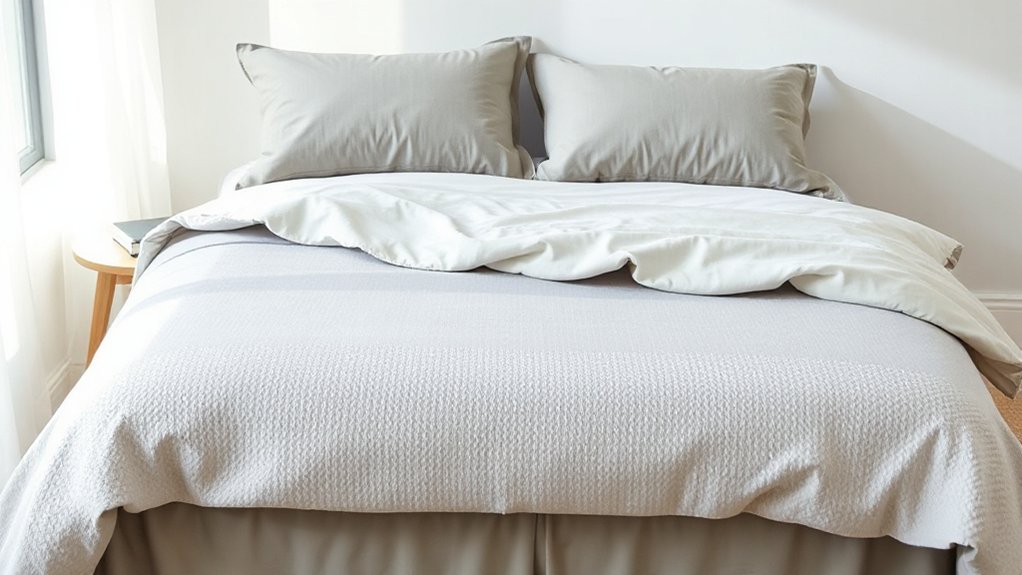
Bed skirts and mattress toppers can change the look and feel of a room without a full remodel. You’ll choose a bed skirt to hide under-bed clutter and to add a clean, tailored edge. Look for a color that coordinates with your comforter or sheets for cohesion.
A mattress topper improves comfort while extending your bedding’s life, offering a subtle upgrade in support or softness. Read labels for height and fabric weight to assure a snug fit.
If you’re short on storage, a bed skirt with a plain, uninterrupted fall keeps lines simple and calm.
Combine textures by pairing a quilted mattress topper with a smooth cover, then finish with pillows you already love for an intentional, welcoming vibe.
Seasonal Tweaks Without a Full Redo
You can refresh your bedroom for the season without a full redo by swapping in small, strategic updates. This is about seasonal color and textile innovation that feel intentional, not fussy. You’ll create a cohesive new mood with minimal effort, inviting everyone to settle in and belong.
- Swap pillow shams or a throw in a seasonal hue for instant cohesion
- Layer a lightweight quilt or textured blanket for warmth and depth
- Introduce a scented element and subtle metallic accents to elevate textile details
- Update a small wall textile or lampshade fabric to refresh ambience
These tweaks are practical, affordable, and personal, helping you stay connected to the season without disruptions. Your space stays welcoming, consistent, and gently evolving.
Easy Maintenance and Care Tips
Keeping your bedding fresh is easier with simple, practical care: choose easy fabrics that resist wrinkles and show stains less, and wash on a mild cycle with a gentle detergent.
Spot-treat spills promptly and blot—don’t rub—to keep fibers looking new and avoid setting stains.
Let fabrics air dry or tumble on low to preserve softness, and regularly rotate and wash pillows and sheets to maintain their shape and longevity.
Easy Fabric Care
When it comes to easy fabric care, start with a simple routine that keeps your bedding looking fresh. You’ll notice fabrics stay brighter and comfy longer when you handle them with calm, consistent habits. Tie your choices to what you love about your space—soft textures, clear color, tidy sheets—and you’ll feel more at home.
- Wash on gentle, cold cycles and skip overdrying to protect fabric dyes and thread count.
- Use a mild detergent and skip bleach if possible to maintain color depth.
- Rotate between lightweight and heavier sets to even wear.
- Air dry when you can; otherwise remove promptly to reduce wrinkles and fuzz.
Your bedding stays welcoming, with less effort and more belonging.
Stain Prevention Tips
Stains happen, but you can prevent most of them with simple, proactive steps. Begin with a nightly routine: use a washable, protective cover and a stain-free top sheet to create a barrier.
Treat spills immediately by blotting—don’t rub—and apply a gentle pretreatment before washing. Always check fabric care labels to match water temperature and cycle.
Use a mild laundry soap and avoid harsh powders that can abrade fibers. For color-fast fabrics, run a quick test on an inconspicuous area first.
Regularly rotate and air-dry bedding to prevent set-in marks. Stain removal should be timely and targeted, while ongoing Fabric preservation comes from gentle handling and correct washing.
With these habits, your bedding stays fresh, inviting, and easy to care for.
Budget-Smart Sourcing: Quality Without Overspending
Budget-smart sourcing means you get quality without overspending by choosing durable basics and smartly comparing options. You’ll feel confident buying pieces that last, while keeping comfort and texture in mind. Look for eco friendly materials and timeless construction, not flashy trends, so your bedding stays relevant season after season.
When you shop, compare weave, thread count (without obsession), and care requirements to avoid surprise costs. Favor simple colors and clean lines that mix with what you own, including vintage finds for character.
Focus on ethical brands and transparent fabrics to build a trusted set you’ll rotate with ease.
- Eco friendly materials that endure
- Vintage finds for unique texture and charm
- Reliable basics that wash well
- Clear care and return options to minimize waste
Weekend-Ready Styling Tricks for Quick Impact
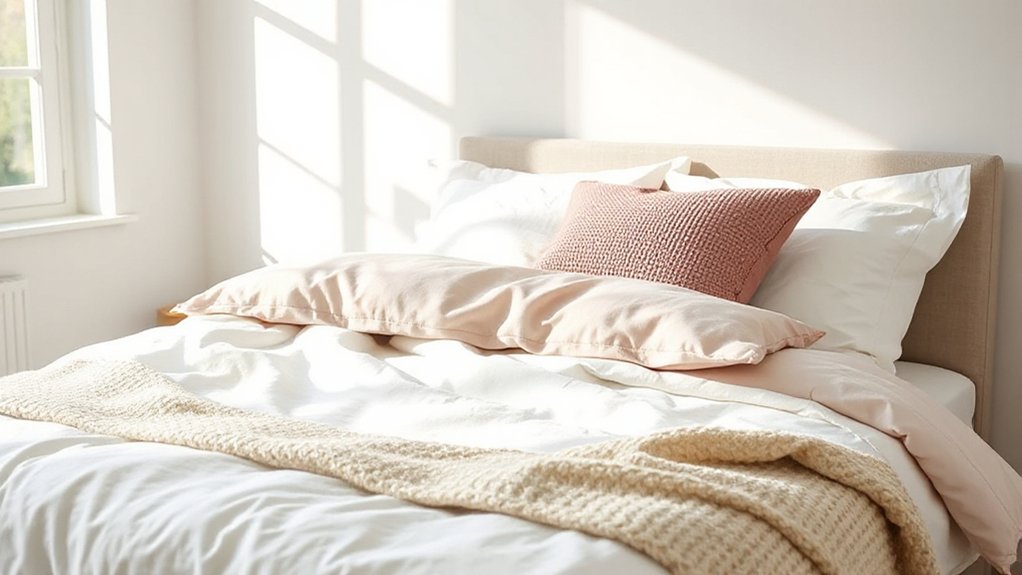
Weekend-ready styling is all about quick, high-impact changes you can drop in without a full redo. You’ll sharpen the room’s personality in hours, not days, with practical swaps and layered textures.
Choose eco-friendly materials for throws, pillow covers, and rugs to signal care for the planet and your home’s comfort.
Mix vintage accents—think a worn leather chair, a midcentury lamp, or a dusted wooden tray—to add character without heavy investment.
Keep the palette cohesive: soft neutrals with one bold note, like sage or navy, to unify bedding and accessories.
Build small focal points: a folded quilt at the foot of the bed, a single statement pillow, or a sculptural plant stand.
Quick, deliberate choices create a welcoming, belonging-filled space you’ll love returning to.
Lighting and Accent Pieces That Complement Bedding
Lighting and accent pieces do more than illuminate the bed; they shape the mood and finish the look of your bedding. You can blend warmth and texture to create a cohesive, inviting space.
Start with lighting options that suit your vibe—soft, dimmable lamps for relaxation or bright task lighting for reading.
Choose accent piece choices that echo fabrics, patterns, or colors in your bedding, tying the room together without crowding it.
Balance is key: one statement piece, plus two subtle accents, keeps things calm.
Keep cords tucked and switches convenient to feel in control.
Focus on proportional scale to avoid clutter and ensure comfort.
- Easy-to-adjust bedside lamps that align with your bed height
- Textured throws or cushions echoing bedding hues
- Metallic or wood accents that pick up room tones
- Minimalist wall decor complementing the bedding palette
Room-Wide Coordination: Bedding, Walls, and Furniture
To coordinate bedding with walls and furniture, start by picking a unifying color story and carrying it through every element. You’ll create harmony by matching undertones across textiles, furniture finishes, and wall paint, then introduce contrast with a lighter or darker shade for depth.
Think mattress layering as a quiet backbone—sheet color, duvet, and throw blanket should read as a single field, with pillows adding texture and interest. Plan decorative accents—art, lamps, and rugs—that repeat the color story in accents and patterns, not overwhelm it.
Keep scale in mind: large patterns on bedding pair with simpler wall art, while small patterns thread through accessories. This approach invites belonging, making the room feel intentional, cohesive, and naturally welcoming.
Sizing and Fit by Bed Type
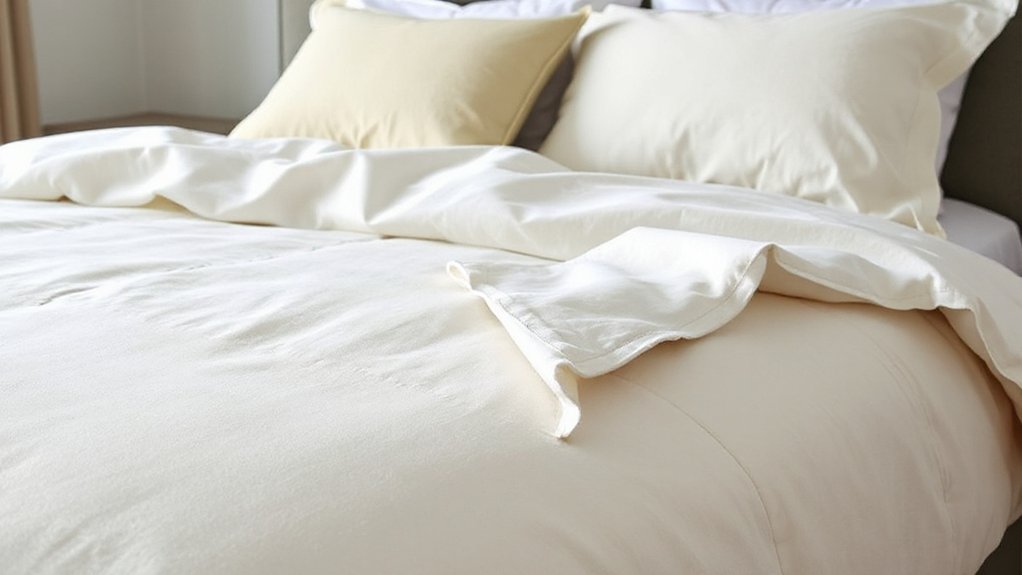
How you choose bedding size and fit depends on your bed type, and getting it right makes the whole look (and feel) sharper.
- Match sheets to your bed frame and mattress height for clean corners and a tucked-in finish.
- Check overhangs: deeper mattresses need deeper pockets or skirts that stay put.
- Consider a quilt, duvet, or cover that aligns with your bed’s width without bunching.
- Factor headboard and footboard visibility when selecting pillow shams and comforters.
With a platform, sleigh, or adjustable bed, you’ll notice different edge lines; pick bedding that reinforces a balanced silhouette.
Aim for a cohesive top layer that fits snugly across the mattress height, keeping creases minimal and your space feeling welcoming and ordered.
Troubleshooting Common Bedding Mismatches
When bedding doesn’t align with your bed, easy fixes can restore a clean, polished look without a full redo. Start by identifying the mismatch: sagging corners, shifting sheets, or clumps of fabric. Tackle each issue with targeted tweaks—tuck corners firmly, use a mattress protector to reduce slippage, and straighten the fitted sheet seams.
If colors or patterns clash, swap pillow shams or add a simple duvet cover to unify the palette. Consider bedding myths you’ve heard and test a small change first; often the solution is straightforward.
Plan a low-effort seasonal swap: rotate light fabrics for warmer months and vice versa. This practical approach builds belonging—you’ll feel deliberate, organized, and confident in your refreshed space.
Quick-Start Weekend Plan: Two Days to Finish
You’ll finish the refresh in a focused two-day sprint, building on the fixes you’ve already put in place for mismatches. You’ll map zero-waste steps, then lock in a simple routine that actually sticks.
This plan centers on Holiday themes and Eco friendly materials so your space feels welcoming without excess clutter. You’ll start with a quick audit, swap in durable basics, and finalize with cohesive accents that survive daily life.
The result is a bedroom that signals belonging, not perfection, and invites calm, mindful rest.
- Quick audit: note mismatches, decide on a holiday-inspired palette, and choose eco friendly textiles
- Pack light, buy local, and favor timeless patterns over trends
- Assemble a 2-step weekend routine: declutter, then refresh with soft layers
- Test lighting and scent to complete the cozy, inclusive mood
Frequently Asked Questions
How Often Should You Refresh Bedding Color Themes?
You should refresh bedding color themes every season, keeping color coordination in mind, with seasonal updates that feel like home. You’ll stay connected, cozy, and belonging, adjusting tones as trends shift while preserving harmony in your sanctuary.
Can Bedding Upgrades Improve Sleep Quality Significantly?
Coincidence nudges you: yes, bedding upgrades can improve sleep quality. You’ll notice better sleep hygiene and comfort when you choose breathable Bedding materials, keep steady temps, and feel a deeper sense of belonging reaching for rest each night.
What Budget Range Yields Noticeable Results?
You’ll see noticeable results around a modest budget, roughly mid hundreds; prioritize seasonal color and fabric textures for depth, comfort, and cohesion, and you’ll feel upgraded daily, more connected, enjoying calmer nights and welcoming spaces.
How to Mix Patterns Without Overwhelming a Room?
You’re a quilt of comfort, weaving harmony. Start with pattern coordination: pick a unifying color, vary scale, and repeat motifs. Aim for visual balance, mixing subtle with bold, so you feel belonging, not overwhelmed, in your serene space.
Are Allergy-Friendly Bedding Options Worth the Cost?
Yes, allergy-friendly bedding is worth it: hypoallergenic materials reduce irritants, and eco friendly fabrics last longer. You’ll breathe easier, sleep cooler, and create a welcoming, inclusive space where you belong, even during seasonal sensitivities.
Conclusion
You’ve stitched a fresh vibe into your sanctuary, like sunlight waking a sleepy room. With fabrics you trust, colors that whisper and sheets that cradle, you’ve built a peaceful stage for rest and routine. Each layer locks in comfort, every texture adds a note of depth, and the whole space sings in harmony with walls and furniture. When you tuck in tonight, you’ll feel the glow—calm, organized, and absolutely yours. The refresh isn’t done; it’s just begun.