
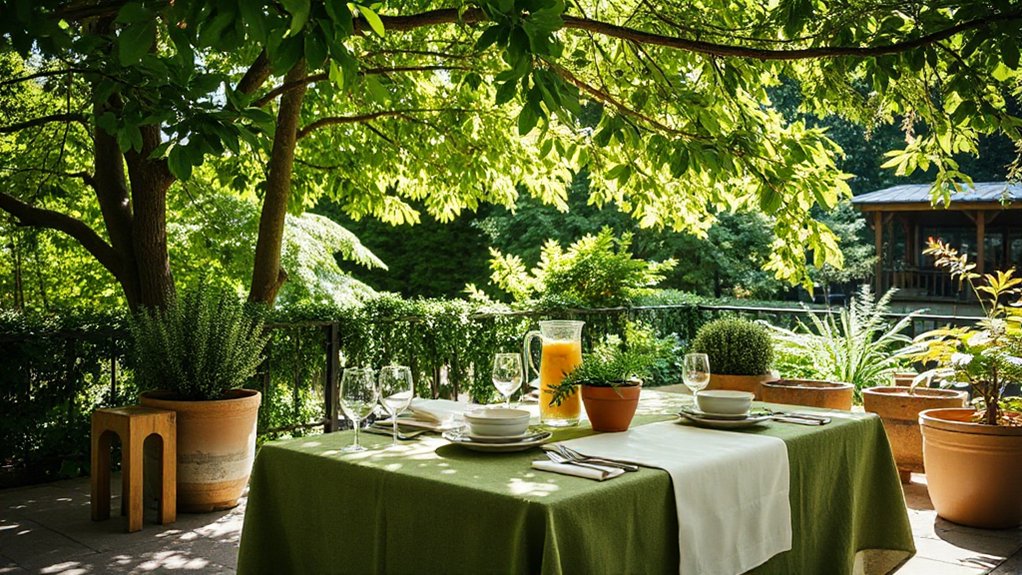
Transform your shaded garden into a cool, inviting outdoor dining space by mapping sun, breeze, and surface conditions first. Design a cozy, shade-proof nook with a compact table and perimeter seating, then add UV-blocking canopies or sails to prevent overheating. Choose breathable, durable furniture and modular pieces that reconfigure for gatherings. Layer lighting for after-dark mood and pair textiles with plants for comfort and airflow. With practical tweaks like trellises and wind breaks, you’ll create year-round charm—plus you’ll discover more tips ahead.
Assess Your Shade Space: What Works and What Needs Change
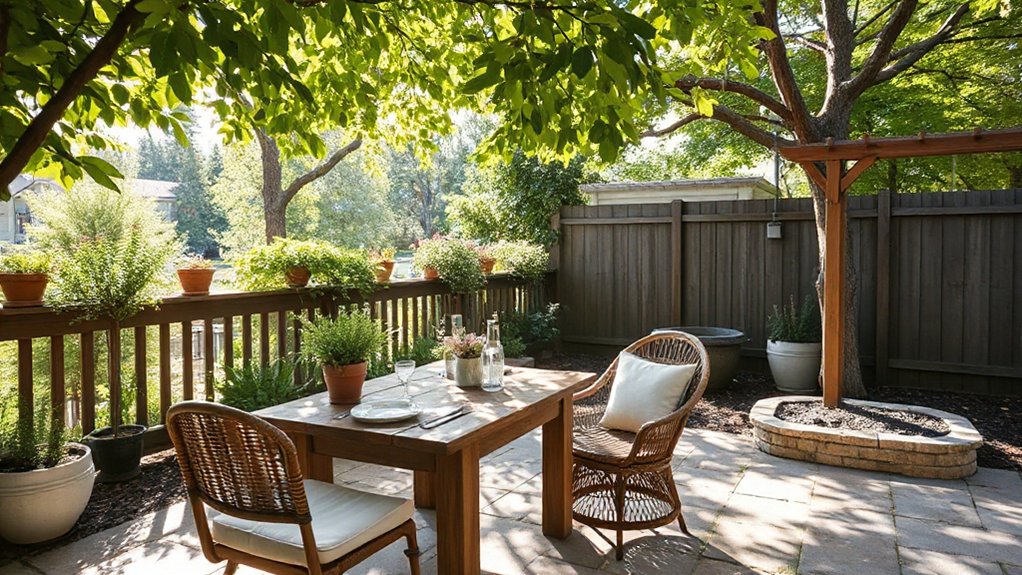
Assess your shade space by mapping light, airflow, and surface conditions, so you know what works and what needs change. You’ll evaluate sun exposure patterns throughout the day to determine true shade opportunities and peak hot spots.
Check airflow: does a breeze reach your dining zone, or does still air trap heat? Inspect surfaces for temperature, texture, and moisture, noting slick or rough patches that could affect comfort.
Measure available shade duration during peak dining hours and identify any gaps you can address. Consider seasonal shifts and potential shade adaptability, like movable umbrellas or pergola coverage.
With this precise diagnostic, you’ll craft reliable seating, lighting, and décor that feel welcoming and inclusive, ensuring everyone feels they belong in your carefully tuned outdoor space.
Design a Cozy, Shade-Proof Dining Nook
A cozy, shade-proof dining nook centers on a compact layout that maximizes comfort without crowding. You choose a perimeter of seating that hugs the space, then add a small table with clean lines to preserve sightlines.
Prioritize sun protection with a retractable canopy or thick, UV-blocking shade materials that shade without overheating surroundings. Use materials that resist moisture and fading, like treated wood, composite fibers, or powder-coated metal, to reduce maintenance.
Position the nook where natural breezes fold through and overhead shade aligns with the sun’s path, keeping dining cool.
Integrate built-in storage for cushions, napkins, and organizers to minimize clutter. Lighting should be subtle yet functional, so you can enjoy meals after sunset without inviting glare.
Choose Cool, Comfortable Outdoor Furniture
Need to keep guests cool and comfy? Choose furniture that performs in shade without sacrificing style. Opt breathable fabrics, fade-resistant cushions, and frames built for outdoors to reduce heat buildup and maintenance.
Favor low, stable profiles so you can move seating easily within your garden layout and keep sightlines open for conversation. Pick pieces with UV-stable finishes and water-repellent surfaces to handle mist and light rain.
Include a mix of seating heights—armchairs, benches, and a compact dining set—to accommodate different groups. Prioritize modular options you can rearrange for sun, shade, or supper gatherings.
Match tones to your outdoor decor so textiles and wood read as one. Guarantee materials resist mold, and stores stay dry between uses.
Layer Lighting for After-Dusk Ambience
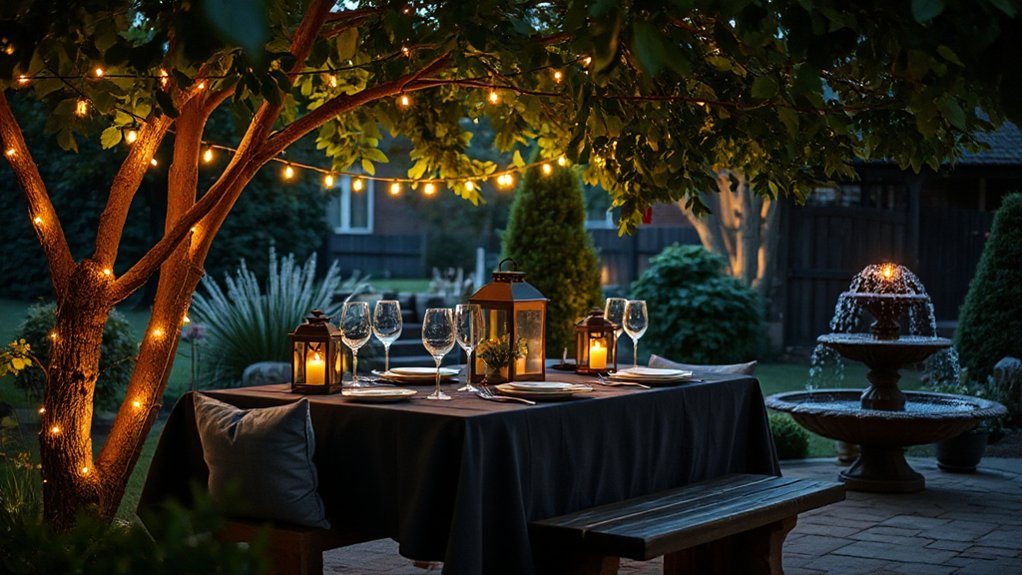
Layer lighting creates a warm, layered glow that guides guests without glare, using a mix of path lights, under-plant LEDs, and shaded-friendlier options.
Start with layering techniques: ambient base, task accents, and subtle uplight to enhance texture while keeping the shade’s cool benefits.
Choose shade-friendly sources—low-profile fixtures, warm color temperatures, and dimmable controls—to craft an after-dusk ambience that’s comfortable and functional.
Layered Lighting Techniques
To create inviting after-dusk spaces, start with a plan that layers light for function, safety, and mood. Layered lighting balances visibility with atmosphere, guiding movement along paths, seating, and entry points while avoiding glare.
Use a mix of ambient, task, and accent levels to control brightness by zone, not globally. Place outdoor lanterns at eye level for warm, inviting glow and to define seating arcs. Integrate recessed step lights to illuminate changes in grade without direct glare.
Add subtle neon accents sparingly to highlight architectural textures or plant silhouettes, ensuring they don’t overwhelm rather than complement. Dimmers empower you to modulate intensity as conversations deepen.
Choose fixtures with weather sealing and a cohesive finish to reinforce belonging and consistency throughout your shaded garden dining space.
After-Dusk Ambience Creation
After-dusk ambience hinges on deliberate lighting that makes a shaded garden feel intimate without overpowering the night. You’ll shape scenes with low, warm glow that highlights textures and seating without glare, inviting conversation and lingering.
Prioritize contrast: softly lit borders, a centerpiece candle, and subtle overhead stringing to suggest a Starry ambiance. Integrate controlled hotspots to spotlight plates during Nighttime culinary moments, keeping paths safe but discreet.
Dimmer controls let you modulate mood as hours pass, from cozy to celebratory. Use warm color temperatures and shielded sources to prevent glare, preserving the night’s depth.
Maintain cohesion with your landscape’s forms, then let guests contribute to the glow with shared reflections and quiet laughter.
- Warm, low-wattage accents
- Shielded, dimmable sources
- Centerpiece glow with candles
- Subtle path illumination
- Gentle string lighting
Shade-Friendly Light Sources
Shade-friendly lighting relies on fixtures that perform without washing out the garden’s textures. In shaded gardens, choose sources that emphasize warmth and visibility without harsh glare.
Start with solar powered lanterns placed at eye level along paths or seating zones; they provide gentle pools of color and low maintenance.
Pair them with LED string lights draped softly overhead or woven through lattice to create a cocoon of ambiance without overpowering foliage.
Opt fixtures with diffusers or frosted lenses to soften edges and preserve texture.
Avoid bright spotlights; instead, aim for layered layers of light, balancing task needs and atmosphere.
Test placements at dusk, then adjust angles for even, non-obtrusive illumination that invites lingering conversations and a sense of belonging.
Use Textiles and Plants to Boost Comfort
Textiles and plants work together to create a cooler, more inviting shaded dining space, so start by choosing breathable fabrics and layered greenery that won’t overwhelm the area. You’ll balance airflow with soft textures and varied plant varieties to promote comfort without crowding sightlines.
Focus on textile textures that feel cool and durable, like cotton blends, linen throws, and woven placemats. Pair these with foliage that provides shade but maintains air movement.
Use color and form to guide the eye, creating intimate zones. Maintain cleanliness and simplicity to invite lingering and conversation.
- breathable fabrics and layered greenery
- textile textures that stay cool and durable
- plant varieties offering dappled shade
- color and form for intimate zones
- simple, easy-care maintenance
Implement Shade Solutions: Trellises, Awnings, and Canopies
Outdoor shade solutions are the practical next step after selecting breathable fabrics and layered greenery. You’ll want to choose structures that blend function with aesthetics to keep the dining area comfortable and visually cohesive.
You’ll evaluate options like trellises, awnings, and canopies as shade structures that integrate with existing garden elements. Install trellises with climbing plants to extend vertical shade and soften light, or mount retractable awnings for adaptable outdoor coverage during changing sun angles.
Canopies offer full-coverage options for larger tables or lounge zones, and they’re ideal where rainfall warrants protection. Confirm fabric and frame selections resist weather and match your outdoor palette.
Prioritize secure anchors and easy access to lighting, so you feel welcome and connected while dining al fresco.
Plan Dining Layouts for Breeze and Privacy
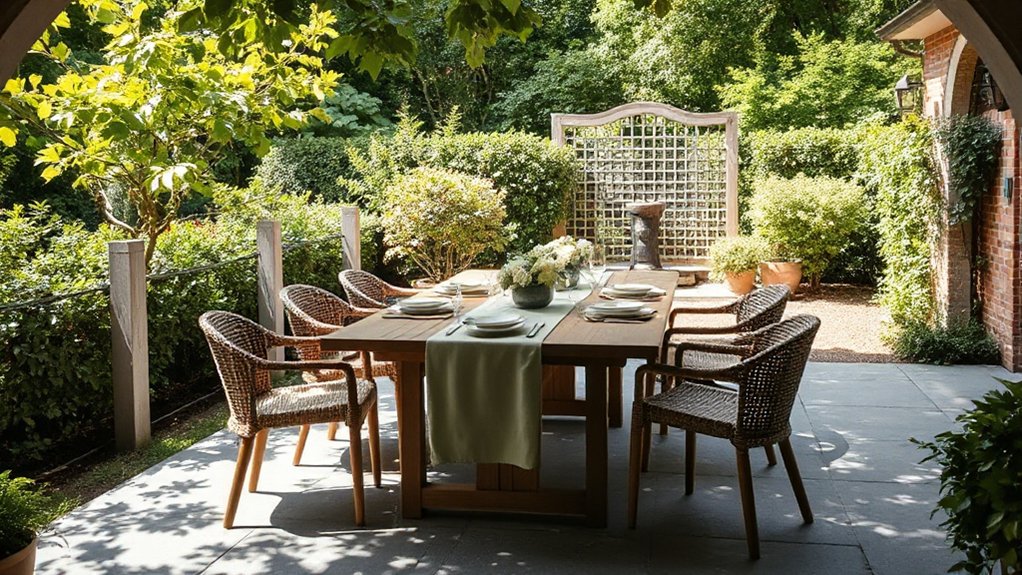
To optimize comfort, position dining so breeze paths aren’t blocked and seating faces the prevailing wind for a natural cooling effect.
Pair intimate, privacy-minded zones with open, breeze-friendly areas using screens or strategic plantings to shield chatter without stifling air flow.
Start with a simple grid or curved layout that supports easy movement and clearly defined dining pods.
Breeze-Friendly Layouts
When planning breeze-friendly dining layouts, start by locating the table where prevailing winds naturally flow through the space while keeping diners shielded from stronger gusts. You’ll optimize comfort with mindful orientation, durable shading, and purposeful wind breaks that still feel open.
Set zones that invite conversation yet preserve privacy from neighboring views. Balance materials to reduce heat buildup and to invite easy cleaning after meals. Prioritize shade optimization and wind mitigation to preserve a cool, intimate atmosphere without closing off the garden’s breeze.
- Orient seating to align with air flow
- Use adjustable umbrellas or sails for shade control
- Introduce low screens to calm gusts
- Choose light, breathable fabrics for chairs
- Position plantings as soft wind trails and visual anchors
Privacy-Paired Dining Areas
Begin by placing a compact table beneath a shaded canopy, then frame views with low hedges or trellises to define space without cutting off circulation. Use outdoor screens strategically to modulate sunlight, create shelter from gusts, and invite lingering rather than hurried meals.
Choose durable furniture with cohesive materials to maintain a calm, unified feel. Prioritize garden privacy through plant height, texture, and seasonal interest, ensuring year-round softness around the dining zone.
Label zones clearly to guests, so comfort becomes routine, not guesswork. This approach fosters belonging and practical enjoyment of shaded garden dining.
Budget-Friendly Upgrades and Quick Maintenance
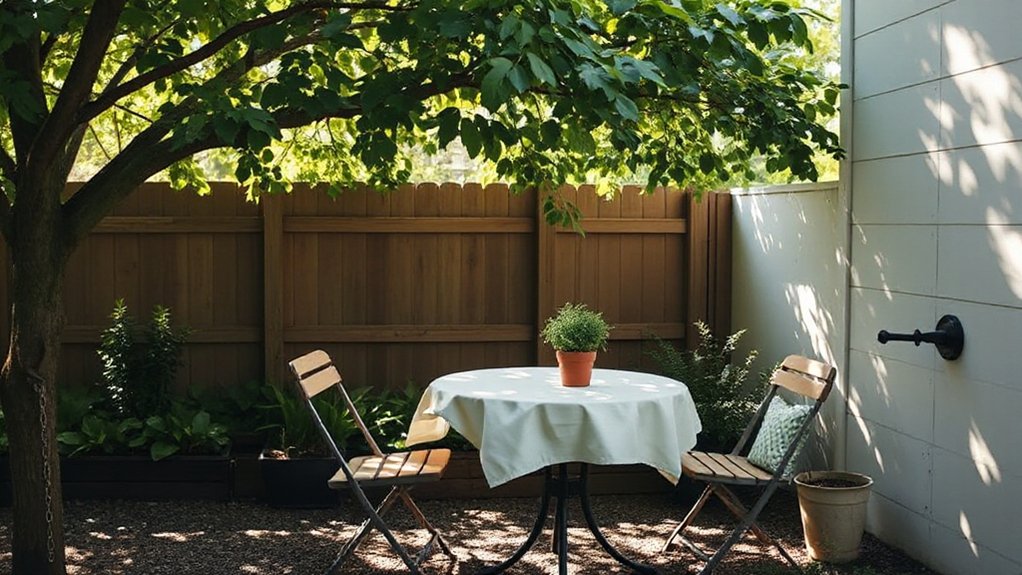
Even with a shaded garden, you can upgrade affordably and keep maintenance quick with a few targeted moves. You’ll maximize impact with simple, durable choices and a clear routine that respects your space and budget. Focus on low-cost refreshes, smart plant selection, and streamlined upkeep, so every dining moment feels relaxing and inclusive.
- Refresh surfaces with pressure-washed pavers and a light seal to cut upkeep.
- Choose shade plant selection that thrives in dappled light and flowers across seasons.
- Introduce a compact, rot-proof furniture set and weatherproof cushions.
- Install a simple drip irrigation or soaker hose for efficient garden maintenance.
- Create a rotating centerpiece container with easy-to-replace annuals.
These steps deliver comfort, cohesion, and belonging without complexity.
Frequently Asked Questions
How Can I Maximize Shade Without Sacrificing Sunlight for Plants?
You can maximize shade without harming plants by smart Plant spacing and selective Shade structures, then rotate light gaps, staggered canopies, and reflective mulches. Maintain airflow, monitor microclimates, and invite community feedback to refine your shaded garden’s balance.
What Dietary Vibes Suit Shaded Garden Dining Most?
Feasting here feels legendary, you crave vibes that suit shaded garden dining: go plant-forward, light and fresh. For garden aesthetics, curate textures and herbs; mood enhancement comes from soft lighting, comfortable seating, and seasonal, crowd-inclusive menu.
Which Budget-Friendly Shade Options Require Minimal Maintenance?
You’ll pick affordable shade options that require minimal maintenance, like lightweight Shade structures and low-effort plant arrangements. You’ll enjoy practical, durable setups, confident you belong here, with clear care steps and efficient, budget-friendly plant arrangements for covered dining.
How Can I Protect Furniture From Morning Dew and Evening Humidity?
Like a shield-walled fortress, you protect furniture by using Protective covers and humidity barriers, readying for dew and evening humidity; you fasten covers tightly, vent when needed, and store cushions to maintain longevity and belonging.
What’s the Best Time of Day for Outdoor Shade Dining?
You’ll want shade dining mid to late afternoon, when sun isn’t glaring. Set up garden lighting and sturdy shade structures, keeping comfort centered. You’ll feel belonging as you dine, protected by thoughtful shade, soft lighting, and practical arrangements.
Conclusion
As you step into your shaded garden, you’re the captain steering a cozy schooner through dappled seas. Your cushions are sails, your trellis a dependable mast, and the canopy a trusted lantern. You chart layouts with practical precision, layering light, texture, and scent to calm the wind. With budget-minded fixes and steady maintenance, storms become mere whispers. You’ll dine under softened skies, where shade and comfort chart a simple, enduring voyage toward shared meals and quiet joy.