
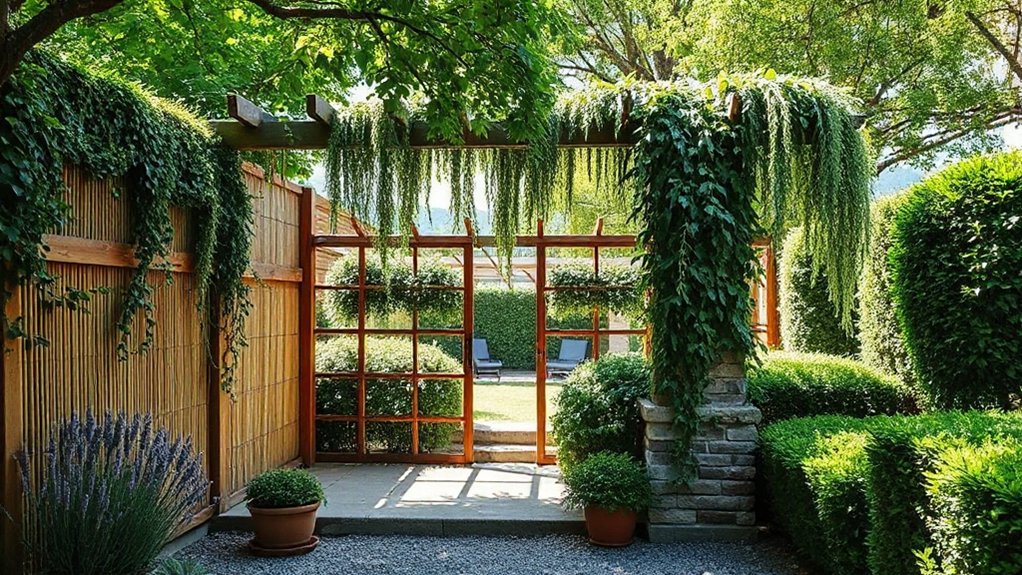
Turn overlooked corners into a private retreat with flexible screens, layered planting, and warm lighting. Define your priorities: what needs hiding, from sightlines to noise, and when you’ll use the space. Use soft barriers like tall grasses and reeds for gentle screening, plus freestanding or trellis screens you can move as needed. Layer textures and evergreen plants for year-round privacy, and add low, warm lighting to extend evenings. Ready to transform your patch? More tips follow.
Define Your Outdoor Privacy Priorities
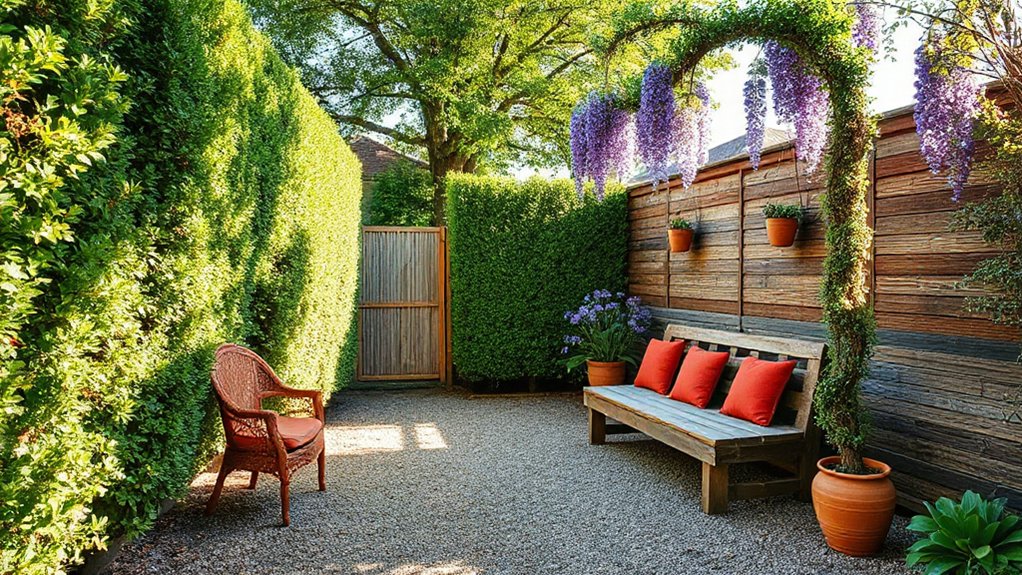
To define your outdoor privacy priorities, start by identifying what you want to protect and why. You’ll map three essentials: your time, your space, and your peace of mind. Focus on how much visibility from neighbors and passersby matters, and where noise leaks in.
Then translate those needs into concrete goals you can act on today. Consider your daily routines and social moments—breakfast sun, evening chats, weekend gatherings—and decide which areas deserve shield or seclusion. Choose solutions that fit your style and feel like home, rather than a compromise.
Think about garden furniture and outdoor decor that support your goals without clutter. Prioritize sturdy, low-maintenance options, and test layouts before committing to a final plan. Your space, your rules, your comfort, your belonging.
Light, Sightlines, and What You Want Hidden
Balance light with privacy by planning sightlines that prevent glare while keeping key views. Consider visible space to gauge how open or screened you want areas to feel.
And map hidden corners for added retreat or storage. You’ll refine what to hide and what to showcase, balancing brightness, safety, and discretion.
Light and Privacy Balance
Where should you start when balancing light and privacy in outdoor spaces? Begin by clarifying what you want visible and what you want shaded. Choose screening that filters, not blocks, daylight—think lattices with climbers, adjustable screens, or slender hedges that open sightlines toward open sky.
Mix materials that bounce light softly: pale woods, glassy surfaces, and light fabrics on seating. Position garden furniture to optimize sun angles without creating glare, while leaving clear zones for relaxing and socializing.
Use plants to sculpt privacy near seating, but avoid dense, uniform blocks that feel isolating. Remember wildlife attraction can coexist with light: keep gaps for movement, and provide water features or feeders off to the side.
Balance is practical, inclusive, and intentional.
Visible Space, Hidden Corners
Visible space invites openness, while hidden corners offer retreat—so you should map what you want to stay visible and what you prefer tucked away.
You’ll balance light and sightlines by choosing plants, screens, and furniture that frame views without crowding them. Identify overlooked spaces you want to shield—from nosy fences to bustling corners—then insert discreet barriers, like lattices or tall grasses, that blend with your garden’s texture.
Prioritize paths that invite movement through rather than across, guiding attention toward features you value. Use reflective surfaces sparingly to expand perceived space, and conceal utility zones behind screens.
Soft Barriers: Tall Grasses for Gentle Screening
Tall grasses act as living screens, offering immediate, flexible screening without harsh borders. You’ll gain gentle privacy and seasonal texture with species like reed grasses and ornamental grasses.
Consider how height, density, and maintenance fit your space to balance light, airflow, and visual seclusion.
Tall Grasses as Screens
Tall grasses can quietly shield your yard without blocking light or view. You’ll shape a living screen that behaves like a soft wall, slowing sightlines while keeping air and sunlight free-flowing.
Choose species with upright, dense profiles and seasonal variation for year-round privacy. Then group three to five clumps for natural barriers rather than a single hedge. Plant on a staggered spine to avoid gaps and maintain coverage as plants mature.
Maintain height by light pruning and removing dead tips after freezes, which keeps the screen tidy and resilient. This approach feels inclusive and welcoming, inviting neighbors to linger without feeling fenced out.
Tall grasses provide practical privacy you can manage, with minimal effort and maximum belonging.
Gentle Privacy With Reeds
Reeds offer a softer, more flexible privacy option than rigid hedges, creating gentle barriers that still let light and air move freely. You can achieve a natural screen that feels inclusive, not imposing, by choosing tall, non-invasive species and planting in staggered rows for depth.
Focus on Reed selection that fits your site’s light and wind patterns, and match moisture tolerance to your garden’s drainage. The result is a welcoming edge that blends with outdoor living spaces while preserving sightlines.
- Assess sun exposure and seasonal color when selecting varieties.
- Match Moisture tolerance to soil drainage and irrigation.
- Space plants to promote air movement and healthy growth.
Freestanding Screens for Flexible Privacy
Freestanding screens offer flexible privacy without committing to a permanent install. You’ll appreciate how quickly you can adjust sightlines, block wind, and create intimate zones without digging up the yard.
Choose portable dividers with sturdy bases and weather-resistant panels for year‑round use. When placement matters, a modular layout lets you reconfigure as neighbors change or your garden evolves.
Prioritize height and density to reduce glare and hummingbird distractions, while keeping airflow intact. Lightweight designs empower you to shift positions during gatherings or solo retreats, then tuck them aside for a clean look.
Maintenance should be simple: wipe panels, check fasteners, and store cushions or greenery when not in use. This approach reinforces belonging by strengthening your sense of space and comfort.
Vertical Privacy: Trellises and Climbing Plants
Vertical privacy can be achieved by pairing trellises with climbing plants, which act as living screens that you can tune over time. You shape the view, and the garden responds with evolving texture and shade. Use this approach to frame seating areas, highlight garden art, and complement outdoor furniture without blocking light or air.
- Choose sturdy trellises and vigorous climbers that suit your climate and sun exposure.
- Train plants methodically, rotating targets for even coverage and ongoing renewal.
- Schedule seasonal maintenance to keep growth tidy and privacy reliable year round.
This method blends function with style, giving you a sense of belonging as you reclaim your outdoor room. It’s practical, durable, and visually engaging.
Layered Planting for Texture and Seclusion
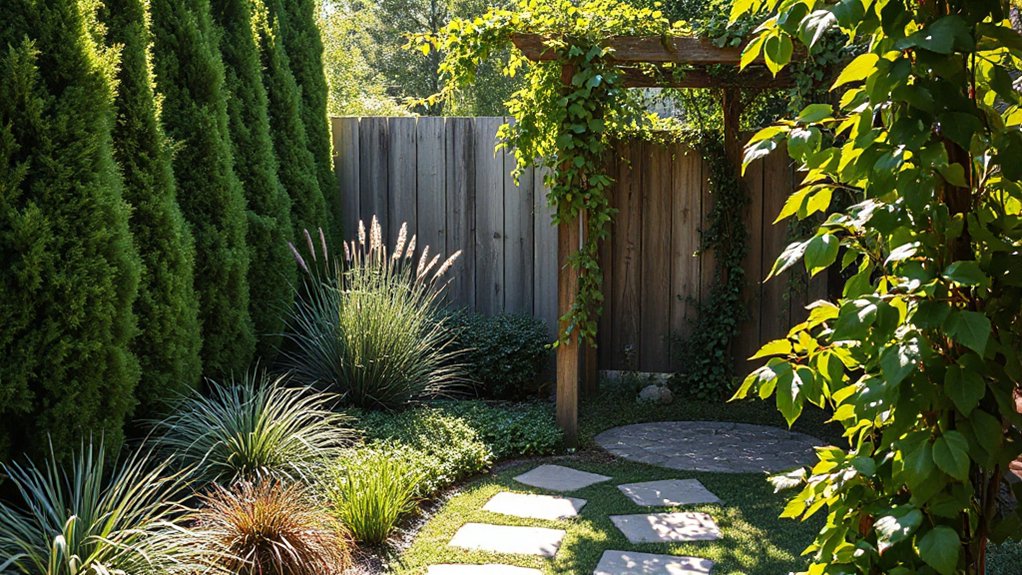
Layered planting adds texture and seclusion by stacking plant heights and textures in a purposeful sequence. You design a living screen that guides the eye and buffers activity, using tall background shrubs, mid-height perennials, and low groundcovers to weave depth.
Choose foliage with varying colors and leaf forms to create visual rhythm year-round, ensuring seasonal interest without sacrificing accessibility. Pair evergreen structure with seasonal bloom for continuous privacy and color.
While you maintain soil health and plant health through mulching and targeted watering. Integrate garden art and outdoor furniture as focal points within the layered border, so seating feels tucked into the landscape rather than isolated.
This approach delivers practical privacy you can enjoy every day, with intentional, cohesive design.
Ground-Level Tricks to Limit Visibility
When you’re aiming to curb sightlines at eye level, start with the ground itself. Ground-level tricks keep you visible to a minimum by shaping textures, colors, and coverage you feel confident about.
Ground cover provides immediate density, while smart soil preparation helps plants establish fast and stay sturdy through seasons. Plan for shallow roots near borders to avoid lifting mulch over time.
Now, apply these steps:
- Assess soil; amend with compost to boost structure and moisture retention.
- Choose ground cover that spreads evenly and tolerates local sun exposure.
- Layer mulch thoughtfully to reduce weed growth and maintain a tidy, intimate look.
Ground cover, Soil preparation, with consistent maintenance, creates a calm, inclusive feel you’ll enjoy every day.
Water Features That Mask Noise and Calm
Water features can mask noise while adding a calming focal point to your yard. You’ll want to contemplate water noise masking, calming effects, and cascading sounds to tailor the ambience.
Start with a simple setup and test how the sounds balance with nearby activity to refine your outdoor privacy.
Water Noise Masking
Would you like a simple, effective way to quiet nearby noise? You can tune your space with water noise masking, turning chatter into a distant hum. Focus on two core ideas: Soundproofing foliage and Water feature placement.
By layering plants that soften sound and locating a water feature where it intercepts passing sounds, you create a calmer refuge.
- Place a compact fountain behind a hedge to diffuse street noise while offering visual privacy.
- Position a waterfall along a boundary path, using the sound to mask external disturbances without overpowering the garden.
- Select foliage with dense texture and height to further dampen echoes and frame the feature.
This approach builds belonging, signaling you value a peaceful, shared outdoor retreat.
Calm, Cascading Sounds
Positioning matters: place the feature near seating, away from bedrooms, and angled to reflect toward your listening zone. To strengthen acoustic barriers, combine soft plantings, porous screens, or a low wall with water’s natural hush.
Maintain your system for dependable sound quality, using clean lines and fuel-efficient pumps. When blended with landscaping, these soundscapes promote belonging, calm focus, and shared moments outdoors.
Layout Moves: Seating and Pathing for Privacy by Placement
When you want privacy without fencing off your entire yard, place seating and paths to create intentional sightlines that shield lounging areas from neighbors and street view. Arrange garden furniture and plant screens so you control focal points, not passerby views. Paths should lead to intimate nooks, not expose open horizons. Use height, texture, and rhythm to obscure the street while inviting lingering moments.
- Position seating at angles behind privacy plants to block direct lines of sight.
- Curve or stagger paths to break long, straight views and create secluded pockets.
- Layer furniture with low hedges or screens to maintain openness while preserving privacy.
Keep materials cohesive and scale appropriate; clarity and calm foster belonging.
Seasonal Privacy: Year-Round Interests
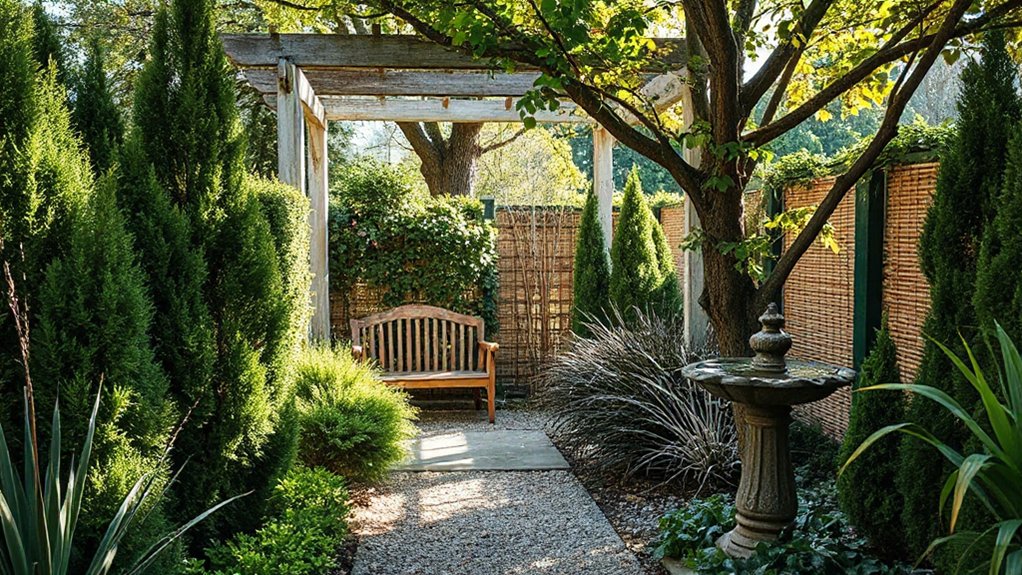
Seasonal privacy isn’t a one-and-done fix; it’s about year-round interest that adapts with the calendar. You design for shifting seasons, not single moments, so your space remains welcoming and private while thriving outside your door.
Choose plantings and features that perform across weather changes: evergreens for shelter, flowering shrubs for color, and layered heights to break sightlines without feeling closed in.
Include sun and shade pathways, so you still enjoy the yard in winter light or summer heat.
Consider activities that attract wildlife in steady cycles: bird habitats and wildlife corridors can coexist with screening, performing double duty as life-supporting elements and privacy cues.
Regular maintenance keeps structure intact and mystery intact, reinforcing a sense of belonging you can count on year after year.
Neighbor-Friendly Boundaries on Shared Property
- Define maintenance responsibilities for the shared boundary.
- Establish access rights for routine upkeep and emergencies.
- Agree on plant height, shading, and screening limits near the boundary.
Lighting to Protect Nighttime Seclusion
You can boost nighttime privacy with light layering that zones in on entryways and seating areas without washing everything in glow. Use privacy-friendly design features like motion-activated, low-amp fixtures and shielded fixtures to control spill and glare.
Start with clear goals for Light Layering Tips, Privacy-Friendly Lighting Design, and Low-Glow Night Illumination to keep spaces inviting yet secluded.
Light Layering Tips
Layering outdoor lighting isn’t just about brightness; it’s about creating a secure, private perimeter you can trust after dark. You’ll use layered textures and ambient lighting to shape a calm, protective glow that guides without glare. Start with core pathways, then add accents that reinforce sightlines and deter intruders.
- Map functional zones with low, warm LEDs to minimize harsh shadows.
- Place ambient fixtures high and angled to wash walls softly, increasing coverage without blinding you.
- Layer textures by mixing materials (stone, wood, metal) to create depth and subtle security cues.
Keep controls simple: smart switches or timers help you maintain consistency. This approach reinforces belonging, turning your garden into a welcoming refuge while preserving nighttime seclusion.
Privacy-Friendly Lighting Design
Opt for low, warm lighting that extends your awareness without blooming into neighbors’ windows. Solar powered lanterns provide dependable, standby coverage, while motion-activated zones conserve energy and reduce contrast.
Keep fixtures at eye level to limit shadows that reveal your yard’s shape. Use glow in the dark accents on fences or stepping stones to gently guide movement without signaling intrusion.
Layered, indirect light supports subtle privacy—soft pockets around seating feel welcoming, not exposed. This approach strengthens belonging and safety, day and night.
Low-Glow Night Illumination
- Use low-wattage, warm LEDs placed close to ground level to minimize spill.
- Position fixtures along paths and fences, keeping direct sightlines occupied by gentle glow.
- Opt for shielding and dimmers to control brightness and preserve the night’s quiet.
This approach supports belonging, practicality, and clear boundaries while enhancing concealed yet inviting outdoor moments.
Materials That Feel Cozy, Not Cloistered
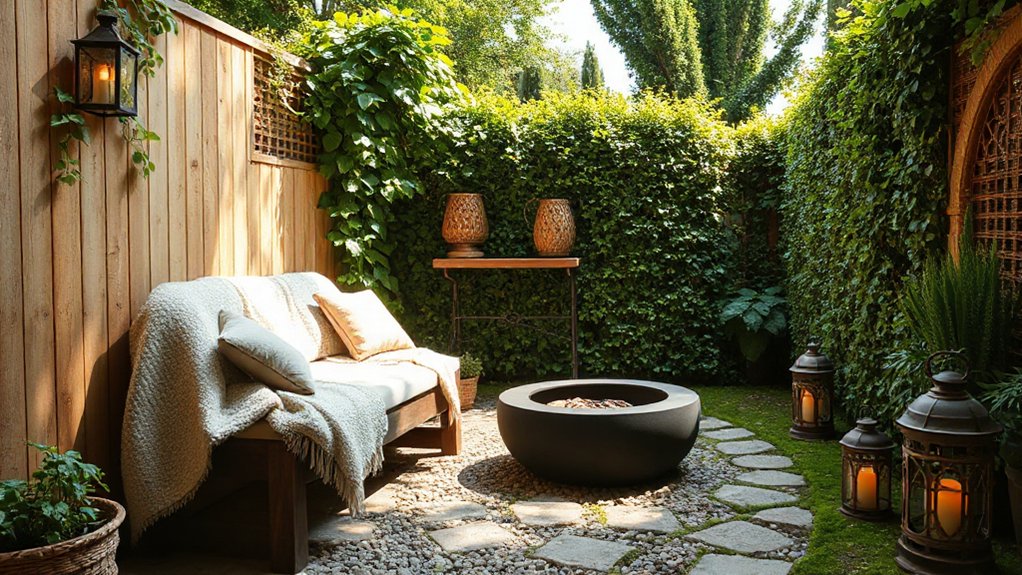
When you aim for a cozy, inviting feel outdoors, choose materials that soften hard lines and absorb sound. You’ll prioritize warmth over stark surfaces, selecting textures that comfort without clutter.
Opt for privacy fabrics on screens and seating that’s breathable yet snug, so conversations stay intimate. Introduce cozy textures through woven throws, tactile cushions, and softly brushed outdoor rugs that dampen footsteps.
Materials should resist weather but feel gentle under touch—think composite decking with a wood-like feel, or stone pavers with a matte, velvety finish. Choose colors that recede and mingle, not shout.
Layer different textures to create depth, then balance with clean lines to maintain clarity. Practical, durable choices foster belonging, turning overlooked corners into intimate, usable spaces.
Quick-Start Plan: From Nook to Private Oasis
Even a small outdoor corner can become your private oasis with a quick-start plan. You’ll act now, choosing simple elements that define the space and invite lingering. Build with intention, not excess, and you’ll feel immediately more at home.
- Select a focal piece of garden art that reflects your vibe, then position seating to frame it.
- Create a bounded edge with screens or plants to form a discreet boundary.
- Wildlife corridors for safe, inviting movement.
- Layer textures—soft cushions, a durable rug, and light, scentful foliage—to deliver comfort, color, and cohesion.
Keep it practical: measure, test, then adjust. This approach makes belonging effortless, turning a nook into a ready-made retreat you’ll revisit daily.
Maintenance and Troubleshooting for Lasting Privacy
Maintenance and troubleshooting are essential to keep your privacy intact and your outdoor space inviting. You’ll protect screening measures by inspecting structures seasonally, tightening fasteners, and replacing damaged components before they fail.
Check garden furniture for stability and rot, treating or updating pieces as needed to maintain a cohesive, private vibe. If a fence or screen shows gaps, reseal or rehang sections promptly to preserve cover.
For plant-based privacy, prune strategically so canopies remain dense without overgrowth that compromises sightlines. Address weathered outdoor art and furniture by cleaning, sealing, or repainting to deter decay and maintain aesthetic cohesion.
Keep a simple maintenance log and schedule; timely fixes prevent costly, disruptive downtimes and preserve your sense of belonging in the space.
Frequently Asked Questions
How Tall Should Privacy Plants Be for Different Patios?
For patios, plant height should match your space and privacy needs, aiming for a strong privacy ratio around 2:1 or higher, with taller screens at the back. Consider gradual layering, spacing, and usable height for better balance.
Can I Mix Soft and Hard Barriers Effectively?
Yes, you can mix soft and hard barriers effectively. Use a privacy screen as a backbone, then layer with structural elements; barrier blending creates depth, rhythm, and cohesion, while you still feel a sense of belonging in your sanctuary.
What’s the Best Sun Light for Screening Plants?
The best sun for screening plants depends on their sunlight requirements; you should pick species that thrive in your site’s light. Plan plant placement by shading hot spots, ensuring even canopy coverage and consistent growth for privacy.
How Do I Maintain Privacy Year-Round Without Heavy Work?
You can maintain privacy year-round with low effort by selecting evergreen screens and tall perennials, balancing Plant height considerations while integrating Seasonal privacy solutions that adjust with seasons, requiring minimal pruning and smart spacing for lasting, inclusive shelter.
Are Neighbor Rights Considered in Shared-Property Privacy?
Yes, neighbor rights are considered in shared-property privacy. You should respect neighbor boundaries and confirm property lines, then establish clear, mutually acceptable privacy practices to feel secure and belong in a cooperative, low-conflict community.
Conclusion
You’ve mapped your privacy priorities and picked a path that fits your space. With tall grasses, a trellis, or freestanding screens, you’ll control sightlines without sacrificing ambiance. Lighting sweetens nighttime seclusion, while cozy materials invite lingering. Start small, then expand as you see what works. Example: a narrow patio turned private oasis after adding a bamboo screen and string lights, plus a potted climbing rose. Maintenance stays simple with seasonal pruning and mulch refreshes. Your overlooked garden becomes your retreat.