
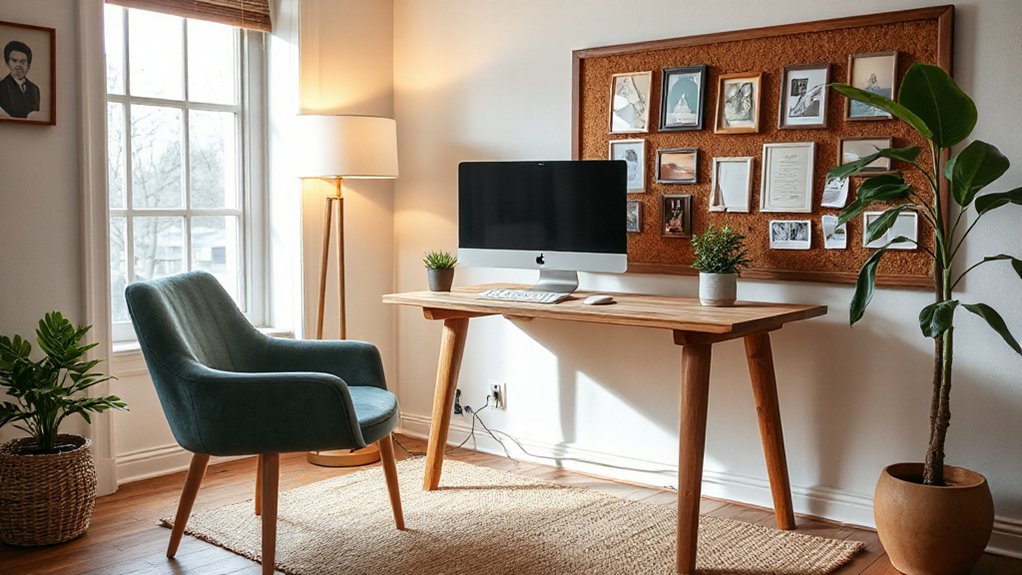
Set a clear budget before shopping and separate must-haves from nice-to-haves to avoid overspending. Choose versatile, compact furniture with hidden storage, layered lighting, and budget-friendly accents that echo your flooring tones. Prioritize ergonomic seating, adjustable desks, and task lighting to boost productivity. Use vertical storage, restrained textures, and cohesive color palettes to achieve a high-end feel. Maintain simple routines, like a daily 5-minute reset, to keep everything organized. If you keep going, you’ll uncover more practical tips.
Set Your Budget for a Stylish Home Office (Step by Step)
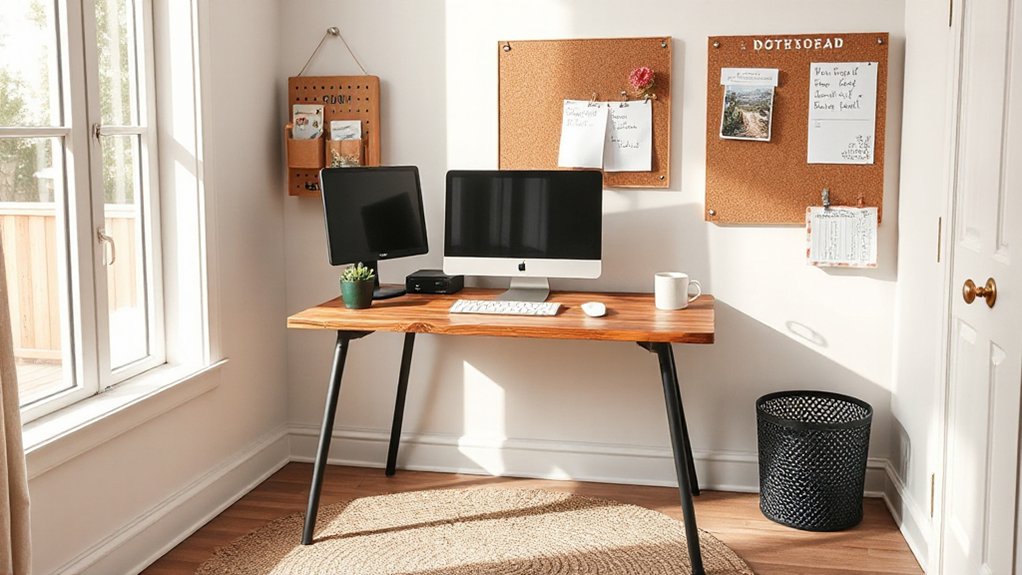
Set a budget before you start shopping to prevent overspending and keep your project on track. You’ll map a clear ceiling, then allocate portions for essentials, storage, and small upgrades.
Begin by listing must-haves and separating them from nice-to-haves, so your decisions stay purpose-driven.
Look for budget-friendly accessories that elevate style without breaking the bank, such as simple organizers, a productive lamp, and a chair with good support.
Track every purchase in a single sheet to avoid surprises and adjust as needed.
Embrace cost-effective organizational tips, like vertical storage and multi-use furniture, to maximize space.
Prioritize quality where it matters—durability and comfort—so you feel confident and connected to your workspace from day one.
Define Your Space: What You Need From a Desk and Setup
Start by pinpointing your Ideal Desk Basics: size, height, and surface that fit your work style.
Then outline Essential Setup Elements like lighting, power access, storage, and monitor placement to reduce clutter.
Finally, apply Space Optimization Strategies to make the most of what you have without overpacking.
Ideal Desk Basics
When you define your space, identify the essentials your desk must support: a reliable surface, enough surface area for your monitor(s) and keyboard, and a comfortable working height. You’ll build confidence by choosing a setup that feels natural and grounded, with ergonomic accessories and decorative accents that reflect you.
- Prioritize a sturdy desk surface and stable monitor placement to minimize strain.
- Guarantee ample room for peripherals, documents, and movement without crowding.
- Fine‑tune height, chair position, and keyboard angle to maintain neutral wrists.
This approach keeps focus on efficiency, comfort, and belonging. By blending practical hardware with tasteful details, you create a space that supports steady, intentional work while staying within budget.
Essential Setup Elements
To define your space effectively, start with the essentials: a sturdy desk surface, a reliable monitor setup, and a chair that supports ideal posture. You’ll create focus when your work zone feels intentional and grounded.
Choose a desk height that aligns with elbow comfort and let the monitor sit at eye level to reduce strain. Keep cables neat with simple management under the surface.
Color schemes matter: calm neutrals or soft accents set a professional tone without distraction, while ergonomic accessories—adjustable chair, keyboard tray, and a wrist rest—boost comfort and productivity.
Add a lamp for task lighting and a small yet purposeful storage solution to stay organized. Prioritize practical, affordable choices that invite you to settle in and stay.
Space Optimization Strategies
Maximize your workspace by defining exactly what you need from your desk and setup. When you identify essential tools and workflows, you prevent clutter and create focus. A clear plan makes furniture arrangement intentional, not accidental, and it boosts confidence that your space supports belonging and productivity.
- Determine essential gear and preferred reach zones to minimize movement and maximize comfort.
- Choose compact, dual-purpose furniture that fits your room’s flow, preserving open areas for concentration and quick collaboration.
- Prioritize noise control with soft surfaces, a door curtain, or a dedicated zone away from foot traffic to maintain calm.
With these steps, you optimize space, reduce distractions, and create a functional, welcoming home office.
Pick a Desk That Blends Style With Function
Choose a desk that serves both form and function. You want a piece that looks right in your space and supports daily work without clutter.
Prioritize ergonomic design: adjustable height, keyboard tray, and a surface you can measure to fit your laptop, monitor, and notebooks.
Look for clean lines, durable finishes, and hidden storage like drawers or cable channels to keep surfaces clear.
Consider materials that withstand daily use and suit your décor—wood for warmth, metal for a modern edge, or composite for budget-friendly options.
Plan for furniture maintenance: easy-to-clean surfaces, simple assembly, and parts you can replace over time.
Confirm sizing in your room and leave room to move.
A thoughtful desk blends style with practical, lasting function.
Layered Lighting on a Budget: Brighten Your Workspace
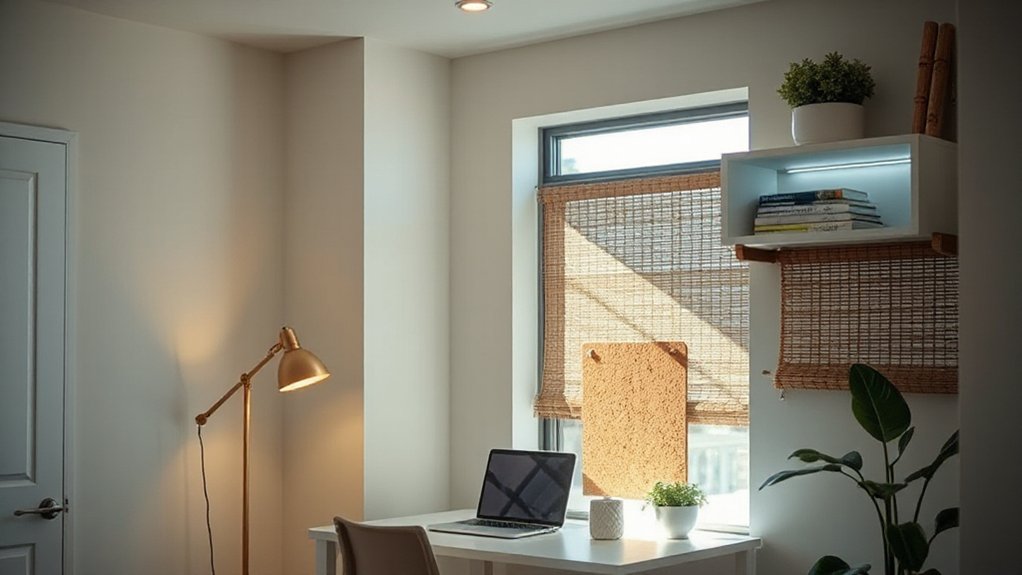
Layer your lighting to cover everyday tasks and mood, starting with a primary, bright overhead or floor lamp.
Add a focused task light on your desk and place it where glare won’t hit screens.
Consider dimmable options and LED units to adjust brightness without blowing your budget.
Layering Budget Lighting
Layered lighting lets you mix functional and ambient light without blowing your budget. You’ll create a workspace that feels purposeful and welcoming by combining options you already own with affordable finds.
1) Start with ambient glow from a ceiling or floor lamp to set the mood without glare.
2) Add task lighting from a desk lamp with adjustable arms to focus when you need precision.
3) Include a subtle accent piece, like a vintage fixture, to inject character and tie the room together.
Keep cables tidy and choose bulbs with similar color temperatures for consistency.
Layering light gives you flexibility—you can brighten for deep focus or soften for collaborative moments. This approach honors belonging, making your space feel lived-in, intentional, and feasible on a budget.
Task Light Placement
A desk lamp with an adjustable arm is your best friend for budget-friendly task lighting, so place it where your hands land when you type or write. Position the light slightly behind you to avoid screen glare, then angle it to illuminate your workspace evenly.
Use it as your primary task light, supplementing with ceiling or wall lamps for ambient illumination. Keep height modest to prevent harsh shadows and eye strain; a 45-degree tilt works for most desks.
Create a clean lighting hierarchy: a bright task light plus softer ambient sources for depth and comfort. Match color temperature to your tasks—cooler for detail work, warmer for reading breaks.
This approach reinforces belonging and efficiency without clutter or overspending.
Affordable, Focus-Friendly Seating
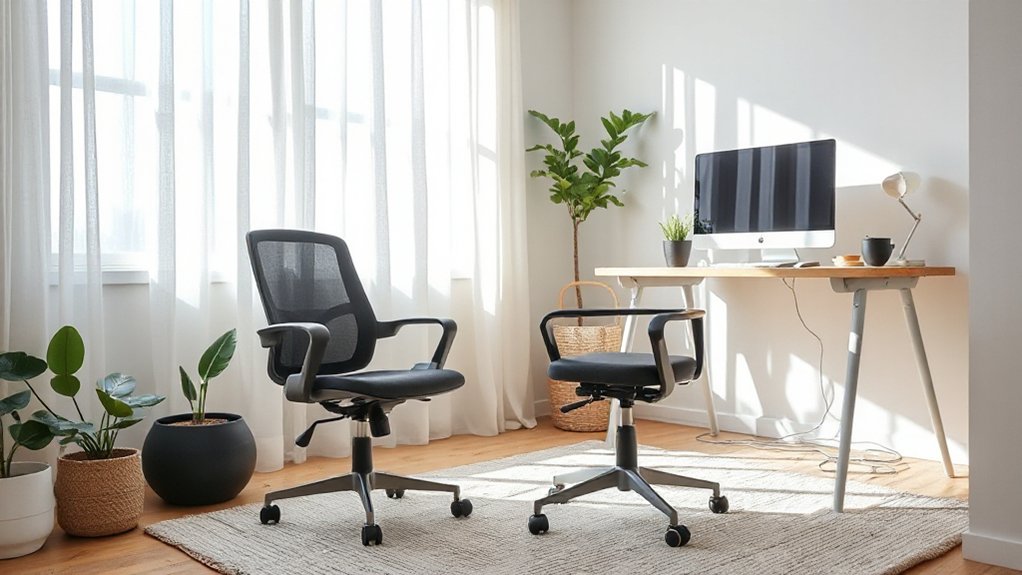
If you’re aiming for a focused work zone without breaking the bank, start with a chair that supports good posture and feels comfortable for long sessions. Prioritize ergonomic design over flashy features, and choose budget-friendly fabrics that breathe and wear well. An adjustable seat height, lumbar support, and tilt tension help you stay aligned without fatigue.
- Look for ergonomic cushions for extra back comfort and sit-test before buying.
- Choose budget-friendly fabrics that resist stains and wipe clean easily.
- Pick a chair with adjustable elements you’ll actually use, not just admire.
With the right seating, you’ll feel steady, productive, and part of a thoughtful workspace community. Comfort becomes a shared value, not a luxury.
Smart Storage for Small Spaces
Maximize every square foot by choosing modular storage that fits your layout and budget. In small spaces, smart storage means purpose-built solutions you can actually use daily.
Prioritize multi functional furniture that hides supplies behind doors, drawers, or sliding panels, so your desk surface stays clean.
Opt for modular storage you can reconfigure as needs shift, giving you flexibility without clutter.
Vertical growth matters: wall shelves, pegboards, and magnetic organizers keep essentials within arm’s reach.
Think closed storage for stashing cords, paperwork, and chargers, paired with open cubbies for quick access.
Choose neutral finishes to blend with your office vibe, and label bins or drawers for easy finding.
Seal the system with a daily 5-minute reset to preserve order and create a sense of belonging.
Texture and Color Strategies That Feel High-End on a Budget
Texture and color can elevate a budget setup dramatically; start by grounding the space with a handful of high-impact materials and a cohesive palette.
Texture and color strategies you can employ now:
1) Create textural contrast with a mix of matte and gloss surfaces, plus natural fibers, so the eye moves without overwhelm.
2) Build color palettes around a dominant neutral and 1–2 accent tones, then repeat subtly across rug, chair, and accessories to unify the room.
3) Choose affordable statement pieces—textured throw, minimal metal desk hardware, and a wood tone that echoes flooring—to anchor the vibe without clutter.
Result: a high-end feel through restrained texture, balanced color palettes, and purposeful repetition.
Finishing Touches: Personalize With Low-Cost Decor and Greenery
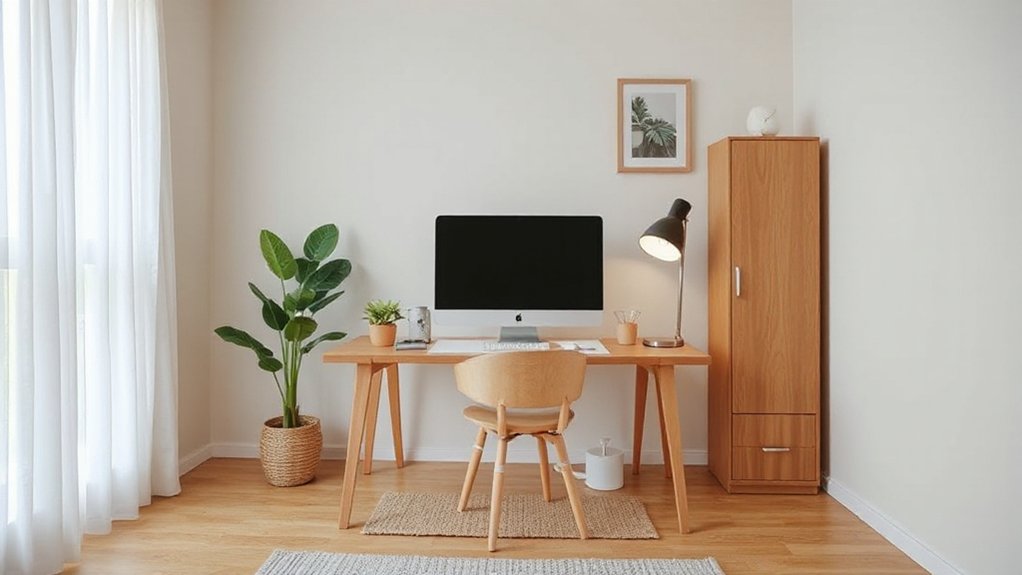
Finishing touches pull the look together without blowing your budget. You can personalize your space with budget-friendly artwork and greenery that feel deliberate, not decorate-for-decorate’s-sake.
Start with a few intentional pieces: a ready-made print in a frame that matches your desk, or a handmade canvas you DIY in an hour.
Add greenery in practical, low-maintenance containers—think a compact succulent on your lamp shelf or a trailing vine near natural light.
Choose decor ideas that reflect your work style: a favorite mug, a simple clock, or a monochrome plant schedule.
Avoid clutter; select two to three accents that repeat across the room for cohesion.
Your office should invite focus, belonging, and a sense of pride.
Frequently Asked Questions
How Can I Repurpose Existing Furniture for a Chic Office?
Repurpose your existing furniture by reconfiguring it into a cohesive layout. You’ll boost DIY decor impact through deliberate furniture arrangement, add character with fresh hardware, and create a welcoming workspace that feels like you belong.
What Small Budget Upgrades Create a Luxury Feel Fast?
Dust rises like morning steam; you claim order now. Invest ergonomic accessories and decorative lighting for a luxe vibe fast, boost focus, and feel belonging as you work. You’ll notice sharper posture, calmer ambience, and immediate professional polish.
Which Colors Boost Focus Without Overwhelming the Space?
You should use calm neutrals with strategic color psychology, and add accent greens or blues as mood enhancers to boost focus without crowding. These mood enhancers help you feel centered, productive, and connected in your workspace.
How Can I Reduce Clutter Without Sacrificing Style?
Keep surfaces clear with Decor organization basics and adopt Minimalist decor, you’ll streamline functionality without sacrificing style. You’ll set limits, store smart, and curate only essentials, creating a welcoming, belonging-focused workspace that stays calm, productive, and visually cohesive.
What Budget-Friendly Tech Essentials Maximize Productivity?
Investigation shows smart gadgets and ergonomic accessories boost focus quickly. You’ll program workflows, connect devices, and reduce strain. You’ll prioritize wireless keyboards, ergonomic mice, adjustable stands, and a reliable monitor arm to maximize productivity on a budget.
Conclusion
You can create a stylish home office without breaking the bank by smartly budgeting, choosing multifunctional furniture, and layering light. Don’t fear small tweaks—paint, organizational accessories, and a few plants stretch style far more than pricey upgrades. If you think you need a big, fancy desk, remember a compact, well-organized setup can feel just as premium. Stay focused on function, add texture with affordable accents, and you’ll enjoy a polished workspace that’s both practical and personal.