

When you pick interior paint, focus on durability, color accuracy, and finish options, then compare coverage, dry time, and batch consistency across brands. For value under $40, look for solid coverage, low-VOC formulas, and quick-dry options with good color stability. Mid-range brands offer better hide and fewer coats, while premium lines deliver flawless finishes and richer color payoff. For sensitive spaces, choose low-VOC/low-odor options. If you want a streamlined guide so you know what to choose next, keep going.
H2 #1: How to Pick the Right Interior Paint Brand
Choosing the right interior paint brand starts with understanding your goals: durability, color accuracy, and finish options. You’ll assess coverage, inconsistency, and dry time to target system compatibility with your space.
Prioritize color matching capabilities so accents stay true from sample to wall, and consider finish options that balance sheen with cleanability. Eco-friendly paints become a strong lever if you want lower odor and fewer toxins, without sacrificing performance.
Look for brands that publish third-party colorfast tests and warranties, and check compatibility with primers you already trust. Informed buyers demand consistency across batches, predictable pigment reproduction, and minimal recoat cycles.
Your power lies in choosing brands that align with your standards, delivering reliable color, durable protection, and responsible formulation.
H2 #2: Best Value Interior Paints Under $40
If you’re shopping for value under $40, you’ll want options that balance price with performance, including budget-friendly tints that still look fresh over time. Look for solid coverage per gallon, so fewer coats save you money and time.
Consider finish and durability that hold up in high-traffic rooms. We’ll compare top picks by how they handle color consistency, washability, and long-term wear, so you can choose confidently.
Budget Friendly Tints
Budget-friendly tints under $40 deliver solid coverage and modern finishes without breaking the bank. You’ll get dependable hides and smoother tones without premium prices, making it easy to refresh spaces on a budget.
Look for low VOC options and quick-dry formulas that suit busy rooms and real-life timelines. Color matching matters here: choose shades you can pair with existing decor to maximize impact with minimal waste.
Store excess paint properly—cool, dry paint storage practices prevent waste and keep colors consistent across projects. These value picks often perform best with a quality base and a reliable topcoat, ensuring durability in high-traffic areas.
For best results, test swatches on-site to confirm depth and undertone before committing.
Coverage Per Gallon
Coverage per gallon is where value meets practicality. You’ll want a paint that stretches without sacrificing finish, especially when you dial in a specific paint color for bold rooms. Under $40, many options deliver solid coverage, so you can cover more wall texture with fewer coats and keep project times tight.
Look for high solids content and reputable brands that emphasize hide and even spread. Remember to factor primer compatibility and surface porosity, since porous textures drink more product.
Roll-on efficiency matters, so choose a formula designed for smooth application on a variety of textures. In practice, you’ll trade marginal gloss or sheen for greater coverage, achieving a cohesive look across walls without breaking your budget.
Finish And Durability
Finish and durability matter most when you’re picking an affordable interior paint. You want an enduring finish without blowing your budget, so target mid-sheen or eggshell for high-traffic rooms. These finishes balance washability with a refined look, resisting scuffs as you move furniture and rehang art.
For under $40, you’ll find paints that deliver solid coverage, minimal repaint cycles, and smooth, even color retention. Pick a brand that offers consistent pigment load and placement options to keep your paint color from fading under interior lighting.
Consider primers that enhance adhesion and reduce the need for extra coats, maximizing value. In practice, test swatches on different wall sections under your interior lighting to confirm depth, tonal accuracy, and how the finish handles daily use.
Prioritize durability, then color performance.
H2 #3: Mid-Range Paints That Boost Durability and Coverage
You’ll find mid-range paints that balance durability and coverage by pairing robust formulas with smart finish options.
Look for finishes that resist scuffs and stains while still delivering even color in fewer coats. We’ll break down practical tricks—like optimized binders and spray-friendly formulations—to help you choose confidently.
Durable Coverage Tricks
Mid-range paints that boost durability and coverage strike the right balance between cost and performance, delivering better hide, fewer coats, and easier touch-ups without breaking the bank. You’ll notice improved color matching and consistency across surfaces, plus smarter pigment systems that resist fading and scuffs.
To maximize durability, prep matters: clean, patch, and prime where needed, then apply with steady, even strokes. Use a high-quality roller and a cut-in tool to minimize edges that trap air.
For storage, seal cans tightly, label by room, and store upright in a cool, dry spot to preserve consistency for touch-ups. Choose formulas with mildewcide additives in damp areas, and avoid mixing brands mid-project.
Your goal: durable coverage that looks precise now and stays reliable over time.
Mid-Range Finish Options
For mid-range finishes, you get a sweet spot between cost and performance that supports durable, even coverage across rooms. These options deliver better hide, easier touch-ups, and faster drying without the premium price tag.
You’ll notice improved color consistency and fewer coats needed, which saves time on projects that aim to transform spaces quickly. Look for mid-range lines that emphasize stain resistance and scrubbability, especially in high-traffic areas.
Color mixing becomes practical here, giving you flexibility to fine-tune tones without breaking your budget. Plan ahead for color accuracy by documenting formulas and labeling cans to protect consistency over updates.
Also, invest in proper paint storage—sealed containers, cool, dry spots—to preserve viscosity, extend shelf life, and keep future touch-ups precise.
H2 #4: Premium Brands for Flawless Finishes and Color Payoff
Premium brands deliver flawless finishes and true color payoff, making your walls look smooth, uniform, and showroom-ready from the first coat. When you choose premium lines, you’re investing in consistency, advanced pigments, and better flow, so you can control edges, coverage, and application speed with confidence.
Expect richer color payoff and minimal touch-ups, even on challenging substrates. The right premium product enhances paint texture, letting subtle textures read cleanly and professionally in every room.
Color psychology matters: deeper tones anchor mood, while airy neutrals expand spaces. These brands often offer superb leveling and durability, resisting sheen variations as lighting shifts.
You gain consistency across rooms, faster projects, and a bold, lasting impression that elevates your design authority.
H2 #5: Low-VOC and Low-Odor Options for Sensitive Spaces

Low-VOC and low-odor options are essential for spaces where occupants spend time—think nurseries, bedrooms, and home offices. You demand performance without compromise, so pick paints with true low-VOC formulas and proven low-odor claims.
Look beyond labels to real tests and third-party certifications, ensuring eco-friendly finishes that don’t dull color or durability. In practice, prioritize wide color ranges that still read clean indoors, and rely on color matching techniques to maintain a cohesive aesthetic across rooms.
Seek brands that offer rapid drying without smell, minimal off-gassing, and easy cleanup for busy homes. These choices empower you to create safe, stylish spaces with confidence, consistency, and a modern, health-conscious edge.
H2 #6: Understanding Sheen: Satin, Eggshell, Semi-Gloss, and Matte
Understanding sheen helps you tailor both look and practicality across rooms. When you choose satin, eggshell, semi-gloss, or matte, you’re shaping not just color, but behavior of light, durability, and washability.
Satin offers subtle depth with a slight sheen, ideal where you want texture without glare. Eggshell balances resilience and a soft, approachable finish, great for high-traffic hallways.
Semi-gloss delivers bold reflectivity, making trims pop and spills easy to wipe away in kitchens or baths. Matte hides imperfections and creates a modern, sophisticated backdrop, though it’s less forgiving on washability.
Consider paint texture and color psychology: glossier sheens energize spaces; flatter finishes calm them. Your choice communicates intent, influences mood, and supports maintenance strategy in your design system.
H2 #7: Finish Recommendations by Room: Living Room, Kitchen, Bedroom, Bathroom
For each room, pick finishes that balance durability, washability, and mood, then tailor sheen to activity: living rooms benefit from soft eggshell or satin for warmth and light, kitchens and baths call for semi-gloss on trim and walls for easy cleaning, and bedrooms often drift toward matte or eggshell to minimize glare and create a calming backdrop.
In living rooms, lean into Color psychology to elevate energy with warm neutrals or muted greens while keeping eco-friendly formulas in mind.
Kitchens profit from resilient, washable surfaces that stand up to fingerprints and splashes, using semi-gloss where needed.
Bathrooms benefit from moisture resistance and easy wipe-downs, pairing performance with tasteful color.
Choose finishes that project authority, without sacrificing comfort or sustainability.
H2 #8: How to Read Paint Labels: Coverage, Primer Compatibility, Washability
When you read paint labels, you’ll quickly spot how coverage estimates translate to fewer coats and less waste.
Primer compatibility matters, so you know which formulas pair best with your wall surface and existing finish.
We’ll compare how different brands present these details, helping you choose faster and finish stronger.
Coverage Details
Labels clearly show how much area a quart or gallon covers, but the real value is in how those numbers translate to your project—look for per-coat coverage, whether it accounts for primer, and if the calculator scales for rough walls. You want precise math you can trust, not guesswork.
Compare brands on coverage consistency across finishes and textures, so your final color pops without extra coats. Check instructions for color matching impact and whether multi-surface teams note coverage variation.
Material efficiency matters for budgets, so favor products with transparent, per-surface estimates. Think through cleanup posture too: low odor, quick dry times, and straightforward touch-ups save time.
And, consider sustainability signals like color matching options and responsible paint disposal guidance.
Primer Compatibility
Primer compatibility matters because not all paints play nicely with every surface or underlying coat. You’ll maximize coverage and durability when you verify color matching and primer adhesion before you commit. Check label notes for compatible primers and surfaces; this saves you time and prevents peeling, flaking, or uneven tone later.
If you’re repainting a glossy or stained surface, look for a primer that offers stain-blocking and enhanced adhesion to the substrate. In metal, wood, drywall, and previously coated surfaces, compatibility varies—don’t assume. Prioritize brands that publish explicit primer compatibility charts and test patches.
A smart move: choose a primer that aligns with your color goals, reduces coats, and improves topcoat gloss rise. Your finish will look disciplined, cohesive, and showroom-ready.
H2 #9: Prep Like a Pro: Preparation, Cut-In, and Layering Techniques
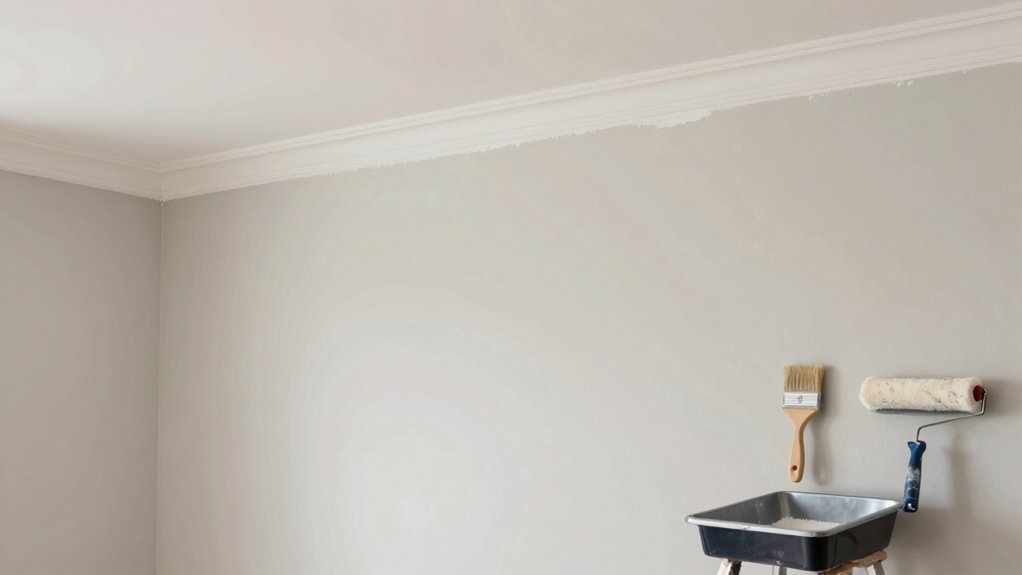
Prep sets the foundation for a flawless finish: start by cleaning and masking surfaces, then fix imperfections and prime where needed, so color goes on smoothly and evenly from the first coat. You’ll approach prep with purpose: declutter the area, protect floors, and choose a quality primer that matches your sheen and color goals.
Cut-in accuracy matters, so use a steady hand and a high-contrast edge to define trim without splatter. Layering techniques demand a wet edge, light back-rolling, and consistent pressure to avoid lap marks.
Plan color mixing ahead of time to ensure uniform hue across rooms. Keep color mixing essentials organized for speed, and practice proper paint storage to extend shelf life and preserve performance.
Power up your finish with deliberate prep, precise cut-in, and controlled layering.
H2 #10: What to Expect About Color Performance and Longevity
Color performance and longevity depend on the right paint choice, proper preparation, and consistent application. You’ll notice that top brands deliver strong color retention when you pick the right finish for your space and light exposure. Expect color accuracy to hold up through daily wear, humidity swings, and occasional scrubbing.
In practice, you’ll encounter two key realities: color fading can occur with harsh lighting or low-quality pigments, and stain resistance varies by finish and film thickness. For high-traffic rooms, choose a durable enamel or higher-quality acrylic with excellent washability.
In calmer spaces, mid-range acrylics can perform near premium options at a lower cost. Plan for touch-ups and consider color testing on small patches before committing. Your choice defines longevity, not luck.
H2 #11: DIY vs. Contractor: Choosing the Right Brand and Line
When deciding between DIY and a contractor, start by matching the job scope, budget, and timeline to the right brand and line. You’ll gain leverage by aligning product performance with your project rhythm, not just price.
For DIY, choose user-friendly lines with predictable color matching and durable eggshell or matte finishes that hide flaws and rotate easily with touch-ups.
For contractor work, lean on lines that offer advanced primers, deeper color accuracy, and faster coverage per coat, plus warranty support.
Color matching matters more than you think—opt for brands known to reproduce shades consistently across cans and batches.
Eco friendly paints matter too: look for low VOCs, long-lasting durability, and minimal odor to keep crews productive and spaces livable during updates.
H2 #12: Quick Decision Framework: Compare Options and Next Steps
Now that you’ve weighed DIY versus contractor routes and picked the right brand line, here’s a practical quick decision framework to compare options and map next steps.
First, shortlist finishes and color matching needs; note which options support precise shade replication and consistency across rooms.
Next, evaluate coverage and durability claims against your space’s traffic, lighting, and humidity.
Prioritize eco friendly paints that meet low-VOC standards without compromising depth or washability.
Compare price per square foot, return policies, and warranty terms to avoid late surprises.
Create a simple scoring rubric for color fidelity, ease of application, and cleanability.
Finally, decide on a testing plan: order swatches, paint sample boards, and verify under different lighting before committing.
Implement steps, track results, and proceed with confidence.
Frequently Asked Questions
Do Brands Differ in Indoor Paint Color Accuracy?
Yes, brands differ in indoor paint color accuracy. You’ll notice variance in color matching and brand consistency across shades, so choose trusted lines and test swatches to guarantee your final finish matches your vision.
How Long Does Interior Paint Last Before Repainting?
Paint durability typically lasts 5–10 years indoors, depending on wear. You’ll maximize color longevity by choosing high-quality finish and matte vs. satin wisely, maintaining humidity, and touch-ups. You empower spaces through consistent, durable color longevity.
Which Brand Offers the Best Stain Resistance in Kitchens?
You’ll pick a brand with superior stain resistance technologies, delivering top-tier kitchen wall durability you can trust. You’ll notice less scuffing, easier cleanup, and a confident, trend-forward finish that keeps your space pristine under daily use.
Are VOC Levels Consistent Across Color Lines?
Yes, VOC level consistency exists across many brands, but color line variations can differ. You’ll find some lines stay steady while others vary batch to batch, so check spectra, compare swatches, and ask for recent test data.
Do Premium Brands Require Special Primers for Best Results?
Yes, premium brands often require slightly different primers for ideal results, enhancing primer compatibility with their premium paint formulations. You’ll achieve stronger adhesion, fewer coats, and a smoother finish by matching the primer to the finish.
Conclusion
Want a paint brand that sticks, looks great, and fits your budget? Start with your space, finish, and odor tolerance, then compare finish options, coverage, and durability. Think value vs. premium payoff: you’ll save time and money with the right pick. In the end, your color payoff is the chorus, and the prep is the verse—juxtapose quality and price, and you’ll nail a flawless, long-lasting look. A palette of possibilities awaits—choose confidently.