
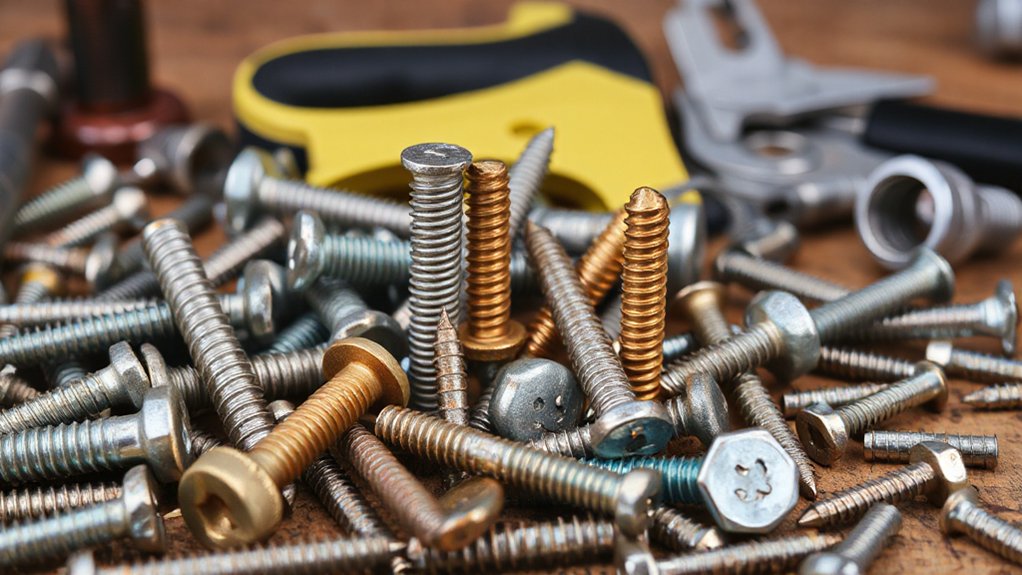
Screws differ by material, thread style, head, and drive, so you match the fastener to the substrate and load. Wood screws with coarser threads bite soft materials; machine screws with finer threads suit metal or pre-threaded holes. For outdoor projects, choose corrosion-resistant alloys and coatings; interior uses can save with zinc or plain steel. Exterior or deck screws require tougher finishes. When in doubt, consider pilot holes, correct length, and the right drive. You’ll uncover a clear framework that helps you decide what to use next.
Screw Families at a Glance: What to Use When
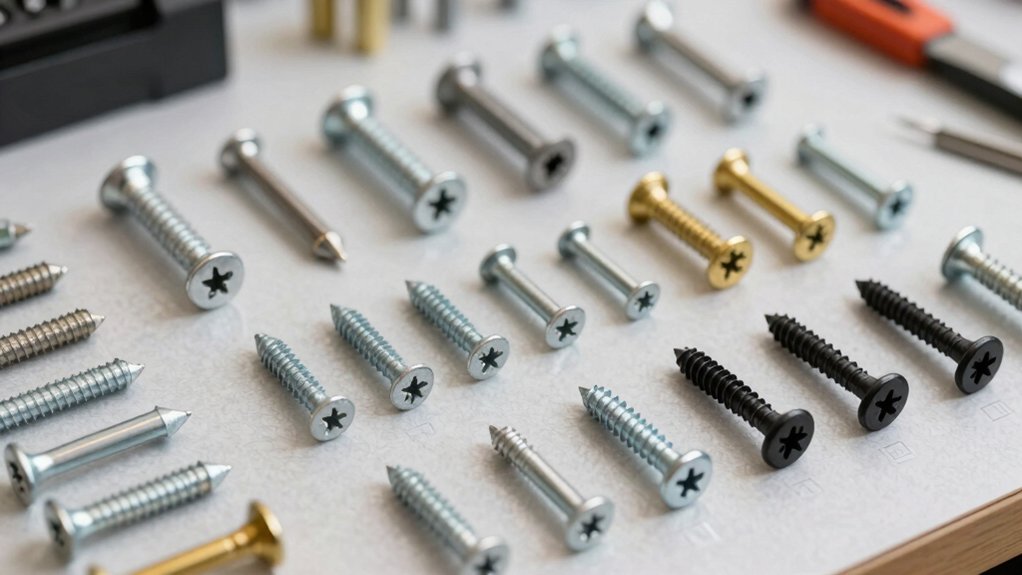
Screws come in distinct families, each designed for specific jobs, materials, and load demands. You’ll categorize by material (wood, metal, masonry), head style, and drive system to predict performance.
For fast, decisive work, know screw head types: flat, round, pan, oval, and countersunk variants define seating flushness and tool compatibility. Pair that with screw drive mechanisms—slotted, Phillips, Pozidriv, Torx, square, and tri-wing—to balance torque, cam-out resistance, and installation speed.
Material-specific families demand matching substrate hardness and withdrawal strength, while threading patterns—coarse for soft wood, fine for metal or hardwood—control grip and pull-through.
In practice, you select a family first, then refine by head type and drive to maximize reliability, efficiency, and structural integrity across projects.
Wood Screws vs. Machine Screws: Core Differences for Quick Decisions
You’ll compare wood screws and machine screws by first checking material compatibility, so you don’t pair metal with the wrong substrate.
Then assess thread style differences to make certain of proper engagement and load transfer for your application.
Finally, evaluate load and fit considerations to choose a fastener that seats correctly and delivers the needed strength.
Material Compatibility Basics
Choosing the right fastener starts with understanding material compatibility: wood screws bite into soft or engineered wood, while machine screws rely on pre-threaded drills or nuts for strong joins in metal or hardened substrates.
You assess substrate hardness, grain structure, and load path to determine the correct pairing. Screw material choices—carbon steel, stainless, brass, or alloy-coated—directly influence corrosion resistance, torque limits, and withdrawal strength.
Compatibility issues arise when mismatching screws to substrates: wood screws in metal fail to seat properly; machine screws in wood risk crush or pullout.
Objective testing of combination options yields predictable performance under load. Documented specs guide your selection, limiting surprise failures.
In short, verify substrate, choose compatible material, and align with fastener geometry for durable connections.
Thread Style Differences
Have you ever wondered how thread patterns drive fastener behavior in assemblies? In this comparison, you’ll fix attention on thread style differences that determine engagement.
Wood screws use coarser thread patterns and variable depth, designed to bite soft substrates and resist pullout with minimal pre-drilling.
Machine screws employ finer thread pitch and uniform engagement, optimized for metal or pre-tapped holes and precise clamping.
The thread pattern affects seat depth, shear transfer, and load distribution, while thread pitch governs axial advancement per turn and compatibility with nuts or tapped threads.
For quick decisions, prioritize substrate compatibility and required clamping force.
Wood screws demand broader, aggressive threading; machine screws require consistent pitch for predictable, repeatable fastening in assemblies.
Choose based on substrate, mating partners, and desired stiffness.
Load and Fit Considerations
Wood screws and machine screws demand different load paths and fit tolerances. You assess a joint by expected load direction, material behavior, and withdrawal risk, then choose accordingly.
Wood screws transfer load through bending and surface compression, relying on thread bite and material shear to hold fast. Machine screws rely on rigid interfaces, nut connections, and precise clearance to maintain clamping force.
Consider thread pitch: coarser pitches suit softer timbers and rapid assembly, while finer pitches improve pull-out resistance in hardwoods and align with threaded inserts.
Head design matters too: low-profile or pan heads minimize protrusion in tight gaps, while countersunk heads seat flush for clean lines.
Ensure fit tolerances match your substrate, fastener length, and load duration to prevent premature failure and maintain structural integrity.
Exterior and Deck Screws: Corrosion-Resistant Options That Last
You’ll assess corrosion-resistant alloys to match your exterior and deck conditions, balancing strength, compatibility, and cost.
Weatherproof coatings add a second line of defense, so you’ll compare adhesion, coverage, and long-term performance under sun, rain, and salt exposure.
This frame clarifies how coating benefits complement alloy choice, guiding durable, low-maintenance selections.
Corrosion-Resistant Alloys
Corrosion-resistant alloys are essential for exterior and deck screws because salt exposure, moisture, and varying temperatures can quickly degrade inferior fasteners.
You assess alloys by chemical stability, mechanical strength, and long-term performance under harsh conditions. Galvanic corrosion emerges when dissimilar metals contact one another, so alloy selection must minimize potential reactions and maintain fastener integrity.
Consider stainless grades, high-nickel compositions, and bronze-embedded formulations that resist chlorine-rich environments and humidity cycles. Alloy composition directly informs creep resistance, hardness, and edge retention, enabling consistent driving force and reduced head pop.
You prioritize predictable performance over nominal spec sheets, valuing corrosion resistance, load-bearing reliability, and installation efficiency. In practice, choose alloys with proven in-field durability, verified by corrosion tests, to sustain structural safety and finish quality over time.
Weatherproof Coating Benefits
Are weatherproof coatings worth the extra cost when selecting exterior and deck screws? Yes, because coatings directly influence long-term performance.
Weatherproof coating benefits include enhanced barrier protection against moisture ingress, UV exposure, and environmental salts that accelerate corrosion. By reducing rust initiation, coated screws maintain thread integrity, torque stability, and load transfer for years beyond uncoated options.
Consider coating type, thickness, and warranty implications: epoxy, ceramic, or polymer-based finishes typically outperform basic zinc or plain steel in outdoor assemblies. For deck applications, coastal or high-humidity sites demand higher protection levels.
Though upfront costs rise, you gain predictable maintenance intervals, fewer replacement cycles, and improved aesthetic continuity. Rust prevention is the practical outcome, translating to reliable fasteners under load and superior overall project durability.
Drywall Screws: Fast, Clean Sheetrock Holds
Drywall screws are the backbone of fast, clean sheetrock installations. You choose the right driver, control depth, and lock sheets without tear-out. Precision matters: coarse-thread for soft framing, fine-thread for metal studs, and bugle heads that seat flush without bulging.
You prioritize grip over vanity, selecting corrosion-resistant coatings for moisture zones and correctly sized lengths to avoid penetrating behind the sheetrock. In practice, you drill pilot holes sparingly, then drive steadily to minimize wobble and drywall spline damage.
When it comes to drywall installation, you assess spacing, typically 8 to 12 inches apart along edges, 12 to 16 in the field, ensuring consistent shear transfer.
For sheetrock repair, you anticipate mud consistency and screw penetration depth to maintain a seamless finish.
Woodworking Screws for Cabinets and Furniture: Better Joints, Better Finish
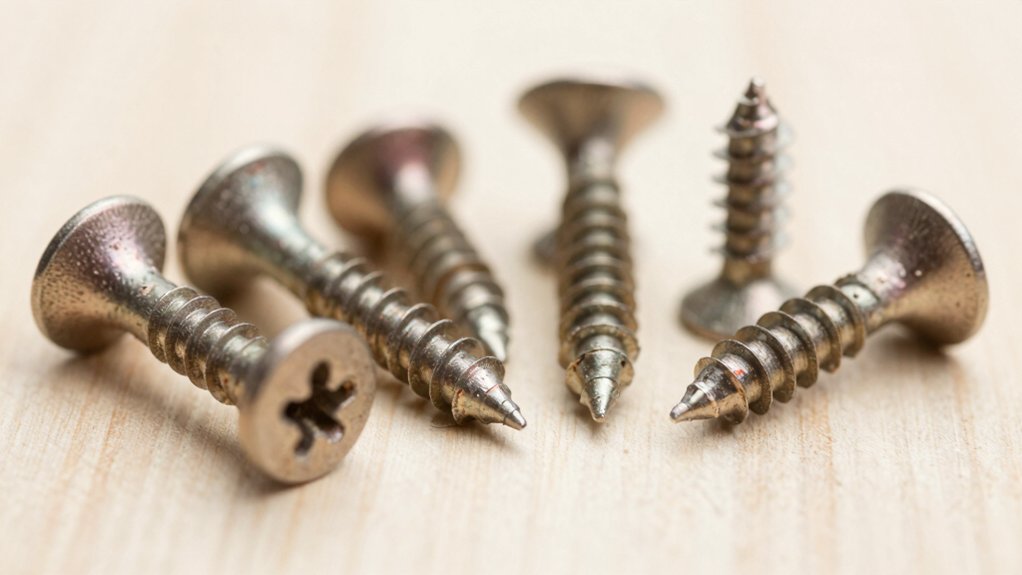
Woodworking screws for cabinets and furniture deliver strong joints and a clean finish by matching thread type, length, and head style to the job. You’ll optimize fastener durability by selecting a thread form that resists pull-out while aligning with the substrate.
Use pilot holes to control tear-out, then drive with steady force to preserve grain integrity. For cabinet faces and drawers, choose flat- or pan-head screws with the correct ballast under the head to minimize dimples and maximize flush alignment.
Installation ease rises when you standardize screw grades and lengths across projects, reducing search time and misfits. Precision in size, material, and driver compatibility yields repeatable results, fewer callbacks, and a superior, professional finish.
Self-Tapping Screws: When They Save Time and Leave Clean Finishes
Self-tapping screws streamline installation by threading into the material as they’re driven, eliminating the need for predrilled pilot holes in many substrates. You gain time and consistent finishes when mismatch-free alignment is essential.
Choose the right screw head for your tool compatibility and surface access, because the head design controls seating depth, countersinking, and bearing surface. Drive types determine ease of use under load and with access constraints; you want low slippage and predictable seating in tight spaces.
Consider material thickness, substrate hardness, and the torque your driver can deliver, as these factors affect thread cutting and grip. When accuracy and finish quality matter, self-tappers reduce steps without sacrificing strength, provided you select appropriate drive types and head styles for clean, flush results.
Coatings and Materials: Stainless, Brass, Zinc, and Protective Finishes
Coatings and materials determine corrosion resistance, aesthetic fit, and long-term performance in home projects. You’ll compare stainless, brass, zinc, and protective finishes by balancing durability, cost, and installation context.
Stainless resists corrosion and stains, offering high coating durability but at a higher material cost and potential alloyment constraints.
Brass delivers a distinct appearance and decent corrosion resistance, with moderate coating durability and a premium material cost.
Zinc-coated options provide cost-effective protection, quick availability, and decent longevity, yet are prone to wear in harsh environments.
Protective finishes—clear, black, or color-imparting—enhance appearance while modestly boosting durability without drastic material cost spikes.
Your choice hinges on exposure, moisture, and load. Prioritize environments demanding longevity and minimal maintenance, and align finish with project aesthetics for the most favorable performance.
Head Styles and Drive Types: Grip, Flush Finish, and Ease of Driving
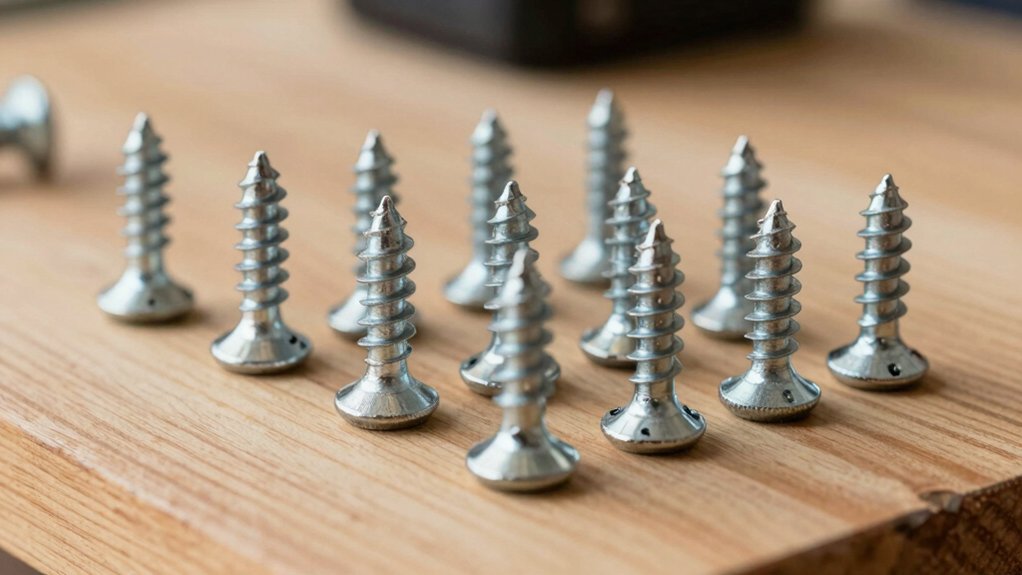
When choosing fasteners for home projects, head styles and drive types determine both appearance and ease of installation, linking closely to the coatings and materials considerations you weighed earlier.
You evaluate screw head options for visibility, flush finish, and shear resistance, then select a drive type that matches tool access and torque control. A grip head delivers strong seating without protrusion, while flush finishes minimize profile and risk snagging, ideal for visible surfaces or tight gaps.
The drive type you pick governs driving efficiency, reduction of cam-out, and tool compatibility. Align these choices with your material needs to optimize seating, pull, and load distribution.
Informed pairing of screw head and drive type yields reliable performance, reduces mistakes, and accelerates project timelines.
Thread Types and Grip: Coarse vs. Fine for Materials and Joints
Coarse threads excel in fast assembly and in softer or softer-density materials, offering rapid grip with fewer turns.
Fine threads provide higher load distribution and better holding power in harder base materials and precision joints, where alignment matters.
Consider the application: use coarse for quick, rough-fit connections and fine for durable, accurate joints, balancing grip, material compatibility, and removal needs.
Coarse Thread Advantages
Are coarse threads more grip-focused for everyday projects, or do they simply offer faster assembly? You’ll notice their advantages stem from higher pitch and greater thread engagement in softer, thinner substrates.
This translates to quicker bite and predictable seating, especially when you’re working with hardwoods or plywood where load paths demand rapid engagement without stripping. Coarse screws distribute clamping force more broadly, reducing local stress concentrations and enhancing material strength under typical home-use loads.
In metal-to-wood joints, you gain dependable pull-out resistance when surfaces aren’t perfectly flat, while keeping installation time short. Precision remains essential: avoid over-torquing, monitor thread engagement depth, and select appropriate pilot holes.
Fine Thread Applications
Fine-thread screws offer greater grip in harder or thinner substrates and excel where precise seating matters. You’ll choose based on thread pitch, which controls load distribution and seating alignment.
Fine threads, with closer spacing, cut deeper into material and resist loosening under vibration, making them ideal for metal joints, thin gauge wood, or high-tolerance assemblies. Coarse threads bite quickly but offer less precision in critical joints; fine threads excel where precise alignment and pull-out resistance are paramount.
Consider coating durability: higher-quality coatings reduce corrosion risk in shared environments and extend service life under moisture exposure. When selecting, assess substrate hardness, joint stiffness, and whether you require fine-thread performance for accuracy or coarse-thread efficiency for rapid assembly.
In decisive applications, prioritize thread pitch and coating durability to maximize grip and longevity.
Sizing Screws: Length and Diameter Guide for Common Materials
Understanding sizing starts with length and diameter: choosing the right screw hinges on the material, the load, and the joint you’re creating. You evaluate length by how deep the fastener penetrates and the material’s thickness, ensuring full engagement without protrusion.
Diameter matters for withdrawal resistance and seat; too thin invites failure, too thick risks material damage. For wood, select longer than the thickness of the top piece plus a minimum 2–3 threads embedded in the bottom layer.
For metal, match diameter to clearance and load, using self‑tapping variants when appropriate. Consider screw head design to align with tool access and flush seating.
Remember screw material properties, including corrosion resistance and hardness, to optimize longevity and performance under load. This disciplined approach yields secure, durable assemblies.
Pilot Holes and Pre-Drilling: When and How to Do It Right
Pilot holes prevent splitting and guide fasteners by matching drill size to screw diameter and material. You determine when to pre drill by substrate density and screw type, not guesswork.
For soft woods, use a pilot hole slightly smaller than the screw’s core; for hardwoods, step up by one size to prevent snapping. Always align drill bit with the screw’s intended path and avoid drilling at an angle.
Pre drilling reduces driving torque, minimizes bit wandering, and preserves grain integrity. When countersinking, concede a shallow recess so the screw head sits flush without tearing fibers.
For metals, drill only through the top sheet to prevent thread binding, then drive with steady pressure. In all cases, verify fit with a test, adjust hole size, and proceed decisively.
pilot holes, pre drilling.
Material Compatibility: Screws to Avoid With Certain Substrates
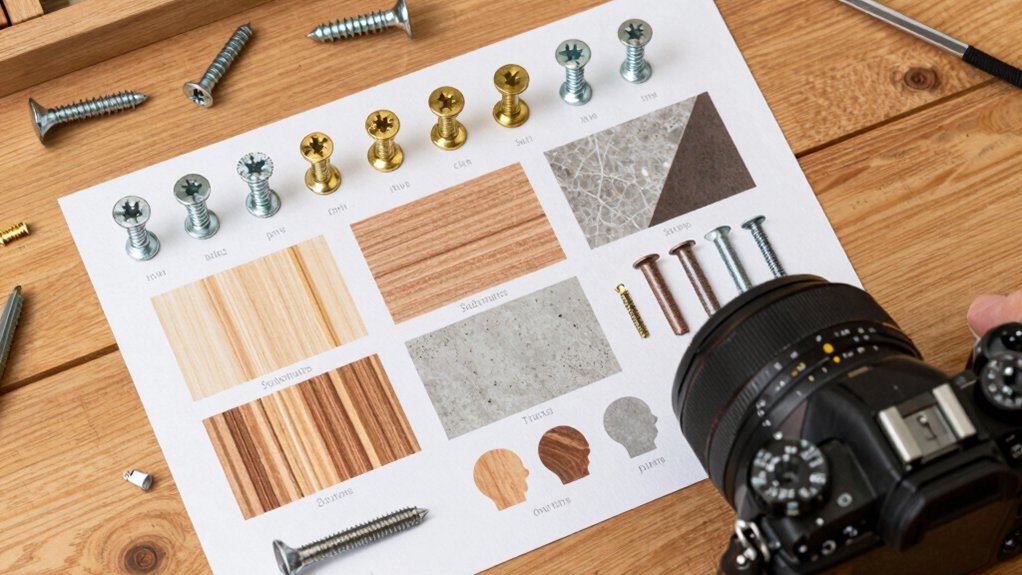
You’ll want to identify substrate compatibility pitfalls early, as certain materials react with screws via galvanic corrosion, staining, or failure to hold. Be alert to corrosion-prone substrates and choose fasteners with appropriate coatings, alloys, or barriers to prevent premature degradation.
This discussion starts with warning signs and moves toward practical selection guidelines for safe, durable assembly.
Substrate Compatibility Pitfalls
Substrate compatibility pitfalls arise when choosing screws, since mismatches between fasteners and substrate can compromise hold, corrosion resistance, and long-term durability. You evaluate substrate flexibility, then assess how a fastener’s shaft design, thread pattern, and coating respond to that movement.
Compatibility challenges surface when screws don’t accommodate moisture, expanding or contracting materials, or fiber-rich cores, leading to loosening or fracture under load. You must anticipate substrate rigidity versus embedment depth, ensuring withdrawal resistance aligns with expected stresses.
Avoid over-penetration that weakens the substrate, and beware heat or chemical interactions that degrade attachment, especially near finishes. Choose screws engineered for the substrate’s behavior, not just the project type.
Document findings, test fitment, and adjust choices to preserve strength, service life, and predictable performance.
Corrosion-Prone Substrates Warning
Corrosion-prone substrates demand explicit avoidance of screws that can accelerate degradation through galvanic reactions or moisture-driven rust. You must assess substrate compatibility before selection, prioritizing corrosion prevention as a core criterion.
When dissimilar metals meet, select coatings, seals, or compatible alloys to disrupt electrochemical pathways. For wood, avoid metal-to-wood pairs prone to staining or staining transfer; opt for corrosion-resistant stainless or coated fasteners with appropriate sealants.
For concrete or masonry, ensure anchors and screws are designed for alkaline environments; mismatches invite rapid corrosion and compromised load performance.
In metal-to-metal interfaces, verify compatible grades and plating to minimize galvanic potential. Your goal is to sustain strength, appearance, and long-term integrity, not short-term fixes.
Confirm substrate compatibility early, enforce defaults toward corrosion-resistant options, and document prevention strategies.
Practical Comparison: Which Screw Type for Common Projects
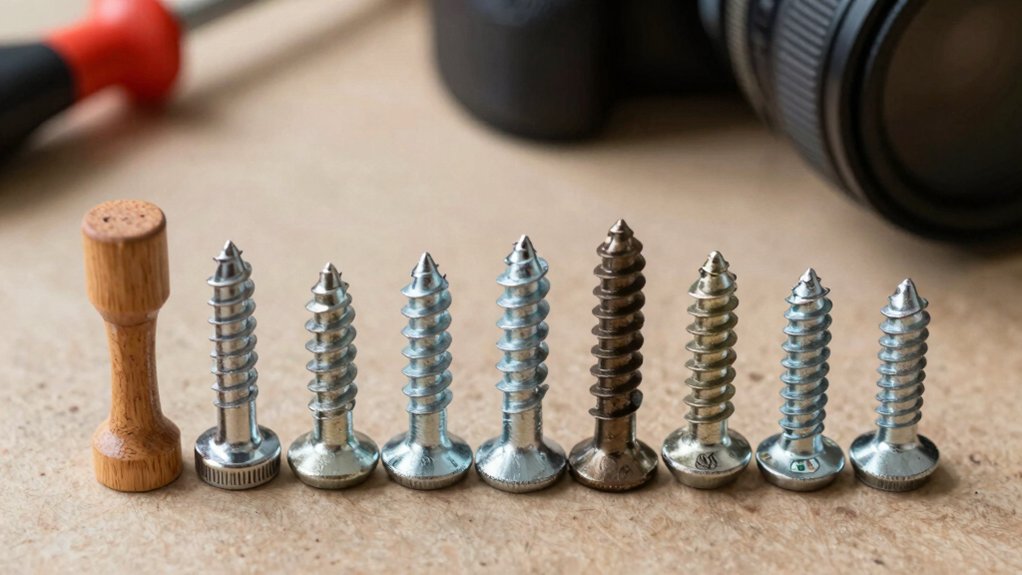
When choosing a screw type for common home-improvement projects, the right selection hinges on material compatibility, load needs, and environmental conditions. You evaluate substrate hardness, shear and withdrawal forces, and potential corrosion exposure before selecting.
For fast assembly on wood, metal, or composites, match screw thread design to substrate density to optimize grip without splitting. Consider head styles to balance finish and access—flat, round, and countersunk options—alongside drive mechanisms that suit your tools and torque control.
For exterior uses, opt for corrosion-resistant alloys and a sealing method to prevent moisture ingress. For interior lightweight tasks, prioritize lower insertion effort and predictable seating.
Quick-Start Decision Framework: A Simple Checklist to Pick the Right Screw
A quick-start checklist helps you pick the right screw by translating material, load, and environment into actionable choices. You evaluate substrate first: softer materials require larger shanks, while harder substrates tolerate finer threads. Next, determine load type—shear, tension, or withdrawal—to choose length, gauge, and thread form that maximize grip without compromising integrity.
Don’t overlook environment: moisture, corrosion risk, and temperature dictate coating and material. Then translate design into execution, selecting screw head styles and drive mechanisms that align with tools and aesthetics while minimizing cam-out. Prioritize compatibility between head style and surface finish to avoid rework.
Use a simple ranking: strongest, adequate, or limited. Finally, confirm compatibility with fastener guides and project specs, ensuring your choice supports predictable performance and durable joints.
Frequently Asked Questions
How Do I Choose Screw Length for Softwood vs. Hardwood?
You choose screw length by reshaping load paths: go slightly into hardwood, deeper in softwood. Consider screw material and thread design; thicker materials demand longer screws, finer threads in hardwood, coarser in softwood, ensuring secure, shear-resistant joins.
Which Screw Type Resists Corrosion Best Outdoors?
You should choose galvanized coating screws for outdoors, as they resist corrosion best, especially with marine grade materials. You’ll get durable performance, structured protection, and power in longevity, delivering precise, analytical results you can rely on under varying weather conditions.
What Are the Signs a Pilot Hole Is Needed?
When you sense resistance, a pilot hole is needed—pilot hole indicators include stiff drill bite and skidding, signaling drilling difficulty. You recognize the warning and proceed with a precise groove, ensuring controlled, powerful insertion.
Are Self-Tapping Screws Suitable for Metal vs. Plastic?
Self-tapping screws can work for both metal and plastic, but with caveats: metal compatibility requires proper pilot holes and avoid over-torquing; plastic threading benefits from softer materials and larger diameters to prevent cracking.
How Do Head Styles Affect Drive Ease and Finish?
Echoing your goal like a compass, you’ll find head styles affect drive ease and finish: flatter heads are kinder to appearance, while deeper recesses boost drive compatibility and reduce cam-out; choose accordingly for precise, powerful results.
Conclusion
Screw choices aren’t magic spells, they’re tools with cliff-notes consequences. You’ll save time and avoid rot if you match material, environment, and load with the right thread, length, and head. Don’t pretend a drywall screw doubles as deck hardware, or that a fine cabinet screw forgives sloppy joints. Follow the framework, respect pilot holes, and resist impulse buys. In short: precision beats bravado, and deliberate selection beats DIY folklore every time.