
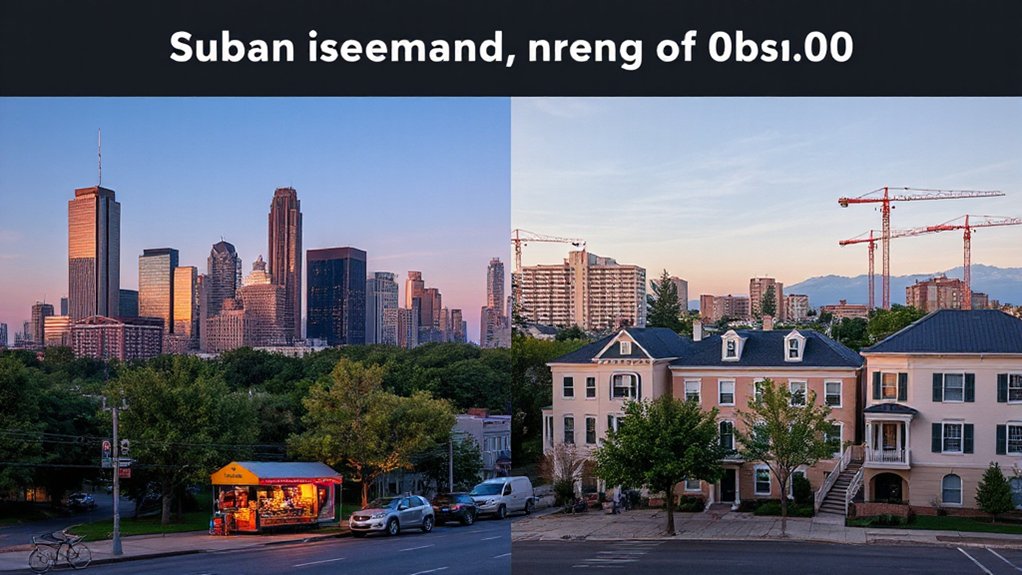
Urban rental demand hinges on density, transit, and amenities, drawing younger, flexible renters to cores with jobs, culture, and shorter commutes, while suburbs lure families with space, affordability, and stability. In cities, rents rise with amenities and walkability, yet churn can be high as employment shifts. Suburbs offer longer tenancies and steadier occupancy, often with larger layouts. Pricing and turnover shift with regulation, but the core split remains: urban intensity vs. suburban steadiness—explore the patterns further to target opportunities.
What Drives Rental Demand in Cities vs Suburbs
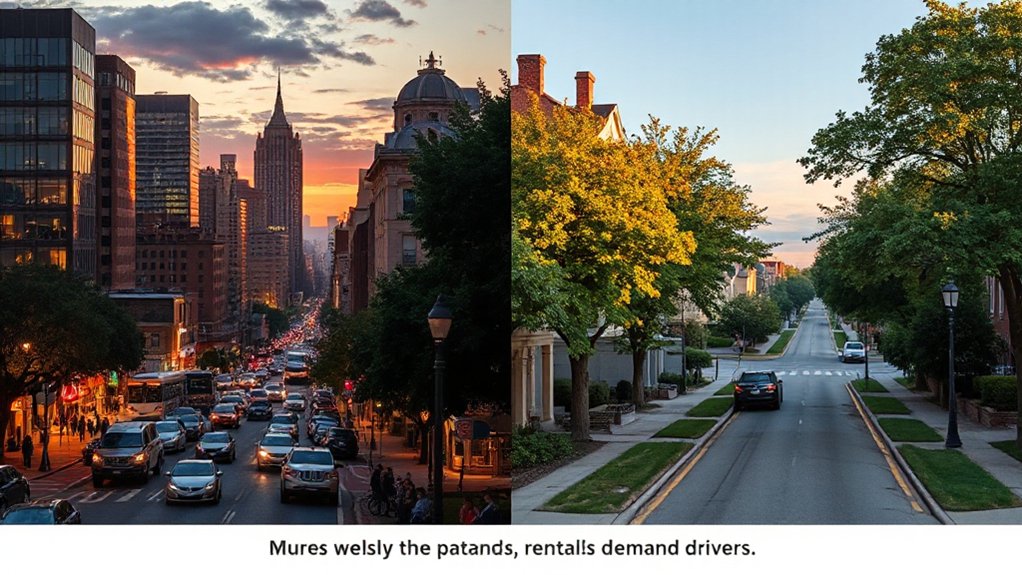
Cities and suburbs attract renters for different but overlapping reasons: urban areas tend to offer higher job density, richer amenities, and shorter commutes, while suburbs appeal with more space, lower rents, and greater stability.
You evaluate demand by translating data into experience: job clusters shape neighborhood inflows; amenity access—culture, dining, transit—drives willingness to pay a premium; price elasticity reveals how much space you’ll sacrifice for proximity.
In cities, luxury amenities and tech integration signal convenience and prestige, attracting renters who value efficiency and status alignment.
Suburbs pull with larger layouts, quiet streets, and a predictable cost base, boosting long-term occupancy.
Balancing these forces requires market-aware sizing, landlord flexibility, and inclusive signals that foster belonging across diverse renter cohorts.
Who Is Renting in Cities vs Suburbs
Brookings and landlord surveys show renters in urban cores skew younger, mobile, and career-focused, while suburban tenants trend toward families and early-to-mid career stability. You’ll see distinct profiles shaping demand, yet with overlap that signals belonging across communities.
In cities, luxury amenities and access to culture attract professionals who value experiences, while suburbs draw households seeking stability, space, and long-term roots. The balance matters for developers and landlords aiming to meet varied needs without fragmenting neighborhoods.
- Younger, mobile renters in cities prioritize flexible leases, short commutes, and high-end amenities that double as social hubs.
- Suburban renters lean toward family-friendly layouts, school zones, and durable spaces that support multi-generational living.
- Cultural diversity persists across both markets, enriching neighborhoods and informing service expectations, from events to inclusivity.
How Transportation Access Shapes Where People Rent
Transit options and shorter commutes shape where you’ll rent, as higher accessibility tends to lift demand in markets with strong transit networks. When commute times drop, households tolerate smaller spaces or higher rents in transit-rich corridors.
While less connected areas see weaker demand and slower price growth. In practice, you’ll see demand cluster around walkable hubs and transit lines, with price and vacancy signals reflecting those access advantages.
Transit Accessibility Influence
Transit accessibility increasingly shapes where renters choose to live, because easy access to buses, subways, and rail reduces commute time and uncertainty about travel costs.
- You’ll notice neighborhoods near transit hubs attract higher demand, stabilized by predictable ridership and real estate value signals.
- Data show multi-modal access correlates with stronger occupancy stability, lower vacancy risk, and healthier turnover patterns, reinforcing community engagement and shared spaces like parks and gathering areas.
- In markets prioritizing sustainability, proximity to transit pairs with green spaces, creating walkable, lower-emission lifestyles that foster belonging and continued tenancy.
These dynamics highlight a nuanced balance: transit density, local amenities, and community voice converge to shape where people want to live.
Commute Time Effects
When commute time drops, rental demand concentrates around accessible corridors and nodes, because shorter door-to-destination trips predict steadier occupancy and lower turnover risk.
You’ll notice buyers cluster where transit lines, highways, and bike networks intersect, shaping a predictable demand spine.
In urban cores, dwellers prize time savings, so properties near key stations and employment hubs command premium rents and faster leasing.
Suburban portfolios gain resilience when they front efficient park-and-ride and shuttle options, yet face tradeoffs in longer access legs unless blended with mixed-use nodes.
Across markets, performance correlates with neighborhood aesthetics and clear rental branding that signals value, safety, and community identity.
Align your strategy to emphasize walkability, visible upkeep, and consistent experiences to attract tenants seeking belonging.
Housing Density and Rentability: Why It Matters
Density shapes rental economics. You’ll see how density shifts margins, risk, and tenant mix across urban and suburban markets, guiding you to smarter placement decisions. This topic blends historical affordability with current constraints, so you can gauge where rentability rises or falls as you scale.
- Higher density often improves operational efficiency and risk pooling, while also exposing you to tighter construction regulations and permitting timelines.
- Historical affordability layers influence renter expectations and willingness to pay, shaping yield trajectories in different density bands.
- Regulatory environments and zoning decisions determine where you can capitalize on density gains without compromising long-term viability.
In a market-aware lens, you’ll balance density-driven demand with costs, ensuring a sense of belonging for tenants and stakeholders alike.
Amenities That Move the Needle in Urban Rentals

Amenities in urban rentals move the needle by delivering value that tenants can directly perceive in daily life, while operators balance upfront costs against long-term occupancy gains. You’ll notice how small conveniences compound, elevating overall appeal without inflating rents.
Data show that luxury amenities correlate with higher renewal rates and faster resident onboarding in dense markets, signaling stronger demand stability. Thoughtful layouts, noise mitigation, and high-efficiency systems reduce friction in daily routines, boosting perceived quality of life.
Pet policies also matter: flexible, well-enforced rules lower turnover and attract longer-tenancy households. Integrating luxury amenities with pragmatic design creates a compelling value proposition for communities seeking belonging and brag-worthy experiences.
In practice, measurable satisfaction drives occupancy, price resilience, and long-term profitability in urban portfolios.
Job Access and Local Economies: Where Renters Work
You’ll see that job access gaps shape where renters can afford to live, with suburban areas often pulling workers toward lower commuting costs or higher-wage hubs.
Local economy hubs concentrate opportunity and can create mismatches between where jobs exist and where housing is affordable.
As markets evolve, understanding these patterns helps explain rent differentials and informs demand shifts across urban and suburban landscapes.
Job Access Gaps
1) Urban cores offer shorter commutes for white-collar roles, but longer waits for flexible schedules.
2) Suburban areas attract service-sector workers who tolerate longer drives for affordable rents and local schools.
3) Rural dynamics amplify transport gaps, nudging households toward mixed commuting or remote options, reinforcing belonging through resilient networks.
Local Economy Hubs
In suburbs, you’ll notice reliance on auto-dependent corridors and larger gaps between jobs and homes, which can raise true living costs even when headline rents look lower.
Data show higher turnover near mixed-use districts, where amenities and cultural influences attract workers seeking belonging. Community engagement around neighborhood projects often correlates with steadier occupancy and faster rent adjustments.
Cultural influences shape worker preferences for proximity to transit, schools, and social spaces, affecting demand cycles. Market resilience hinges on inclusive planning that aligns job access with affordable housing.
How Lease Terms Differ by City vs Suburb
Lease terms show clear city–suburb divergence: urban renters often accept shorter, more flexible windows, while suburban tenants lean toward longer commitments and stricter renewal options. You’ll see this in practice through lease lengths, renewal realities, and the way flexibility is packaged with perks.
Data shows city leases skew monthly to six months, with more midterm options, while suburbs favor 12–24 months and enforce late-renewal penalties. You’ll also notice how pet policies and entry terms vary, shaping daily life and belonging.
- Lease flexibility appears higher in urban markets, paired with more adaptable pet policies and move-in windows.
- Suburbs enforce longer terms, tighter renewal rules, and stricter pet-weight or HOA constraints.
- Both tiers increasingly tie renewals to incentives, balancing certainty with community fit.
Pricing Dynamics: Rent Levels, Growth, and Sensitivity
You’ll see rent levels trend differently across urban and suburban markets, with urban areas typically starting higher. But suburban gains are widening as supply tightens.
Growth patterns reflect mix shifts, new supply, and macro conditions, so sensitivity to job markets and demographics matters more than any single metric.
Together, these factors shape the urban-suburban variance in pricing dynamics, informing where rents might accelerate or stabilize next.
Rent Level Trends
Rent levels have risen unevenly across urban and suburban markets, driven by shifting demand, housing supply constraints, and changing employment patterns.
1) You’ll notice urban rents push higher when dense-core amenities and short commutes attract professionals, even as suburban rents climb with larger units and flexible work setups.
2) Price trajectories diverge where luxury upgrades and pet policies influence tenancy choices, shaping value perception and renewal opportunities more than floor plans alone.
3) Across districts, volatility mirrors local demand-supply gaps, with tight markets tightening discounts and broadening premium segments for premium finishes and pet-friendly features.
This landscape rewards you with nuanced signals: neighborhoods offering balanced price-to-value, inclusive pet policies, and tasteful upgrades tend to sustain rent growth while preserving renter belonging and confidence.
Growth Sensitivity Drivers
Growth in rents hinges on how sensitivity to price changes shapes demand. You’ll see demand bend where small price shifts trigger meaningful occupancy changes, especially in dense urban markets versus spread-out suburbs.
Data show price elasticity varies by segment: premium renters chase architectural styles and neighborhood character, while price-conscious renters prioritize rental amenities that cut future costs or improve daily life.
In suburbs, growth hinges on value signals—stable rents, longer tenancies, and predictable increases—yet urban cores often command higher rent growth when amenities and transit access compound appeal.
Tracking vacancy-to-rent ratios, you’ll notice sharper responses to rate moves where supply is constrained.
Urban-Suburban Variance
Urban and suburban markets diverge in how pricing shapes outcomes: urban cores tend to see sharper rent gains when amenities, transit access, and density drive demand, while suburbs reward stability, longer tenancies, and predictable rent trajectories. You’ll notice variance in growth paths, sensitivity to policy, and branding cues that affect perception and demand.
1) Urban aesthetics elevate willingness to pay when neighborhoods signal culture, walkability, and short commutes; Suburban branding emphasizes space, schools, and safety, delivering steadier growth.
2) Price gaps widen during tech and entertainment cycles, then narrow as cooling periods hit both sides with different paces.
3) Rent-level elasticity differs: urban rents swing with density shocks; suburban rents flatten as households optimize stability and routine.
This framing helps you anchor decisions with data, belonging, and market nuance.
Vacancy Trends Across Core Cities and Suburban Rings
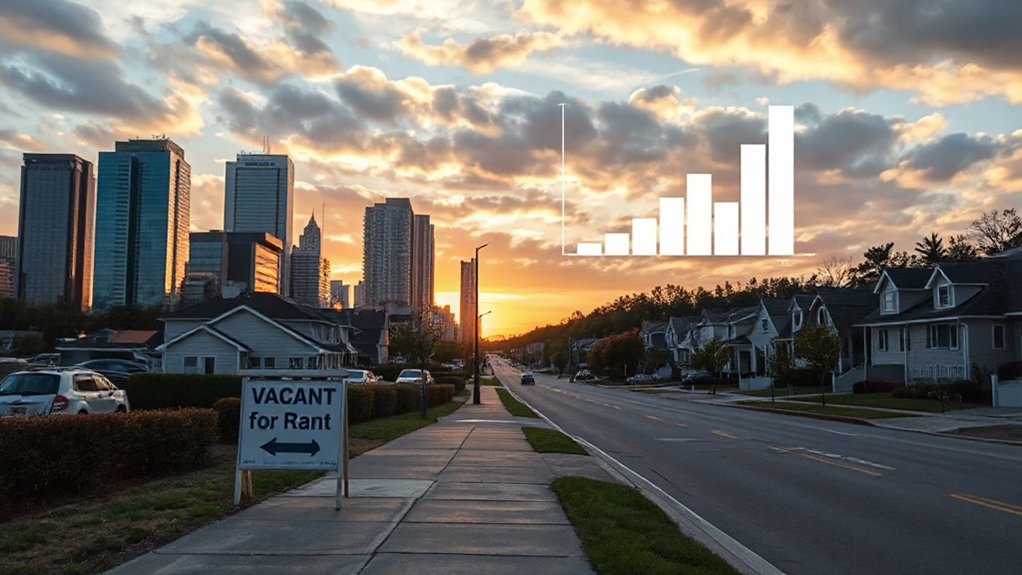
Across core cities and their surrounding suburban rings, vacancy rates have diverged in ways that reflect shifting demand, evolving transportation patterns, and housing supply constraints. You’ll notice core markets tightening where urban amenities draw renters, while outer rings show steadier or higher vacancies as commute tolerance and value propositions shift.
In prime downtown corridors, vacancies compress alongside shorter lease durations, signaling churn from flexible living and leasing to capture luxury amenities and walkable access.
Suburban pockets with good transit and school appeal maintain moderate vacancies, attracting longer lease terms and stable occupancy.
Price signals matter: tighter markets reward premium units with upgraded finishes, while looser markets favor efficient layouts.
New Builds vs Redevelopment: Where Demand Flows
You’ll see urban demand anchored in amenities and speed, while suburbs lean on affordability and space, shaping where new builds gain traction.
As preferences shift, redevelopment often captures value from existing stock with updated zoning and faster occupancy, rebalancing the flow between fresh projects and reinvested assets.
The balance of New Builds vs Redevelopment hinges on cost, timelines, and target demographics, with data pointing to nuanced, city-by-city variation.
Urban Demand Drivers
Although overall renter demand remains solid, the flow between new builds and redevelopment hinges on price, location, and timing: neighborhoods with incomplete supply and amenities in demand corridors tend to pull more buyers toward new developments, while mature cores seeing upkeep needs and affordability pressures catalyze redevelopment activity.
You’ll notice this split reflected in Historical occupancy trends and evolving rental regulations, which shape incentives for builders and investors alike.
- Demand concentrates where occupancy history signals tight markets, guiding developers toward strategically located new builds.
- Redevelopment activity grows where aging stock collides with affordability pressure, often influenced by rental regulations that balance preservation and modernization.
- Investors track occupancy cycles, using data to align timing with permitting windows, funding cycles, and neighborhood revitalization momentum.
Suburban Preference Shifts
Suburban demand is tilting toward distinct paths for new builds and redevelopment, with price signals and space needs shaping where buyers and renters invest. You’ll notice buyers favor newer layouts and energy efficiency when evaluating new builds, while redevelopment taps nostalgia and affordability, drawing those who seek established streetscapes with updated interiors.
Market data show higher cap rates for thoughtfully upgraded cores, yet growth in outlying areas hinges on flex spaces, access to transit, and walkable hubs. This shift doesn’t erase belonging; it reframes it around a Suburban lifestyle that blends privacy with connectedness.
Communities that foreground inclusive planning and ongoing resident input foster loyalty and longer tenures, turning redevelopment into a rallying point for authentic, accessible community engagement.
New Builds vs Redevelopment Flow
New builds and redevelopment channels are diverging in their demand signals: buyers and renters weigh new layouts, energy efficiency, and modern amenities against established streetscapes, affordability, and refreshed interiors. You’ll notice how Historical redevelopment trends shape expectations, while zoning regulations constrain what’s feasible, guiding where demand concentrates.
In practice, flows split between pristine new builds and revitalized cores, with buyers prioritizing updated layouts and smart systems, and renters valuing character and refreshed interiors in walkable neighborhoods.
1) New-build appeal hinges on efficiency upgrades, contemporary design, and predictability in delivery timelines.
2) Redevelopment draws demand from location-centric buyers and renters seeking density, heritage, and price relief within established grids.
3) Regulatory buffers, like zoning regulations, influence timing, project scope, and neighborhood mix, shaping market momentum.
Turnover Rates by Locale: Stability and Rent Impact
Turnover rates vary meaningfully by locale, shaping both stability and rent dynamics across urban and suburban markets. You’ll see higher churn in dense urban areas driven by employment shifts, while suburbs often exhibit steadier tenant tenure, even as affordability pressures rise.
Data show turnover correlates with seasonal leasing cycles, renter age, and building quality, influencing vacancy duration and unit-ready timelines. In markets with stricter Rental regulations, turnover can slow as tenants leverage protections, stabilizing rents but potentially limiting supply.
Neighborhood safety also matters: perceived risk drives early renewals or exits, affecting price trajectories and occupancy. Across both locales, informed pricing hinges on current absorption rates, renewal probabilities, and maintenance costs.
When you interpret these signals, you align your choices with community stability and inclusive growth.
Where Investors See Returns: City Cores or Suburban Markets

You’ll want to weigh city-core demand signals against suburban growth indicators to gauge where returns might concentrate.
In markets, core areas often show density-led rents and resilience, while suburbs signal upside from supply growth and evolving work patterns.
City Core Demand
City cores command steady investor interest thanks to higher rent premiums and deeper liquidity, even as price growth slows. Vacancy tends to be lower, and demand remains resilient in multifamily and mixed-use assets.
- Luxury apartments in historic districts attract premium rent and stable occupancy, supported by walkable amenities and cultural appeal.
- Dense cores provide diversified demand, including professionals and students, sustaining rental velocity during economic swings.
- Asset resilience comes from recurring demand drivers: transit access, entertainment options, and short commutes that keep turnover modest.
You observe a market where data shows higher price-per-unit appreciation in city centers, tempered by careful cap-rate expectations and selective development. Belonging here hinges on active asset management, precise targeting, and ongoing tenant experience investments.
Suburban Growth Signals
You’ll notice Suburban signals pointing to steady absorption as households migrate for space and affordability, while growth indicators highlight resilient rent trajectories despite macroheadwinds.
In this view, job centers expanding in fringe areas lift daytime populations, supporting small-business vitality and service demand.
Access to transit, parks, and ranked schools elevates perceived value, attracting long-term renters and first-time buyers reconsidering commute time.
This balance creates differentiated risk-adjusted returns: steadier cash flow with possible cap-rate compression, yet sensitivity to economic shifts and financing conditions.
Investors who track these signals gain clarity on where to allocate capital with belonging and confidence.
Landlord Tactics: Pricing, Incentives, and Concessions
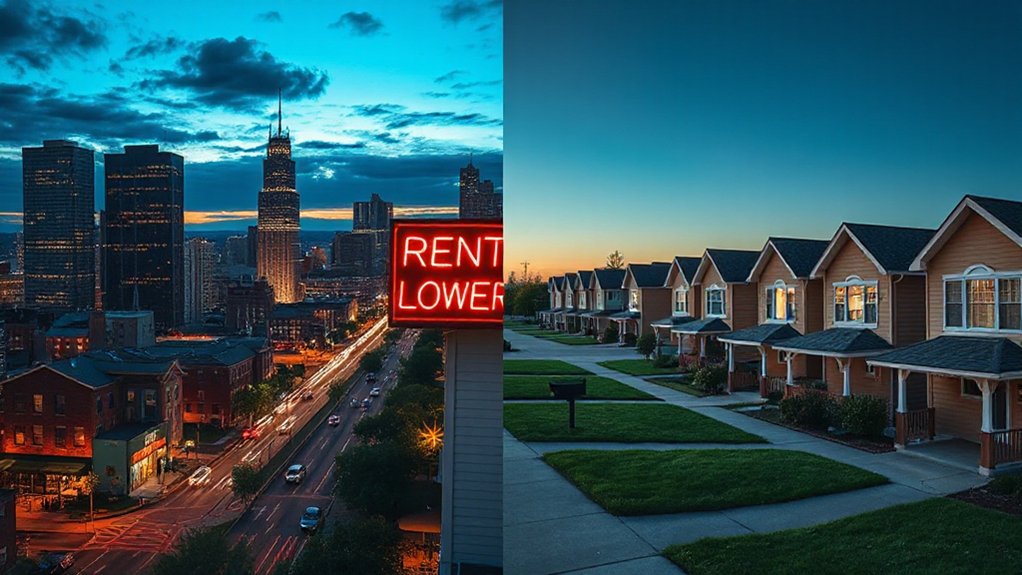
Landlords calibrate pricing and incentives to match local demand signals, shifting rents, concessions, and lease terms in response to market conditions and tenant behavior. You’ll notice urban rents often leverage selective incentives, while suburban properties emphasize stability and longer-term leases. Data-driven adjustments hinge on occupancy trends, vacancy duration, and cycle timing, all tracked through property management systems. Tenant screening remains critical to avoid mispricing risk and to balance throughput with quality tenants.
- Pricing strategies align with demand signals for each locale, balancing speed of lease‑ups and margin.
- Incentives vary by segment: flexible move-in specials in peak seasons, longer‑term rewards for reliable tenants.
- Concessions are calibrated with lease terms to sustain occupancy without eroding value.
This approach preserves belonging, transparency, and predictable cash flow.
How Policy Shapes Rental Demand
Policy shapes rental demand through the signals governments set—income limits, zoning rules, and housing supply programs can tighten or loosen the market quickly. You’ll notice urban zoning often steers where new units appear, influencing rental velocity in cities with growing jobs hubs.
In contrast, suburban development patterns tend to spread supply over longer cycles, cooling sudden spikes in rents but sustaining steady demand as families seek space and quality of life. Data show policy nudges, from density bonuses to inclusionary housing, shift renter choices and move flows between urban cores and outer suburbs.
When markets predict smoother approvals and faster construction, demand tightens in hot neighborhoods and relaxes where processes stall. Informed expectations help communities plan with belonging and resilience.
ESG and Smart-Building Trends in Rentals
Environmental, social, and governance (ESG) criteria are reshaping rental markets by tying performance to energy use, occupant well-being, and transparent reporting.
Smart-building tech sharpens operational efficiency and tenant experiences. You’ll see data-driven moves that blend sustainability with comfort, signaling strong demand signals for responsibly built spaces.
In practice, owners that prioritize energy efficiency and sustainable materials attract tenants who value transparency and long-term value, creating healthier communities and safer portfolios.
- Energy dashboards and predictive maintenance reduce waste and downtime while highlighting energy efficiency gains.
- Sustainable materials and intelligent air-quality controls foster occupant well-being and lower turnover.
- Real-time reporting and third-party verifications build trust, driving occupancy and premium rents without sacrificing affordability.
Submarket Variations: Downtown, Core, Outer Cities, Exurbs
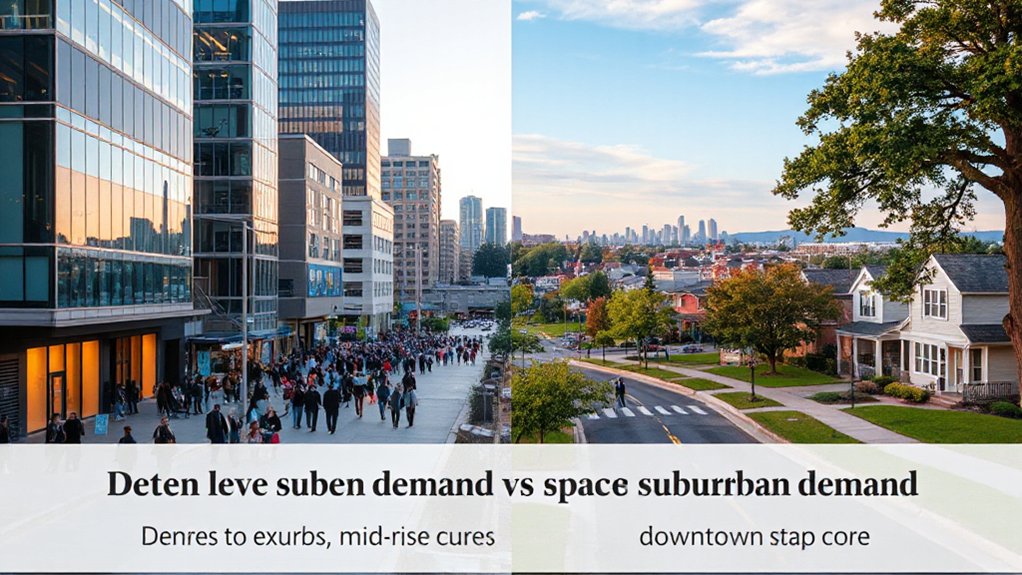
Downtown, core urban neighborhoods, outer cities, and exurbs each exhibit distinct rental dynamics driven by commute patterns, density, and amenity access. You’ll see how Downtown concentrates demand on shorter commutes and vibrant services, while core neighborhoods pull in residents seeking walkable, mixed-use life.
Outer cities attract families and longer commutes with comparatively lower rents and space, and exurbs appeal to those prioritizing space and affordability, despite rising travel times.
Historical trends tell you how infill and redevelopment shape velocity of demand across submarkets, while demographic shifts reshape who prioritizes flexibility, amenities, and car dependence.
You’ll notice nuanced occupancy, turnover, and price dispersion patterns that reflect evolving preferences for belonging, community, and access to work hubs without sacrificing neighborhood identity.
Data-driven signals guide targeted strategies for each submarket.
Economic Shocks and Dependence on Commuting: Risk by Locale
Economic shocks expose each locale to different rent and occupancy risks, with reliance on commuting shaping how quickly demand shifts after a disruption. You’ll see urban areas rebalance faster as transit resumes, while suburban markets often lag, cushioned by car access but sensitive to budget-tight households. Demographic shifts and historical zoning patterns mold these dynamics, constraining mobility choices and housing forms in ways that persist beyond the shock.
1) Urban cores tend to recover occupancy quickly when jobs remain clustered downtown, but rent volatility spikes as commuters reassess downtown value post-disruption.
2) Suburban districts with flexible commuting options show steadier occupancy but slower price recovery, reflecting longer-term work-location preferences.
3) Zones shaped by historical zoning exhibit varying supply responsiveness, amplifying or dampening rent swings amid changing demographics.
This framing helps you assess risk with clarity and belonging.
Case Studies: Urban Hotspots vs Suburban Strongholds
Across cities and suburbs, case studies illuminate how the same shocks play out differently where proximity to jobs, transit access, and housing form collide.
In urban hotspots, you’ll see elevated demand for units with luxury amenities, driven by density, brand experiences, and proximity to employers. Developers leverage amenity-rich clusters to command premium rents, while pilots of rental subsidies help retain renters during cycles of price pressure.
Suburban strongholds tell a different story: space and car-oriented layouts temper competition, but quality schools and newer builds attract households willing to trade proximity for value.
You might notice mixed signals—some urban areas soften after subsidy programs; others sustain demand through diversified transit options.
A Practical Framework for Investors and Tenants to Decide Where to Rent
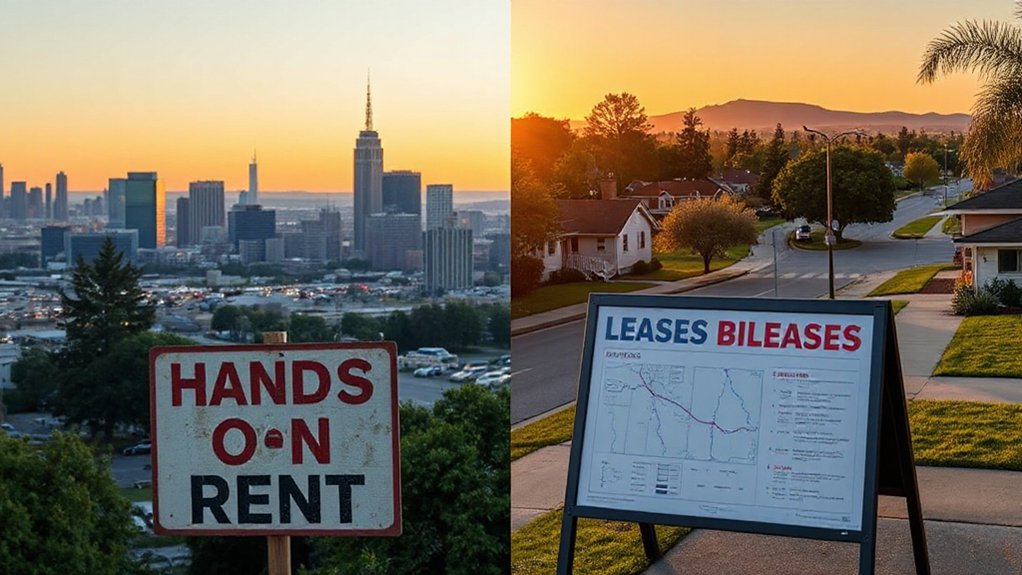
A practical decision framework starts with aligning rent choices to your priorities and the local market signals you care about most. You’ll weigh cost, quality, and proximity while reading price trends, vacancy rates, and neighborhood safety data to spot affordable housing options that don’t compromise lifestyle.
You’ll also consider cultural trends shaping who rents where, from shared spaces to walkable corridors, as communities evolve around work and school access.
- Compare total costs (rent, utilities, transit) against your budget and long-term plans.
- Assess neighborhood dynamics (amenities, transit, schools) and future development that affect value and belonging.
- Align housing type with social signals you value (privacy, community, affordability) while monitoring market indicators.
This framework blends data, nuance, and belonging.
Frequently Asked Questions
How Do Seasonal Trends Affect Urban Vs Suburban Rental Demand?
Seasonal fluctuations shape both markets, but urban demand spikes in spring while suburban steadiness grows in summer; you’ll notice market cycles tightening rents during peaks and easing them off-peak, guiding decisions with data-driven, belonging-focused insights.
What Role Do School Districts Play in Demand Differences?
School quality drives demand: you’ll notice higher interest where district rankings rise, as families seek reliable outcomes. You matter in markets where data shows strong school performance correlates with tighter occupancy, longer leases, and premium rents.
Do Tenants Prioritize Safety Over Price in Cities Vs Suburbs?
Yes—safety concerns often outweigh price sensitivity in cities, while suburbs balance both. For example, 68% of renters cite safety as top consideration; you’ll feel more belonging when you align budget with reliable, lower-crime neighborhoods.
How Does Pet Ownership Influence Urban Vs Suburban Rents?
Pet ownership nudges rents higher in urban areas through pet friendly policies, while suburban markets show modest rental price variations. You’ll see stronger demand signals where amenities, parks, and policies support coexistence, shaping belonging and price dynamics across neighborhoods.
Are Short-Term Rentals Affecting Long-Term Urban Demand?
Short-term rentals are reshaping long-term urban demand, you’ll notice occupancy spikes and price gaps. A key stat shows 28% fewer listings in prime neighborhoods; luxury amenities and rental affordability now drive longer commitments and a sense of belonging.
Conclusion
You’ll see demand patterns map to density, transport, and amenities, not labels. Urban rents surge on lifestyle gravity and job cores; suburbs win on space, price ceilings, and commute hedges. The data show mixed resilience to shocks, with downtowns volatile yet rich in drivers, while exurbs offer predictable leases but thinner amenities. If you’re deciding where to rent, target the intersection of transit access, density sweet spots, and submarket dynamics to minimize risk and maximize value.