
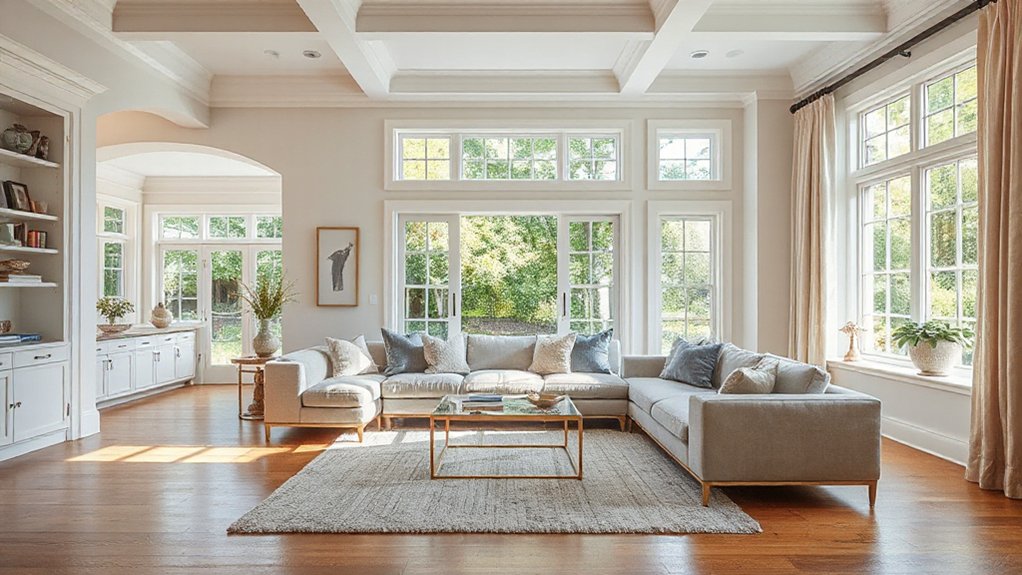
To create a modern interior in a traditional home, balance clean lines with warm textures and heirloom accents. Mix vintage statement pieces with contemporary details, and ground the space with layered textures—stone, wood, woven fabrics—while keeping a restrained color palette of warm neutrals and subtle contrast. Prioritize deliberate layout, cohesive hardware, and purposeful focal points. Use art and accessories to tell your story, reinforcing belonging. If you want more, you’ll uncover practical refinements and tips next.
Define Your Modern-Traditional Style
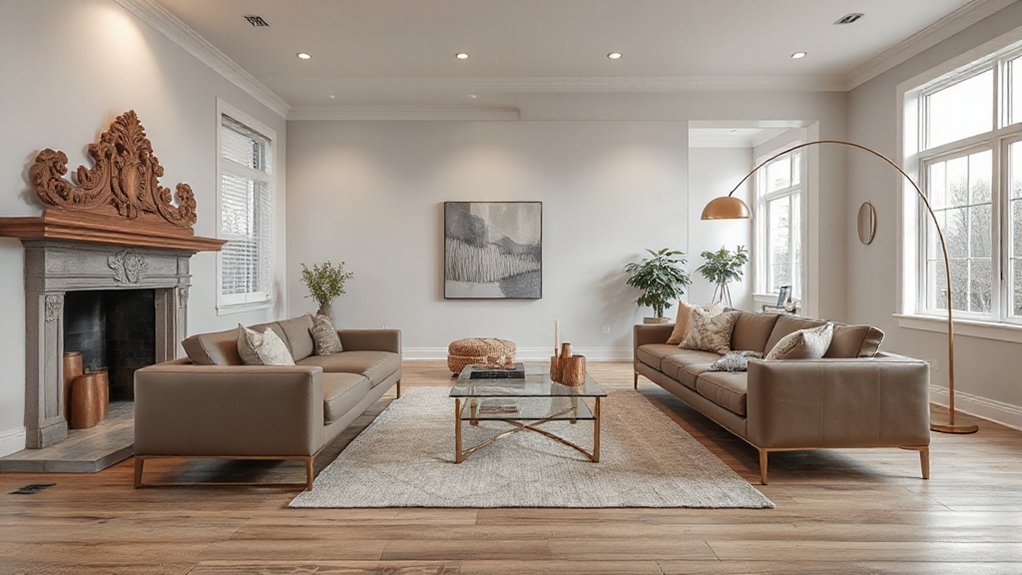
Modern shows up as crisp geometry, thoughtful tech, and purposeful contrasts. Traditional appears through craftsmanship, heirloom textures, and timeless silhouettes.
You anchor decisions in Cultural influences that resonate locally and globally, then translate them into rooms that welcome conversations.
Architectural details become your connective tissue: paneled walls, molding, and exposed beams reinterpreted with contemporary finishes.
You curate proportions, scale, and lighting to reflect a confident, lived-in look, not a showroom.
In this blend, you forge belonging—spaces that feel current while honoring the past.
Set a Neutral, Timeless Color Palette
A neutral, timeless color palette anchors your modern-traditional home, balancing the clean, crisp lines with the warmth of traditional elements. You’ll choose a restrained base—eggshells, warm whites, soft beiges—and layer with deeper neutrals to create depth without overwhelming.
Consider color contrast thoughtfully: a charcoal or graphite anchor against lighter walls adds drama while preserving serenity. Introduce texture and subtle saturation through upholstery, wood tones, and tile, so the space reads cohesive rather than flat.
Accent lighting plays an essential role, highlighting architectural details and sculptural furniture as you shift through day and night. Keep a few purposeful accent colors limited to accessories, art, and textiles to preserve timeless appeal and a welcoming sense of belonging.
Prioritize Clean Lines in Your Floorplan
Position furniture to reinforce flow, not clutter; place larger pieces against walls and favor low-profile profiles to keep the silhouette airy. Avoid visual clutter by silencing busy details and chords of ornament, letting architecture and craftsmanship speak.
Design with intentional symmetry and negative space to anchor zones like seating, dining, and circulation. Consider a central axis or a deliberate focal point to orient movement without abrupt interruptions.
This approach invites belonging, as every space reads as purposeful, cohesive, and thoughtfully configured for everyday living.
Ground the Space With Textures
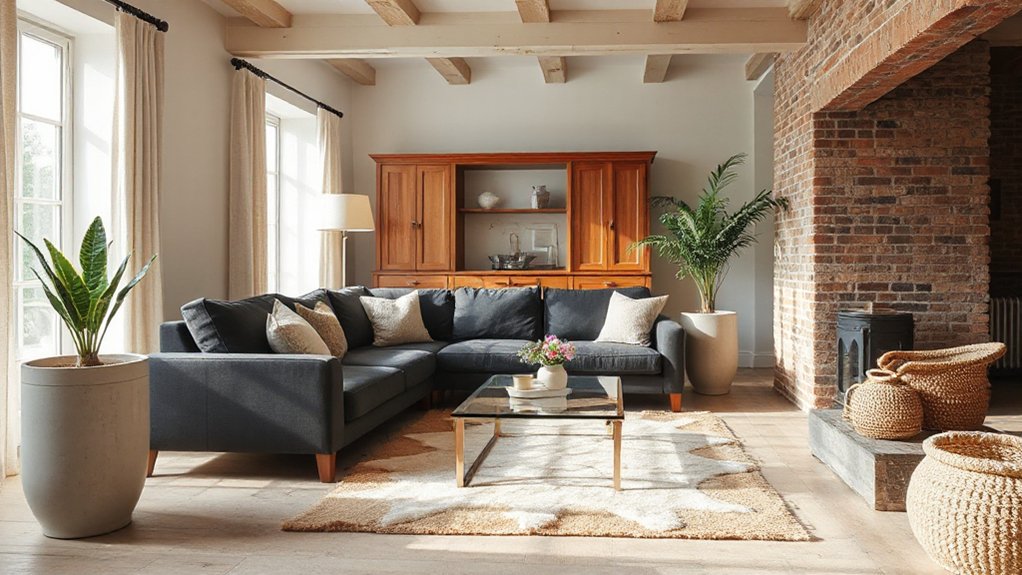
You’ll ground the space by layering natural textures, mixing soft and rough surfaces to create tactile contrast.
Pair woven fabrics, stone, and wood in a grounded material palette to anchor traditional architecture with contemporary nuance.
This approach keeps your rooms cohesive, fresh, and unexpectedly inviting.
Layer Natural Textures
Prioritize Textured wall treatments as a backdrop that adds depth without competing with artwork or furniture.
Introduce Layered fabric patterns in a cohesive palette to create visual rhythm and intimate zones within open layouts.
Let natural light play across matte finishes, avoiding high-gloss distractions.
Pair rough-hewn surfaces with smooth leathers and velvets to achieve a refined, lived-in vibe.
This approach supports belonging, inviting guests to linger, while signaling contemporary taste within a traditional framework.
Mix Soft + Rough
To ground a room that mixes traditional warmth with contemporary edges, pair soft textiles with rugged surfaces in equal measure. You’ll create depth by balancing plush velvets or wool with rough-hewn woods, stone, or concrete.
Seek deliberate textile contrast—a smooth chair fabric against a coarser rug or wall hangings that echo earthy textures. Let architectural details—moldings, columns, carved surrounds—speak through restrained, tactile counterpoints.
Focus on how light plays across surfaces; sheen on textiles versus matte roughness adds dimension without competing. Keep palette cohesive, letting a few metallic accents punctuate rather than shout.
Grounded Material Palette
Ground the space with textures that feel elemental and intentional. A grounded material palette uses tactile contrasts to define rooms without shouting.
Combine natural woods, stone, and brick with soft textiles to create depth and warmth, letting material contrast guide the flow from traditional to modern.
Choose finishes that align with color coordination—cool stone beside warm oak, matte against satin, rough against smooth—so furniture, walls, and floors read as a cohesive, curated whole.
Introduce subtle metallic or leather accents sparingly to lift the palette without dominating.
Prioritize quality over quantity; a few well-chosen materials stay timeless and feel already lived-in.
This approach invites belonging, making modern sensibilities feel earned within a traditional shell.
Mix Vintage and Contemporary Furniture
Mixing vintage and contemporary furniture is about balance: let standout pieces do the talking while subtler, modern forms ground the room. You curate a dialogue between eras, honoring vintage charm while embracing contemporary contrast.
Choose one or two statement items—an ornate chair, a sculptural lamp—that anchor the space, then weave in streamlined pieces for pace and clarity. Pay attention to scale, ensuring heirloom and modern forms share proportion rather than compete.
Materials should echo across styles—wood with metal accents, soft textiles alongside clean surfaces—to knit a cohesive narrative. Color acts as the hinge; use a unifying palette to unify disparate pieces, then introduce occasional bold accents for personality.
You’ll create a refined, welcoming environment where tradition and now feel naturally connected.
Use Light and Shadow for Depth
Light and shadow aren’t afterthoughts in a modern-traditional blend; they’re the shaping forces that give depth to a room. You leverage lighting techniques to sculpt atmosphere, guiding how spaces feel and flow.
Favor layered sources: ambient glow, task illumination, and accent spots that choreograph focus without shouting. Subtle shadows from furniture edges or drapery add dimensionality, inviting guests to inspect textures and materials.
Use dimmers to modulate intensity as daylight shifts, keeping the space cohesive from morning to evening. Consider wall-washing to reveal architectural details, and softly luminous artifacts to anchor color palettes.
Shadow play should be intentional, not accidental, highlighting contrast between old and new pieces while ensuring comfort, belonging, and a timeless, design-forward rhythm.
Create Functional Zones Without Clutter
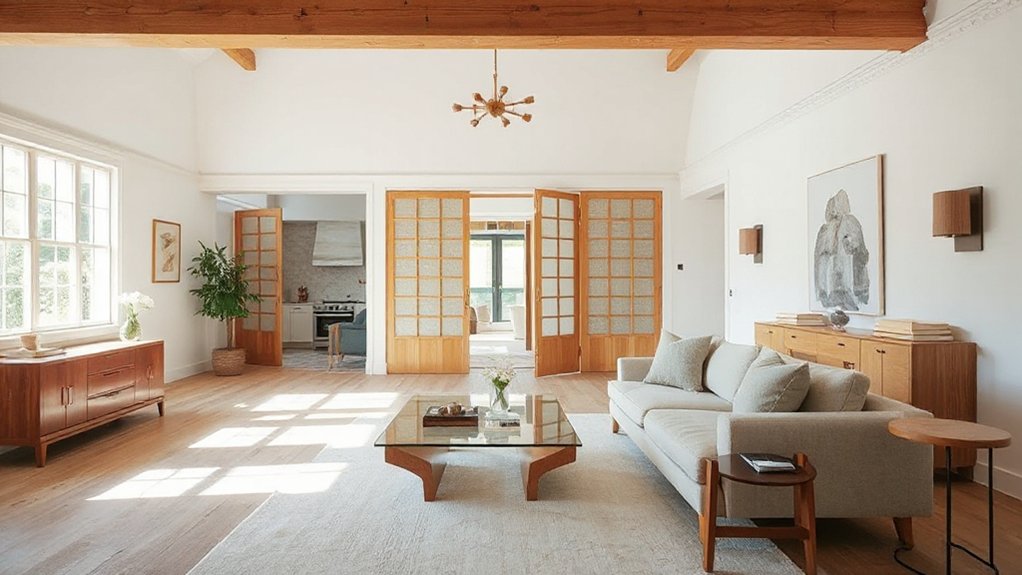
To create functional zones without clutter, designate distinct work, gathering, and display areas that flow seamlessly from one to the next. You’ll design these zones with intentional sightlines, so every space feels connected, not fragmented.
Use open storage for items you want accessible, keeping surfaces clean while revealing a curated collection that adds personality. Combine concealed compartments for cords, seasonal décor, and documents, preserving calm in living rooms and multiuse halls.
Let furniture scale define zones—low bookcases or glass-partition screens create boundaries without blocking light. Choose a restrained color palette and repeat materials to unify zones.
Prioritize easy-to-reach storage, so everyday tasks stay effortless. The result is a modern, warm flow that honors tradition while delivering belonging and functionality.
Refresh Fabrics and Hardware on a Budget
You can refresh fabrics on a budget by swapping in durable, cost-effective options that elevate texture without swamping the palette.
Quick hardware swaps—think modern pulls and hinges—update the feel without a full renovation.
Choose proven, long-lasting materials that balance style and resilience for a refreshed, timeless look.
Refresh Fabrics on Budget
Have you considered revitalizing your fabrics and hardware on a budget to instantly elevate a traditional room? You’ll refresh textures without overhauling, embracing craft-forward updates. Use upcycling techniques to transform old textiles into fresh accents, then pair with simple dyeing methods for controlled color shifts. The result is cohesive, current, and warmly inviting.
- Frayed edges become intentional texture on cushions and throws
- Re-dyed velvet drapes gain lush depth without new fabric costs
- Patchwork cushions tell a story of heritage and modern tactility
- Painted, stenciled upholstery panels introduce color without replacing seating
- DIY tassels and trim add custom finishings that feel boutique
Swap Hardware Quickly
Swapping hardware is a fast, high-impact move that complements the fabric refresh without breaking the bank. You’ll notice an immediate lift when you swap door handles and drawer pulls to sleeker shapes, warmer metals, or matte finishes.
Choose cohesive finishes—brushed nickel, aged brass, or oil-rubbed bronze—to unify traditional silhouettes with contemporary vibes. Measure hole spacing and backset before you shop to avoid surprises. If you’re unsure, opt for universal installation plates; they simplify updating without new cabinetry.
Keep scale in mind: slim pulls for narrow drawers, longer bars for wide doors. Pair hardware with upholstered details and subtle hardware detailing elsewhere in the room to weave a confident, belonging-ready narrative.
Your space feels curated, current, and undeniably yours.
Durable, Cost-Effective Options
- Weathered bronze knobs with matte black detailing, aged to patina with use
- Heavyweight, low-maintenance upholstery in dense weaves
- Recycled-fiber curtains that drape richly, absorb light, and endure
- Simple, low-profile rails and clips for clean lines
- Satin-nickel accents on durable hardware to unify spaces
This approach creates belonging through thoughtful choices, proving you don’t need excess to achieve durable, stylish, contemporary character.
Add Personal Story With Art and Accessories
To add a personal story with art and accessories, curate pieces that speak to your lived experiences and everyday rituals, then weave them into the room’s rhythm. You’ll select artworks and objects that reflect how you actually live, not just what’s trendy.
Prioritize art integration that feels effortless within the traditional framework, so the modern layer reads as a natural extension of your life. Mix mediums, from photography to textile, with a cohesive color cadence that mirrors your daily routines.
Use scale and placement to guide the eye toward meaningful moments, like a favored keepsake by the sofa or a gallery wall that evolves with seasons. This approach cultivates belonging through intentional storytelling and thoughtful curation.
Practical Rules to Refine Your Design
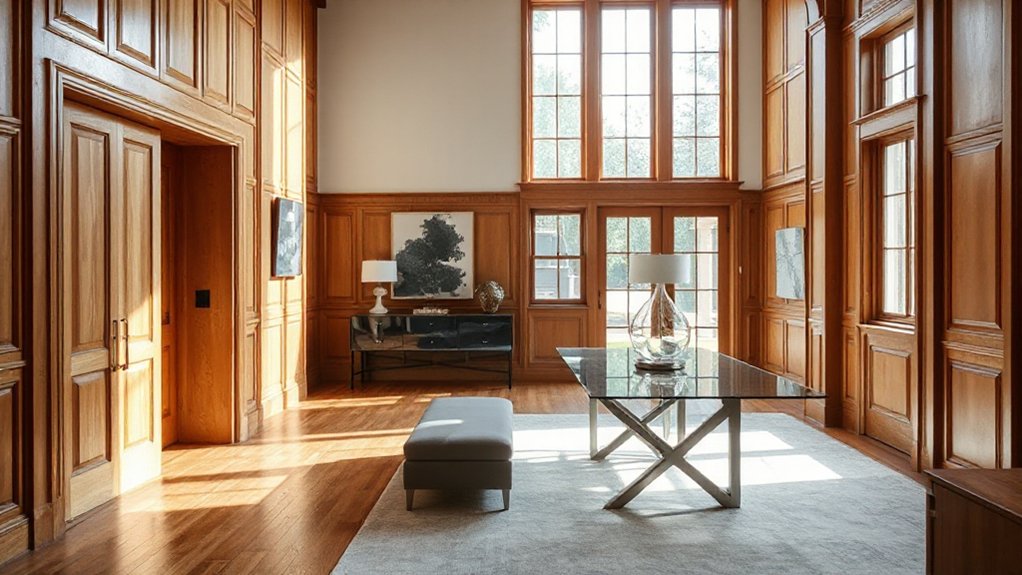
You refine a modern-meets-traditional interior by establishing clear rules that serve as a design compass. You balance timeless Historical influences with crisp Architectural details, then translate them into practical steps you can follow daily.
- Define a restrained palette that honors history while inviting contemporary warmth
- Highlight key architectural features, preserving moldings and beams as intentional focal points
- Use texture and scale to create layered depth without visual chaos
- Embrace purposeful contrasts: sleek surfaces with warm woods, soft fabrics with iron accents
- Vet each element for belonging, ensuring it strengthens the whole rather than competing with it
These rules foster belonging, clarity, and confidence, guiding you toward a cohesive, forward-looking home.
Frequently Asked Questions
How Do I Balance Modern and Traditional Across Ceilings?
You balance modern and traditional across ceilings by emphasizing ceiling height and decorative moldings; keep lines clean, add subtle crown details, and contrast smooth, expansive ceilings with graphic molding accents to foster belonging and design-forward confidence.
What Lighting Helps Blend Styles in Small Rooms?
Moonlight whispers through vintage fixtures, guiding your eye. You blend styles with ambient lighting, choosing warm, subtle glow over harsh light. You’ll feel included, as spaces feel cohesive, modern, and timeless—like belonging in a thoughtfully lit, design-forward home.
Can Patterns Clash With a Neutral Palette, and How to Avoid It?
Yes, patterns can clash with a neutral palette, but you avoid it by scaling prints, balancing with solid neutrals, and using cohesive color coordination. Pattern mixing feels intentional, confident, and inviting, helping you belong in a design-forward space.
Which Materials Age Well in a Traditional Home With Modern Touches?
You’ll love how oak, walnut, and brick age gracefully, with durable textures and warm patina. Material durability shines, while age resistant finishes protect surfaces—instilling belonging as you craft a design-forward, expert, trend-aware, suspenseful reveal.
How Can I Update Hardware Without Losing Historic Character?
Update hardware thoughtfully: mix vintage accessories with antique furniture, choose timeless finishes, and preserve original silhouettes. You’ll maintain historic charm while signaling modern restraint, creating a confident, belonging-rich space that feels curated, intentional, and design-forward.
Conclusion
You now know how to fuse modern ease with traditional warmth, crafting spaces that feel fresh yet timeless. Start with a clear modern-traditional identity, then layer texture, light, and thoughtful zoning to keep rooms calm and usable. For example, imagine a brick-adorned living room softened with a taupe sofa, a vintage wood coffee table, and chrome lighting—the result is polished, not precious. Stay bold with art and let every detail tell your story.