
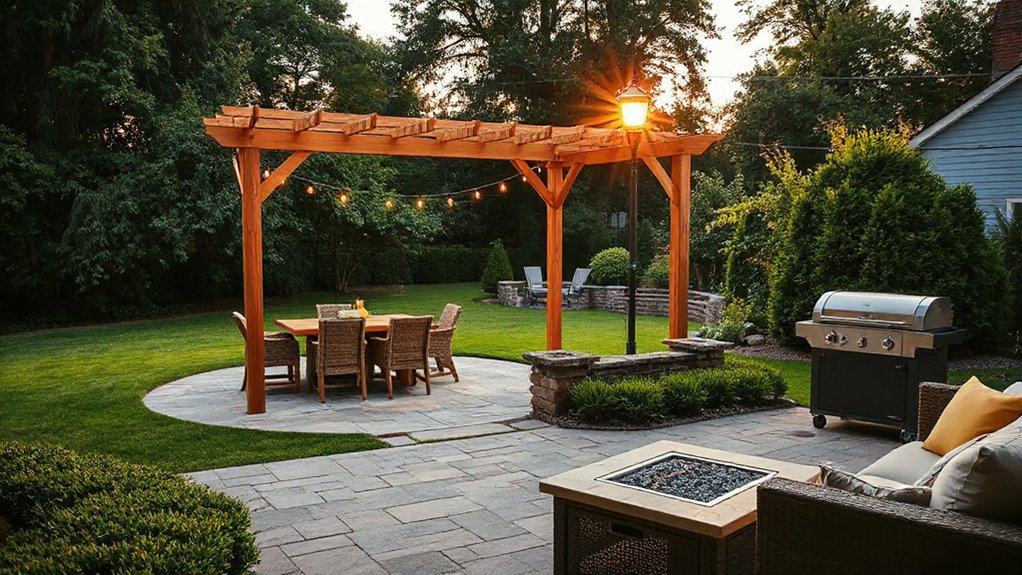
Define your entertaining style and map zones for socializing, dining, and play. Start with a central seating area and connect dining to prep spaces along a clear dining spine. Use weather‑resistant, low‑maintenance seating and warm, layered lighting to invite movement from room to room. Create kid‑safe corners with sightlines and soft surfacing, plus storage for seasonal gear. Maintain tidy routines and seasonal prep to keep everything welcoming year‑round—there’s more to optimize beyond this.
Define Your Entertaining Style: Backyard Spaces That Succumb to Hosting Ease
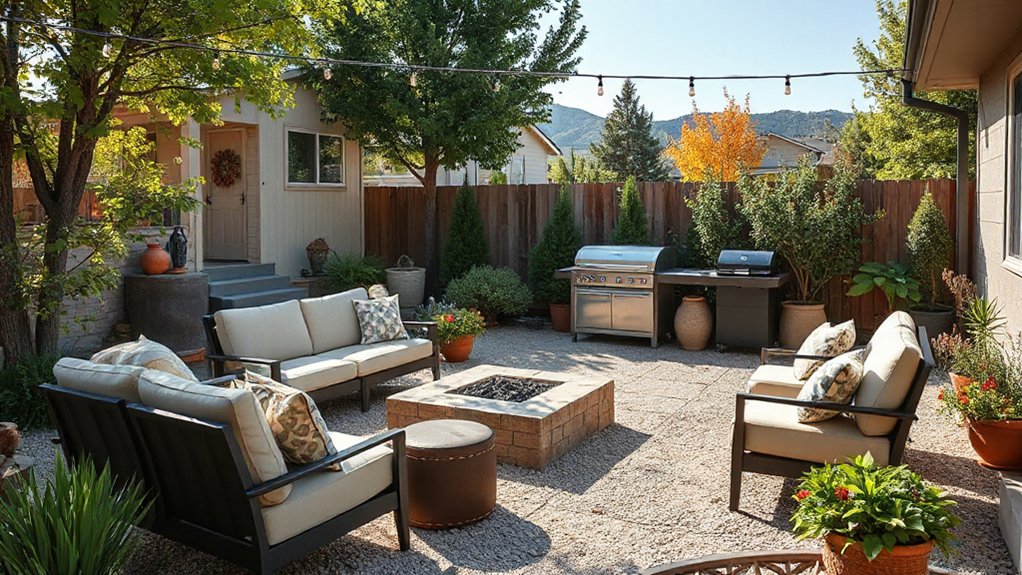
Your entertaining style starts with a clear goal: what kind of gatherings do you host most often, and what spaces will make them effortless? You define this by your season, guest count, and vibe.
Start with a central seating zone that invites conversation, then add flexible options so you can reconfigure as needs shift. Prioritize privacy screening to create intimate moments, whether you’re laughing with friends or hosting a quiet evening under the stars.
Choose durable outdoor decor that feels cohesive with your home, not fussy or overwhelming. Map lighting, weather-friendly furniture, and a defined flow from kitchen to lounge to dining.
When your spaces align with purpose, hosting becomes easier, more enjoyable, and truly welcoming for everyone.
Map Zones for Socializing, Dining, and Play
You’ll sketch clear socializing zones, dining and friends areas, and playtime layouts to keep flow natural and conversations easy.
Consider how each zone supports different activities, sightlines, and accessibility so guests move without crowding.
This map-based approach sets a practical framework for layout decisions that you can adjust as needed.
Socializing Zones Map
A well-designed Socializing Zones Map helps you maximize flow and comfort in backyard gatherings, clearly marking where guests mingle, dine, and play. You’ll design distinct zones that feel natural yet intentional, guiding movement without interrupting conversation.
Start with a central social hub, then place lounge areas near the perimeter for enclosure and privacy. A separate dining spine should connect to prep spaces, ensuring easy service without crowding.
Include a play zone visible from most seating to keep kids engaged yet contained. Use visual cues—colors, textures, and lighting—to reinforce functions at a glance.
This approach enhances garden aesthetics and outdoor decor, making guests feel welcome and connected. Precision planning creates confidence, belonging, and relaxed moments that extend beyond the party.
Dining and Friends Areas
From the Socializing Zones Map, pivot to the dining and friends areas by outlining a clear dining spine that connects service prep to seating and conversation hubs. You create flow with a straight line of activity: prep zone, buffet or pass-through, then dining table cluster.
Position service gear near kitchens or outdoor bars, so guests never search for forks or napkins.
Choose seating in intimate clusters that invite conversation, with varied heights and comfortable textures for lingering.
Use practical zones for garden landscaping elements that frame the dining space and reinforce a seamless look.
Maintain pest control awareness with clean, stored foods and sealed containers to keep the mood relaxed and welcoming.
This setup supports belonging, comfort, and effortless social moments.
Playtime Activity Layouts
Could you design playtime areas that flow as smoothly as the dining spine? In this layout, map zones support socializing, dining, and play without crowding. Place a central open area for active games and a quieter corner for crafts, shielding both with sightlines from seating.
Use clear boundaries—low hedges, stepping-stone paths, or color-coded mats—to guide movement and prevent collisions. Prioritize playground safety by checking surface materials, securing equipment, and arranging soft landings near swings and climbers.
Integrate outdoor game ideas like cornhole, giant Jenga, and relay stations near shade, so adults can supervise while kids rotate. Keep buffers between eating and active zones to minimize spills and noise, reinforcing a welcoming, belonging-first atmosphere.
Maintain accessibility, turnover, and effortless flow for every guest.
Choose Low-Maintenance, Weather-Resistant Seating
Choose seating that lasts with durable outdoor fabrics and weather-resistant materials that resist sun, rain, and fading.
Look for low-maintenance designs that stay comfortable with minimal upkeep and simple cleaning routines.
This sets the pace for durable, easy-care gatherings you can enjoy year after year.
Durable Outdoor Fabrics
Opt for easy-care finishes like stain-repellent textures and machine-washable covers where possible. Consider performance blends, such as solution-dyed acrylics, that stay vibrant after seasons of use.
For outdoor upholstery, prioritize tight weaves and reinforced seams to endure frequent seating, kids, and pets. Match colors to your space so you feel a sense of belonging, not upkeep anxiety.
With the right durable fabrics, your seating remains comfortable, welcoming, and ready for gatherings.
Weather-Resistant Materials
Weather-resistant seating is your best bet for easy-going backyard moments, especially after focusing on durable fabrics. When you choose weatherproof furniture, you gain reliability that invites gatherings year-round.
Look for rust resistant hardware, so screws and anchors stay secure without staining or squeaks. Opt for frames built from powder-coated aluminum or treated hardwoods that resist warping and moisture.
Cushions should be quick-drying and fade-resistant, with removable, washable covers for simple upkeep. For flexibility, pick modular pieces you can rearrange as friends arrive.
Consider integrated drainage or slightly angled seating to shed rain and dew. Stow away cushions during heavy weather, yet remain confident your setup preserves comfort and style.
With these choices, you foster belonging through dependable, ready-to-use seating.
Low-Maintenance Designs
Among low-maintenance options, prioritize seating that stays ready with minimal care. Choose weather-resistant frames like powder-coated steel, teak, or all-weather wicker, and opt cushions with quick-dry fills or solid covers that wipe clean.
Position seating to define gatherings while leaving clear traffic flow for effortless entertaining. Favor modular pieces you can rearrange as crowds shift, so setup feels natural rather than forced.
You’ll benefit from simple maintenance routines: light cleaning, seasonal inspections, and stain-resistant fabrics. Integrate discreet drainage, so furniture rests above wet spots after rain.
Consider garden irrigation planning that keeps nearby greenery thriving without dampening seats. For pest control, seal gaps and choose seating materials that deter insects.
With these choices, you create inviting spaces you’ll use often and guard against upkeep fatigue.
Install Welcoming Lighting and Ambience
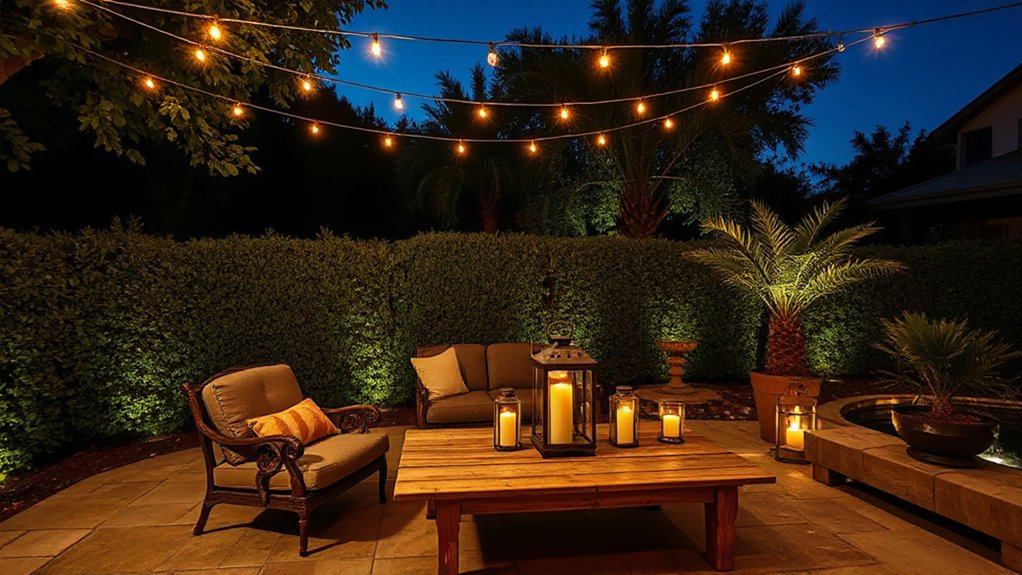
To create a welcoming nightscape, start with layers of lighting that guide guests without overpowering the space. You’ll balance task, ambient, and accent lighting to shape mood and safety. Use warm, energy-efficient bulbs to keep tones inviting, not sterile.
Position pathway lights to lead guests from door to seating without glare, and place overhead fixtures where they best illuminate conversation zones. Incorporate twinkle lights for a soft, festive texture, but don’t overdo it—string them where they frame entries or highlight architectural quirks.
Lantern placement matters: cluster a few near seating for intimacy and use a single focal lamp to anchor a dining area. Dimmers and smart controls enable progressions from casual to intimate gatherings with ease.
Build Kid-Safe Corners and Activities
As you plan kid-friendly corners, start by rethinking safety without sacrificing style, building on your lighting groundwork to create inviting, secure zones. You’ll place low-profile safety barriers where play meets flow, so curious little explorers encounter gentle boundaries rather than rigid barriers.
Implement child-proof fencing around active play areas to deter escapes while preserving sightlines and airiness. Choose soft-edged furniture, rounded corners, and textured rugs to cushion tumbles and encourage tactile exploration.
Design activities that channel energy: color-themes, scavenger hunts, and seasonal “quiet corners” for reading or arts. Establish clear sight lines from seating areas so you can supervise without hovering.
Keep gates and latches easy for grownups, but challenging enough for small hands, reinforcing a calm, inclusive backyard where everyone belongs.
Streamline Outdoor Cleaning and Upkeep
Keeping outdoor spaces clean and well-maintained doesn’t have to feel like a chore; with a few simple systems, you can streamline every task. Start with automated cleaning routines that run on schedules—mrooms, patios, and entryways stay tidy without constant scrubbing.
Invest in practical tools: a power washer for sidewalks, a cordless vacuum for outdoor cushions, and easy-clean mats that trap dirt at the threshold.
Create a routine that pairs sweeping with wipe-downs after gatherings, so debris doesn’t linger.
For pest control, set up barriers and routine inspections, addressing attractants before they become problems.
Maintain seasonal drains and gutters to prevent standing water.
Prepare for Seasonal Transitions and Storage
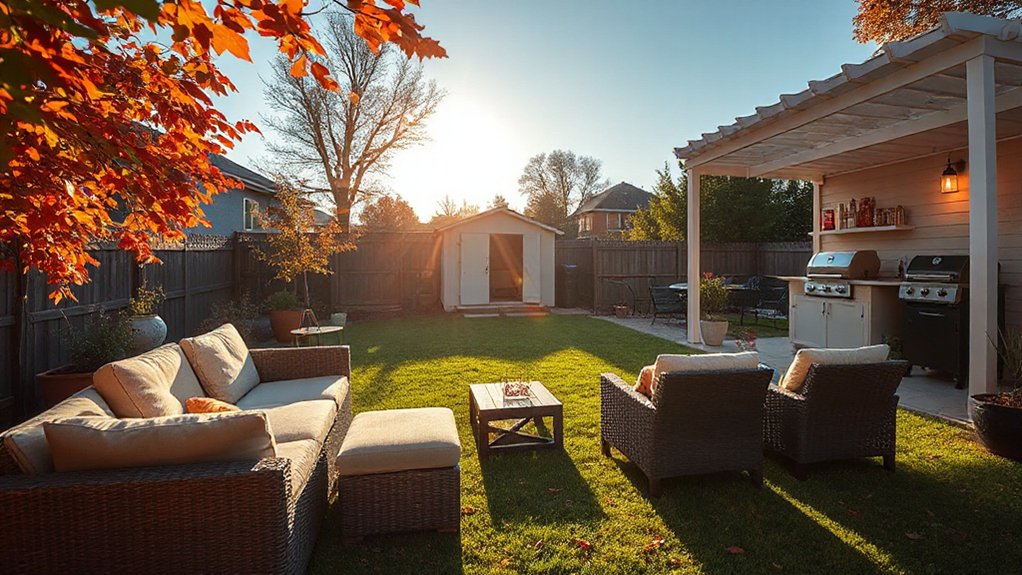
Seasonal shifts don’t have to catch you off guard; with a clear plan, you can swap in seasonal gear and clear space without the chaos. You’ll build a simple cycle: assess, store, label, and rotate.
Use weatherproof bins for seasonal storage of cushions, covers, and decor, and dedicate a shaded shelf for quick access.
Create a climate adaptation checklist: dry items thoroughly, repair outdoor fabrics, and seal gaps in sheds to prevent moisture damage.
Assign each zone a season, so guests feel guided by thoughtful preparation rather than clutter.
Maintain clear pathways and mark storage boundaries with durable labels.
This approach reduces last-minute scrambles, boosts safety, and reinforces belonging—your backyard becomes predictable, welcoming, and ready for any gathering.
Frequently Asked Questions
How Can I Host Multiple Small Gatherings in One Space?
Yes—you can host multiple small gatherings in one space by zoning areas, using flexible seating, and scheduling staggered activities.
You’ll create flow with garden lighting that guides guests between spaces and outdoor furniture setups that encourage conversation.
Keep *changeovers* smooth with portable lighting, side tables, and blankets.
Use comfortable, modular furniture to reconfigure quickly.
Prioritize warmth, accessibility, and belonging, so everyone feels included while you host confidently and efficiently.
What Is the Best Layout for Versatile Outdoor Parties?
Orchestrate zones: open, intimate, and flow together like sunlight on grass. You’ll maximize versatility by creating distinct areas with smart furniture arrangements and easy sightlines for mingling.
Place a flexible seating cluster near a focal point, buffer with a mix of high and low pieces, and keep walkways clear for movement.
Outdoor lighting should color the passages, not overwhelm them. You’ll feel a welcoming rhythm as guests drift, linger, and return.
Which Plants Are Both Low Maintenance and Entertaining-Friendly?
You should choose plants that are low maintenance and welcoming, like compact ornamental grasses, hydrangeas, and lavender.
For entertaining-friendly appeal, select varieties that bloom through seasons and tolerate sun or shade.
Plant selection matters; group them by function—privacy, fragrance, and color—while keeping paths clear for guests.
Garden design becomes practical when you mix evergreen structure with seasonal accents.
You’ll create a durable, inviting backdrop that helps you host confidently and feel a true sense of belonging.
How Can I Conceal Clutter During Guests’ Arrival?
Hide clutter fast by staging your entry with a simple plan: swap out visible mess for calm, curated visuals.
As guests arrive, switch on outdoor lighting to highlight focal points, and tuck cords or odds and ends behind privacy screens or decorative screens.
Use baskets for quick collection, and designate a discreet catch-all area.
This approach creates belonging, keeps paths clear, and makes your space feel intentional and welcoming.
What Budget-Friendly Upgrades Maximize Social Use?
You don’t need a fortune to host memorable evenings; start with smart, budget-friendly upgrades. Focus on garden lighting to set the mood and extend hours, and choose versatile outdoor furniture that stacks or folds for easy rearrangement.
Opt solar lanterns, string lights, and a weatherproof coffee table for gatherings. Prioritize comfort, warmth, and flow so guests feel welcome, included, and enthusiastic to linger.
These practical touches foster belonging and maximize social use.
Conclusion
So you’ll transform your yard into an entertaining hub by defining your vibe, zoning for socializing, dining, and play, and choosing durable, low-maintenance pieces. With welcoming lighting, kid-safe nooks, and simple cleanup plans, you’ll keep spaces inviting year-round. Think ahead for seasonal shifts and smart storage to cut clutter. Ready to visualize the scene: a twilight gathering under warm lights, kids’ corners buzzing, and a breeze of effortless hosting—could your backyard finally feel like a true extension of home?