
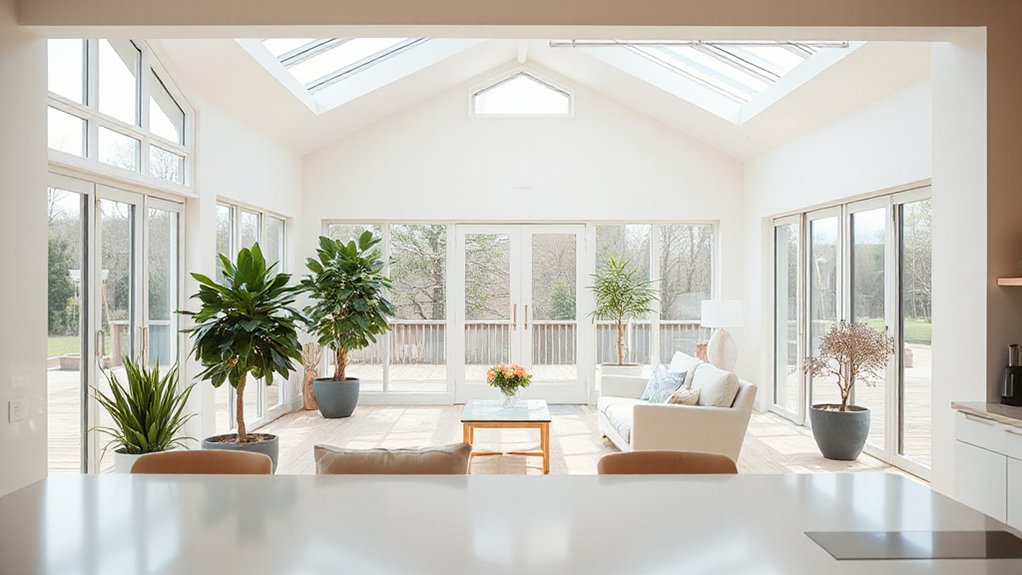
To boost natural light, start with a daylight map: trace sun paths, sightlines, and existing obstructions to spot where glare or shadows form. Maximize daylight with south-facing panes, clerestories, and high-performance glazing, then prune outdoor blockers during peak sun. Use reflective surfaces, diffusion, and light, cool hues to push brightness deeper. Reconfigure walls and partitions in small, measured shifts, and test luminance before and after. If you want more, you’ll uncover practical, budget-friendly tweaks you can try next.
How to Brighten a Room in 7 Steps: Quick Wins and Big Gains
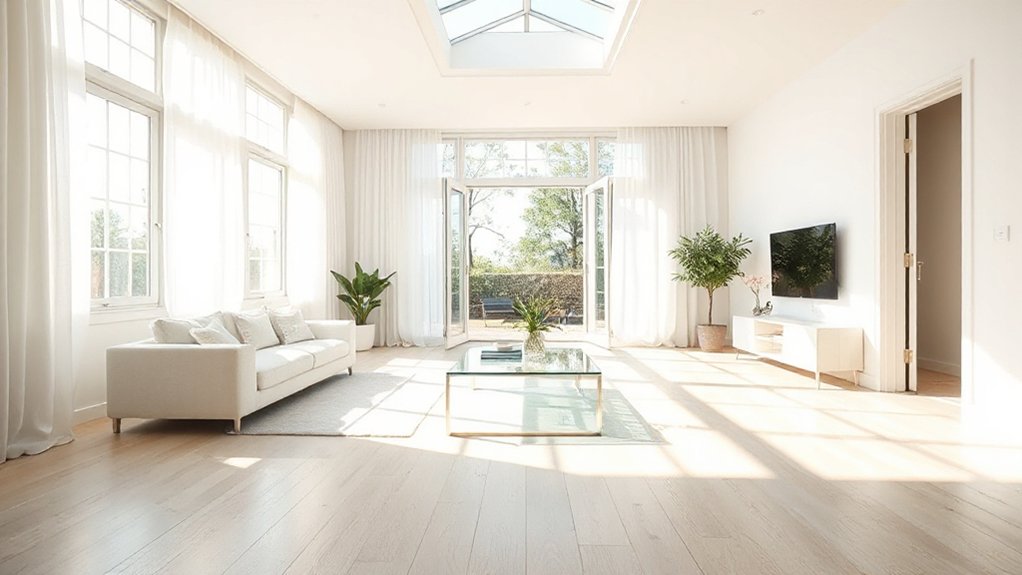
Brighten a room fast with seven practical steps that yield noticeable results. You’ll start by removing clutter, so sightlines can breathe and natural light travels further.
Next, lift heavy furniture away from walls to prevent shadowing and widen the feel of the space.
Use light, reflective colors on walls and ceiling to amplify brightness without extra effort.
Introduce artificial lighting with layered sources—ambient, task, and accent—so you can tailor mood and function instantly.
Maximize window treatments to control glare while keeping daylight streaming in; sheer panels paired with adjustable blinds work well.
Place mirrors opposite windows to bounce light across the room, creating depth.
Finally, trim landscaping outside that blocks key light, and keep windows clean for maximum clarity.
Take a Real-World Look at Your Light: Windows, Walls, and Layout
Take a real-world look at your light by noting where windows actually sit and how that outlet of daylight travels through each room. Check window placement, wall surfaces, and room layout to see where glare, shadows, or dark corners form, and jot where you could optimize.
Use simple data and visuals—photos, measurements, and a quick flow map—to guide practical tweaks that boost brightness without major renovations.
Inspect Window Placement
How you place windows shapes the light you actually get. You inspect placement by tracing sightlines from each room’s main activities to the outside world. Note how window height, width, and setback influence soft vs. direct glow throughout the day, and map sun paths to avoid glare in work zones.
Check whether existing openings align with furniture layouts and traffic flow, and mark any misalignments that dull daylight or trap shadows. Consider window materials for durability and thermal performance, and how those choices affect perceived brightness.
Think about exterior shading options to control strong sun without sacrificing openness. This practical check helps you feel rooted in your space, fosters confident decisions, and supports a brighter, more welcoming home atmosphere.
Optimize Wall Layouts
To optimize wall layouts, start with a real-world scan of how light moves through each room and where walls, doors, and furniture block or channel it. You’ll map glare zones, shadow time, and the pockets where daylight fades.
Focus on wall integrity and the potential for targeted structural modifications that preserve openness while improving brightness. Use data like window orientation, ceiling height, and furniture footprints to guide decisions.
Small shifts—repositioned partitions, partial walls, or slim soffits—can amplify ambient light without major renovations.
- Identify walls that trap or redirect daylight
- Prioritize openings that improve cross-ventilation and sightlines
- Assess load-bearing needs before any structural modifications
- Plan for flexible layouts with movable screens or shelves
- Measure lighting quality across different seasons and times
Choose Window and Door Placement to Maximize Daylight
Where should you place windows and doors to harvest the most daylight without sacrificing privacy or energy efficiency? Start with orientation: align larger panes to south-facing walls where sun exposure is strongest, and use transoms or clerestory windows to bring in light without sacrificing privacy.
Position doors to create light-adjacent sightlines from rooms to outdoor spaces, but avoid direct glare by separating public from private zones. Use consistent sill heights and glass types to reduce heat gain while preserving views.
Choose window treatments and curtain selection that soften harsh noon sun while preserving daylight. In every choice, measure daylight hours across seasons and trust data: windows with high performance ratings yield brighter rooms with lower energy costs.
Aim for cohesive, inviting spaces that feel connected and safe.
Reflect, Diffuse, and Color: Practical Tricks That Multiply Light
Gloss surfaces and smart textures can dramatically multiply daylight, so start by reflecting light from walls and ceilings with bright, neutral tones and a matte finish to prevent glare. You’ll blend Reflective surfaces with color, then use Diffusion techniques to soften harsh shadows, creating a uniform glow.
Small choices multiply impact: test in rooms with the most glass, measure brightness, and pick finishes that don’t tint light.
- Reflective surfaces to bounce daylight across wider areas
- Diffusion techniques to soften excess glare
- Color balance that keeps warmth without muting brightness
- Texture variety to avoid flat, clinical feel
- Consistent lighting rules across ceilings and walls
This approach feels purposeful, data-driven, and inclusive, inviting you to belong in a brighter home.
Everyday DIY Tweaks That Add Daylight Without Breaking the Bank
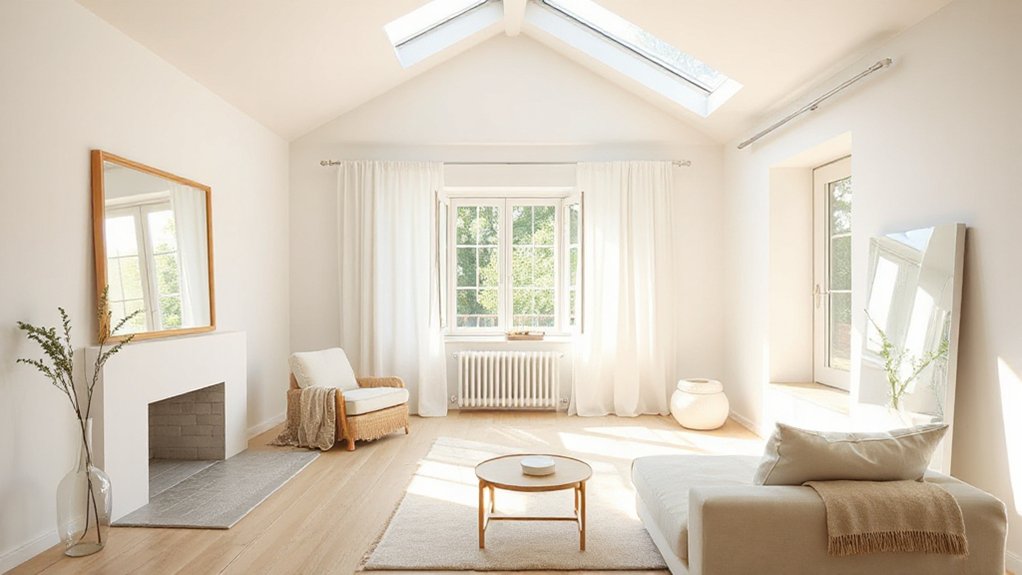
Brighten rooms on a budget with simple, hands-on tweaks you can do in a weekend. You’ll notice daylight feels brighter when you maximize reflections and plant life.
Begin with decorative window films to soften glare while preserving view, choosing subtle textures that expand light without heavy patterns.
Next, optimize indoor plant placement: group glossy-leaved varieties near windows to bounce light toward darker corners, and use tall, slim plants to create vertical light channels.
Clean windows thoroughly; clear panes increase 10–20% daylight transmission, and recheck blinds to raise them during peak sun.
Paint walls in light, cool tones with low reflectance risk, then add mirrors opposite windows to amplify the glow.
Track results with simple brightness checks and adjust placements weekly for best results.
Prioritize Daylight Spending: A Simple Budgeting Framework
To prioritize daylight spending, start with a simple, itemized framework that matches your goals to a budget. You’ll map room-by-room needs to measurable outcomes, then assign costs against a clear timeline. This keeps you in control, avoiding impulse buys.
- Budget planning: define must-haves, nice-to-haves, and contingencies.
- Lighting technology: choose daylight-mromoving controls and efficient fixtures.
- Visual targets: set lumen, glare, and color-rendering goals for each space.
- Investment pacing: phase renovations to balance cash flow with daylight gains.
- Measurement: track daylight hours and satisfaction to adjust future purchases.
This framework centers belonging, with practical choices that align aesthetics and function. You’ll feel informed, confident, and connected to your brighter home.
Troubleshooting Common Daylight Challenges (and Fixes)
You’ll start by adjusting window placement to maximize daylight distribution and minimize glare, using data from your room’s sun paths.
Eliminate obstructions—furniture, plants, or trim—that block high-contrast light patterns while prioritizing light-enhancing palette choices to reflect more into living areas.
This quick, visually guided approach sets the stage for practical fixes that pair with your layout and color choices.
Window Placement Tweaks
When facing daylight distribution challenges, small window-placement tweaks can make a big difference in how a space feels and functions. You’ll optimize flow by mapping sun paths majorly, then testing simple shifts that don’t require major construction. Focus on proportion, orientation, and visual connection to outdoors.
- Window styles chosen for glare reduction and frame minimize light loss
- Curtain options that balance privacy with ambient glow
- Sill height adjustments to maximize floor reflection without overheating
- Alignment with furniture to enhance perceived openness
- Frame color and finish that harmonize with wall tones
These tweaks are data-informed, visually clear, and community-minded, helping you feel more at home. Implement gradual, measured changes to confirm impact before proceeding.
Obstruction Elimination Strategies
Even so, daylight can be gridlocked by obstructions, and the fix is a targeted, data-led process. You assess lighting gaps with a simple grid: map sun paths, window angles, and interior reflectance to identify outdoor obstructions and structural barriers.
Then you prioritize interventions that boost usable daylight without sacrificing privacy or energy efficiency. Start with pruning or relocating outdoor obstructions, like shrubs or furniture, to widen sightlines at peak sun hours. If boundary lines block light, adjust landscaping or reframe sightlines to preserve vertical illumination.
When walls or joists cast shadows, consider lightweight, removable screens or repositioned vents that don’t compromise airflow. Measure results with before-and-after luminance tests to verify consistent improvement for every room.
This practical, inclusive approach helps everyone feel they belong in brighter spaces.
Light-Enhancing Palette Choices
Light-enhancing palettes aren’t just about color afterglow; they leverage tint, brightness, and contrast to amplify daylight without adding fixtures.
You’ll use color contrast and reflective surfaces to guide eye movement toward windows, while avoiding stark shifts that feel clinical. Pair light neutrals with subtly cooler accents to balance warmth from natural light, and test values in daylight to prevent muddy rooms. Choose finishes that reflect rather than absorb glare, and align palette with existing architectural lines for cohesion.
- maximize contrast between wall tones and trim for depth
- select matte walls to reduce glare while keeping brightness
- deploy cool accents to temper warm sun
- prioritize reflectivity over saturation in every surface
- plan around lighting fixtures to maintain even distribution
Frequently Asked Questions
How Does Light Quality Affect Mood and Productivity in Renovated Spaces?
Lighting psychology shows bright, well-balanced light boosts mood and focus, while warm tones aid comfort; you’ll notice productivity rise as glare drops. Mood enhancement comes from layered lighting, daylight cues, and visually cohesive spaces that feel belonging and intentional.
Can Existing Trees or External Shading Be Used to Improve Daylight Without Glare?
Like a familiar fable, yes: you can use Tree pruning and External shading to boost daylight while minimizing glare. You’ll balance light levels, monitor with data, and keep spaces visually open, inviting, and practically comfortable for everyone.
What Are Practical Safety Considerations When Enlarging Windows or Skylights?
When enlarging windows or skylights, prioritize structural reinforcement and weatherproofing measures, then assess fall hazards and glazing quality; you’ll stay safe, feel supported, and trust your build with robust framing, proper flashing, and leak-free, energy-efficient panes.
How Do You Balance Daylight With Privacy in Urban Homes?
To balance daylight with privacy, you should optimize window placement and use interior glass partitions strategically, layering treatments and screens. You’ll measure sightlines, max natural light, and maintain comfort, belonging, and visual openness for your urban space.
What Simple Non-Structural Changes Best Boost Daylight in Dark Interiors?
Brighten interiors with light-reflecting interior paint and simple window treatments; you’ll notice a 20% visual lift, like a lighthouse metaphor guiding you home. Use airy whites, light grays, and sheer panels for inclusive, inviting spaces.
Conclusion
You’ve mapped how to boost daylight—now put it into action. Start with a quick audit of windows, walls, and layout, then test light at different times of day. Prioritize cost-effective moves, like lighter colors and strategic mirrors, before bigger, pricier changes. Track results with photos and daylight hours to stay data-driven. This approach lets you see real gains without overhauling your whole space. With daylight on your side, you’re basically lighting up your home—can’t beat that. It’s the trick of the trade.