
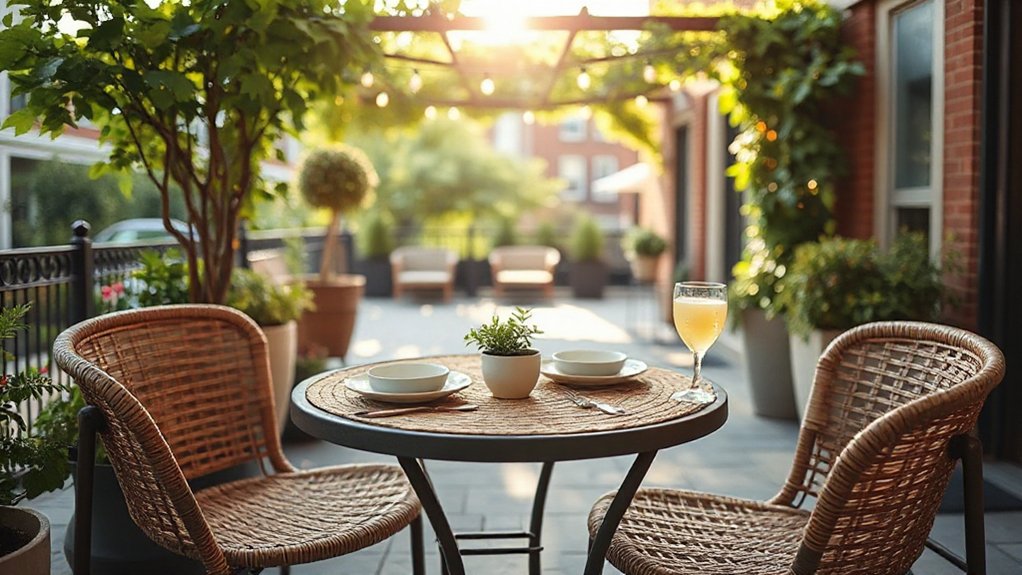
Turn your small patio into a flexible dining zone with compact, weather‑ready furniture and smart storage. Measure your space, map doors and traffic, and pick a layout that suits you—linear against walls, a corner nook, or a circular setup for intimate eye contact. Choose a foldable table and benches with built‑in storage to maximize floor space. Add warm lighting and a vertical herb wall for flavor. Curious what else can elevate this space? Let’s explore more ideas.
Why Small Patios Are Perfect for Al Fresco Dining
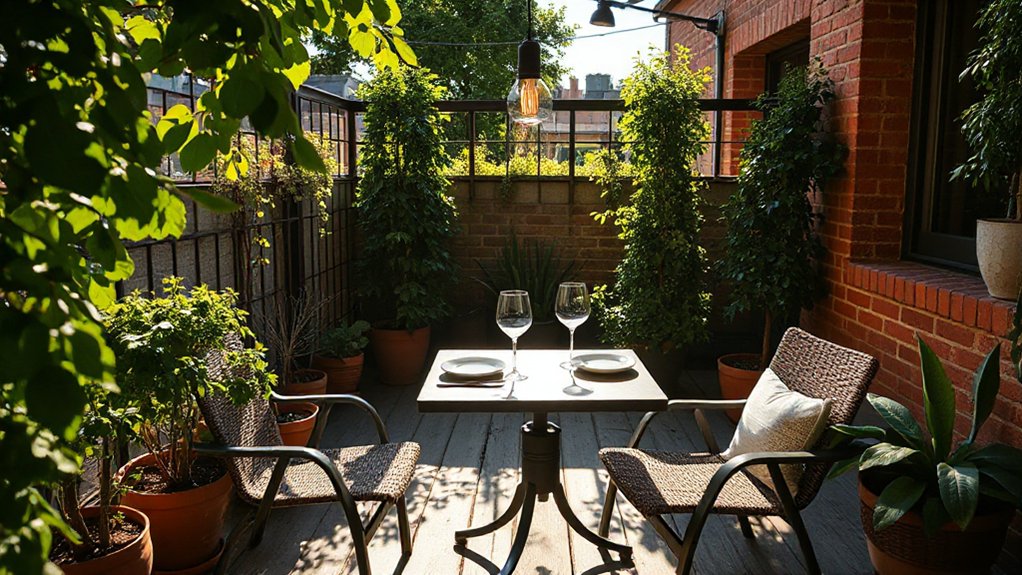
Small patios are inviting precisely because they’re intimate and easy to manage. You’ll experience al fresco dining sooner, with less setup and more ambiance.
The core advantage is intimacy: everything feels close, personal, and controllable, so conversation flows naturally and guests stay engaged. You can tailor the space to your routine, not the other way around, making meals feel like a shared ritual.
Practical layouts maximize seating without crowding, while flexible furniture adapts to different occasions.
Garden lighting creates atmosphere and safety, letting you extend meals into evenings without overpowering the space.
Thoughtful plant arrangements frame the dining area, add fragrance, and soften hard edges.
In small patios, you shape the mood, not the constraints, then invite friends to linger and contribute.
Assessing Your Space: Measure, Shape, and Flow
To design a functional patio, start by measuring accurately, then map the shape and flow of the space. You’ll identify usable squares, door clearances, and circulation routes, making sure you leave room for movement and furniture. Measure every key datum: walls, offsets, windows, and any fixed features.
Note sun and shade patterns to anticipate timing and comfort. Sketch a simple layout, then compare it to your reality to reveal constraints and opportunities.
Consider focal elements like garden sculptures or a water feature that guide traffic and seating; guarantee they don’t obstruct pathways. Plan for practical additions first: durable seating, shade options, and safe, accessible paths.
Finally, align your plan with a cohesive style—your space should feel invited, organized, and distinctly yours—so guests sense belonging.
Pick Your Dining Layout: Linear, Corner, or Circle
With your space mapped and flow clear, the next step is choosing how guests will gather: a linear, corner, or circle dining layout.
A linear setup works well against a wall, saving center space while guiding traffic, and it supports easy conversations along the line.
Corner layouts optimize tight patios, forming an intimate, sociable nook that invites shared dishes without crowding.
A circle encourages inclusive, all-seated chatter, ideal for small groups who want eye contact and quick service.
Consider traffic patterns, service access, and focal points like a window or view.
Add string lights overhead to define edges and create warmth, then place outdoor cushions for comfort and informal gathering zones.
Pick a layout that facilitates effortless interaction and a welcoming, cohesive patio vibe.
Choose a Compact Dining Set That Fits Your Footprint
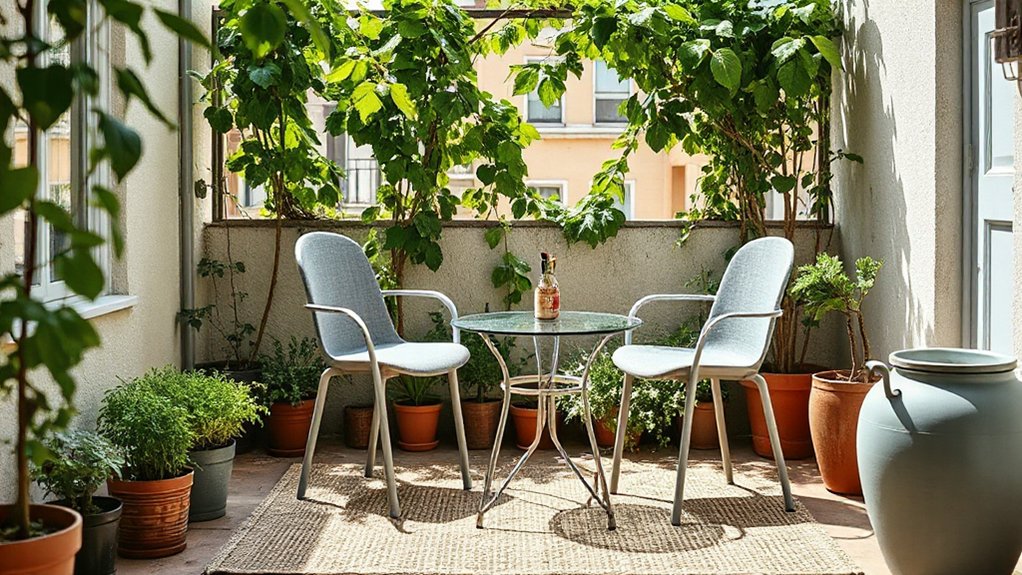
If you’ve mapped your space and settled on a dining layout, pick a compact set that fits your footprint without overwhelming the patio. Choose pieces that balance function with scale, so movement stays easy and inviting. Your goal is cohesion, not clutter, so prioritize clean lines and comfortable seating.
Color schemes should accent the patio’s mood, while material choices withstand weather and daily use.
- Match a small table with slim chairs or a bench to maximize openness without skimping on seating.
- Opt for materials you can care for year-round, like powder-coated metal, tempered glass, or outdoor wicker in a neutral finish.
- Consider modular or extendable options that you can reconfigure as your space or gatherings grow.
Foldable Tables That Disappear When Not in Use
When you choose foldable tables that disappear, you gain instant floor space without sacrificing seating later.
Look for models that hide away cleanly when closed, offering an ultra-compact profile and sturdy hinges.
With quick setup and simple storage, you keep your patio ready for foot traffic or meals in seconds.
Hidden When Closed
1) Choose compact, foldAway designs that lock flat against walls or stow inside a cabinet, keeping pathways clear.
2) Pair with discreet seating that tucks beneath rails or benches, so nothing interrupts sightlines or flow.
3) Label a small, dedicated spot for quick setup, so guests sense belonging through effortless, tidy routines.
These strategies respect your space, reinforce comfort, and let you host with ease, turning patios into intimate extensions of home.
Hidden corners reward your thoughtful arrangement; garden secrets stay yours until you open them.
Ultra Compact Design
Ultra compact foldable tables disappear when not needed, reclaiming floor space without sacrificing dining practicality. You’ll love how they vanish when you don’t use them, yet pop up instantly for meals with friends.
Choose models that fold flat against a wall or tuck into a corner, so your patio feels open and welcoming. Pair with lightweight chairs that stack or hinge away, maximizing flow around garden sculptures and water features.
The right finish resists weather and wipes clean, keeping your space looking calm and cohesive. Use concealed hardware and soft hinges to avoid snagging fabrics on outings.
Plan concealed storage for lids and pads, so evening gatherings stay tidy and your patio remains a true extension of community, comfort, and belonging.
Easy Setup/Store
Foldable tables that disappear when not in use make setup a breeze and storage effortless. When you choose collapsible options, you reclaim space for seasonal plantings and outdoor art, keeping your patio feeling cohesive year-round. You’ll find the rhythm of quick assembly translates to more time for gatherings and quiet moments alike.
1) Select lightweight, steel-framed or aluminum tables that fold flat for minimal footprint and maximum usability.
2) Pair with a wall-mounted rack or cabinet to tuck away cords, placemats, and tools, so seasonal plantings stay vibrant and accessible.
3) Store tables in a closet or under a modular bench, then reveal them for guests without sacrificing style or comfort for belonging.
Multi-Functional Seating With Storage and Clever Add-Ons
Think about seating that does double duty, so you get more room without sacrificing comfort. Hidden storage solutions keep cushions, menus, or tools out of sight.
Convertible seating morphs from benches to storage chests with ease.
Add-on features like built-in planters, bottle storage, or USB-powered lights boost usability without clutter.
Hidden Storage Solutions
Hidden storage can transform a small patio from cluttered to functional in minutes. You’ll reclaim space with purpose-built solutions that blend seam, comfort, and utility. Use hidden compartments and storage benches to keep essentials within reach without crowding the scene. You’ll feel a cleaner, more welcoming vibe when seating doubles as organizers, and surfaces stay free for dining.
- Storage benches with lift-up lids hide cushions, games, and tools while inviting guests to linger.
- Hidden compartments in side tables or ottomans store placemats, napkins, and chargers for easy access.
- Hidden drawers under seating or in backrests tuck away seasonal decor and outdoor supplies without sacrificing style.
Belonging comes from thoughtful, practical design you notice every time you sit.
Convertible Seating Options
Convertible seating on a small patio isn’t just about making room for more bodies—it’s about making every inch count. With convertible furniture, you gain instant versatility for dining, lounging, and storage.
Choose benches that flip into compact chests or ottomans that open to hold cushions, placemats, and napkins. Adaptable seating helps you redefine layouts as your gathering changes, from a tight breakfast setup to weekend entertaining.
Look for pieces that blend weather resistance with clean lines so they feel like part of the space, not an afterthought. Keep surfaces uncluttered by tucking away essentials in built‑in storage or under-seat bins.
Integrated Outdoor Accessories
- Choose multi-functional benches with built-in drawers, weatherproof cushions, and optional planter inserts to weave in greenery and form.
- Integrate compact features like flip-top tables, hidden bottle storage, and space-saving hooks for tools or outdoor sculptures, keeping surfaces clear.
- Add a subtle fountain or water feature and an outdoor sculpture as focal points that don’t overwhelm, elevating ambience with garden fountains and art.
These touches create a cohesive, inviting space you’ll reuse season after season.
Vertical Gardens and Wall Shelves to Save Floor Space
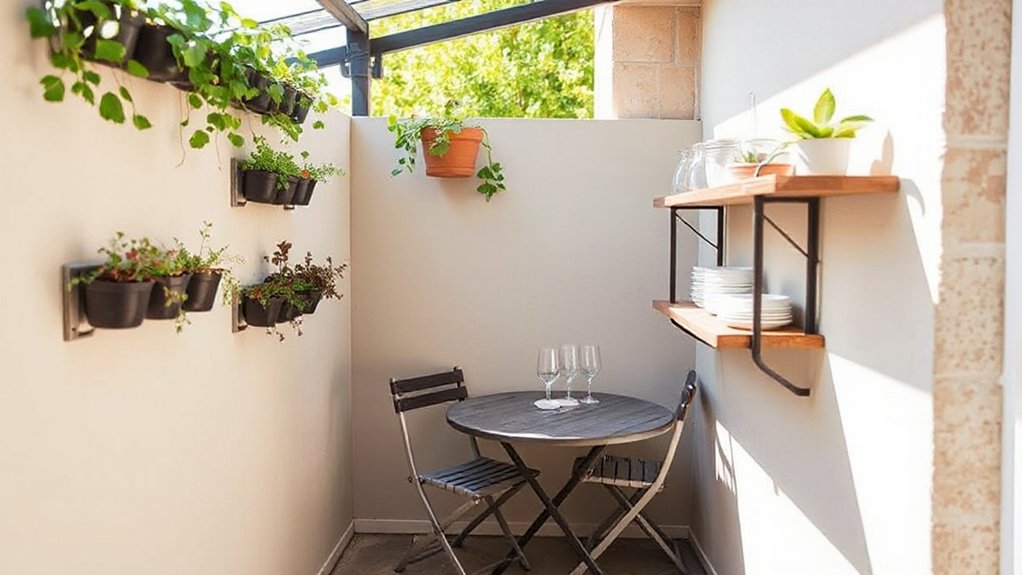
Vertical gardens and wall shelves are smart, space-saving solutions for small patios. You’ll transform empty walls into thriving greenery and functional storage, keeping the deck open for dining and movement.
Choose compact, container-friendly plants that match your light and water habits, and group them into cohesive plant arrangements for a gallery feel.
Wall shelves anchor pots above eye level, freeing floor space while adding visual interest. Use modular shelves to adapt as your collection grows, and select lightweight pots to simplify rearranging.
Integrate wall art with plant displays to create a coordinated focal point that invites guests closer. This approach earns you a cohesive, welcoming patio where you can entertain with ease and comfort.
Lighting Ideas for Mood and Practicality on a Small Patio
To set the mood without clutter, use soft glow layering with a mix of warm string lights, lanterns, and dimmable bulbs that highlight seating areas.
Opt for solar-powered options for practicality and low maintenance, so you can enjoy ambiance without running cords or fuss.
This approach keeps lighting flexible, enhances safety, and fits a small patio’s footprint.
Soft Glow Layering
- Layer hues and brightness levels to avoid harsh contrasts.
- Use warm, dimmable options and outdoor textiles to soften edges.
- Keep fixtures within reach of maintenance and safe from weather while maintaining a cohesive, belonging-forward look.
Solar-Powered Ambiance
Solar-powered lighting is a practical way to create mood and extend patio use without wiring or maintenance chores. You’ll design a welcoming space by selecting solar lighting that fits your patio’s scale and style, then place fixtures to illuminate dining areas and pathways, not glare.
Opt for warm-color temperatures to encourage lingering conversations and a cozy vibe. Choose energy-efficient options like LED solar lanterns and string lights with auto-dimming timers to minimize battery strain.
Position solar panels where they receive abundant daylight, and avoid shadows from furniture and plants. Regularly clean panels and replace batteries as needed to sustain brightness.
With solar lighting, you gain ambience and energy efficiency, fostering belonging while keeping maintenance low and everyone comfortable.
Colors That Feel Bigger and Brighter Outdoors
- Use color psychology to pick hues that evoke warmth, openness, and sociability, then build your outdoor palette around those feelings.
- Combine outdoor palettes with light-reflecting finishes and matte neutrals to amplify brightness without adding clutter.
- Test bold accents on cushions, planters, or the smallest trim, ensuring they harmonize with larger surfaces and create a cohesive, welcoming scene.
This approach keeps you grounded in practicality while inviting others to gather, share, and belong.
Zone Your Patio: Dining Nook, Coffee Corner, and Storage
Set up a clear dining nook, a compact coffee corner, and smart storage so each zone serves a purpose without crowding. You’ll define traffic flow, optimize sight lines, and keep essentials within arm’s reach.
Let’s discuss layout options, materials, and organization tips that maximize function on a small patio.
Dining Nook Zone
Transform your patio into an efficient dining nook by pairing a compact table with two to four chairs and a built-in storage solution nearby. This keeps essentials like napkins, condiments, and extra utensils within reach without clutter.
You want a space that feels intentional yet inviting, so favor clean lines, durable materials, and a cohesive color palette. Place garden sculptures as quiet anchors and a fire pit as a focal point for ambiance during cool evenings.
The dining nook should invite conversation, not crowding. Keep pathways clear and lighting soft but adequate for safety and mood. Cozy seating, a small rug, and accessible storage complete the setup.
- Compact table with two to four chairs
- Built-in storage nearby
- Subtle garden sculpture accents
Coffee Corner Setup
Thinking coffee first, carve out a dedicated Coffee Corner that’s compact yet capable of handling daily rituals without intrusion into the dining area. You’ll want a slim station with a compact brewer, a single mug rack, and a small grinder tucked beside.
Choose a weatherproof shelf for beans and filters, and a dedicated outlet or battery-powered option for reliability. Keep the surface clear for quick transfers and a tiny thermal carafe to preserve Coffee aroma.
Add a plant or decorative tray to cue relaxation without crowding sightlines. Plan a simple routine: wake, brew, sip, and move on.
This setup supports your morning ritual while preserving flow, belonging, and the social vibe for shared patio meals.
Weatherproofing Tips for Year-Round Use
To weatherproof a small patio for year‑round use, start with a solid plan: seal gaps, protect joints, and choose materials that tolerate moisture and temperature swings. You’ll stay confident when everything feels sturdy, weather‑ready, and welcoming.
- Inspect and seal: run a light caulk around frames, doors, and planters to keep drafts and leaks out.
- Choose resilient surfaces: go for corrosion‑resistant metals, treated wood, and properly sealed stone that handle frost, heat, and humidity.
- Layer for comfort: use seasonal plantings as living barriers, plus outdoor heating options that focus warmth where you gather, not everywhere.
With these steps, you create a space that invites belonging, regardless of the forecast.
Outdoor Rugs and Textures to Anchor a Small Dining Area
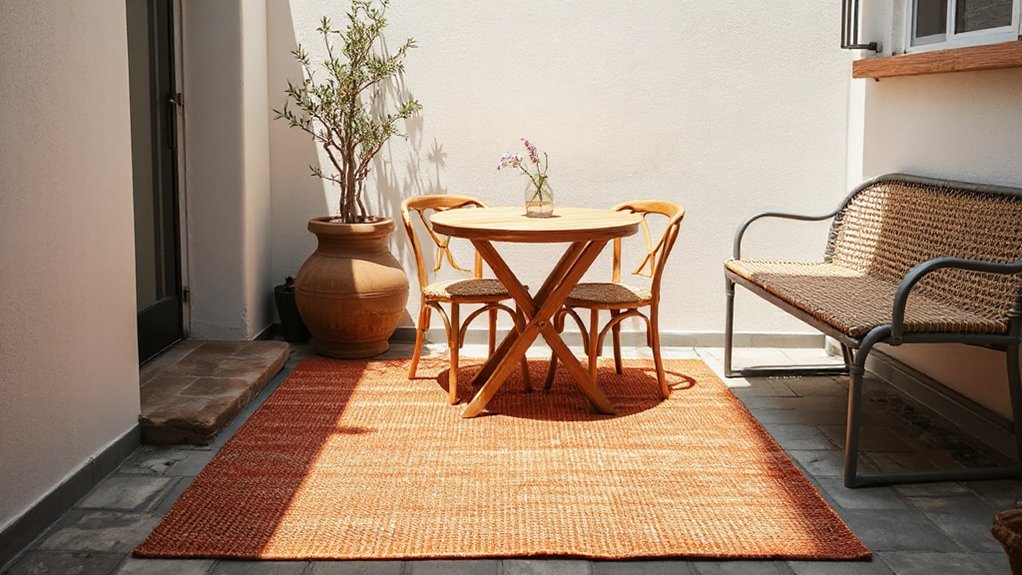
Outdoor rugs do the heavy lifting here, defining the dining zone, adding warmth, and protecting your patio surface beneath. You anchor the space with a durable, medium-pile rug in a color that complements your furniture. Choose patterns that read as intentional, not busy, so your eyes rest and conversation flows.
Layer texture with woven cushions, a natural jute placemat, and a lightweight table runner to emphasize precision. Ground the setup with garden art placed off the table, so guests focus on conversation rather than clutter.
If you have water features, position seating to enjoy the soft sound without overpowering meals. Add a simple, weatherproof shade solution to extend evenings.
These touches create belonging, comfort, and a cohesive, inviting patio experience.
Storage Hacks to Keep a Tiny Patio Clutter-Free
Maximize every inch with hidden storage solutions that keep essentials out of sight but within reach. Use vertical space with wall-mounted shelves and hooks to free up floor area.
Pick multi-use furniture that tucks away clutter after dining. This approach blends practicality with efficiency, letting you shift from setup to cleanup in seconds.
Hidden Storage Solutions
Hidden storage is essential for a tiny patio, so start with compact, multi-purpose pieces that tuck neatly into corners or under seating. You’ll gain breathing room and a sense of belonging when every item has a home, not a pile.
1) Choose ottomans with hidden compartments and removable tops, perfect for cushions, napkins, and tools.
2) Opt for benches with concealed storage beneath hinged lids, doubling as extra seating during gatherings.
3) Integrate coffee tables or side tables with shallow, pull-out drawers to hold apps, placemats, and chargers.
These solutions keep clutter out of sight while maintaining accessibility, so you can entertain confidently.
Focus on hidden compartments and concealed storage that blend with your patio’s style, not distract from it. Your space stays tidy, welcoming, and ready for shared moments.
Vertical Space Maximizers
Need more storage fast? You can reclaim tiny patio space with vertical maximizers that actually work. Anchor wall-mounted shelves, hanging baskets, and slim peg rails to keep essentials within arm’s reach, without crowding floor area.
Use stackable, weatherproof bins that tuck into corners, and label them for quick access. Install a narrow curtain rail or privacy screens that double as plant hangers, so you gain concealment and a calmer perimeter.
When you choose materials, favor corrosion-resistant metals and UV-safe plastics to keep upkeep minimal. Consider urban wildlife habits and place deterrents or faux habitats away from food zones.
Everything you store should feel calm and intentional, reinforcing a sense of belonging and control while you dine outdoors. Reassess seasonally to sustain clutter-free serenity.
Multi-Use Furniture Gains
Multi-use furniture is a practical cure for a tiny patio, letting you dine, relax, and store gear without extra clutter. You’ll feel more at home when every piece serves two roles, and you’ll notice the space breathe. The trick is choosing sturdy, stylish items that hide essentials yet invite gatherings.
1) Opt for benches with hidden storage and lift-top tables that double as seating for guests, reducing clutter while keeping essentials close.
2) Select compact multi-function units, like planters with built-in seating or garden sculptures as decorative storage lids, integrating form and function.
3) Add a small outdoor fountain or a slim wall-mounted water feature to create ambience without crowding floor space.
These touches foster belonging, making your patio feel thoughtful, organized, and inviting.
Smart Tech for Comfort: Automation and Weather Sensors
Smart tech can make small patios feel bigger and more comfortable with automated lighting, climate control, and weather-aware adjustments. You’ll implement smart lighting that adapts to dining moments, moods, and security needs, creating a welcoming ambiance without manual fiddling.
Pair it with reliable climate control—compact fans or heated cushions trigger automatically to keep you comfortable as the evening shifts. Weather sensors monitor wind, rain, and temperature so you don’t have to guess when to close a shade or extend a canopy.
You’ll appreciate quick setup, routines, and occasional tweaks that fit your routine, not the other way around. This approach builds belonging by showing you control, reliability, and thoughtfulness in every outdoor meal.
Smart lighting and weather sensors keep your patio consistently inviting.
Budget-Friendly Decor Ideas That Look High-End
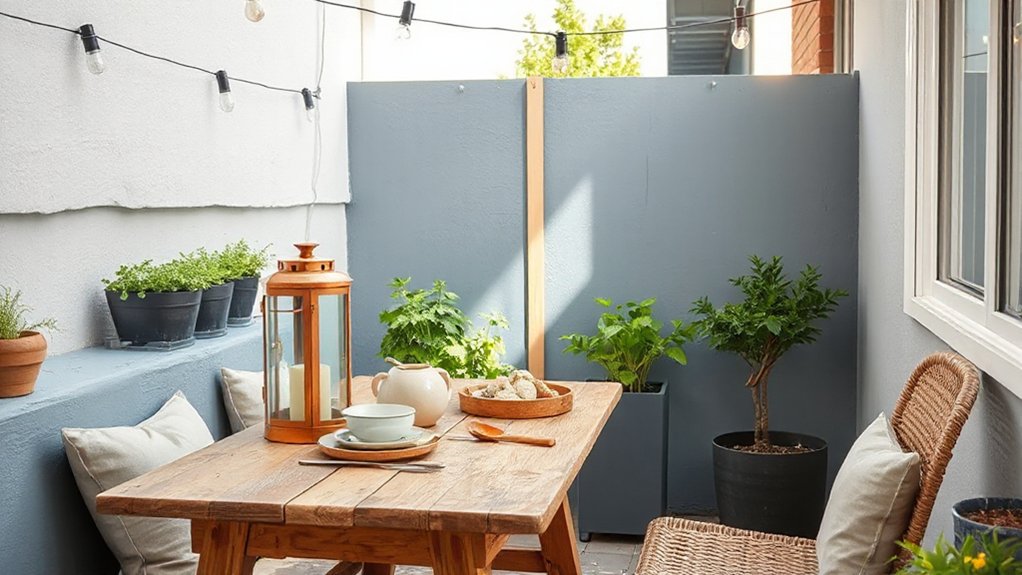
If you’re aiming for a high-end look without a big price tag, start with a cohesive color scheme and purposeful textures that echo luxury. You’ll pull the room together by pairing balanced Color palettes with thoughtful furniture styles, then let materials do the heavy lifting.
- Choose muted neutrals with a metallic accent to create depth without loud contrasts.
- Mix durable, affordable furniture styles—think rattan or powder-coated metal—with plush cushions in high-end-feel fabrics.
- Add texture through woven throws, a textured rug, and strategic lighting to elevate ambiance without overspending.
Keep it curated: limit extras, rotate a few key pieces seasonally, and maintain clean lines. The result reads deliberate, welcoming, and worth gathering around.
DIY Vertical Herb Wall for Fresh Flavors
With a compact setup, a DIY vertical herb wall brings fresh flavors within arm’s reach and frees valuable patio space. You’ll organize a practical system that fits your patio’s constraints and your cooking needs.
Start with a simple frame or repurposed pallet, then add lightweight planters for easy access. Choose herbs that thrive in your climate and kitchen routine, forming a convenient herb garden you’ll actually use.
Mount at a comfortable height, so you don’t strain your back when pruning or harvesting. Use drip irrigation or frequent light waterings to keep roots moist without mess.
Label each patch for quick identification, and rotate herbs as seasons shift. This vertical planting approach maximizes flavor, saves square footage, and keeps your patio feeling inclusive and thriving.
Seating Configurations: Linear, Corner, and Circular Options
Linear, corner, and circular seating each offer distinct advantages for small patios, so choose based on how you use the space and how many guests you plan to host. You gain flow, social sightlines, and flexibility by matching forms to your patio’s shape and your entertaining style. Garden sculptures and water features can anchor any arrangement, guiding movement and adding texture without crowding.
- Linear setups optimize wall space, leaving a clear center for circulation.
- Corner arrangements maximize seating without obstructing access or views.
- Circular designs foster intimate conversation while promoting inclusive interaction.
Accessorizing With Portable Dining Gear
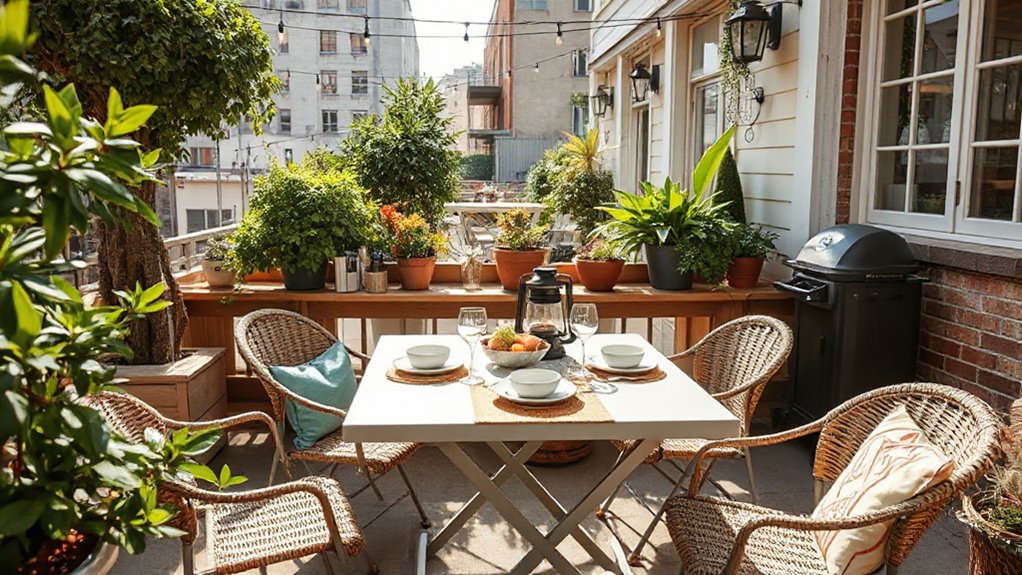
Can we elevate small-patio dining without clutter? You can, with portable gear that’s purposeful, not decorative filler. Choose compact, multi-use pieces: a foldable table that stows flat, stackable chairs, and a lightweight serving cart you can wheel next to the grill.
Prioritize durability and ease of setup, so you feel confident hosting on a whim. Integrate garden lighting to guide the table area and create ambiance without cords snaking across the deck.
Look for outdoor accessories like spill-proof trays, insulated mugs, and silicone coasters that resist weather and washing. Keep a single color story and minimal patterns to reduce visual noise.
Store items in a small bin or rolling tote so you can switch layouts quickly while preserving a cohesive, welcoming space.
Maintenance Tips to Keep Your Small Dining Space Pristine
Maintaining a pristine small dining space comes down to daily checks and quick, targeted upkeep. You’ll keep clutter at bay and set a welcoming tone every time you step outside. Focus on two core priorities: Plant maintenance and Pest prevention, which protect comfort and flow.
1) Inspect plants daily for wilt, pests, and soil moisture; trim dead leaves and rotate pots to avoid overgrowth crowding your table.
2) Seal gaps, wipe surfaces, and store cushions properly; remove standing water, clean spills promptly, and apply light pest barriers where needed.
3) Routine maintenance schedule: map weekly surface cleanings, monthly plant checks, and seasonal reorganization to preserve space integrity and mood.
You belong here—this space should feel effortless and inviting.
Frequently Asked Questions
How Can I Maximize Shade on a Tiny Patio?
You can maximize shade by layering shade solutions and choosing outdoor umbrellas that fit your space. Position them for afternoon sun, use light-coloured fabrics, and add a wall-mounted trellis with vines for cooler, inviting comfort and belonging.
What Chair Height Suits Compact Dining Sets?
You’ll want counter-height chairs for close-fitting, compact sets, because they harmonize table height with breathable space, optimizing seating comfort. Chair styles should be simple, sturdy, and stackable, ensuring next-time gatherings feel inclusive and comfortable for everyone.
Is Weatherproof Storage Essential for Small Patios?
Yes, weatherproof storage is essential for small patios; it improves weather resilience and keeps items safe. Use weatherproof storage for patio organization, quickly declutter, and feel confident hosting friends in a tidy, welcoming outdoor space.
How Many People Fit Around a Circular Table?
A round table seats roughly like a choir: you fit about 2 people per 36 inches of table diameter, plus space for elbows. Dining capacity hinges on table size; plan for 4–6 around a 48-inch circle.
What’s the Best Low-Maintenance Plant for Edges?
You’ll want a low-maintenance edge plant like succulent plants, paired with ornamental grasses, for crisp, fault-tolerant borders. You’ll enjoy simple care, steady structure, and a welcoming, belonging-filled garden chorus that stays neat with minimal effort.
Conclusion
You’ve got the basics to transform a small patio into a functional al fresco dining spot. Start with precise measurements, then pick a layout and compact set that fits your footprint. Foldable tables and a vertical herb wall save space without sacrificing flavor or style. Aim for one strong focal point, like a herb corner, and use portable gear for easy rearrangement. Fun fact: households with outdoor dining gear report 48% more usable entertaining space in small patios.