
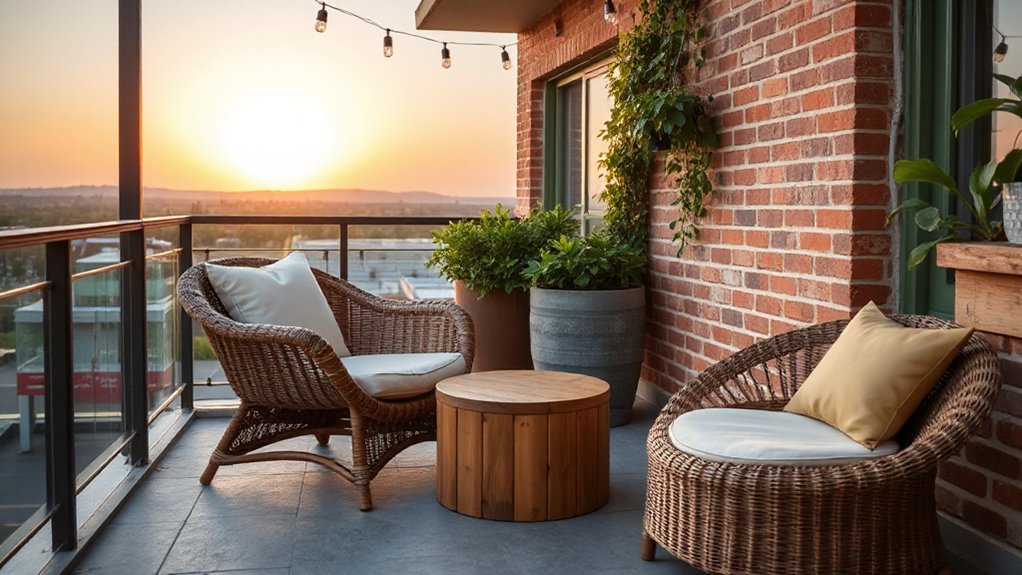
Turn your balcony into a cozy retreat with weather-ready seating and smart layout. Start by evaluating size, sun exposure, and weight limits, then choose compact, durable options like fold-away or modular pieces. Prioritize weatherproof materials—wood, metal, or rattan—with protective finishes and easy-care cushions. Plan clear traffic flow, layer with greenery, and add soft lighting. Keep cushions removable and storage handy for seasonal shifts. Ready to optimize comfort and style? More tips await to elevate your space.
Assess Balcony Size, Sun Exposure, and Weight Limits
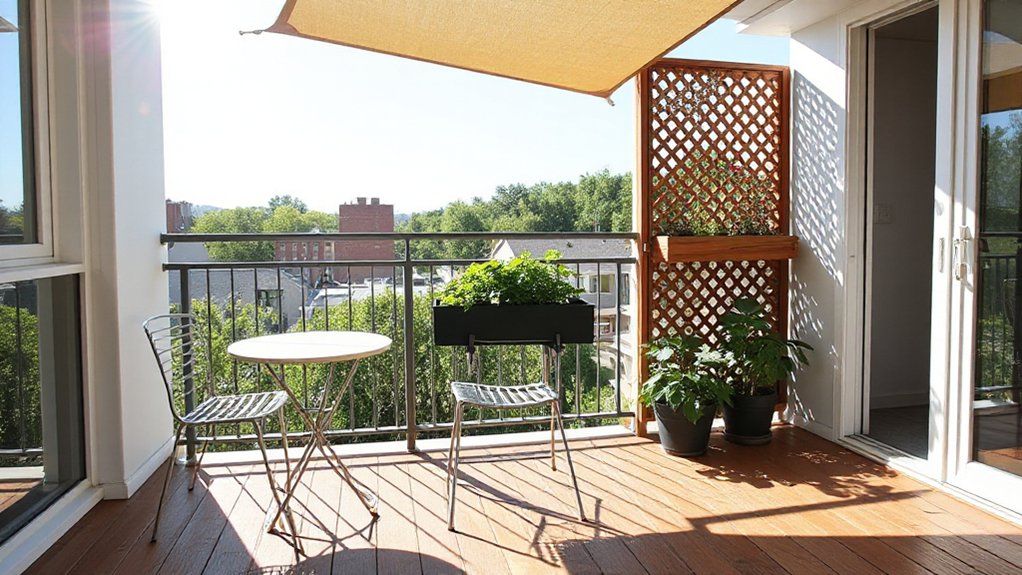
Start by sizing up the balcony: measure its usable area, note any railings or posts that take up space, and check the floor’s condition. You’ll translate measurements into a sensible plan, so you don’t overestimate what fits.
Assess sun exposure across morning, midday, and evening to determine shade needs and heat tolerance.
Consider weight limits for furniture, planters, and storage boxes, then account for dynamic loads like cushions and guests.
Prioritize balcony privacy by orienting seating away from neighbors and selecting compact, functional pieces.
Guarantee safe access to outdoor storage without cluttering walkways.
Track current wear or damage that may affect stability.
With clear measurements and a mindful layout, you’ll create a welcoming, belonging-rich space that remains practical and durable.
Pick the Best Seating Type for Small Balconies
For small balconies, prioritize space-saving seating options that tuck away or double as storage.
Balance comfort with footprint by choosing compact, supportive pieces and considering multifunctional furniture that serves seating plus other needs.
Start with a plan that combines storage, easy staging, and flexible usage to maximize every square inch.
Space-Saving Seating Options
When you’re designing a small balcony, space-saving seating should prioritize compact footprints, flexibility, and stackable or foldable options. You’ll lean toward modular pieces you can rearrange for solo mornings or group evenings, and you’ll value light-weight durability for quick storage.
Consider benches with built-in storage to hide cushions or small dining essentials, or fold-away chairs that tuck beside a slim table. Choose materials that resist weather without bulk, like powder-coated metal or all-weather resin.
Elevate the feel with versatile cushions in calm tones that blend with rooftop gardens or urban dining setups. Limit clutter with multifunctional units, and plan for easy cleaning after outdoor meals.
With thoughtful pieces, your balcony becomes a welcoming extension of community and belonging.
Comfort vs. Footprint
Choosing the right seating for a small balcony means balancing comfort with footprint: you want a setup that invites you to linger without sacrificing usable space. In practice, prioritize seats that support you without crowding the rail or door.
Opt for compact options that don’t bend your sense of scale, like slim chairs, stools, or a narrow bench with removable cushions. Elevate the feel with a small table that doubles as a plant stand, reinforcing aesthetic functionality while keeping flow open.
This approach creates an urban retreat you can actually use, day or night. Choose materials that resist weather yet feel inviting—wood tones or sleek powder-coated finishes work well.
Comfort should feel effortless, not bulky; every inch should serve purpose and belonging.
Multifunctional Furniture Choice
On a small balcony, the right seating should do double duty, so pick multifunctional pieces that save space while maximizing comfort.
Start with a compact, cushioned bench that opens to reveal storage, giving you a hidden place for cushions, blankets, or tools.
Consider a chair that converts to a small table or ottoman, so you’ll never crowd the floor with extra furniture.
Look for modular seating you can rearrange into a corner lounge or a straight row as your needs shift.
Choose weatherproof materials that resist sun and rain, reducing maintenance.
Embrace multifunctional furniture for space optimization, and you’ll feel anchored rather than cramped.
Prioritize pieces you can use daily, with a simple, coherent color palette.
Belonging grows from purposeful, practical design.
Plan Layout for Easy Traffic and Access
Prioritize clear traffic paths so you can move around without obstacles.
Arrange accessible seating layouts that keep at least one full-time, unobstructed route from door to seating area.
Focus on practical spacing and easy entry—your balcony should invite use, not crowd it.
Traffic-Friendly Pathways
To keep traffic flowing smoothly on a balcony layout, design clear, unobstructed pathways that guide guests from entry to seating without forcing backtracking. You shape the space to support fluid movement, keeping main aisles a comfortable minimum width for two people to pass.
Place furniture to preserve sightlines, and use contrasted edging or lighting to delineate walkways at dusk. Prioritize pedestrian safety by avoiding sharp corners, securing rug edges, and anchoring planters so they don’t snag ankles.
Create a logical traffic sequence: entry, seating, service area, and exit, with short, intuitive detours unavailable for obstruction. Regularly reassess flow after adding plants or furniture, ensuring each adjustment maintains traffic flow and reinforces a sense of belonging for every guest.
Accessible Seating Layouts
Ever wonder how to make balcony seating truly accessible for all? Plan layouts that prioritize easy traffic and access. Start with clear circulation paths; leave at least 36 inches of open space for wheelchair maneuverability and door clearance. Use accessible pathways that connect entry points to seating zones without detours, curbs, or clutter.
Choose seating ergonomics that support varied postures: chairs with firm support, adjustable height tables, and cushioned backs. Arrange furniture in a grid or semi-circle to keep sightlines open and conversations intimate. Place a versatile seating module near the main route to serve as a rest spot without blocking flow.
Maintain consistent colors and textures for tactile cues, and guarantee surface transitions are even. This thoughtful layout fosters belonging through comfort, safety, and effortless navigation.
Elevate Comfort With Cushions, Fabrics, and Support
Soft cushions and durable fabrics transform a balcony into a welcoming retreat, combining comfort with weather-ready performance. You design seating that supports longer moments outside, choosing cushions with proper cushion placement to prevent shifting and sagging.
Prioritize fabric durability by selecting tight-weave textures and colorfast dyes that endure sun and rain, and double-stitched seams for lasting shape. Align cushions with the chair and railing lines to create a cohesive, inviting setup that reinforces belonging.
Add removable covers for easy cleaning, and rotate cushions weekly to balance wear. Invest in a compact back support or lumbar pillow to enhance posture during conversations or reading.
Keep color accents muted and cohesive to unify the space, so everyone feels comfortable and welcomed.
Weatherproof Materials: Wood, Metal, and Rattan
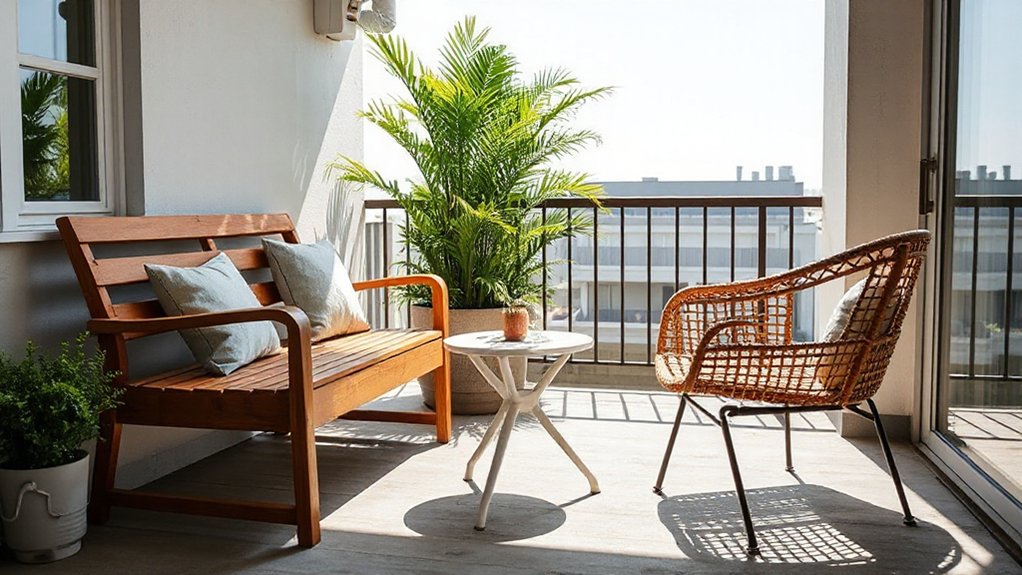
For weatherproofing on balconies, you’ll want to choose wood with natural resistance (or proper sealant) and consider durable metal finishes that resist corrosion.
Talk through weatherproof wood choices and the best protective coatings, so you can keep stools and tables standing season after season.
We’ll also compare rattan options and metal, focusing on longevity and low maintenance under outdoor conditions.
Weatherproof Wood Choices
When choosing weatherproof wood for balcony seating, start with species and finishes that resist moisture, rot, and sun exposure. You’ll prioritize hardwoods or treated softwoods with proven durability, then pair them with finishes that seal joints and block UV.
Think Weatherproof decking practices: choose boards with tight grain and minimal warping, and seal edges to prevent water intrusion. For long-term performance, apply a durable barrier and recoat as recommended, keeping timber preservation in mind.
Consider FSC-certified options to support responsible sourcing, and select hardware that resists corrosion from humidity.
Maintenance matters: clean regularly, inspect joints, and address chips promptly.
With the right wood choices, your balcony seating feels integrated, stable, and welcoming, inviting neighbors to linger and share space.
Durable Metal Finishes
Metal finishes offer low maintenance: wipe down between uses, avoid harsh cleaners, and reapply as needed to maintain luster. Pair with cushions covered in fade-resistant fabric to extend life under sun exposure. Consider breathable gaps and rust-proof hardware to reduce staining and moisture buildup.
When you select durable metal finishes, you reinforce a sense of belonging—chairs and tables that endure seasons, look cohesive, and welcome you and guests to relax with confidence. metal finishes, outdoor durability.
Space-Saving Options: Folding, Nesting, and Modular Sets
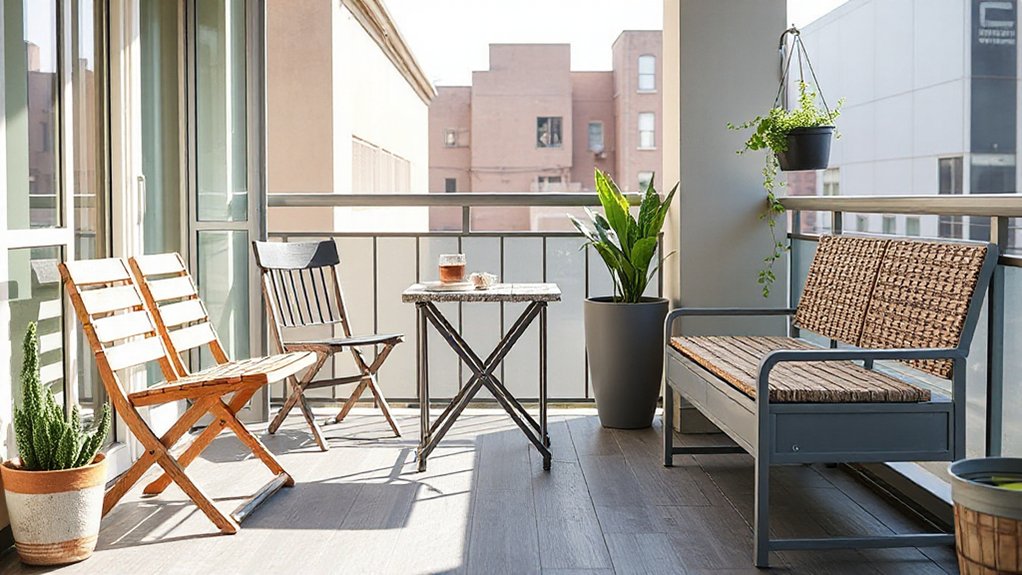
If you’re maximizing a tight balcony, folding, nesting, and modular sets are your fastest path to flexibility and extra floor space. You’ll appreciate how folding chairs tuck along the railing or against the wall, ready to deploy when guests arrive and disappear when you reclaim surface area.
Nesting benches stack neatly, letting you switch from seating to storage in moments. Modular sets offer configurations that adapt to parties, breakfasts, or quiet mornings, pairing benches, stools, and tables into compact arrangements.
Choose durable, weather-ready finishes, and keep essential cushions with quick-access hooks. Prioritize ease of use and stable joins so setup feels effortless.
With these space-saving options, you create a welcoming, inclusive balcony you can enjoy daily without crowding your footprint.
Vertical Solutions to Maximize Depth
You can add depth to your balcony with vertical elements that don’t crowd the floor. Layered planters create a sense of distance and greenery at different levels.
Wall-mixed seating keeps the footprint compact without sacrificing comfort. Start by pairing slim planters with a foldaway seat or mounted bench to maximize depth without sacrificing practicality.
Layered Planters for Depth
Layered planters add depth to a balcony by stacking vegetation in tiers, creating more usable growing space without widening the footprint. You’ll maximize light and airflow by choosing slender, permeable containers that keep sightlines clear.
Select a mix of trailing herbs, compact annuals, and small ornamental grasses to form a living wall that reads as intentional design rather than clutter. Place planters on modular stands to vary heights, then cap with a low-wide planter for a focal point.
This approach enhances balcony privacy without sacrificing urban aesthetics, letting you enjoy greenery without crowding your view. Keep irrigation simple with self-watering inserts, and group plants by water needs for easier maintenance and a cohesive, belonging-forward outdoor room.
Wall-Mixed Seating Solutions
Wall-mixed seating embraces verticality to reclaim floor space while inviting social comfort. You’ll integrate benches, shelves, and built-ins along walls to create depth without crowding your balcony.
Choose modular pieces that hinge or fold, so you can convert a small gathering into open circulation in seconds. Pair narrow seating with inverter-back cushions and wall-mounted tables to keep walk paths clear and accessible.
Prioritize materials that resist weather and reduce noise, improving balcony acoustics for conversations and music. Use vertical planters or peg boards to add greenery and texture without consuming floor area.
For outdoor entertainment, mount speakers discreetly and angle seating toward the focal point. Remember: balanced height, durable finishes, and thoughtful placement cultivate belonging and comfort.
All-Season Comfort: Weather-Resistant Cushions
All-season comfort starts with weather-resistant cushions that stay firm and inviting, rain or shine. You want resilience that matches balcony life, so choose cushions with dense foam cores and UV-safe covers that resist fading.
Look for weather resistant fabrics that dry quickly and don’t trap moisture, preserving shape and support. Opt for high-quality stitching and removable, washable covers for easy care.
Consider cushion thickness and back support to maintain invitinging posture during extended lounging. Weight and tie-downs prevent shifting on breezy days, while a breathable inner layer keeps you cool in sunlit moments.
With care, these cushions deliver all season comfort and a cohesive, welcoming vibe to your outdoor retreat. Your balcony becomes a dependable, stylish sanctuary.
Lighting to Highlight Your Balcony Lounge
Start with a focused lighting plan that highlights your balcony lounge while keeping the space inviting after dark. Use a mix of functional and ambient sources so you feel anchored, not overwhelmed.
Begin with low-profile string lights or warm LED lanterns along railings to define the perimeter. Then add a dimmable spotlight for seating zones.
Incorporate wall sconces or portable lanterns to create soft, inviting pools of light that enhance balcony lighting without glare. Choose a color temperature around 2700–3000K for a cozy, cohesive outdoor ambiance.
Prioritize energy efficiency and ease of maintenance with weather-resistant fixtures. Guarantee controls are simple—one switch or smart app access—so you can switch moods quickly.
The result: a welcoming, intimate balcony you’re proud to share.
Color and Texture Combinations for Mood
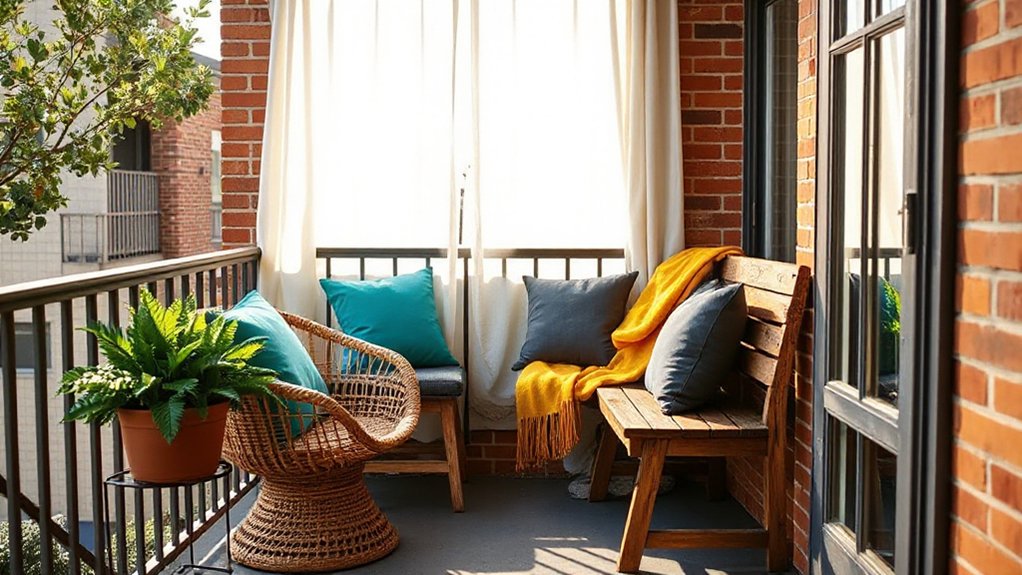
Color and texture set the mood, so start by pairing bold, textured fabrics with solid, saturated colors for contrast and cohesion.
Try mixing tactile fibers—linen, jute, wicker—with color pops like terracotta or teal to energize the space without shouting.
Keep the palette balanced and repeat a couple of textures across cushions, planters, and throws to unify the look.
Colorful Texture Pairings
To create mood-smart balcony seating, mix bold and soft textures with a unifying color note: combine tactile surfaces like rattan, boucle, metal, and concrete while anchoring them with a cohesive color story.
You’ll pair Vibrant palettes with Textured fabrics to create depth without clutter. Start with a single grounding hue—slate, olive, or terracotta—that threads through cushions, throws, and planters.
Layer textures: a boucle chair with a smooth metal frame, a woven rattan accent table, and a concrete planter for contrast. Keep patterns restrained and scale balanced so your space reads calm and inviting.
Add small pops of color in pillows or accessories to energize without overwhelming. This approach yields inviting, cohesive seating that welcomes you to linger.
Mood-Setting Material Mixes
Mood-setting on balconies hinges on deliberate material pairings. You shape atmosphere by pairing durable, outdoor-ready textures with soft, inviting surfaces.
Start with a foundation of weather-resistant material textures like teak, rattan, concrete, or powder-coated metal, then layer with fabric cushions and throws in natural fibers.
Contrast smooth and rough surfaces to create depth, but keep a cohesive color story so the space reads as one.
Introduce mood lighting through lanterns, string lights, and low-profile lamps to warm angles and highlight textures without glare.
Avoid clashing finishes; repeat a subtle material or tone in accents to unify the scene.
Balance hardscape with warmth: a textile lounge, a wooden tray, and a metal frame become a calm, inclusive retreat.
Greenery and Planters That Complement Seating
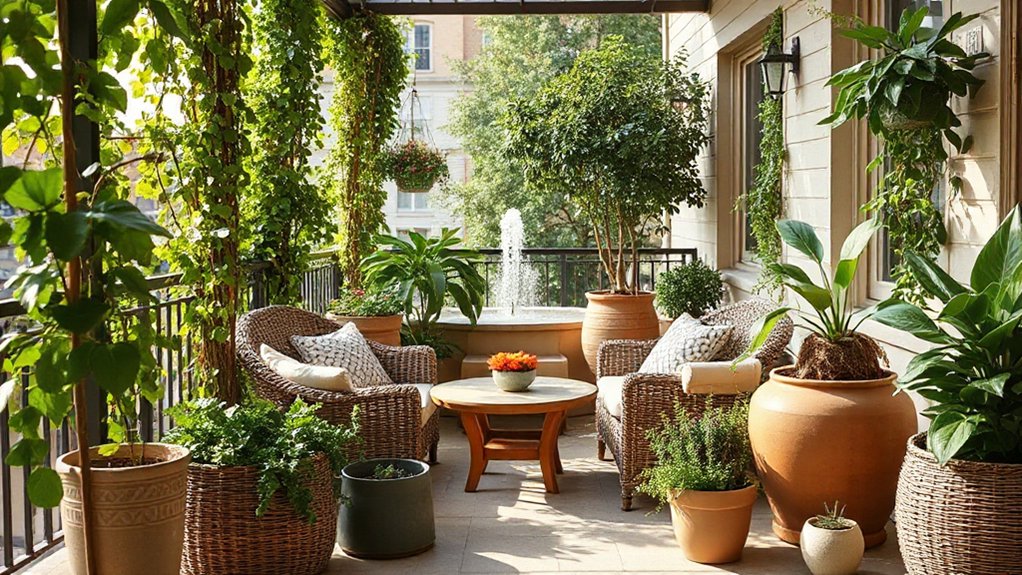
Creating a green backdrop that complements your seating starts with choosing planters that fit your space and style. You’ll maximize impact by pairing containers with plants that thrive in balcony light and heat, keeping weight in mind.
Opt for a cohesive planters arrangement using materials that echo your furniture—terracotta with earthy tones or sleek fiberglass for a modern feel. Think height variety to create depth: tall, trailing, and compact specimens layered in a purposeful grid.
Groupings read as an intentional urban jungle, not a random mix, so prune regularly and rotate seasonal greens to maintain liveliness. Use level placements to ensure easy access and water drainage to prevent pooling.
Finally, add a splash of color through foliage and accents that invite lingering and belonging.
Solo Nook or Cozy Duo: Furnishing Arrangements
A solo nook or a cozy duo thrives on an arrangement that invites reclining and easy conversation, so start with a comfortable seating distance and a clear focal point. You’ll want seating that faces a view or a small feature, not scattered chaos, to foster natural dialogue.
Choose garden-inspired textures—woven rattan, linen cushions, weathered wood—and layer with a single, calm color palette for a cohesive feel. Aim for minimalist design: compact furniture, clean lines, and shared surfaces within reach.
Balance is key: one focal chair or loveseat paired with a slim side table to hold drinks or a plant. Add soft lighting and a discreet rug to anchor the space, ensuring comfort, belonging, and effortless usability for everyday moments.
Balancing Privacy With Openness on a Small Balcony
Prioritize a layout that invites movement and conversation while preserving moments of solitude. Use vertical plants or trellises to create micro-separations without closing in the area, achieving an openness balance.
Think multi-functional furniture: foldable chairs, a compact table, and nesting storage that stows away when not in use. Lighting matters—soft string lights or solar lanterns extend usability after dark.
This approach reinforces belonging, practicality, and cozy efficiency in a small balcony setup.
Budget-Friendly Upgrades That Last
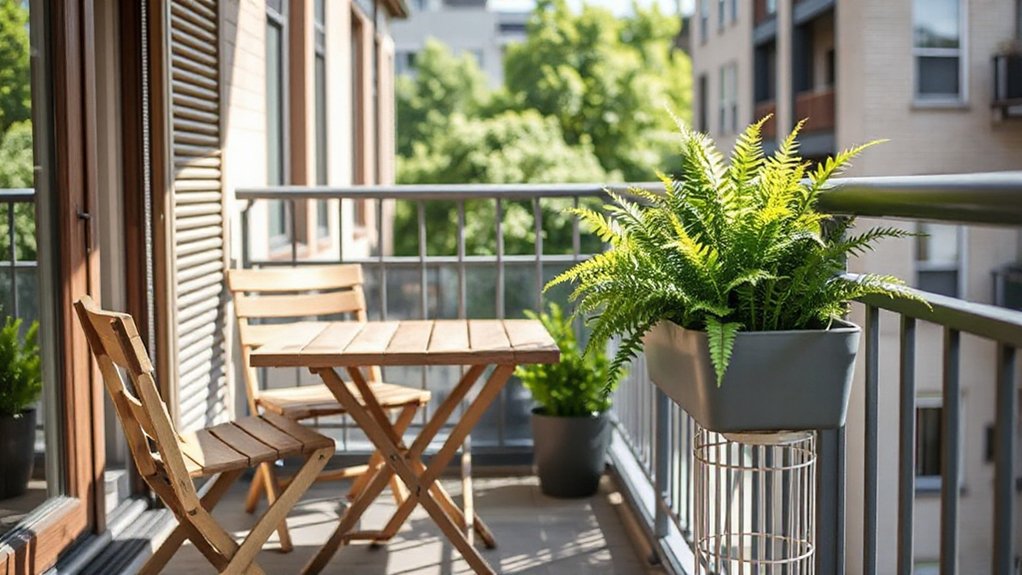
If you want your balcony to keep paying off over time, focus on durable upgrades that don’t break the bank. You’ll get long-lasting value by choosing simple, sturdy changes that feel like belonging, not burden.
- Opt for weatherproof cushions and a compact, foldable table to maximize space without sacrificing comfort.
- Install affordable privacy screens made from durable polymer or bamboo, offering privacy without crowding sightlines.
- Invest in a powder-coated metal chair set and a weatherproof mat for quick, clean setup.
- Add LED string lights and a small potted greenery corner to create an inviting, low-maintenance ambiance. Outdoor dining becomes effortless, and the balcony feels like an extension of your home.
Maintenance Tips to Keep Seating Fresh
Maintenance keeps your balcony seating looking new and ready to use. To keep surfaces inviting, establish simple cleaning routines: wipe daily with a damp cloth, brush away dust weekly, and spot-clean spills immediately.
For fabric, protect cushions with removable covers when possible, and launder per label guidance, typically air-drying away from direct sun to prevent fading.
Use mild soap and water for frame care, drying thoroughly to prevent rust or rot. Rotate cushions monthly so wear is even, and store accessories in a dry, ventilated space during heavy rain or cold snaps.
Inspect joints and fasteners seasonally; tighten screws and re-tree felt pads as needed. Replace worn fabrics promptly to maintain a cohesive, welcoming look that invites everyone to sit, linger, and belong.
Tech-Friendly Touches Without Clutter
Smart tech can enhance your balcony without turning it into a gadget show. You want a clean, functional space, not a tangle of cords. Start with purpose-built devices that hide cables and pair seamlessly with your existing setup.
- Smart technology essentials: a compact outdoor hub, weatherproof, with a single power strip to minimize clutter.
- Wireless charging: place a weatherproof pad on a table edge for easy, cable-free power.
- Discreet controls: use voice or app routines to dim lights, adjust temperature, and play music without reaching for devices.
- Thoughtful placement: mount sensors and speakers where they’re unobtrusive yet accessible, preserving sightlines and airflow.
Focus on simplicity, reliability, and belonging—tech that serves you, not the other way around.
Seasonal Styling: Spring to Winter Transitions
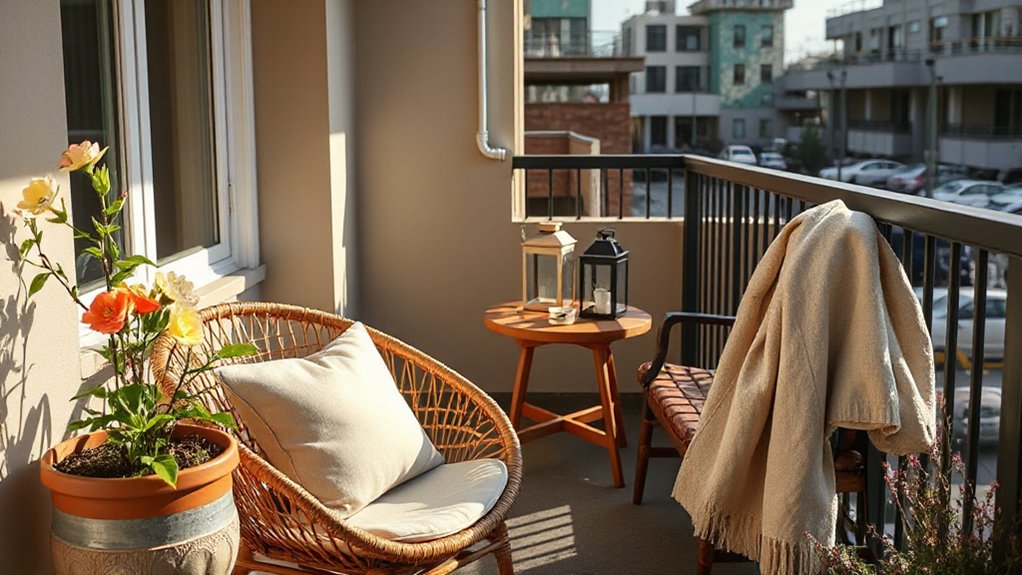
Spring through winter isn’t a single look, it’s a sequence you can implement with simple shifts. You tailor your balcony style by swapping textiles, lighting, and greenery to match the season’s mood.
In spring, layer lightweight cushions and planters that invite lingering conversations.
In summer, emphasize shade and airflow with breathable fabrics and compact, upright greenery.
For fall, introduce warm tones, lanterns, and a durable rug for coziness against cooler air.
Winter calls for textures you can feel—soft throws, moisture‑resistant fabrics, and a compact heater or fire-safe supplement.
This approach enhances balcony privacy without sacrificing openness, and it boosts rooftop versatility by adapting rather than rebuilding.
You’ll feel grounded, connected, and ready to enjoy every transitional moment.
How to Choose Balcony Seating for Your Lifestyle
Choosing balcony seating that fits your lifestyle starts with how you’ll use the space. You’ll want comfort, function, and a sense of belonging, so pick pieces that match how you live.
- Define the main activity: casual lounging, meals, or entertaining, then align seating to support that flow.
- Balance privacy: choose screens, planters, or foldable screens to create balcony privacy without closing you off.
- Prioritize dining potential: compact bistro sets or a slim dining table for outdoor dining without crowding.
- Choose durable materials: weather-ready cushions, fade-resistant fabrics, and rustproof frames for year-round use.
Frequently Asked Questions
What Is the Typical Maintenance Schedule for Balcony Seating?
You should follow a regular maintenance schedule: wipe weekly, deep-clean monthly, and inspect quarterly. Rotate cushions seasonally and seal wood yearly. Cleaning routines protect material durability, preventing moisture damage, fading, and wear, so your balcony stays inviting and lasting.
How Do I Choose Seating for High Wind Exposure?
Choose wind resistant materials and compact furniture, then secure or weigh them down. You’ll feel confident when you sit, knowing your balcony remains cozy and safe even in gusty weather, while still inviting friends to linger.
Can I Maximize Seating Without Obstructing Views?
Yes, you can maximize seating without blocking views. Think compact, modular furniture and wall-mounted rails; use slim couches and foldable chairs. View preservation and space optimization guide you, ensuring belonging, practicality, and wind-safe, low-profile comfort. Chronometer.
Are There Budget-Friendly Warranty Options for Outdoor Sets?
Yes, you can find affordable options with solid warranty coverage. Look for sets from reputable brands, ask about return policies, and choose retailers offering extended or transferable warranties to guarantee long-term peace of mind and budget-friendly protection.
What Safety Checks Prevent Balcony Overloading With Furniture?
Balcony weight limits must never be ignored—your safety depends on it. Check structural integrity, verify load ratings, distribute weight evenly, avoid oversized furniture, and use proper anchoring. This keeps you secure and part of a trusted community.
Conclusion
Balcony seating should fit your space, lifestyle, and climate. Start with size, sun, and weight limits, then pick a compact, comfortable type and plan clear traffic flow. Use weatherproof materials and add cushions for comfort, swap fabrics seasonally, and keep maintenance simple. A striking stat: well-maintained balconies can boost resale value by up to 10–15%. With practical layout, durable materials, and easy-care touches, you’ll enjoy outdoor moments year‑round without clutter.