
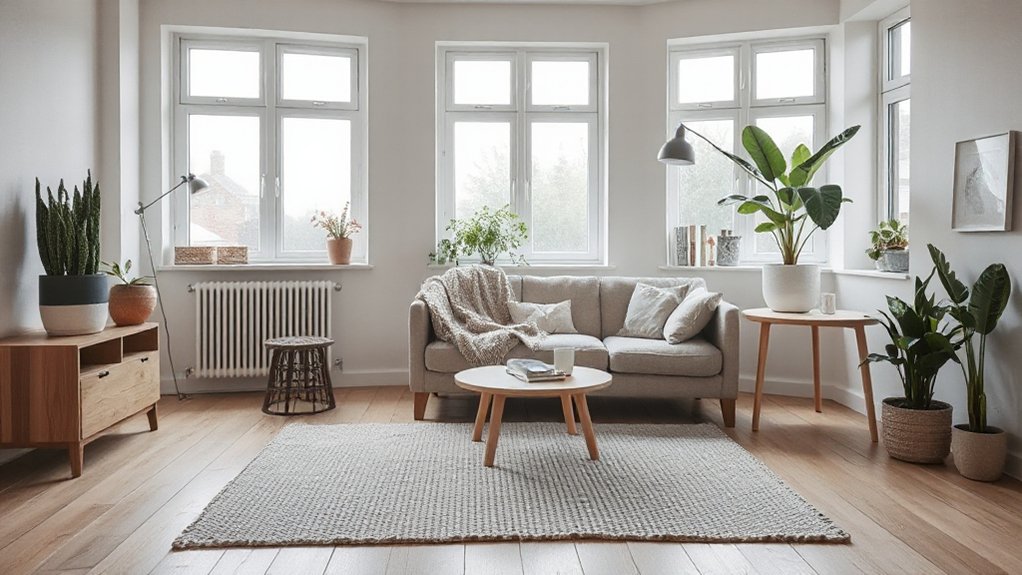
To nail Scandi in UK homes, start with a light-first layout that maximizes daylight and uses reflective surfaces like mirrors opposite windows. Choose pale woods—maple, ash, birch—and natural textiles in linen, wool, and cotton for warmth without heaviness. Stick to neutral bases with subtle seasonal color pops, and layer textures with rugs, throws, and cushions. Prioritize smart, multi-functional storage to keep clutter down and sightlines clear. If you keep going, you’ll uncover practical, cozy details that make it work.
How to Make Scandi Work in Small UK Homes
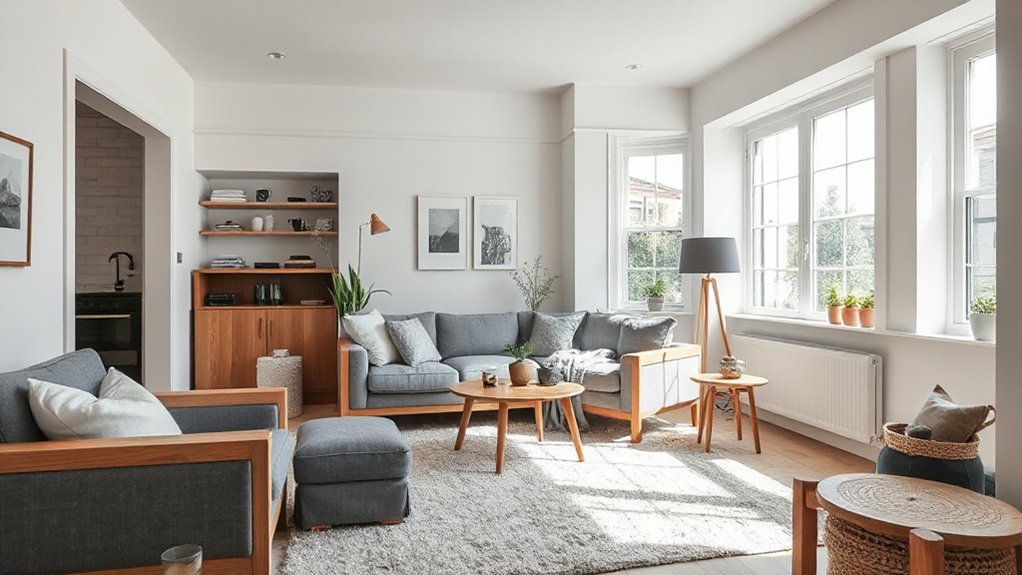
In small UK homes, Scandi design thrives by prioritizing function over form and choosing materials that feel light and durable. You’ll embrace simple silhouettes, affording each piece a clear purpose while reducing visual noise.
Start with a pale, warm palette; color psychology guides you toward hues that calm and connect, fostering belonging rather than clutter.
Add natural textures—wood, wool, and cotton—to anchor spaces without heaviness.
Consider furniture that scales to your rhythm, keeping open sightlines so rooms feel airy and usable.
Ground your choices in Scandinavian history, appreciating its practicality and craft, then adapt it to your home’s rhythm.
Let lighting be multifunctional—soft ambient plus task lighting—so you move confidently through daily life, fully inhabiting a bright, cohesive space.
Light-First Layouts for Compact UK Spaces
When you design a compact UK space, let light guide the layout from the start. Prioritize open sightlines and multifunctional zones that don’t block daylight. Place furniture to reflect and bounce natural light, using slender profiles and low-lying storage to keep spaces airy.
Build a calm rhythm: keep walls pale, but introduce color accents through textiles, art, and small furniture to add personality without clutter.
Maximise window real estate with sheer curtains or none where privacy isn’t a concern. Use indoor plants to surface texture and soften edges, guiding the eye toward light corners.
Remember flow matters: arrange entries and seating to feel inclusive, not segregated. This approach creates rooms that feel larger, brighter, and welcoming, supporting a true sense of belonging.
Pale Woods and Natural Textiles for Warmth
Pale woods and natural textiles bring warmth without sacrificing the light-first honesty you’ve established. You’ll notice how maple, ash, or birch soften rooms without steeping them in heavy tones, keeping air and movement intact.
Choose natural weaves, linen, and wool for upholstery, curtains, and throws; they breathe, age gracefully, and invite touch. Layer textures to create tactile warmth—think a lightweight rug underfoot, a wool blanket draped over a chair, a cotton cushion with a subtle weave.
Vintage accents add character without competing with the calm, while botanical prints bring life and a quiet energy that feels welcoming. Keep palettes light and tonal, letting texture and form do the “cozy” work, and you’ll cultivate spaces that feel grounded, social, and endlessly usable.
Neutral Palettes That Weather British Weather
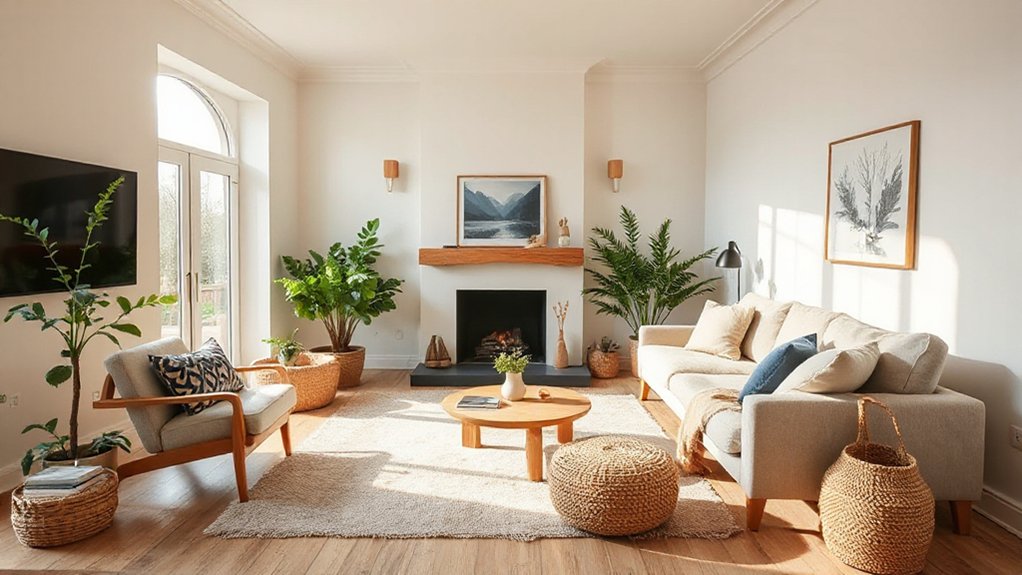
Neutral palettes hold steady against the fickle British weather, absorbing moisture and light changes without looking muddy or dull. You’ll find these tones validate a calm, secure home where you belong, even on damp days.
Color psychology supports this approach, balancing warmth and airiness to lift rooms. Embrace neutrals as a base for daily life, then let small contrasts guide mood shifts without loud disruption.
Scandinavian art-inspired touches deepen texture and depth without noise.
- Build contrast with warm woods and linen textures.
- Layer soft whites with stone greys for misty mornings.
- Add charcoal accents to sharpen focus and calm.
- Introduce muted greens or blues for subtle seasonal echoes.
Smart Storage Solutions That Keep Clutter Down
Smart storage isn’t about cramping your style; it’s about making every square meter work harder. You’ll access hidden nooks with shallow wall shelves and tall, slim wardrobes that don’t overwhelm rooms.
Opt for modular units you can reconfigure as needs shift, so today’s clutter becomes yesterday’s solved problem. Use drawer dividers and labeled boxes to keep small items tidy, yet accessible, avoiding the dreaded rummage.
Decorative vignettes on shelves create character without chaos, while doors keep mess out of sight. In kitchens and hallways, floating cabinetry maximizes floor space and enhances flow.
Choose furniture with built-in storage to reduce clutter elsewhere. For ambience, integrate statement lighting that highlights clean lines and organized surfaces, reinforcing calm, purposeful living.
Furniture That Follows Function and Comfort
Prioritize function-first pieces that fit your space and daily routines, so every item earns its keep.
Pair comfort-driven design with practical space solutions to guarantee furniture supports real life, not just looks.
In practice, choose versatile silhouettes and thoughtful layouts that adapt from workday tasks to weekend lounging.
Function-Forward Furniture
- Multi functional furniture that folds, stacks, or transforms, freeing square footage without sacrificing style.
- Adaptable layouts that reconfigure rooms for work, play, or rest with ease.
- Built-in storage that hides clutter while maintaining clean lines and calm energy.
- Seamless collaboration between form and function, so you feel confident inviting others in.
This approach gives you belonging through practicality, not excess. You’ll experience calmer evenings, efficient mornings, and spaces that grow with you.
Function-forward choices empower you to live with intention and comfort.
Comfort-Driven Design
Materials matter: wood with a soft patina, natural fabrics, and cushions that hold shape while embracing you. Pair ergonomic silhouettes with simple lines to keep spaces calm and usable.
Cozy textiles layered over minimalist decor create warmth without clutter, so rooms feel lived-in but uncluttered. Choose pieces that adapt—modular sofas, extendable dining tables, versatile storage—that grow with you.
With this approach, you’ll enjoy spaces that look refined and feel welcoming, reinforcing belonging through thoughtful, purpose-driven design.
Practical Space Solutions
When space is at a premium, let function guide the layout and furniture choices, not the other way around; you’ll create rooms that work hard for you without feeling crowded. Practical space solutions center on furniture that follows function and comfort, with eco-friendly materials and Scandinavian color schemes grounding the mood.
1) Choose multiuse pieces that tuck away essentials without clutter.
2) Opt modular units that reconfigure as needs change.
3) Prioritize clean silhouettes and natural textures for calm, cohesive spaces.
4) Integrate hidden storage to keep surfaces serene and purposeful.
These choices foster belonging, proving you can curate warmth and efficiency. Your home becomes a calm, capable hub—practical, inviting, timeless.
Layered Textures: Rugs, Cushions, and Throws
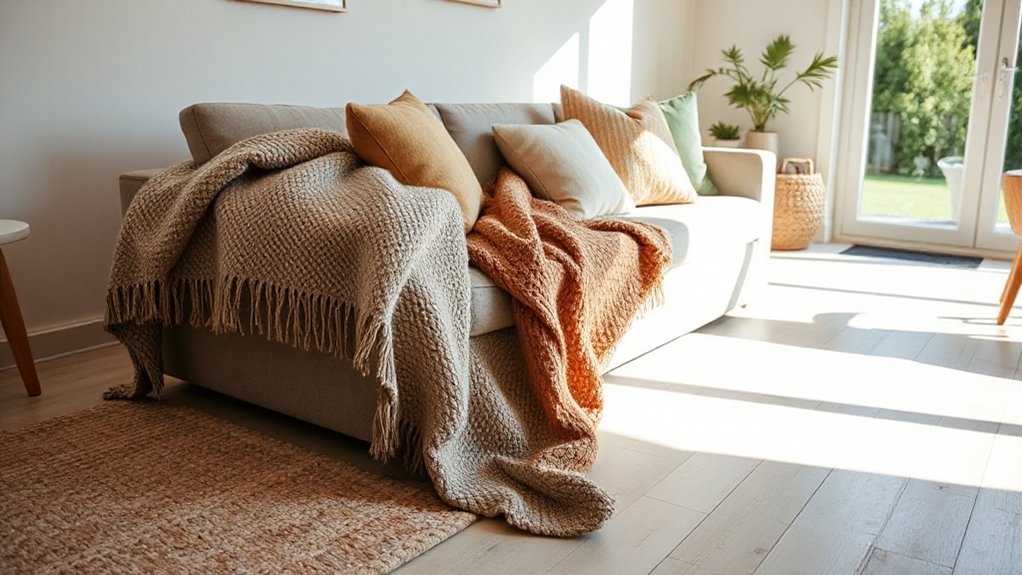
Layered textures are a practical way to anchor a room and add warmth without crowding the space. You’ll feel the impact when rugs define zones, cushions invite casual seating, and throws finish the look with tactile depth.
Practice textural layering by mixing natural fibers—jute, wool, cotton—in complementary tones to keep the palette calm and cohesive. Choose rugs that ground furniture and add subtle pattern, then layer cushions of varying sizes and textures for visual interest without clutter.
Throws should be lightweight but snug, draped casually at sofas or chairs for instant coziness. Prioritise quality over quantity; select durable materials that endure UK seasons.
This approach creates cozy accents that invite lingering, fostering belonging in a calm, well-considered home.
Maximize Sunlight With Reflective Surfaces
Maximize daylight by using reflective wall surfaces to bounce natural light around a room. Place mirrors strategically to illuminate darker corners while avoiding glare and visual clutter.
Consider alternative light-blocking solutions, ensuring reflections stay soft and true to the space’s calm, Scandi vibe.
Reflective Wall Surfaces
To harness this effect, consider these priorities:
1) Use ornamental glass panels to scatter light with a subtle glow.
2) Choose soft metallic accents on trim or furniture to reflect warmth without shouting.
3) Keep finishes light and neutral, enhancing contrast with strategic reflective elements.
4) Balance brightness with texture, so reflections feel intentional, not clinical.
This approach creates a practical, confident atmosphere you’ll want to share. You’ll sense belonging as family moments glow from every corner, guided by thoughtful, purposeful design.
Mirror Placement Tricks
Strategically placing mirrors can dramatically boost daylight, so you’re not relying on artificial light all day. To start, position mirrors opposite windows to reflect natural brightness into dim corners.
Choose mirrors with simple frames and cool, matte finishes for a Scandi vibe that feels calm and cohesive. Avoid clutter by grouping two or three mirrors rather than scattering many small ones; symmetry creates a sense of belonging and order.
Consider slim vertical mirrors above a console to extend ceiling height, or a wide horizontal piece to widen a narrow room. Reflective surfaces work best when angled to bounce light toward seating areas, not toward busy walls.
Light-Blocking Alternatives Avoided
When you’re chasing more daylight, you’ll avoid common traps that block light rather than bounce it. Instead of heavy window treatments or blackout curtains, lean into reflective surfaces and smart layouts that amplify brightness.
- Embrace high-gloss or light-tinged finishes on furniture to scatter light deeper into rooms.
- Use mirrors strategically to extend daylight without creating glare, especially opposite windows.
- Place glass or translucent screens to guide rays around corners and brighten nooks.
- Choose pale, cool-toned textiles and paint to reflect rather than absorb, while keeping a cozy, welcoming vibe.
Entryways and Living Rooms: Everyday Scandi in Britain
In Britain, entryways and living rooms embody practical, everyday Scandi—where warm wood tones, clean lines, and a restrained palette create calm first impressions.
You’ll combine functional storage with uncluttered surfaces, so you feel invited rather than overwhelmed. Choose a light, neutral base and let texture carry personality: a knitted throw, a sisal rug, or a tactile plaster wall.
Vintage accents anchor the space without shouting, while botanical motifs appear in cushions or ceramic pieces to soften edges.
Prioritize sightlines and airflow, ensuring rooms breathe with natural light. Keep surfaces near-blank for ease of upkeep, then layer warmth through lamps, candles, and a simple gallery.
This approach fosters belonging, consistency, and daily comfort in your British home.
Frequently Asked Questions
How Does Scandi Style Adapt to British Seasonal Lighting?
You’ll see Scandinavian style adapt to British seasonal lighting by prioritizing warm, layered lighting and color. You make seasonal lighting adjustments with dimmable LEDs, warm white tones, and task lights that mimic daylight.
You’ll enhance natural light by arranging mirrors and light fabrics, maximizing daylight hours. You keep spaces bright in winter with skylights or light tubes where possible, and you balance shadows in summer with sheer curtains.
This approach feels practical, confident, and welcoming, inviting belonging.
What Are Budget-Friendly Scandi Upgrades for Rental Homes?
When you want warmth on a budget, start with affordable furniture and natural decor that brighten spaces without long leases. You’ll swap bland panels for light, airy tones and clever storage, keeping your rental feeling spacious.
Choose multi-function pieces, matte finishes, and textiles that echo Nordic calm. You’ll feel you belong quicker by embracing simple lines, clean silhouettes, and plant life that softens every corner—proof that charging less can still look luminous and welcoming.
Can Scandi Interiors Support Bold British Art Choices?
Yes, Scandi interiors can support bold British art choices. You can pair bold colour palettes with minimalist walls, letting the artwork shine.
Use art display techniques like single-gallery walls or staggered frames to create rhythm, and balance bright pieces with neutral textures.
You’ll feel a sense of belonging as your space reflects your taste—practical, confident, and cohesive.
Keep lighting soft and focused, so the art remains the star while the room stays welcoming.
How to Maintain Scandi Calm With Kids and Pets?
Yes—you can keep Scandi calm with kids and pets. Start with child proofing safety: secure cords, corner guards, and breathable, durable fabrics. Choose pet friendly materials like washable rugs and hardwood or laminate flooring with soft wool blends.
Use simple, uncluttered layouts to reduce temptation and stress. You’ll feel a sense of belonging as you clean less, live more mindfully, and maintain calm spaces that welcome every family member.
What Are Easy DIY Projects for Scandi Textures?
You can tackle easy DIY projects for Scandi textures by focusing on natural fibers and simple shapes. Use minimalist color schemes and natural material accents like untreated wood, wool throws, and linen cushions.
Create texture with woven wall hangings, hand-stitched cushions, and sanded plywood panels. Keep lines clean and functional, and you’ll feel a sense of belonging.
You’ll finish faster if you plan, measure twice, and seal woods to preserve their soft, calm look.
Conclusion
You’ve got the core ideas to make Scandi work in UK homes without sacrificing practicality. Start small with light-first layouts, pale woods, and natural textiles, then layer textures for warmth. Keep neutrals steady and introduce reflective surfaces to boost daylight. Smart storage is your best friend, so choose furniture that serves both function and comfort. Stay adaptable, because the simplest setups often feel the most stylish. When in doubt, shipshape simplicity—that’s the name of the game. It’s a win-win.