
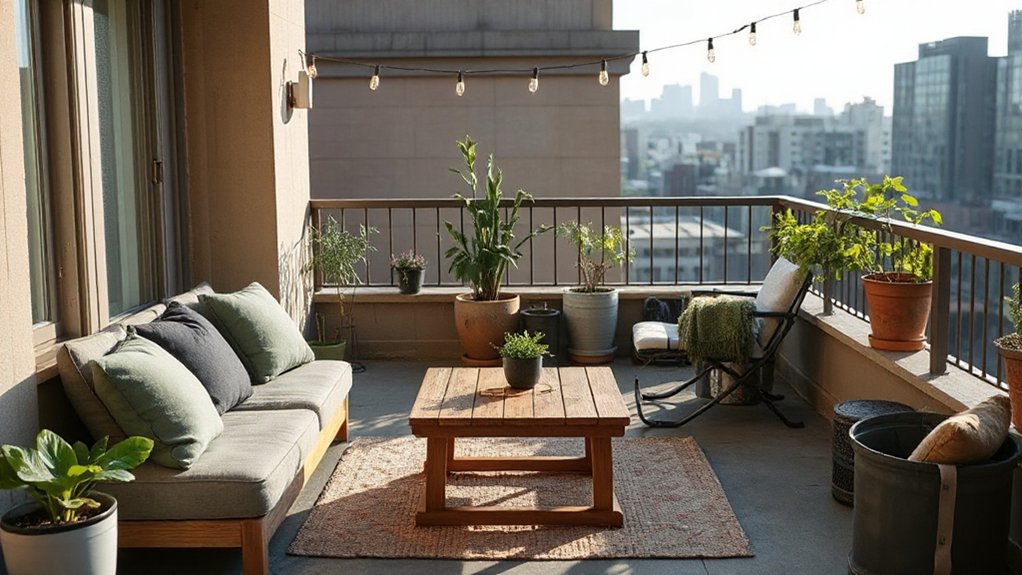
Maximize a tiny balcony with foldable, multi-use furniture that tucks away when not in use. Plan a clear layout that zones seating, walking, and service, and add vertical storage with wall-mounted shelves and hooks to cut clutter. Choose weatherproof materials and neutral tones with pops of color to expand the space visually. Layer lighting and bring in low-maintenance greenery for ambiance without crowding. Stay practical with durable cushions and smart textures—more tips await.
Make Balcony Seating Work in Tiny Spaces
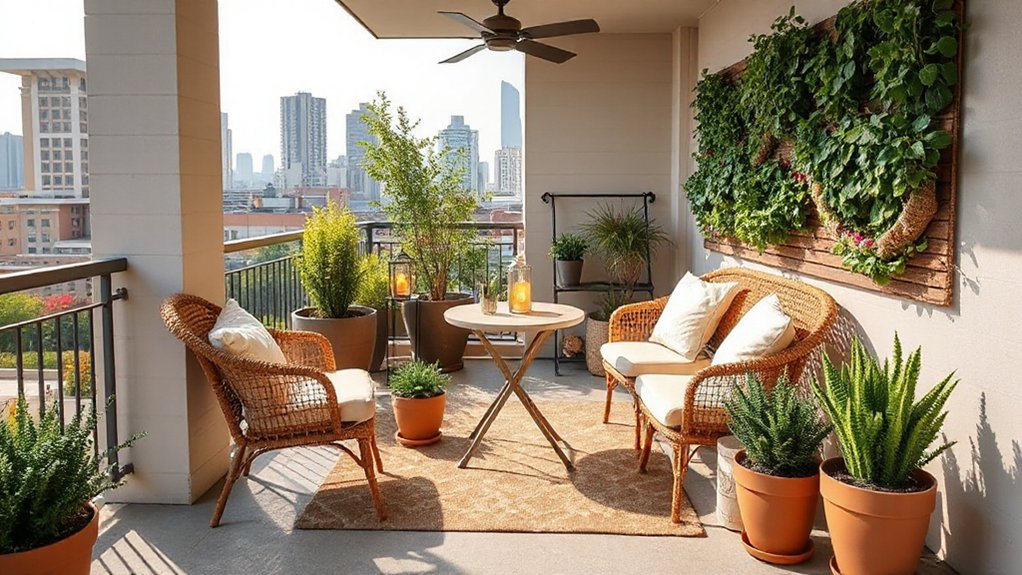
Small spaces don’t have to limit your balcony’s usefulness. You can design seating that works in tiny spaces by choosing compact, multiuse pieces. Opt for a foldable chair or a slim bench that tucks against a wall, then add a balcony privacy screen to create a personal nook.
Built-in benches with hidden storage maximize function without crowding the floor. Use modular cushions that stack or rearrange, so you adapt for two people or solo moments.
Consider wind protection with a low railing screen or light privacy panels that double as backrests. Pick weather-ready fabrics and a small, durable table that doubles as a step stool.
Plan a Clear Balcony Layout
Start with a clear blueprint that matches how you’ll actually use the balcony. Begin by zoning: a relaxed seating zone, a narrow walk path, and a small service area for drinks or plants.
Position the main seating to face an inviting view or a focal point, then tuck in compact side tables and planters to minimize clutter.
Choose balcony lighting that extends usability after dark—soft string lights, solar lanterns, or wall-mounted sconces create warmth without glare.
Use privacy screens to define space and soften exposure, especially if you share a railing or overlook. Confirm sightlines stay open enough for safety and connection.
Finally, map accessibility: keep cushions and storage within reach, and leave room for movement as you move through your everyday rituals.
Pick Foldable and Multi-Use Furniture
Think foldable options that save space without sacrificing comfort, and choose pieces you can use in multiple ways.
Look for foldaway chairs, tables, and benches that tuck away or transform to suit seating, dining, or storage needs.
Prioritize versatile, compact designs that maximize balcony square footage and stay stylish.
Foldable Space Savers
Foldable and multi-use furniture is a smart way to maximize balcony space without sacrificing comfort. You’ll value pieces that fold away cleanly, revealing more floor area for movement and evenings outdoors.
Look for compact furniture that still feels substantial—think slim-profile chairs, a fold-down table, and stools that tuck under rails. When you choose, prioritize durability and weather-ready finishes, so resilience matches your daily routines.
For space optimization, select modular options that can reconfigure as your needs shift, from solo coffee breaks to small weekend gatherings. Consider integrated storage, like benches with hidden compartments, to reduce clutter without sacrificing style.
With thoughtful selection, you create an inviting, belonging-rich balcony that adapts to you.
Multi-Use Balcony Pieces
Look for modular seating that rearranges into intimate clusters or open layouts, giving you instant social flexibility. Foldaway tables, stackable chairs, and compact ottomans keep traffic free and storage simple.
Material choices matter: weather-resistant finishes withstand dawn mist and evening mistreated winds, while cushions with removable covers simplify cleaning.
Think in layers: a slim sofa module with a corner chaise, plus a modular base that doubles as a bench or coffee table. With these elements, your balcony feels intentional, connected, and genuinely yours.
Add Vertical Storage and Wall-Mounted Essentials
Think vertical with smart storage built into your balcony layout—think wall-mounted shelves, hooks, and rail systems that keep essentials off the floor.
Use vertical storage hacks to free up seating and create balanced, clutter-free zones.
We’ll explore wall-mounted essentials and practical decluttering tips to maximize space without sacrificing style.
Vertical Storage Hacks
Vertical storage on a balcony means you can reclaim floor space while keeping essentials within arm’s reach. You’ll organize smarter with vertical planters and hanging baskets that add capacity without crowding your outdoor living zone.
Prioritize lightweight, weatherproof options that resist sun and rain, so maintenance stays minimal. Stackable shelves or tote organizers let you swap items seasonally, while hooks keep gardening tools close at hand.
Use modular units to tailor depth and height to your balcony’s constraints, avoiding bulk that obstructs flow. Color and texture matter: choose finishes that echo your furniture and railing.
Label storage zones for quick access, so guests feel invited rather than rummaging. This approach reinforces belonging through thoughtful, accessible design that respects your space.
Wall-Mounted Essentials
- Install wall rails for utensils and small planters to create vertical greenery.
- Add weatherproof shelves paired with discreet garden lighting to extend evening usability.
- Use privacy screens that mount to the wall, maintaining openness while defining zones.
Together, these choices support a calm, connected outdoor nook. Focus on materials that weather well and colors that echo your seating palette.
A tidy backdrop enhances conversation and belonging.
Balcony Decluttering Tips
Maximize your balcony by embracing vertical storage and wall-mounted essentials to cut clutter and boost usability. You’ll free floor space by pairing slim shelves with wall hooks, keeping everyday items within arm’s reach.
Choose modular units that clip to rails or studs, so you can reconfigure as seasons shift. For Balcony gardening, install hanging planters and tiered pockets to grow herbs without sacrificing seating.
Use privacy screens as both texture and storage—foldable panels with integrated rails hold lightweight pots or tools, creating a sense of enclosure without weight.
Decluttering also means rotate decor: swap out accessories monthly, keeping only those you truly love. These steps cultivate belonging, simplify routines, and make your balcony a calm, stylish retreat.
Choose Weatherproof Materials and Outdoor Colors
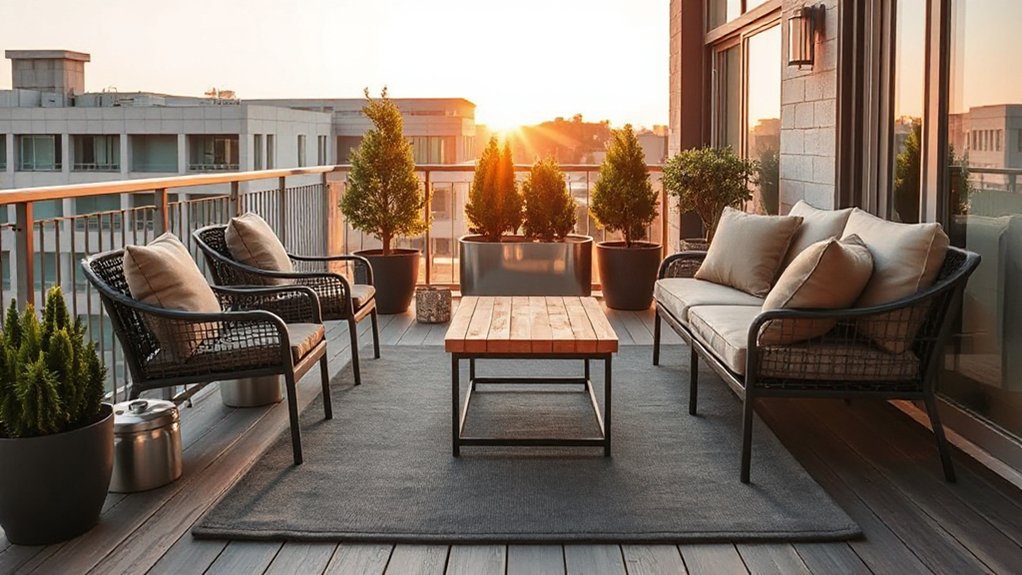
Choosing weatherproof materials and outdoor colors is about durability and cohesion: pick finishes that resist sun, rain, and temperature swings, then pair hues that enhance your balcony’s size and light.
- Weatherproof fabrics guide your lounge pieces, ensuring colorfast cushions and sun-safe upholstery.
- Outdoor color schemes balance neutrals with accent tones to enlarge space while reflecting natural light.
- Material consistency across furniture, railings, and planters creates a cohesive, inviting mood you’ll love returning to.
Focus on non-slip, fade-resistant options and sealant-friendly surfaces so maintenance stays low.
For color, lean toward warm neutrals with cool accents to expand perception and invite conversation.
Your balcony becomes a curated retreat when you align fabric performance with a thoughtful palette.
Belonging grows as the space feels deliberate and durable.
Elevate Comfort With Cushions and Textures Without Clutter
Cushions and textures should elevate comfort without adding clutter, so pick a few high-impact pieces and layer tactically. You’ll create depth by Cushion layering: choose one bold outdoor cushion as a focal point, then anchor with two complementary tones.
Use Texture mixing to pair smooth: a satin-luxe pillow with a matte woven, and a lightly nubby throw for tactile contrast. Limit the palette to three hues for coherence and easy maintenance.
Think scale: oversized cushions on larger seating, smaller accents on stools or rails. Arrange in a deliberate triangle to invite conversation without crowding.
Choose removable covers for quick refreshes and seasonal shifts, keeping upkeep minimal. The result feels intentional, welcoming, and effortlessly stylish—a balcony that signals belonging through thoughtful, clutter-free comfort.
Light and Greenery to Boost the Balcony Vibe
Soft, layered lighting and greenery work together to extend your balcony’s usability after sunset and soften its edges. You’ll create a welcoming space by pairing warm sconces with compact greenery that thrives in limited light, emphasizing Sunlight enhancement where possible and thoughtful potted plant placement.
- Position lights at knee height along rails to illuminate seating without glare.
- Group low-maintenance greens in varied pots to add texture and depth.
- Place a tall plant near the doorway to frame the entry and invite you outside.
Keep paths clear and reflectors affordable, so ambience meets function. This approach fosters belonging by inviting neighbors to linger and chat.
The result is a balanced, design-forward balcony that feels both intimate and expansive.
Budget, Maintenance, and Usability Tips
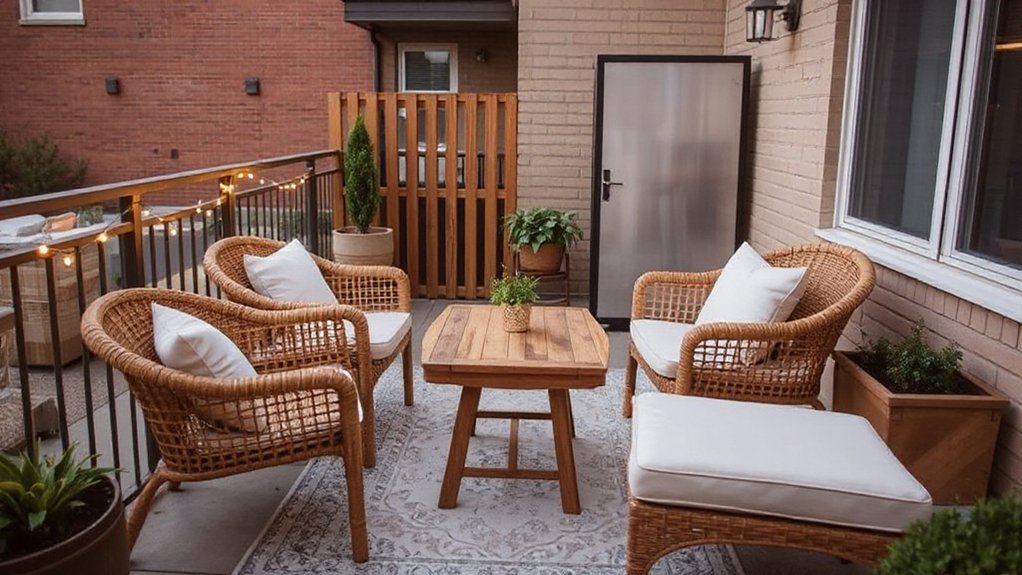
To keep your balcony inviting without breaking the bank, start with a practical plan that balances budget, upkeep, and daily use. You’ll prioritize cost effective solutions and choose pieces that earn long-term value.
Opt for low maintenance materials that resist weather, fading, and wear, so you spend less time cleaning and more time enjoying. Select compact, modular seating that can rearrange for solo lounging or small gatherings.
Protect surfaces with simple, durable finishes and use outdoor-safe cushions with removable covers for easy laundering. Plan for flexible storage so you can tuck away seasonal items.
Consider a small plant routine that requires minimal care to sustain mood and color. With thoughtful choices, your balcony remains welcoming, functional, and cohesive.
Frequently Asked Questions
How Do I Measure Balcony Load Capacity Safely?
To measure balcony load capacity safely, you should check signage and specs, estimate weight per item, and stay under the structural safety limit. Balcony weight matters; know beam span, then consult a licensed engineer for confirmation.
What Permits or Restrictions Apply to Balcony Setups?
Permits vary by city, but you’ll usually need a building or zoning review before altering your balcony. Check load limits, retrofitting rules, and HOA restrictions. Balcony decor and furniture arrangement should comply with safety and noise guidelines, clearly belonging.
How Can I Weatherproof Electronics on a Balcony?
Weatherproof your balcony electronics by using electronic waterproofing sealants, IP-rated enclosures, and weather resistant gadgets. You’ll shield cords and outlets, avoid corrosion, and feel secure, connected, and part of a thoughtful, design-forward outdoor space you love.
What Are Low-Maintenance Plant Options for Balconies?
Start with easy, low-maintenance choices like sansevieria and pothos; they thrive with minimal care. For indoor plants and low care greenery, you’ll enjoy a lush balcony that feels welcoming, even without daily attention—think timeless, practical, design-forward appeal. One century-odd vinyl record.
How Can I Maximize Privacy Without Blocking Light?
You can maximize privacy without blocking light by using privacy screens that double as light filters, like sheer lattices or translucent panels, letting sun kiss your space while you feel protected, connected, and design-forward in your balcony retreat.
Conclusion
Unlike sprawling terraces, your balcony thrives on smart restraint. You’ll plan a clean layout, foldable pieces, and vertical storage that free floor space for daylight and breathability. Yet you’ll indulge in texture and color—soft cushions, outdoor rugs, and greenery—that cozy up the small footprint. The contrast is deliberate: practicality meets design-forward flair. With weatherproof materials and clutter-free zones, you gain comfort without compromise, illumination without excess, and a balcony that feels expansive despite its size.