
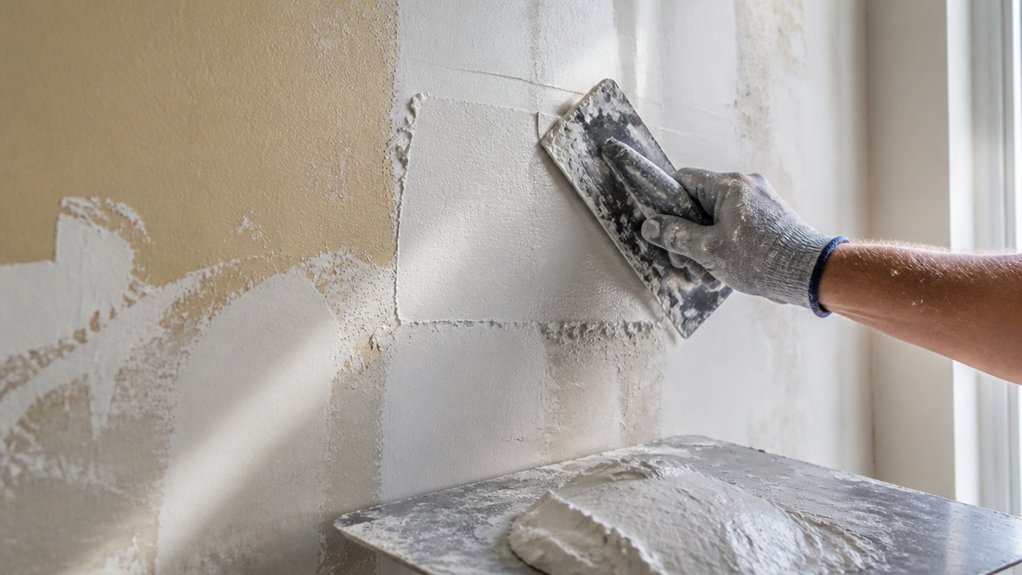
Can You Plaster Over Paint Safely? (Quick Checks)
Before you plaster over painted walls, you need to confirm the paint is sound, keyed, and dry—otherwise the plaster won’t bond and you’ll get drummy patches or debonding. Check the finish type: matt and breathable emulsions usually accept bonding aids better than vinyl silk or gloss. Note previous Painting techniques; heavy roller stipple, brush marks, or over-thick coats can create weak layers. Assess Wall texture: high spots, nibs, and orange peel need flattening so you don’t overfill with multi-finish. Remove loose edges, silicone contamination, and surface dust; wash greasy areas with sugar soap and rinse well. Make sure the room’s above 5°C and well ventilated. Prime appropriately (e.g., PVA or SBR) to control suction and provide a key.
How Do You Test If Painted Walls Are Sound?
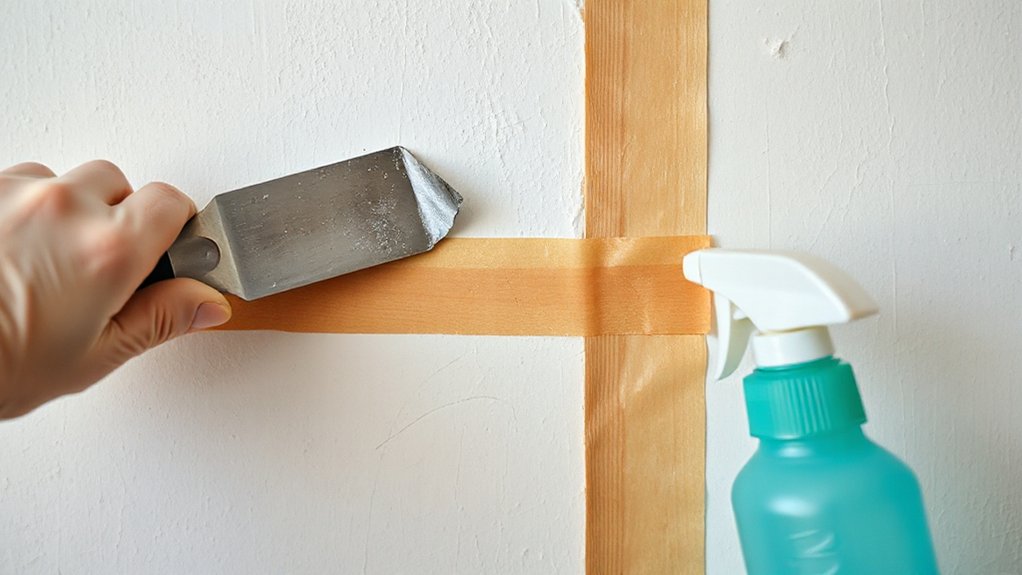
Once you’ve checked the finish type and cleaned the surface, you need to prove the existing paint is properly bonded to the plaster or you’ll just skim onto a weak layer that can shear off later. Start with a visual check under raking light: look for blistering, flaking, crazing, and soft edges around cracks. Run a scraper over changes in wall texture; sound paint won’t lift in sheets. Next do a cross-hatch test: score a 10×10 grid with a sharp knife, apply strong tape, then rip it off sharply. If squares detach, paint adhesion’s poor. Tap the wall with a knuckle or the butt of a screwdriver; hollow notes suggest delamination. Finally, wet a small area and rub; if it slimes or powders, it’s unstable.
Which Painted Surfaces Can You Plaster Over?
You can usually plaster straight over matte, porous paints because they give you a key and let moisture move through, provided the coating’s sound. Glossy or sealed paints (like high-sheen emulsions, oil-based gloss, or vinyl/satin finishes) won’t bond well, so you’ll need to abrade, degrease, and apply a bonding agent such as PVA or a grit primer before skimming. Your next step is to identify which finish you’ve got and prep it to meet UK plastering standards for adhesion and drying.
Matte And Porous Paints
When can plaster go straight over paint? You can usually skim over matte emulsion and other porous paints, because they let water soak in and give the plaster a mechanical key. Check the texture finish: light stipple or rolled matte is fine, but heavy orange-peel needs flattening. Scrape off loose paint, wash away grease, and abrade any shiny patches so suction stays even. Mist-coat with diluted PVA or a bonding agent to control suction and improve moisture resistance, especially on old, chalky surfaces. Let it go tacky, then apply a tight first coat and a second skim. Keep ventilation steady and avoid over-trowelling, which can drag paint through the skim. Patch-test first.
Glossy Or Sealed Paints
Although plaster will stick to plenty of painted walls, glossy or sealed finishes (silk/vinyl emulsion, gloss, eggshell, acrylic enamel, and stain-blocking primers) don’t offer much suction or “key”, so a skim can debond unless you mechanically roughen the surface and use the right bonding system. Start by washing off grease, then de-nib and abrade with 80–120 grit to dull the sheen and open the wall texture. If your Painting techniques left runs, drips, or brush ridges, scrape them flat so the skim doesn’t shadow. Vacuum dust, then apply a grit bonding coat (e.g., Blue Grit/Bond-It) or PVA in controlled coats; don’t leave glossy puddles. Let it go tacky and skim with multi-finish. For enamel, add a second grit coat.
When Should You Avoid Plastering Over Paint?
Before any skim coat goes on, paint condition dictates whether plaster will bond reliably, so it’s worth walking away from the job if the surface fails basic checks. Avoid plastering if the coating is flaking, chalking, blistered, or soft under a scraper; you’ll only trap failure and the skim will delaminate. If you’ve got multiple layers of Historical paint on lath-and-plaster, assume weak adhesion and potential contamination (lead risk) and don’t disturb it without proper controls. Walk away where damp staining persists, salts are present, or the wall feels cold and wet, because moisture will break the key. Also avoid where there’s pronounced texture mismatch—deep artex, heavy stipple, or thick roller peaks—because you’ll need build-up beyond a standard skim coat.
How Do You Prep Painted Walls for Plaster?
Before you plaster over paint, you’ve got to start with a clean, grease-free surface, so wash down with a sugar soap solution and rinse well. Next, you’ll abrade the paint to provide a mechanical key, focusing on any glossy or eggshell finishes. Finally, you’ll prime with a suitable bonding agent (such as PVA or a dedicated plaster bonding primer) so the plaster grabs evenly and doesn’t dry out too fast.
Clean And Degrease Surface
Once you’ve checked the paint is sound, you need to clean and degrease the wall so the plaster can key properly. Any surface contamination (grease, hand oils, nicotine, kitchen film) will reduce paint adhesion and can cause debonding between paint and fresh plaster.
Start by vacuuming dust and cobwebs, then wash down with warm water and sugar soap or a proprietary degreaser, following the manufacturer’s dilution rates. Work from the top down with a non-abrasive sponge, changing water frequently so you don’t redeposit grime. Rinse with clean water to remove residues that can interfere with bonding. Pay extra attention around light switches, radiators, and cooking areas. Let the wall dry fully; in UK homes allow at least overnight with good ventilation and steady heat.
Abrade And Prime Paint
Next, you’ll need to abrade the painted surface and prime it so the plaster has a reliable mechanical key and a controlled suction rate. Use 80–120 grit abrasive paper on a pole sander to dull the sheen and remove nibs, then vacuum dust and wipe down. You’re not stripping to bare plaster; you’re creating a consistent, matt profile.
Prime with a UK-approved bonding agent: PVA diluted to the manufacturer’s spec, or a grit primer for glossy paint and dense substrates. Apply evenly with a roller, avoid puddles, and let it go tacky before skimming if using PVA. In kitchens and bathrooms, choose primers rated for moisture resistance. A correct key prevents blistering and supports decorative finishes without crazing or debonding.
Which Primer Is Best: PVA or SBR? (Plus Common Failures)
Although both PVA and SBR get called “bonding agents”, they don’t behave the same under plaster. PVA re-emulsifies if it gets wet again, so it can stay tacky and cause the skim to drag or slump. Use it only as a sealer on porous backgrounds, not as your main key over sound paint. For paint adhesion and primer compatibility, SBR is usually the safer bet: it forms a more water-resistant film and gives a reliable grip when you’ve abraded the surface.
Mix SBR 1:1 with water for a first coat, then apply a neat coat and skim while it’s still tacky. Common failures: glossy paint left unkeyed, over-diluted primer, and letting SBR fully dry before skimming.
Frequently Asked Questions
Will Plaster Over Paint Affect Room Humidity or Breathability?
Plastering over paint can reduce breathability and trap humidity unless you guarantee good paint adhesion. Dense finishes limit moisture absorption; use a bonding agent, control indoor ventilation, and avoid sealing impermeable layers on solid walls.
How Long Should Plaster Dry Before Painting Again?
You should wait 2–4 weeks before painting; like watching mist lift, plaster must fully dry. You’ll guarantee plaster adhesion and paint compatibility by confirming uniform pale colour, low moisture, then mist-coat. UK rooms vary.
Can I Plaster Over Painted Ceilings With Textured Finishes?
Yes, you can plaster over painted, textured ceilings if the coating’s sound. You’ll need thorough Surface preparation: scrape high spots, wash, abrade, seal with PVA, then apply a bonding coat and skim for a flat finish.
What Plaster Type Works Best Over Painted Drywall?
Use a UK gypsum finish coat like Thistle Multi-Finish over painted drywall—because who needs shortcuts? You’ll guarantee Plaster compatibility with Surface preparation: degrease, key, dust-off, then apply PVA or bonding agent before skimming.
How Much Extra Weight Does Plaster Add to Painted Walls?
You’ll typically add about 4–10 kg/m², depending on skim thickness and backing. You must handle wall preparation carefully to guarantee plaster adhesion: remove loose paint, key surfaces, and use a suitable UK bonding agent.
Conclusion
Yes, you *can* plaster over paint—provided you don’t treat your wall like a mysterious “it’ll be fine” science experiment. You’ve checked the paint’s sound (no flaking, no hollow taps), keyed it up, degreased it, and primed properly. Choose SBR for reliability; use PVA only if you enjoy plaster going off like a badly timed kettle boil. If the paint’s glossy, damp, or failing, don’t skim—strip it first and save yourself a redo.