
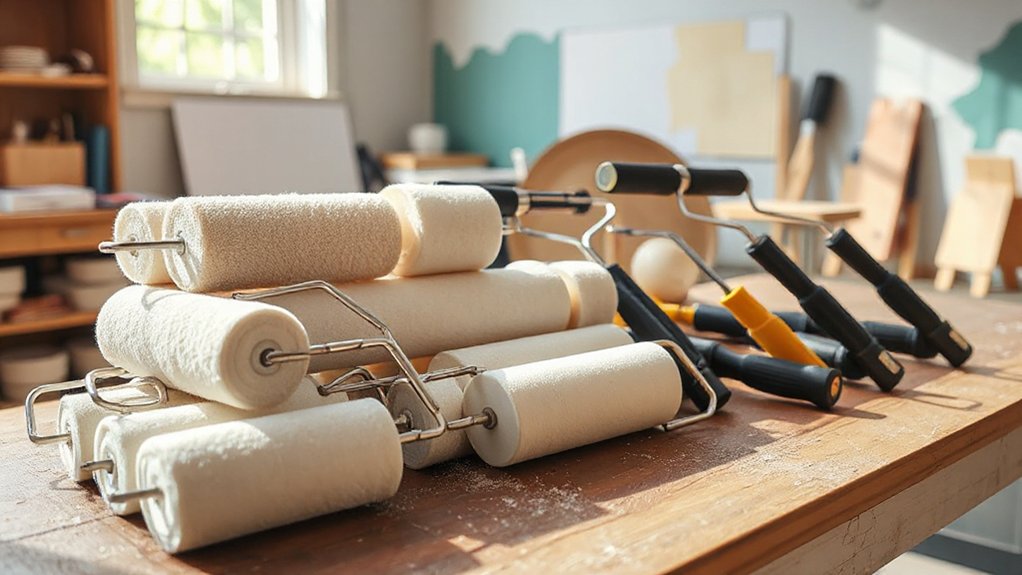
When you compare rollers, you’ll choose by surface, finish, and paint type. Fabric rollers grip rough textures and hide flaws, then synthetic rollers offer durability and easy cleanup for frequent projects. Foam gives smooth, fast coats ideal for ceilings, while natural fibers excel with solvent-based or flat coatings. Match nap length to texture—short for smooth walls, long for rough surfaces. For tight spots, use mini rollers, daubers, or edgers. If you keep exploring, you’ll uncover even smarter choices.
Choose the Right Roller Type for Your Project
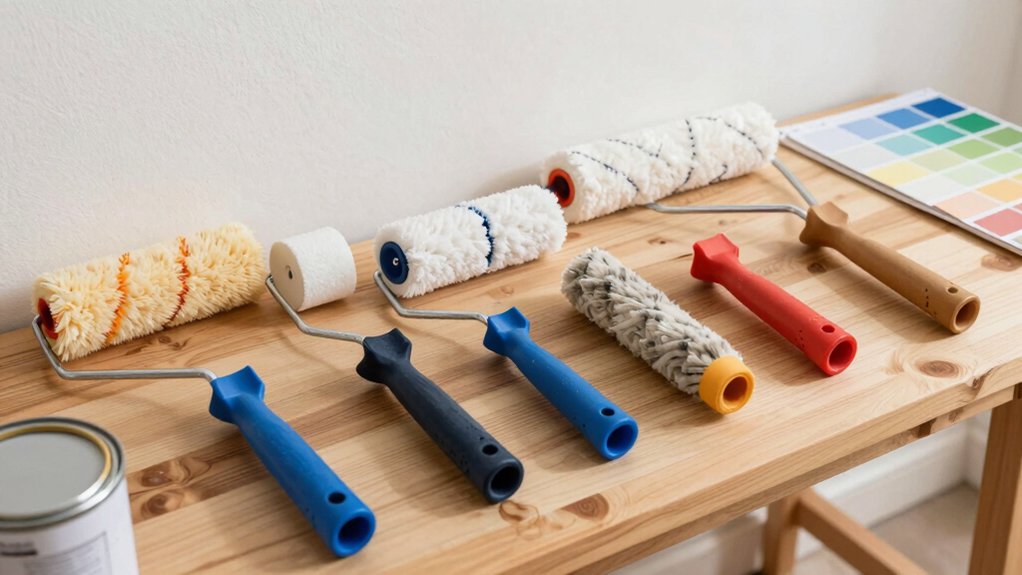
Choosing the right roller type starts with your project’s goals and material. You select based on surface texture, paint viscosity, and the finish you demand.
For smooth walls, a short-nap roller minimizes texture and yields a clean edge. For rough surfaces, a longer nap hides imperfections and improves coverage per stroke.
Consider paint sheen to match your durability needs—gloss or semi-gloss requires tighter control, while flat finishes tolerate a bit more wobble.
Roller diameter affects speed and control: larger diameters cover more area quickly but can compromise precision in corners. Smaller diameters offer tighter turns and better adaptability in tight spaces.
Finally, assess roller core material for solvent resistance and cleanup ease to sustain performance over multiple projects.
Plan, measure, and execute with confidence.
Fabric, Foam, and Synthetic Rollers: Key Differences
Fabric, foam, and synthetic rollers each bring distinct advantages depending on your project. Your choice hinges on material interaction, not just price.
Fabric textures grip more paint and deliver consistent coverage on rough surfaces, reducing rework.
Foam excels with smooth, fast coats and minimal texture transfer, ideal for ceilings or walls with low porosity.
Synthetic rollers offer balanced performance, combining durability with good release for interior paints and primers.
Durability matters: synthetic options resist breakage under pressure and repeat use, while fabric can shed fibers if overworked.
For frequent projects, synthetic rollers provide reliability and easier cleanup.
Use fabric textures for textured walls, foam for slick finishes, and synthetic durability when you need a versatile, long-lasting tool.
Natural vs. Synthetic Fibers: When to Pick Each
Natural fibers and synthetic fibers each have strengths that matter for different paints and surfaces. You’ll choose based on finish, absorption, and cleanup, not guesswork.
Natural fibers excel with flat and solvent-based coatings, delivering a smoother lay with fewer strokes, but they can nick on rough surfaces and absorb more.
Synthetic fibers resist wear, shed less lint, and maintain shape across high-reload jobs, making them ideal for enamel and glossy finishes.
For tight corners or delicate hides, natural options offer better saturation per pass; for high-traffic projects or frequent roller reloads, synthetic fibers boost roller durability.
Consider your project’s scale, surface texture, and cleanup demands. Evaluate fiber options against durability, cost, and expected reuse to optimize your tool choice.
Match Nap Length to Surface Texture and Paint
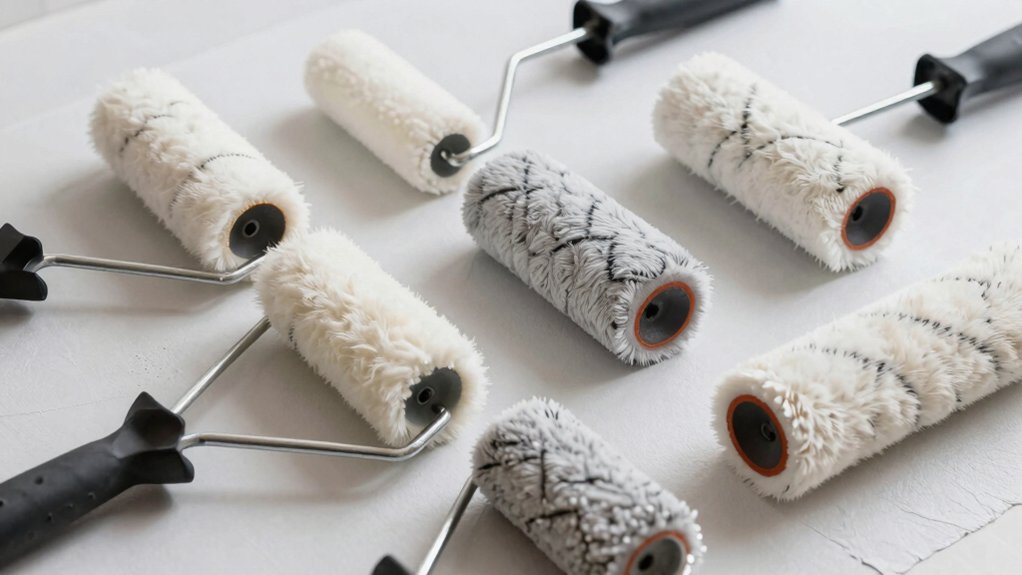
Choosing the nap length that matches your surface texture and paint helps control coverage and finish.
On rough surfaces, use a longer nap to lift and lay down material evenly. Smooth surfaces benefit from shorter naps for fine, consistent coats.
Consider the paint’s viscosity and tip-off requirements to fine-tune your technique and reduce lint or roll marks.
Surface Texture Matching
Surface texture matters because the nap length you choose directly affects coverage and finish. You’ll match nap length to texture to maximize texture consistency and minimize project rework.
For smooth surfaces, choose short naps to reduce stippling and ensure a uniform, tight finish with less roller marks.
Medium naps balance rough walls and ceilings, delivering controlled coverage without overloading the surface.
For coarse textures, long naps push enough material into crevices, delivering even coverage and extending finish durability.
Always test a small patch first and compare results with your target texture. Record data on coverage rate, touch-up needs, and drying times to validate your choice.
Precision selection reduces waste, improves speed, and yields a dependable, professional-grade result.
Paint Application Tips
To get the best finish, match your nap length to both the surface texture and the paint you’re using, then apply in a controlled, deliberate pattern. You’ll maximize coverage and minimize lap marks by choosing the right roller for the job.
For smooth surfaces, a short nap reduces texture transfer, while rough walls demand a longer nap to tuck in pores. Always prime and test a small area before full application.
Maintain a steady pace, overlap strokes, and avoid overloading the roller to prevent drips. Don’t forget roller storage between sessions to preserve nap integrity.
When batch mixing, keep paint mixing consistent to prevent color and sheen variance. Document your process for reproducibility and measure efficiency gains.
Roller Handles: Comfort Tips for Long Jobs
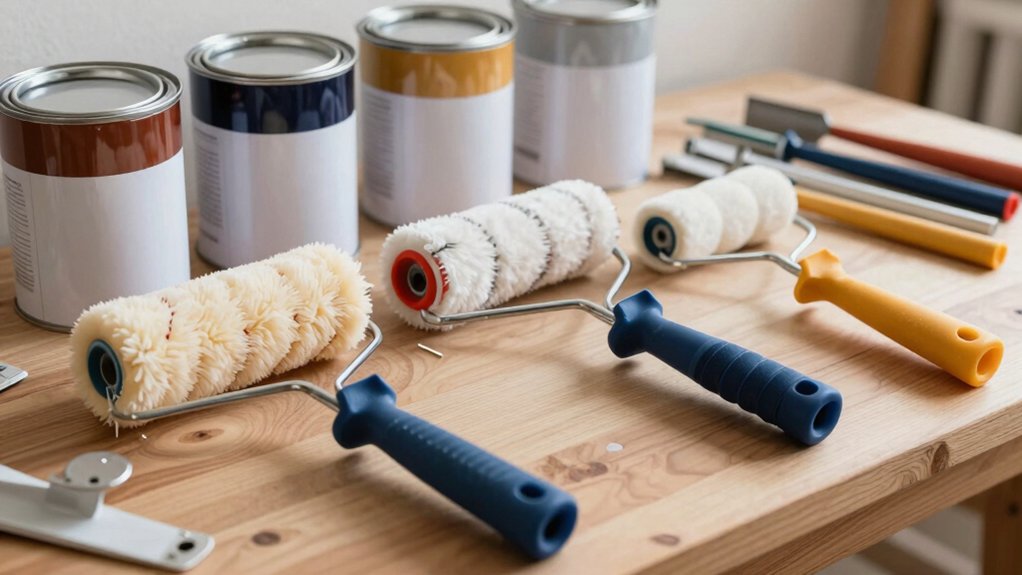
Long jobs wear on your hands, so choose roller handles that reduce fatigue and improve control. For comfort, seek an ergonomic grip that fits your hand’s natural contour, lowering grip strain during extended sessions.
The handle material matters: lightweight, durable options like reinforced plastic or composite metals cut fatigue, while textured surfaces enhance traction without added pressure.
Balance and weight distribution matter too; a cushioned collar under the shaft can soften vibration and prevent hotspots.
Consider interchangeable handles for different tasks, allowing you to switch without reloading your wrist.
Grip width should align with your palm size to minimize finger squeeze.
Opt for handles with corrosion-resistant finishes in damp environments.
Prioritize data-backed designs that demonstrate reduced fatigue in real-world use.
Cleaning and Maintenance to Extend Life
Regular cleaning and timely maintenance dramatically extend a roller’s life, so establish a simple routine: wipe down after use, inspect for wear, and lubricate moving parts as recommended by the manufacturer. You’ll maximize performance by treating brushes and casings gently, drying thoroughly to prevent rust or mold, and storing components in a clean, dry area.
Implement targeted Cleaning techniques that remove paint buildup without abrading surfaces, and avoid harsh solvents that degrade foam or felt. Schedule quick post-project checks: rotate the roller on its axis to equalize wear and replace severed filaments promptly.
For storage, use airtight containers or bags to protect against dust and humidity. These Storage solutions sustain consistency, reduce gaps in coverage, and sharpen overall reliability.
Rollers by Surface: Walls, Ceilings, Trim, and Cabinetry
When choosing rollers for different surfaces, you’ll see clear differences in nap length, texture, and core design that influence coverage and finish quality.
For walls, opt for a medium nap (3/8–1/2 inch) to balance smoothness and speed, and pair with high-adhesion paints to reduce drips.
Ceilings benefit from a longer nap (1/2–3/4 inch) to reach into textures without showing stipple.
Trim requests tighter control; use a short nap (1/4 inch) with a steady wrist to minimize texture transfer.
Cabinetry needs smooth, even coats—select micro-nylon or blended fibers with a rigid core for consistent rotation.
Manage roller storage to protect nap and prevent contamination. Keep a concise set of roller accessories on hand to accelerate prep, loading, and clean-up for every surface.
Maintain a data-driven approach to maximize coverage and finish quality.
Special-Purpose Rollers: Mini, Daubers, and Edgers
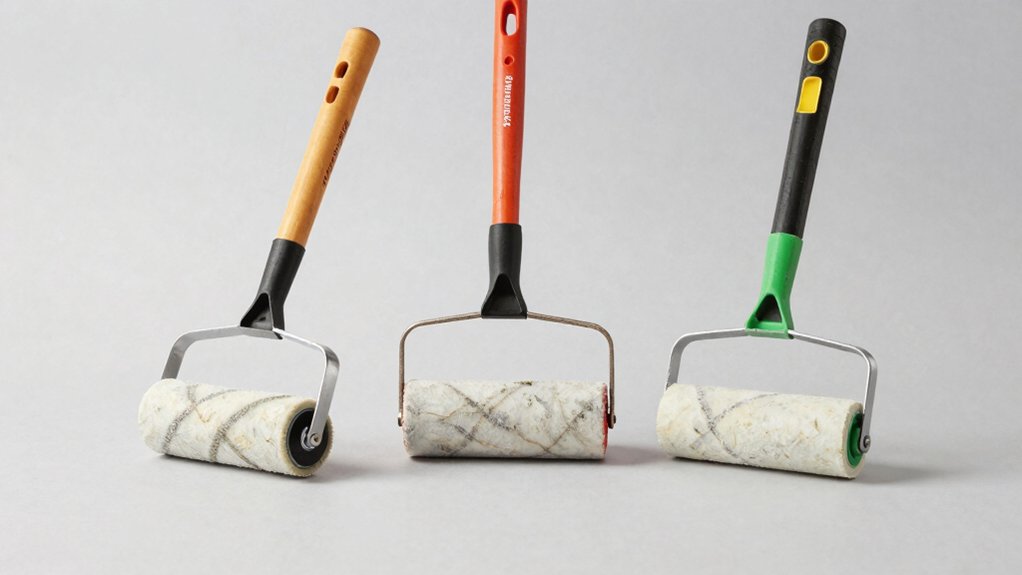
Special-purpose rollers save time and improve precision on tight or intricate areas. You’ll leverage mini rollers for tight corners, window frames, and cabinet details, where a standard sleeve misses grip. Use mini rollers to apply uniform coats in narrow spaces without overspill.
Dauber techniques let you dab paint into crevices, seams, and texture valleys, delivering controlled coverage without pooling. Edgers extend accuracy along trim lines and baseboards, reducing masking needs and cleanup.
When you choose mini rollers, expect faster cut-in work and less finger fatigue, especially on recessed panels. Daubers require steady wrist action and patient layering to avoid streaks, while edgers demand consistent pressure to maintain a crisp edge.
For best results, tailor roller type to each surface feature and desired finish.
Budget vs. Performance: Evaluating Value
Budget vs. performance isn’t about chasing the cheapest option; it’s about balancing cost with durability, coverage, and finish quality. You evaluate value by comparing material quality, roller cover construction, and application efficiency.
Higher upfront price often correlates with better paint durability and smoother coats, reducing touch-ups and longer-term costs. Consider cover density, nap length, and core rigidity to predict real-world performance and waste.
In practice, you’ll measure coverage per pass, cleanup time, and compatibility with your paint type. Don’t overlook roller storage implications: reusable cores, clean storage, and moisture control extend life and ensure consistent results.
When you price options, factor replacement intervals and the impact on project timelines. Aim for the best blend of durability, efficiency, and practical cost to maximize your results.
Five-Step Quick Decision Framework to Pick the Right Roller
Here’s a concise, five-step framework you can apply in minutes: start by defining your project needs (surface type, paint type, indoor vs. outdoor) and set a priority order for coverage, finish, and cleanup.
Step 1: quantify surface characteristics and paint viscosity to predict roller performance.
Step 2: match roller cover type to finish goal—spray-smooth, even lay, or textured results.
Step 3: assess roller storage and workflow—prepare trays, seals, and storage to prevent contamination.
Step 4: evaluate paint consistency and loading technique to minimize runs and pinholes.
Step 5: confirm cleanup ease and durability for reuse.
This framework keeps you data-driven, fast, and decisive, ensuring you select the right roller every time for ideal coverage, finish, and long-term durability.
Frequently Asked Questions
What Roller Type Works Best for Oil-Based Paint?
For oil-based paint, use solvent-resistant rollers (natural or lambswool) with a smooth cover for clean finishes. You’ll optimize brush compatibility and minimize paint absorption, ensuring even coverage and faster project completion.
Do Foam Rollers Work on Textured Ceilings?
Yes, foam rollers can work on textured ceilings, but you’ll want to use ceiling texture techniques specifics and a light touch. Afterward, follow roller cleaning tips to maintain performance and prevent texture residue sabotaging future coatings.
Can Natural Fiber Rollers Shed Lint During Use?
Yes, natural fiber rollers can shed lint, especially if worn; choose high fiber durability and inspect before use. You’ll face lint shedding initially, but with quality fibers, it stabilizes, delivering practical, data-driven coverage and efficient paint transfer.
Are Mini Rollers Suitable for Tight Cabinet Corners?
Yes, mini rollers work well for tight cabinet corners; they let you corner cut efficiently and prevent paint spill, giving you precise control and faster results.
How Long Do Rollers Typically Last With Heavy Use?
Did you know 60% of painters replace rollers after heavy use weekly? Typically, rollers last 6–12 months under heavy use. Expect paint durability and roller maintenance to influence lifespan, and rotate usage to maximize performance and durability.
Conclusion
You choose the right roller by knowing your project, your surface, and your paint. You weigh fabric, foam, and synthetic options, you compare nap lengths, you test comfort, you match roller to wall, ceiling, trim, or cabinetry. You balance budget and performance, you apply a five-step decision, you compare value and results, you plan for efficiency, you commit to clean, you finish with confidence. You roll better, you finish faster, you enjoy professional results.