
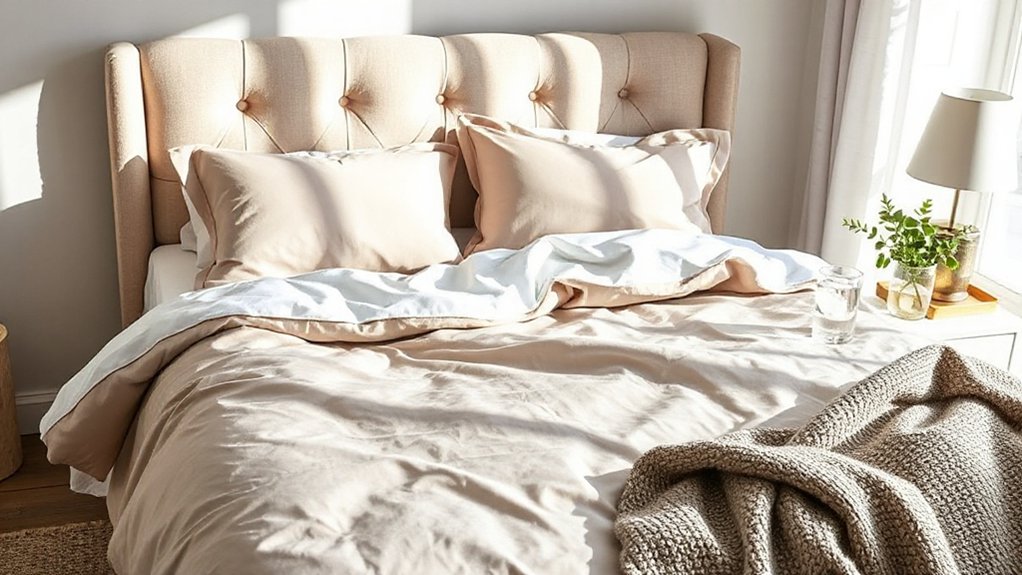
Refresh your bedroom in a weekend by swapping in thoughtful bedding that blends durable fabrics, soothing colors, and layered textures. Start with breathable sheets and pillowcases, then choose a mid-range thread count and a crisp percale or silky sateen weave for year-round comfort. Layer with a lighter duvet or cover, a heavier throw, and tactile accents like knit or embroidered details. Pair neutrals with a few bold accents, and add soft lighting for cohesion—you’ll discover more tips as you continue.
What a Bedding Refresh Delivers

A bedding refresh instantly elevates your room by adding comfort, color, and texture that reflect your personal style. When you refresh, you gain tangible improvements: a calmer sleep zone, clearer morning routines, and a space that invites you to unwind.
You’ll notice bedding durability that stands up to nightly use, seasonal changes, and routine laundry without losing shape or feel. Eco-friendly fabrics let you rest easy, knowing your sheets, blankets, and duvets come from responsibly sourced, low-impact materials.
The right combination reduces noise from restless nights and creates a cohesive look that anchors your decor goals. With thoughtful layering, you achieve consistent temperature regulation, enhanced tactile comfort, and a sense of belonging in a room you truly own.
Start With Sleep Essentials: Sheets and Pillowcases
When you start with sleep essentials, choosing the right sheets and pillowcases sets the tone for your entire refresh. You’ll feel the difference in texture, fit, and ease of care, so keep practicality front and center while you elevate comfort with decorative accents and Bedding accessories.
- Pick breathable cotton or a soft microfiber that suits your climate and allergy needs.
- Match pillowcase closures to your sleep style—envelope or zipper for a clean look.
- Choose a neutral base and layer with subtle patterns for visual depth.
- Prioritize proper fit—deep pockets and correct sheet size prevent tucking tangles at night.
Choosing the Right Thread Count and Weave for Comfort
Choosing the right thread count and weave isn’t about chasing a number; it’s about finding a balance that feels like a revitalizing gust when you lie down. You’ll notice that higher thread counts aren’t always softer, and lower ones aren’t inherently harsh. Prioritize fabric durability and feel over hype.
For year-round comfort, aim for a mid-range thread count and select a weave that suits your climate and sleep style. If you prefer a crisp touch, lean toward a percale; for a smoother, more lustrous drape, consider a sateen.
Weave selection matters as much as weight: a tight weave resists pilling and holds shape, while a looser weave breathes. Test swatches, compare finish, and choose textiles that invite you to unwind nightly.
Layer Textures: Duvet, Comforter, and Throws
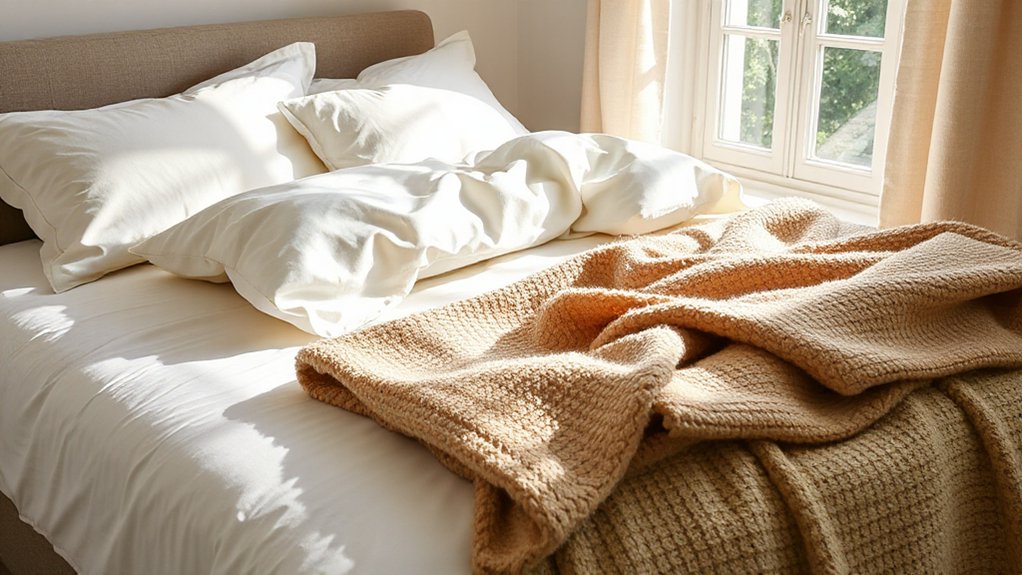
Layer textures by pairing a crisp duvet with a weighty comforter for controlled warmth and structure.
Add throws in varied textures—knit, boucle, or velvet—to create tactile contrast that invites you to touch and linger.
Play with weight dynamics by layering lighter underlayers and heavier top layers to balance coziness, color, and drape.
Layering With Duvet
To create a cozy, polished bed, start by choosing a duvet that complements your comforter and throws in weight, texture, and color.
- Match weight to season: lighter fabrics for warm months, warmer fills for colder nights, keeping bedroom feng shui balanced.
- Layer textures thoughtfully: a crisp duvet against a soft duvet cover adds tactile contrast without bulk.
- Coordinate color with seasonal color schemes, then lift the palette with a single accent throw for depth.
- Tuck strategically and reveal subtle edges: a tidy border at the foot anchors the bed and signals calm ownership.
Texture Through Throws
Throws are the quick way to add tactile drama without a full redeck. You choose textures that invite you to touch, layer by layer, and you feel instantly grounded.
Start with a neutral base throw, then add a textured knit or faux fur for contrast. Keep color cohesive to preserve calm, essential for sleep hygiene tips.
When you drape, think about balance: one heavy knit at the foot, a lighter weave folded over the end. This creates depth without clutter, reinforcing bedroom feng shui by grounding energy near the bed.
Avoid bulky patterns that shout; opt for tactile interest instead.
Finishing touches—fold lines, visibility, and easy care—keep your space serene and welcoming, signaling belonging every time you enter.
Comforter Weight Dynamics
As you shift from texture-focused throws to weight dynamics, you’ll notice how each layer behaves differently on the bed. Your duvet, comforter, and throws combine to form a responsive system that adapts to you, not the other way around.
- Match weight to season: lighter duvets for summer, heavier options for winter, including silk comfort for a breathable luxury.
- Integrate weighted blankets thoughtfully: one layer for calm, not bulk, ensuring the bed retains its inviting silhouette.
- Consider fill power and temperature: higher fill gives warmth without crowding, while silk comfort adds a cool, smooth touch.
- Build cohesion: choose fabrics that glide together, so every night feels intentional and belonging is felt through comfort.
Color Psychology: Mood-Boosting Bedding Hues
Color choices set the mood in your bedroom the moment you walk in, so pick hues that feel uplifting without shouting. You’ll suit mood-boosting colors with practical, breathable choices: soft blues for calm focus, warm blush for coziness, or earthy greens for grounded energy.
Use these hues as a backdrop to your bedding patterns, choosing simple repeats that won’t overwhelm walls or furniture. Consider fabric durability—percale or cotton-sateen blends stay crisp longer and feel cool to the touch, supporting daily comfort.
Balance saturation with enough contrast to highlight textures and layers. Pair light, airy tones with denser textiles for depth, and test color in multiple lights before committing.
Your goal: a serene, cohesive retreat you’re excited to share.
Pattern Play: Coordinating Stripes, Florals, and Solids
Start with a clear hierarchy: pick one dominant pattern (stripes, florals, or solids) as the backbone, then layer a second pattern in a smaller scale, and finish with a solid to ground the look.
Pattern coordination keeps your room cohesive and invites artistic expression. When you mix stripes with florals or solids, you create movement without chaos, enhancing bedding longevity by balancing bold and calm elements.
- Choose a dominant pattern and base color you love.
- Add a second pattern in a smaller scale for contrast.
- Finish with a solid that anchors the ensemble.
- Consider subtle repeats and directional cues to unify the set.
You’ll gain a polished, inviting space where you belong, and your linens will endure the test of daily life.
Elevate Texture: Embroidery, Matelassé, and Knit Details
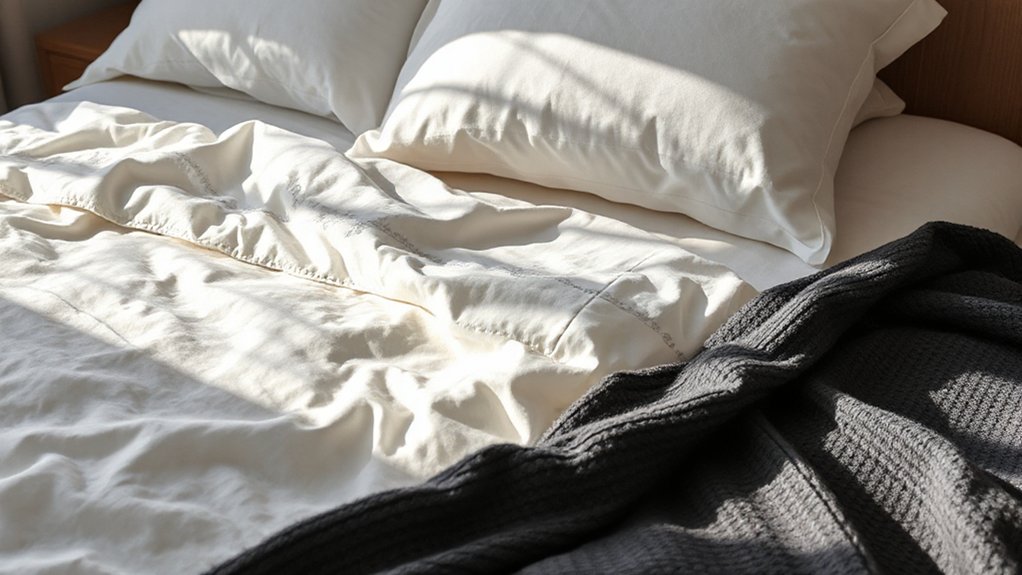
You’ll notice how embroidery, matelassé, and knit details add tactile interest without overwhelming your palette.
Start with a single embroidery motif or a softly quilted matelassé panel to create depth. Then layer in a knit accent for subtle texture variation.
This combination elevates your bedding’s feel while keeping the look cohesive and breathable.
Embroidery Texture Play
If you want to elevate texture in your bedroom, embroidery, matelassé, and knit details are the practical levers to pull. Embroidery texture elevates fabric embellishments, adding personality without clutter. You’ll feel intentional depth when stitches map patterns to your sheets and shams, catching light just enough to feel luxe.
- Choose subtle embroidery motifs on pillowcases to echo your headboard.
- Pair percale sheets with stitched borders for clean, durable texture.
- Use tone-on-tone thread for refined, cohesive fabric embellishments.
- Layer a knit throw at the foot for warmth and approachable texture.
These choices invite belonging and comfort, guiding you toward a curated, cohesive sleep space. Practical, precise, and aspirational, this play respects your room’s balance while enriching tactile experience.
Matelassé Depth Details
Matelassé adds tactile depth that can redefine room calm without altering color. You’ll feel the subtle quilted valleys and raised panels as you settle in, guiding you toward a quieter, more intentional sleep space.
Focus on Matelassé craftsmanship: the stitching, padding, and fabric layers work as a single, serene surface rather than competing textures. In practice, choose a piece with balanced depth—not too puffy, not flat—so shadows and light play softly across the bed.
Pair this with bedding embroidery for quiet focal points that echo the room’s palette, not shout over it. This detail-conscious approach creates belonging—where textures tell a story of care, quality, and thoughtful restraint.
Your retreat becomes both tactile and inviting.
Knit Surface Elevation
Elevate texture by layering knit details with embroidery and Matelassé to create a tactile, cohesive surface. You’ll notice how a knitted surface elevation adds warmth, depth, and everyday luxury, without overwhelming the room. This approach blends contemporary textile innovation with timeless comfort, inviting you to feel connected to your space.
- Choose a knit-weight that matches your bedding’s scale, then pair with subtle embroidery for tactile balance.
- Mix Matelassé panels with simple knit textures to create focal points that read as cohesive, not busy.
- Layer with coordinating textures—cotton, linen, and a soft velvet accent—to deepen the sense of belonging.
- Maintain machine-washable knits and finish with breathable covers for durable, everyday elegance.
The Power of Neutrals: Ground a Bright Look
Neutral tones offer a grounded foundation for a bright bedroom, letting color pops feel intentional rather than faddish. The power of neutrals is in how they mirror light and texture, creating calm while supporting personality through accessories.
You’ll notice that eco friendly fabrics sustain a cleaner vibe, inviting long-term comfort without compromise. Pair soft, stone, or ivory linens with wood tones or matte metals to build depth without overwhelming the space.
Vintage bedding styles can live harmoniously within a neutral base, adding character without shouting. Focus on stitching quality, subtle weave, and durable dye; these details translate into lasting serenity.
When you choose neutrals thoughtfully, you craft a room that feels welcoming, cohesive, and effortlessly elevating.
Add a Pop: Accent Pillows and Bed Runner Ideas
Choose a bold pillow color to instantly lift the headboard and tie in with your existing palette.
Use the bed runner to add texture and a contrasting finish that elevates the look without clutter.
Mix patterns thoughtfully—pair a simple geometric with a subtle floral for depth and cohesiveness.
Pillows: Color Pop
Want to spark interest in your bedding without a full redo? Pillows are your color pop, not reinvention. You’ll choose shapes and scales that complement your sleep space, then layer in contrast with intention. Aim for comfort-first fills and fabrics you trust.
- Start with vintage patterns as an accent—think small florals or geometric repeats that echo your room’s character.
- Mix eco friendly fabrics like organic cotton or bamboo blends for breathability and sustainability.
- Introduce a bold pop with a single, saturated color that repeats in a bed runner or rug for cohesion.
- Tuck a lightweight lumbar pillow at the foot for instant depth and a welcoming touch.
You’ll feel connected to a space that’s stylish, practical, and truly yours.
Runner: Texture Play
Texture is your secret weapon for a refreshed look, because the right mix of accent pillows and a bed runner adds depth without a full redo. You’ll choose texture to complement your bedding palette, not clash with it.
Start with a midweight bed runner in a tactile weave, then layer two to three pillows in varying textures—cord, velvet, and knit—so the bed invites touch.
Prioritize bedding durability by selecting well-constructed covers with reinforced seams and dye-fast colors. Opt for eco-friendly fabrics like organic cotton or linen blends for daily comfort with a lighter footprint.
Keep colors cohesive, but vary texture enough to create interest. A well-tuned texture plan elevates coziness, signals care, and makes your space feel truly designed for belonging.
Mix: Pattern Pairing
Pair patterns thoughtfully to amplify your bedding without chaos: start with a unifying color pulled from your duvet cover and repeat it in two accent pillows and the bed runner. Then introduce a third pattern at a smaller scale to create visual rhythm. You’ll balance texture and print with intention, not luck, giving the room cohesion you can feel when you walk in.
1) Choose a base print in Vintage patterns for familiarity and depth.
2) Add two accents in contrasting scales, echoing the base color with Eco friendly dyes.
3) Layer a smaller, subtle pattern to introduce movement without overstimulation.
4) Finish with accessories in solid, breathable fabrics to ground the look and invite calm.
Sourcing Smart: Budget-Friendly Bedding Finds
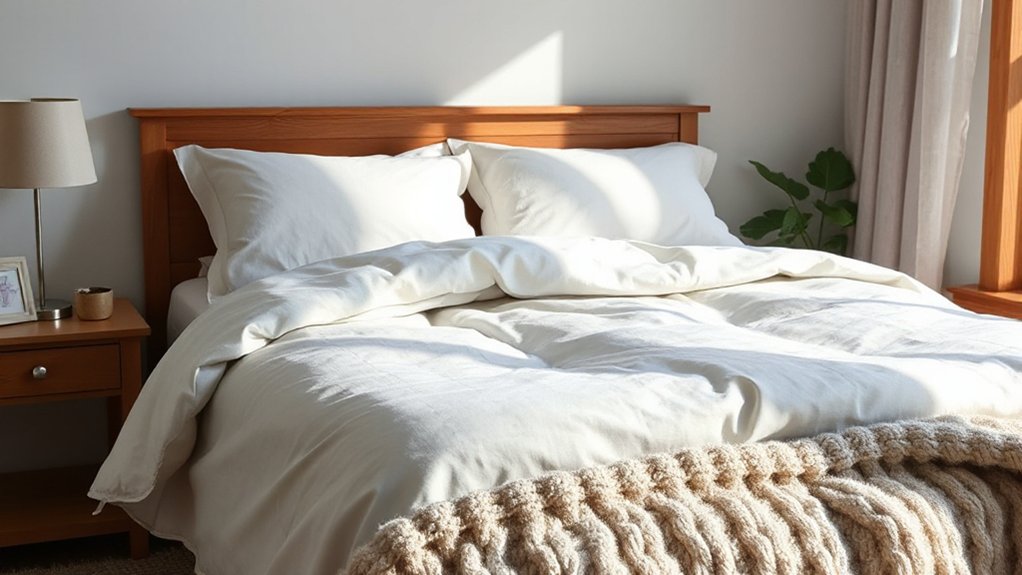
When you’re shopping for budget-friendly bedding, focus on materials that balance comfort with durability, like cotton percale or microfiber blends that feel crisp yet soft after a wash. You’ll maximize value by prioritizing tight weaves, reinforced stitching, and easy-care finishes.
Look for eco-friendly fabrics that reduce environmental impact without sacrificing feel, and compare fiber content to gauge longevity. Seek versatile colors and simple patterns that pair with existing decor, expanding your options over time.
Vintage bedding options can offer unique texture and history at approachable prices, especially from certified sellers or thrifted finds that are clean and structurally sound.
Commit to a small, curated set of core pieces, then refresh with seasonal accents for a cohesive, welcoming sleep haven.
Sizing Tips: Fitting Duvet Covers and Fitted Sheets
To get a perfect fit, start by knowing your bedding sizes and the mattress depth, then match them to your duvet cover and sheets. You’ll feel more settled when the fit anchors your space, echoing your decorative accents. Focus on material durability to guarantee longevity for daily use.
Here’s a practical checklist:
- Measure mattress depth and sheet pocket depth; record in inches.
- Choose duvet covers with proper closure type (zip or buttons) for secure fit.
- Match sheet corner pockets to mattress corners; opt deep pockets if needed.
- Inspect fabric weight and weave; prioritize sturdy cotton blends for lasting shape.
With these steps, you’ll enjoy a cohesive, breathable bed setup that feels inviting and lasting.
Maintenance Made Easy: Quick Cleaning and Longevity
Your daily cleaning ritual keeps your bedding looking fresh and lasting longer, with simple routines that fit into real life.
Focus on materials that breathe and resist wear, so longevity grows with every wash.
Start with quick stain-prevention habits and smart loading to protect fibers and preserve softness.
Daily Cleaning Rituals
1) Tidy surfaces and put away items you touched today, so your bedside feels calm and intentional.
2) Quick wipe-down of dust-prone spots, then vacuum or sweep high-traffic areas to prevent buildup.
3) Set out tomorrow’s outfit and essentials, tying preparation to a smooth bedtime routine.
4) Empty trash and refresh air with a quick vent or open window, fostering a breathable, inviting atmosphere.
This routine anchors your nightly wind-down, promotes restful sleep, and strengthens your connection to a serene bedroom sanctuary.
Longevity Through Materials
Choosing fabrics and finishes that resist wear and clean up quickly keeps your bedroom serene long after you refresh the bedding. You’ll pick bedding materials that balance softness with durability, prioritizing fibers and weaves that endure frequent laundering.
Consider thread count and weight not as luxury metrics, but as longevity factors that influence how often you’ll refresh your set without fading or pilling. Opt for colorfast dyes and easy-care finishes that resist shrinking, stretching, and snagging.
When selecting pillow covers and duvet covers, look for reinforced seams and hardware that withstand daily use. Your goal is consistency: predictable care, steady performance, and a calm room.
Stain Prevention Tips
Stain prevention starts with smart habits you can rely on daily: treat spills immediately, blot rather than rub, and keep a small stash of quick-clean tools within reach. You’ll feel confident, part of a mindful community, as small actions compound into lasting freshness.
By choosing timeless looks like Vintage patterns and fabrics that honor Eco friendly fabrics, you’re investing in longevity.
- Act fast on spills with a clean cloth; don’t rub, dab to lift without embedding.
- Use a portable stain pen for on-the-spot treatment before mail-time laundry.
- Pre-treat areas prone to circulation or near the bed with a gentle, fabric-safe solution.
- Wash with sustainable detergents at cool temps to protect fibers and color.
Together, you create a bedroom that stays pristine and welcoming.
Seasonal Refresh: Lightweight Eiderdowns vs Heavier Covers
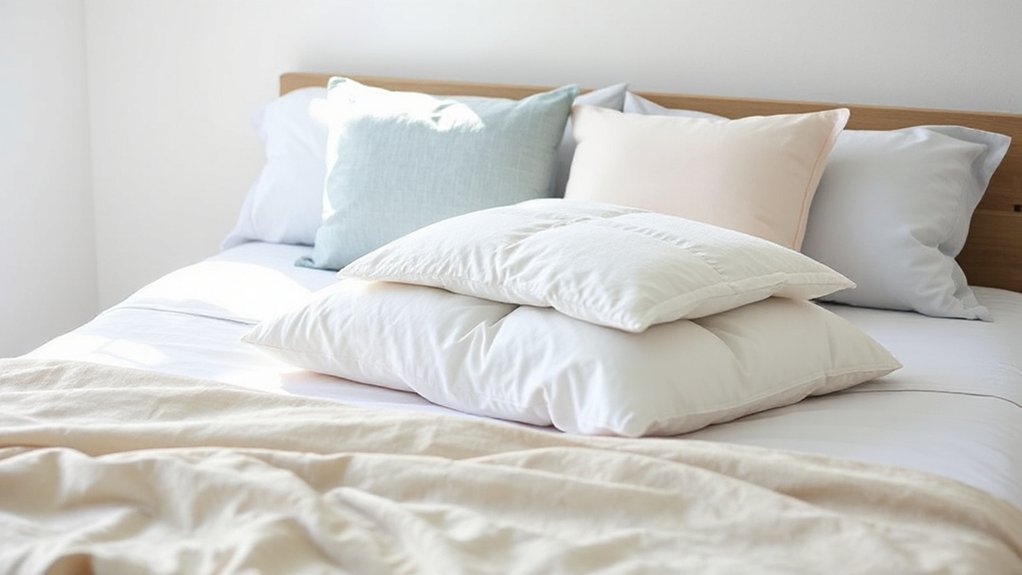
Seasonal changes often call for a quick bedding swap, and choosing between lightweight eiderdowns and heavier covers comes down to warmth needs, sleeping style, and room climate.
You’ll assess how you rest: do you shift a lot, or stay quiet under the covers? Lightweight eiderdowns offer breathability for mild nights, while heavier covers trap warmth for cooler seasons, supporting steady sleep without crowding.
Consider duvet alternatives that blend comfort with functionality, like a midweight option that adapts to temperature swings.
Check bedding durability—stitch quality, fabric resilience, and filling stability guarantee you don’t chase replacements mid-season.
Pair your choice with a clean duvet cover that resists pilling.
With the right pick, you create a cozy, belonging-filled bed that welcomes you home, night after night.
Layering for Climate Control: Temperature-Regulating Fabrics
Layering for climate control starts with fabrics that adapt to your body and room temp. You’ll feel the difference when sheets, blankets, and duvet covers respond to heat and humidity, keeping you comfortable without extra layers. Choose materials that breathe, wick moisture, and insulate where needed, so you sleep soundly through changing nights.
Eco friendly fabrics and allergen resistant materials pair well for lasting coziness and peace of mind.
- Pick breathable weaves that cool you on warm nights and trap warmth when it’s chilly.
- Look for moisture-wicking blends to reduce clamminess and maintain a steady microclimate.
- Favor naturally hypoallergenic fibers to minimize irritation.
- Favor easy-care finishes that stay smooth and durable after multiple washes.
Accessorize the Bed Area: Headboard, Rugs, and Window Tie-Ins
Tying the bed area together starts with a cohesive trio: a thoughtfully chosen headboard, a textured rug, and window treatments that frame the space without competing with your bedding.
You’ll select an artistic headboard that reflects your room’s personality—arched, upholstered, or carved—so it feels like a deliberate focal point.
Pair it with decorative rugs that anchor the feet and add warmth underfoot, choosing patterns and pile heights that echo your textiles without overpowering them.
For windows, opt for simple, non-distracting treatments—soft drapes or streamlined blinds—that soften light and pull the look inward.
Keep colors cohesive across headboard, rug, and window tie-ins to create a calm, inviting bedroom where you belong.
Lighting and Mood: How Bedding Interacts With Room Light

Lighting and mood start with how your bedding looks in different light, from morning sun to evening lamps. You’ll notice Natural Light Effects on fabric sheen, Color Temperature Impact on warmth, and how Texture and Glow shift as light moves across sheets and pillowcases.
Use this awareness to choose colors and textures that stay inviting across the day, then adjust layering or bulbs to keep the room cohesive.
Natural Light Effects
Natural light transforms bedding from a simple textile to a mood-setting element, so you’ll want fabrics and colors that respond well to the sun’s arc.
- Choose bedding materials that reflect or diffuse light softly, like cotton percale or linen blends.
- Opt for neutral tones with subtle sheen to brighten mornings without harsh glare.
- Layer textures (quilt, cover, and pillow shams) to create varying light reflections and depth.
- Keep sleep hygiene in mind by pairing light fabrics with breathable blends to prevent overheating.
You’ll feel more grounded when mornings greet you with a gentle glow, and you’ll maintain cohesion with your space as daylight shifts.
This approach supports belonging, calm routines, and a thoughtfully curated retreat.
Color Temperature Impact
Color temperature shapes how your bedding reads in different rooms and times of day, so you’ll want to pick tones that behave predictably under the lights you actually use. When you choose sheets and duvet covers, think through color psychology: warm whites and soft beiges feel cozy by lamp glow, while cool blues and grays read refreshed under daylight. This helps create a deliberate mood rather than a drifting one.
Pairing fabrics with lighting also supports temperature regulation—bedding that breathes in warm rooms reduces heat buildup, while lighter shades reflect heat in hotter spaces. Practical tests matter: observe under three common hours, adjust accordingly, and note how your eye perceives depth and contrast.
You’ll foster belonging by curating a coordinated, soothing sanctuary.
Texture and Glow
- Select matte weaves for calm areas and satin or sateen for a glow where you want energy, balancing bedroom feng shui with your light sources.
- Layer lighting: a warm base, plus a softer bedside glow, helps support sleep posture and reduces harsh reflections.
- Pair colors and textures to guide attention toward the nightstand or reading nook, creating a sense of belonging and purpose.
- Test fabric translucence with your lamp at night, adjusting to maintain restful ambience without dulling your space’s personality.
Weekend Execution: A Step-by-Step Before-and-After Plan
With a clear plan in hand, weekend execution starts by pulling together just a few essentials: clean, breathable bedding, a fresh color accent, and a simple layout that makes the bed the room’s centerpiece.
You’ll map steps: strip, launder, swap in eco friendly fabrics, then refresh pillows and a throw.
Next, assemble a seasonal color schemes palette, aligning sheets, duvet cover, and accents for coherence.
Make the bed first to anchor the room, then adjust bedside lamps, plant placement, and a rug pull-in to unify the space.
Document the before and after with quick photos, noting how texture and light shift mood.
Finish with a tidy folding zone for future refreshes, and celebrate the small win—a calmer, more welcoming retreat you’ll return to every night.
Troubleshooting Common Bedding Refresh Dilemmas
Even with a clear plan, bedding refreshes can stray off course. When dilemmas pop up, you stay steady by diagnosing first, then choosing simple fixes that fit your space and values. You’ll feel a sense of belonging as you align texture, color, and care.
- If colors clash, swap to organic fabrics in a calming palette and layer with a neutral duvet to restore harmony.
- Stubborn wrinkles? Smooth a warm iron or use a wrinkle-release spray, then finish with tucked corners for a crisp look.
- Pilling or wear? Rotate pillow covers and invest in durable, eco-conscious fabrics for lasting comfort.
- Fading from sun? Rotate bedding seasonally and opt for eco-friendly dyes to preserve vibrancy.
Frequently Asked Questions
How Often Should You Replace Your Bedding Refresh Items?
You should replace bedding every one to two weeks for laundry frequency, and do seasonal swaps quarterly. You prefer fresh, cozy spaces, so you’ll keep textures varied, napkin-soft, and breathable, ensuring comfort, belonging, and practical, mindful routines.
Can You Mix High and Low Price Bedding Successfully?
Yes, you can mix high and low price bedding successfully, pairing luxury bedding with budget friendly options for a cohesive look that feels aspirational, practical, and inviting, so you belong beautifully while enjoying comfort, texture, and lasting style.
What’s the Best Way to Protect Delicate Fabrics?
Allusion-wrapped, you protect delicate fabrics by choosing fabric care products sparingly, washing on gentle, air-drying when possible, and using a mesh bag. You’ll feel belonging as delicate protection becomes your routine, practical, aspirational, and thoughtfully meticulous.
Do Color Changes Affect Sleep Quality or Energy?
Color changes can influence mood and energy; yes, they affect sleep quality when you use calmer tones. Color psychology guides choices to optimize your Sleep environment, helping you feel centered, connected, and part of a peaceful, aspirational home.
How Can You Salvage a Mismatched Pattern Without Redoing the Room?
You can salvage a mismatched pattern by embracing pattern coordination and color harmony, choosing a coordinating threw or pillow shams, and layering with neutral solids; you’ll feel purposeful, connected, and consistently designed while you craft a welcoming, belonging-filled space.
Conclusion
A bedding refresh is your quick path to a calmer, more inviting room. You’ve picked sleep essentials, layered textures, and tuned colors, so you’ll feel rested even before you slide beneath the sheets. Keep a consistent routine for changing sets, and watch how small swaps—throws, pillows, or a rug—boost the mood. Think of your bed as a canvas that evolves with you; every fresh sheet is a doorway to better nights and brighter days. You’ve got this.