
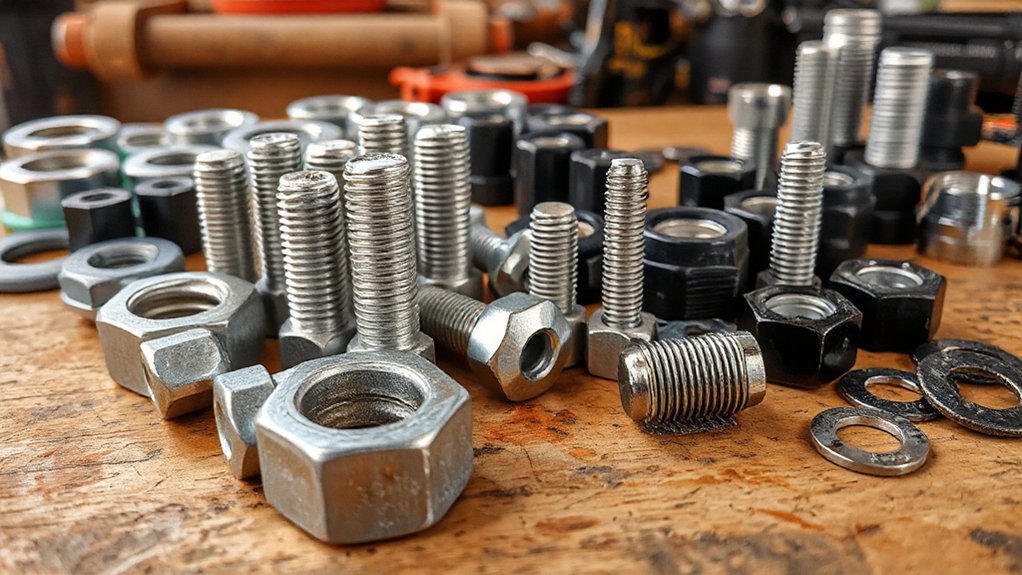
The most commonly used bolts for home improvement are hex bolts for framing, lag bolts for heavy wood connections, carriage bolts for wood-to-wood joints, and anchor bolts for securing to concrete or masonry. Choose materials based on environment: steel (galvanized for outdoors), stainless for corrosion resistance, or brass for decorative/electrical uses. Match thread type and length to the substrate and load, and use proper washers and torque. If you keep exploring, you’ll uncover how these choices affect strength and longevity.
Common Bolt Sizes for Home Projects
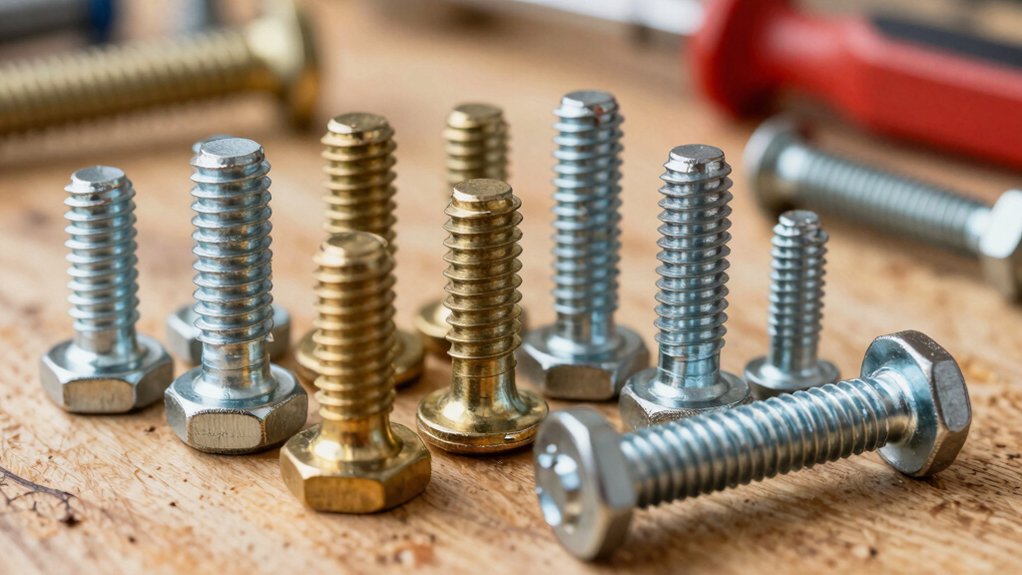
Common bolt sizes cover a wide range of home projects, but a few standards dominate most DIY tasks. You’ll encounter common diameters in sizes like #6, 1/4″, 5/16″, and 3/8″ with corresponding lengths suitable for framing, furniture, and fixtures.
You should prioritize thread pitch consistency to ensure reliable engagement with nuts or tapped holes, enabling predictable load transfer and torque control. In practice, you’ll choose coarse threads for wood and metal-rated fasteners when quick assembly matters, and fine threads where vibration resistance and adjustments are critical.
Corrosion resistance matters in exposed or moist environments, so select zinc, stainless, or coated options accordingly. Remember to verify compatibility with nuts, washers, and receivers, and to follow manufacturer torque specs for secure, lasting joints.
When to Use Wood Screws vs Lag Bolts
Wood screws excel for joining lightweight, thinner materials, while lag bolts provide greater shear and pull-out strength for thick or load-bearing assemblies.
Consider the material, thickness, and access for installation, as well as whether you need removal or adjustments later.
In this discussion, we compare when to choose wood screws versus lag bolts and how each choice affects performance in practical scenarios.
Wood Screws vs Lag Bolts
When deciding between wood screws and lag bolts, consider the joint’s load, material, and the required removal ease.
Wood screws excel in lighter applications where shear and tension are modest, especially in softwoods. They allow fast, effective assembly with strong thread engagement.
Lag bolts shine where high load-bearing capacity matters, particularly in hardwoods or when joining heavy framing. However, they require pilot holes and more effort to install.
Choose wood screws for quick fixes, alignments, and projects that demand easier disassembly.
Opt for lag bolts for structural connections, where withdrawal resistance and long-term stability matter.
Be mindful of bolt corrosion in exposed environments; apply coatings or stainless options where moisture is present.
Prioritize thread engagement to maximize grip and minimize stripping under load.
Application Scenarios Compared
Different scenarios call for different fasteners. You evaluate load, shear, and vibration before choosing. Wood screws excel in thinner, non-structural assemblies where pulling strength isn’t critical, while lag bolts dominate when you need high clamping force and transfer of heavy loads into solid wood.
For framing or structural connections, lag bolts deliver stability, but you must predrill and use washers to avoid timber failures.
In applications involving bolts for electrical wiring or bolts for plumbing fixtures, you prioritize compatibility, corrosion resistance, and accessibility for maintenance, choosing stainless or coated varieties as appropriate.
Consider withdrawal resistance, thread engagement, and long-term performance under the environment. Always align fastener type with material, load path, and service life to guarantee durable, safe connections.
Bolt Grades and Load Capacity Explained
Bolt grades establish what your fastener can safely carry, so you’ll want to start with the basics of grading—what the numbers and letters mean and how they compare.
Load capacity factors include hole size, engagement length, and installation discipline, all of which constrain real-world strength.
Material strength remains a key driver, as steel composition and heat treatment directly influence both the allowable load and failure modes.
Bolt Grading Basics
Bolt grading basics explain how hardware strength is specified and how it affects load capacity. You assess grade stamps, material composition, and proof load to quantify performance.
Bolt thread geometry determines engagement and shear resistance, while bolt material governs toughness and corrosion tolerance. You’ll see standard grades defined by numeric markers (e.g., 5, 8, 10) that correlate to minimum tensile strength and hardness, enabling precise comparisons for fastener selection.
Higher grades deliver greater load capacity, but you must balance with ductility and installation conditions. Consider coatings and heat treatment as modifiers that influence fatigue life.
When evaluating fasteners, verify manufacturer certification and compatibility with nut profiles and sleeves. Precision selection minimizes failure risk, optimizing joint integrity under design loads.
Your power lies in choosing the right bolt grade for reliable, durable connections.
Load Capacity Factors
Curious how strength ratings translate to real-world performance? Here’s how bolt grades map to load capacity. You start with your grade’s nominal strength and apply user-specific load conditions. The key idea is load capacity, not just a number on the package.
Higher grades typically offer greater tensile and shear strength, but you must account for geometric limits, installation quality, and edge distances. Load limits emerge when you compare the bolt’s rated strength to the actual forces you’ll encounter, including dynamic shocks and vibrations.
Then you apply safety factors to translate laboratory results into field reality. Use conservative factors to avoid brittle failure, especially in critical joints. In practice, choose a grade with a suitable margin, verify fit, and document the fallback if conditions change.
Material Strength Impact
Material strength directly shapes load capacity: higher bolt grades usually offer greater tensile and shear resistance, but real-world performance depends on geometry, installation quality, and edge distances.
You assess grade by material chemistry and heat treatment, translating into predictable performance under static and dynamic loads. Higher grades improve fatigue life only if you control stress concentration, improper fits, and misalignment; otherwise, material fatigue can negate nominal strength.
You also weigh corrosion resistance, since environments accelerate degradation and reduce effective capacity. Consider thread geometry, shank design, and embedded length, which influence the actual clamping force and resistance to loosening.
In practical terms, select a grade that matches your load case, while ensuring proper tightening, adequate edge distances, and compatible coatings to sustain long-term performance.
Fine vs Coarse Threads: Which Does What?
Fine vs coarse threads determine how a fastener behaves under load, vibration, and material conditions. You’ll assess performance by pairing thread type with intended environment, rather than assuming universal superiority.
Fine threads offer greater pullout resistance in thin materials and smoother alignment under vibration, but they’re more prone to cross-threading and seizing in dirty or dusty conditions. Coarse threads bite quickly, tolerate debris, and enable faster assembly, yet they may loosen under dynamic loads or softer substrates.
Your goal is thread compatibility: matching bolt threading to material hardness, preload, and service life. For high-load, vibration-heavy joints, you’ll favor fine threads with proper lubrication and tighter tolerances. For quick, repeatable assemblies in harsher environments, choose coarse threads.
Precision setup minimizes failures and maximizes reliability in every home improvement project.
Materials for Home Bolts: Steel, Stainless, Brass, Zinc
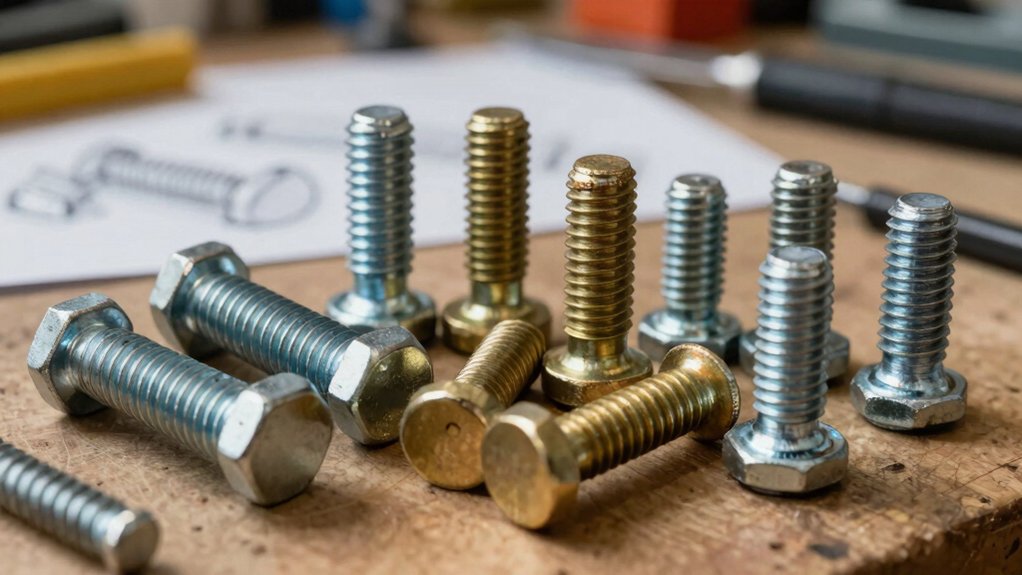
Steel, stainless steel, brass, and zinc-coated bolts cover the vast majority of home projects, each material balancing strength, corrosion resistance, and cost. You evaluate purpose, environment, and load to select the ideal alloy.
Steel provides maximum tensile strength but is vulnerable to bolt corrosion in damp or reactive settings, unless coated or treated.
Stainless offers superior corrosion resistance with a trade-off in cost and hardness, benefiting outdoor or humid installations.
Brass delivers excellent corrosion resistance in low-load, decorative, or conductive contexts, yet its strength is limited.
Zinc-coated bolts improve resilience for general use, enhancing surface protection where moisture is present.
Consider material compatibility to avoid galvanic reactions.
Your decisive choice reduces maintenance, ensures reliability, and aligns with project goals.
Head Styles for Convenience: Hex, Socket, Pan, Flush
Choosing the right head style matters for convenience, tool access, and finish. You’ll compare hex, socket, pan, and flush heads by grip depth, drive compatibility, and seating profile, then select the most efficient option for your project.
Hex heads excel for high-torque scenarios, offering straightforward, robust engagement with standard wrenches.
Socket heads minimize protrusion, reduce snag risk, and work well in tight spaces where access is constrained.
Pan heads balance drive surface with a rounded top for appearance and ease of driving, but may project more than flush styles.
Flush heads sit nearly level, preserving line and clearance for sensitive assemblies.
Consider decorative head styles for aesthetic impact, and bolt color options to match or contrast hardware, ensuring powerfully precise results without compromising stealth or performance.
Visible vs Hidden Mounts: Pros, Cons, and Decisions
Visible mounts expose fasteners and hardware, shaping both aesthetics and serviceability; they’re easier to inspect, adjust, and replace. Yet, they can draw attention and catch on surrounding surfaces. You’ll weigh visibility against friction with use, as exposed bolts offer immediate access but can undermine clean lines.
Hidden mounts preserve aesthetics and reduce snagging, but demand planning, specialized tooling, and more invasive installation—you trade quick fixes for future flexibility. Consider long-term maintenance: decorative bolt finishes matter for curb appeal, yet decorative features must resist wear and corrosion under load and exposure.
Bolt corrosion resistance becomes decisive when choosing between overt hardware or concealed systems. Your decision hinges on function versus form, accessibility versus sleekness, and how you intend to reconcile ongoing serviceability with design intent. Choose a mounting approach aligned with performance, longevity, and control.
Matching Bolts to Decks and Framing
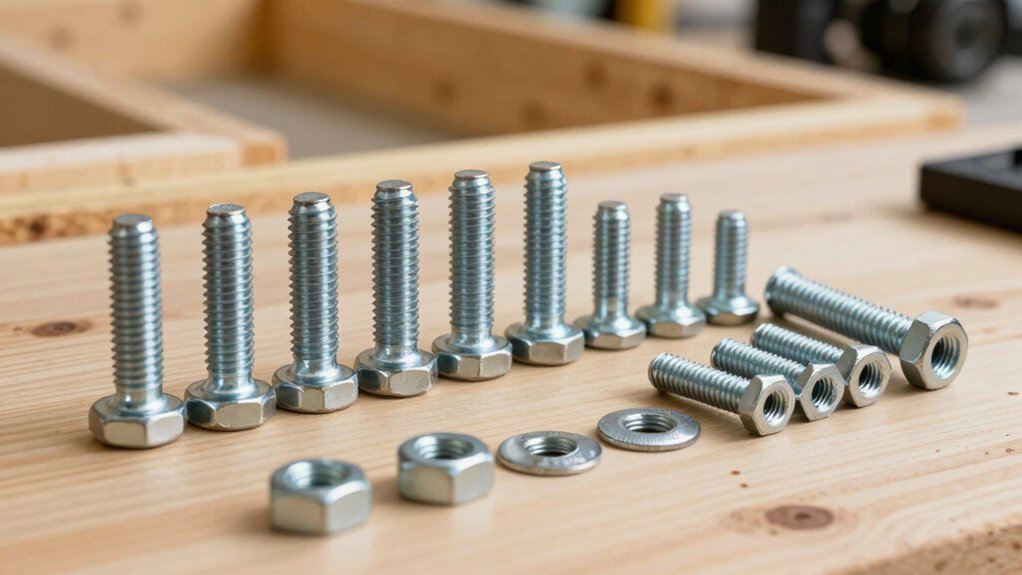
When selecting fasteners for decks and framing, matching bolt grade, diameter, and thread type to the timber and load conditions is critical. You evaluate deck design requirements and framing techniques, then align fastener properties with anticipated stresses.
Choose higher-grade bolts for structural timbers and joints that transfer shear and tension, and select appropriate diameters to avoid crushing fibers or loosening under vibration. Thread type, coarse for softwoods, fine for hardwoods, ensures proper engagement and withdrawal resistance.
Consider corrosion resistance for outdoor exposure, coating, and compatibility with your deck materials. Document lead times and installation sequencing to maintain structural continuity.
In practice, this precise alignment minimizes movement, maximizes safety, and yields predictable performance across seasons and loads. Your approach prioritizes durability, reliability, and professional-level results.
Quick Tips: Avoid These Common Bolting Mistakes
Common bolting mistakes often stem from sizing errors, torque misapplication, or overlooking material compatibility.
You’ll tighten the practice by confirming proper fastener sizing, matching bolts to the load and substrate, and using the correct torque values. This sets a precise baseline for safe connections and minimizes failures, guiding you toward better overall results.
Common Bolting Mistakes
Avoiding common bolting mistakes starts with recognizing how small missteps can jeopardize project integrity. You must avoid over-tightening, which invites thread stripping and bolt corrosion over time, and you shouldn’t underestimate the value of clean, dry threads before installation.
Misalignment forces uneven load paths, diminishing joint strength and inviting premature failure. Use appropriate torque specs, matched fasteners, and a calibrated wrench to maintain control.
Cross-threading damages threads, complicating future disassembly and reducing service life. Don’t substitute hardware or skip surface prep; these shortcuts amplify failure risk.
Protect threads with proper lubrication only when specified, and avoid moisture exposure that accelerates corrosion and weakens grip.
Stay disciplined: verify material compatibility, inspect for damage, and tighten gradually to target torque. Precision today ensures lasting performance tomorrow.
Proper Fastener Sizing
Choosing the right fastener size is foundational to joint strength and long-term safety. You must match diameter, length, and thread pitch to your load, material, and substrate. Start by evaluating shear versus withdrawal forces, then select a bolt grade appropriate for exposure and duty.
Avoid oversized fasteners that trap moisture or compress components excessively, and resist the urge to over-torque to compensate for poor fit. Check thread compatibility with the mating nut, insert, or tapped hole to prevent cross-threading and galling.
Consider corrosion potential; fastener corrosion accelerates fatigue and failure even when size appears correct. Use coatings or stainless options for outdoor or humid environments.
Document sizes and keep consistent standards across projects to ensure predictable performance and repeatable outcomes.
Correct Torque Practices
Proper torque is essential to fastener integrity: under-tightening leaves joints weak and prone to loosening, while over-tightening can strip threads or crush components. You maintain control by using a calibrated wrench and following manufacturer specs, not guesswork.
Start with clean, dry threads and verify thread engagement: at least a full thread visible beyond the nut and bolt when seated, avoiding half-thread engagement which invites failure. Apply gradual turns, pausing to recheck alignment and load distribution.
Avoid cyclic or impulsive torques that heat components and alter friction. Pair torque with anti-seize where appropriate, but never substitute torque for proper preload.
Be mindful of bolt corrosion, which increases friction unpredictably and masks true torque. Document torque values for each joint to ensure consistent, repeatable performance.
Tools and Techniques for Safe Bolt Installation
Using the right tools and following disciplined techniques are essential for safe bolt installation: you should inspect fasteners and hardware for damage, select the correct bolt type and size, and confirm the work surface is stable before beginning.
Precision governs safety—misjudging torque or alignment invites failure. Measure threading and grip length against load requirements, then tighten with calibrated instruments to specified torque values.
Wear safety gear, including eye protection and gloves, to sustain control and reduce risk from sudden slips or splinters.
Always verify concurrent fastener engagement and cross-pattern tightening when multiple bolts are involved.
Recognize bolt corrosion signs, replacing compromised units to prevent hidden weakness.
Document procedures, maintain organized workflows, and prioritize repeatable, verifiable steps to uphold structural integrity and personal power in every project.
Frequently Asked Questions
How Do I Choose Bolt Length for Different Wood Thicknesses?
Bolt length should match wood thickness, aiming for at least 1.5 times the thickness, with full threads not exceeding two-thirds of the wood. Consider washer, nut type, and load. Bolt length selection depends on wood thickness considerations.
Are There Safety Tips for Drilling Pilot Holes Correctly?
Yes, you should always wear safety gear usage, and choose drill bit selection carefully. You drill pilot holes straight and slow, maintain steady pressure, and verify bit sharpness; your focus guarantees clean starts, reduces breakout, and minimizes wobble.
What Signs Indicate Bolts Need Replacement or Failure?
Be alert for bolt corrosion, and signs of loosening, stripped threads, or rusted heads; if you notice them, tighten where safe, replace compromised bolts promptly, and inspect surrounding components to prevent unexpected failures and guarantee structural integrity.
Can I Reuse Old Bolts or Should I Replace Them?
You should replace bolts rather than reuse them, because bolt reusability risks hidden fatigue and failure. Assess thread wear and corrosion; when in doubt, opt for bolt recycling by using fresh hardware to guarantee sustained, powerful performance.
How Do I Prevent Rust on Outdoor Bolt Connections?
Alluding to aging legends, you prevent rust by choosing protective coatings and proper galvanization. You clean, dry, and seal joints, then apply rust prevention measures, guarantee drainage, and inspect annually to sustain enduring, powerful outdoor bolt connections.
Conclusion
Ever wonder which bolts actually pull their weight on your projects? In short, you’ll reach for wood screws for light framing, lag bolts for structural connections, and appropriate bolts by grade for load capacity. Match materials to environment, consider thread type and finish, and always size for the joint. Avoid common mistakes like under-torquing or over-tightening. So, are you selecting the right bolt, tested and installed with proper technique, to make certain safety and durability?