

If you’re targeting fast, reliable commutes to London, consider towns with strong rail links, high service frequency, and affordable housing growth. St Albans, Stratford-upon-Avon, Winchester, Guildford, and Bromley offer under-40-minute rail times, solid value, and rail-led growth in characterful town centers. These towns combine reliable schedules, integrated ticketing, and vibrant amenities that support tenant demand and capital appreciation. Stay tuned to see how upgrades and local culture further reinforce these picks.
Why London Commuter Towns Make Sense for Buyers
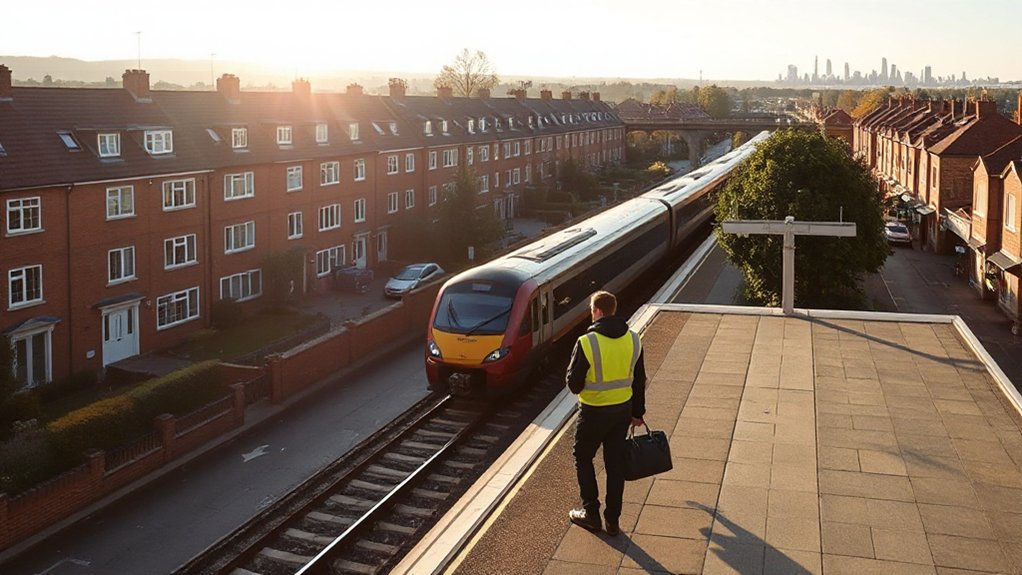
London commuter towns offer a compelling blend of affordability, faster price growth, and reliable transport links that translate into practical advantages for buyers. You’ll notice that solid price trajectories outperform many urban districts, while entry costs remain accessible relative to central London.
This mix supports portfolio diversification and risk mitigation, with steady demand from professionals seeking predictable rents and equity buildup. Transport reliability underpins occupancy stability: direct rail lines, frequent services, and buffered peak times reduce vacancy risk and support rental yields.
Local cuisine and cultural festivals add appeal, boosting tenant retention and community pride. Informed buyers track macro indicators—income growth, planning approvals, and market cyclicality—to time acquisitions, optimize leverage, and align property choices with evolving commuter patterns.
Belonging grows as neighborhoods strengthen social and economic momentum.
How We Compare Commuter Time and Cost
We compare commuter time and cost using standardized Travel Time Metrics and transparent Cost Comparison Methods, so you can see where time is saved and expenses differ.
We align inputs across towns and transit modes to enable apples-to-apples benchmarking, highlighting fastest routes, typical delays, and peak vs. off-peak variations.
This approach supports data-driven judgments for buyer decisions and market expectations.
Travel Time Metrics
Travel time and cost are the core metrics we use to rank commuter viability. You’ll see how transit patterns translate into predictable daily routines, not just abstract numbers.
We compare door-to-door durations, frequency reliability, and peak-hour variance to map practical reality for you and your peers. Our benchmarks reward shorter, stable journeys and penalize unexpected delays, since consistency underpins planning.
We translate timetables into real-world experiences: transfer times, platform crowds, and alternative routes that save minutes or reduce stress.
The analysis also tracks opportunity for productive use of time during commutes, signaling value beyond speed alone.
Historical landmarks and local cuisine emerge in the town narratives, offering context for belonging and community pride as you weigh options.
Cost Comparison Methods
Cost comparison hinges on apples-to-apples calculations that reflect real-world tradeoffs. You evaluate commute options by aggregating time, cost, and reliability across scenarios, not just one trip. We weight rail, bus, car, and cycling against typical schedules, seasonality, and fare structures to reveal true cost per hour.
Remote work feasibility and local entrepreneurship influence opportunity costs, so we factor employer flexibility, hybrid policies, and startup opportunities into total value. We normalize data to a common currency and time unit, then present sensitivity analyses that show how small changes in fuel prices, ticket pricing, or mileage affect decisions.
The result is a transparent framework you can trust, aligning financial impact with lifestyle preferences, community access, and long‑term career ambitions. This supports informed choices for belonging in a commuter town.
North of London: Quick Rail Links to the Capital
North of London, several rail corridors offer exceptionally fast connections into the capital, with peak-time services reliably delivering under 40 minutes from towns like St Albans, Sevenoaks, and Hertford. You’ll find predictable schedules, integrated ticketing, and growing capacity reflected in punctuality metrics and crowding reports.
Embrace the data: faster commutes expand local employment options and cross-town collaboration. To illustrate, consider:
1) St Albans’ frequency growth
2) Sevenoaks’ peak-slot reliability
3) Hertford’s cross-regional connectivity
4) Shared-use infrastructure improvements
Beyond timing, these towns showcase Local festivals and Historic landmarks that reinforce a sense of belonging. Analysts note steady housing-market resilience, with commuter premiums stabilizing as train reliability rises, making living north of London both practical and aspirational.
South of London: Fast Tracks, Quiet Lifestyles
South of London, you’ll notice fast rail corridors that trim commute times and expand market reach for nearby towns.
Quiet suburban lifestyles offer predictable living costs and stable demand, supporting sustainable growth for commuter towns.
Together, these factors shape clear commuter town prospects, guiding investment and housing choices in the region.
Fast Rail Corridors
- 1) Predictable timetables boost productivity and on-time performance
- 2) Higher housing affordability expands talent pools
- 3) Proximity to historical landmarks enhances weekend value
- 4) Local cuisine-driven micro-economies support sustainable growth
Demand signals show accelerated ridership in sectors surrounding major hubs, with commuter satisfaction rising as service cadence stabilizes.
This corridor strategy strengthens belonging through accessible, connected living beyond London, while preserving regional character.
Quiet Suburban Lifestyles
Data indicates housing affordability improves relative to central zones, while rail reliability supports time budgeting for short trips to central markets or meetings.
Local traditions shape weekly rhythms, from farmers’ markets to village fetes, reinforcing social belonging. Community events reinforce networks, enabling you to build practical ties with neighbours and local businesses.
In this environment, the strongest towns blend steady commute performance with engaging, low-friction lifestyles that foster consented, long-term residency.
Commuter Town Prospects
- Fast-track reliability fuels hiring confidence and longer tenure.
- Affordability preserves savings, enabling quarterly home upgrades.
- Quiet lifestyles attract families seeking balance and belonging.
- Community events strengthen social capital and repeat visits.
You gain clarity from market metrics, while you feel the pull of belonging in vibrant neighborhoods.
Local cuisine spaces and calendar-worthy cultural events become anchors, turning routine commutes into gateways for investment, status, and steady quality of life.
East of London: Everyday Perks You’ll Love

East of London, commuters gain tangible, time-saving perks that boost daily reliability and overall quality of life. You’ll notice shorter first-mile commutes, consistent service, and predictable peak-time performance across key lines.
Data shows reliable schedules and modernized stations translating to higher on-time arrival rates and lower transfer anxiety. Local employers leverage this stability, boosting job-seeking confidence and fostering a sense of belonging within expanding neighborhood ecosystems.
You’ll also enjoy accessible amenities: affordable housing pockets, well-planned micro-hubs, and flexible work options supported by robust connectivity. Local cuisine adds daily reward, while cultural events create recurring social anchors that strengthen community ties.
In short, East of London towns deliver measurable value, clear pathways to routine reliability, and reinforced social belonging.
West of London: Characterful Towns With Strong Rail Access
West of London towns offer a distinct mix of character and connectivity that complements the reliability you’ve come to expect from commuter markets. You’ll notice resilient demand patterns, with rail-led growth outpacing broader UK averages.
Local cuisine and cultural festivals anchor community identity while preserving value signals for buyers and renters.
- Strong rail corridors link compact town centres to London hubs, boosting frequency and reliability.
- Characterful town cores attract selective employers, fueling wages and disposable income.
- Local cuisine becomes a differentiator in property narratives and visitor appeal.
- Cultural festivals drive occupancy during shoulder seasons, smoothing demand cycles.
These dynamics translate into measurable yields, lower vacancy risk, and sustained capital appreciation.
In this subset, belonging means choosing towns where transit reliability and authentic charm align with your long-term commuter lifestyle.
What’s the Real Cost of Living Near London?
Living costs near London set the baseline for your commuter budget, with housing, transport, and daily expenses driving variation across towns.
We’ll compare signals like rental yields, mortgage affordability, and travel-time.value to quantify what you actually spend.
This data-driven view will frame how near-London options stack up for overall affordability and lifestyle trade-offs.
Living Costs Near London
When you weigh the real cost of living near London, housing emerges as the dominant factor, but it’s not the only driver. You’ll see how broader expenses shape decisions for remote workers seeking community, comfort, and resilience, with an eye on environmental impact and long-term value.
- Housing costs shadow utilities and council tax, yet steady price signals reflect demand and local amenities.
- Transportation relevance rises as you balance commuting flexibility with carbon footprint and time use.
- Grocery and services pricing tightens households, especially where local sourcing supports sustainability.
- Remote work incentives, housing quality, and school access increasingly influence market stability and belonging, not just affordability.
Commuter Budget Realities
What’s the real cost of living near London when you add up commuting separately from housing? You’ll see a clear split: housing costs in commuter towns can be steady, but transit outlays spike depending on your line, peak timing, and seasonality.
On average, monthly rail or bus passes account for a meaningful portion of total expenses, while fuel and parking add variability for car-leaning households.
In practice, total living costs hinge on your balance between time, reliability, and price. Local cuisine and nightlife options become subtle cost anchors—high-quality options can elevate budgets, yet affordable gems sustain belonging and community.
Demand signals persist: towns with efficient rail links, predictable timetables, and walkable centers offer the strongest value proposition for budget-conscious commuters.
Property Styles That Suits Commuters
For commuters to London, choosing a property style that pairs practicality with resale value is essential, and the data point to several clear winners. You’ll notice demand concentrates on adaptable layouts, energy efficiency, and compact, low-maintenance exteriors that fit busy schedules and tight budgets.
In markets with vibrant local culture, these features align with buyer psychology and shorter holding periods, strengthening the housing market outlook.
1) Semi-detached with open-plan living
2) Modern terrace with efficient insulation
3) Compact detached bungalow for aging-in-place
4) Low-maintenance townhouse with flexible storage
These styles support resale resilience, match walkable town cores, and respect commuter routines. By prioritizing efficiency and adaptability, you reinforce belonging within the local market ecosystem, where housing needs mirror evolving commuter patterns.
Schools, Parks, and Local Amenities That Matter
You’ll want to weigh how close schools are to commuting hubs, and how their quality bands with exam outcomes and Ofsted ratings.
Parks and green spaces should align with daily travel blends, property values, and family activity needs, tracked against market data and local prices.
We’ll examine how these amenities influence select towns’ appeal to London commuters, shaping future investment and resale confidence.
Schools Proximity And Quality
Strong proximity to high-performing schools, plus access to well-maintained parks and essential local amenities, consistently correlates with higher commuter town desirability and resale value. You’re evaluating districts by school proximity, performance data, and ongoing capacity trends, then cross-referencing with local culture and practicality.
- You’ll notice top-tier state and independent options clustered near transport hubs, driving predictable home-value sedimentation.
- You gain confidence from recent Ofsted/ISI results, and year-on-year progress in math and reading metrics.
- You’ll map catchment stability against commute reliability, ensuring choices don’t erode with cohort changes.
- You’ll factor local cuisine and community events as social signals that boost belonging and explain price discipline.
Data supports choices; belonging follows, with resilient demand and stronger resale.
Parks And Local Amenities
Parks and other local amenities shape daily life as much as proximity to work does, so you’ll weigh green space, leisure facilities, and service coverage alongside commute patterns.
In this analysis, parks per capita, school quality indicators, and library access inform town desirability for commuters to London. You’ll notice markets and local cuisine influence weekend planning as much as transit reliability does, signaling a cohesive community fabric.
Data show towns with robust parish and community events calendars correlate with higher resident satisfaction and retention, especially where walking and cycling routes link homes to cores.
For investors, amenity variety signals resilience; for buyers, it signals belonging. Prioritize towns delivering varied green spaces, reliable schools, and active cultural calendars to optimize commuter quality of life.
Peak-Hour Reliability: Frequencies, Delays, and What That Means for You

Peak-hour transit reliability hinges on two concrete metrics: train frequencies and on-time performance. You feel the impact when delays cascade into meetings, school runs, and weekends.
The data show clear patterns: higher frequencies reduce crowding and fatigue, while punctuality boosts predictable routines.
To navigate this system, consider these levers:
- Frequencies during peak windows
- Actual on-time rates vs. timetables
- Delay minutes per journey
- Variation across lines and seasonality
Transport Hubs and Last-Mile Connectivity
Data shows towns with integrated fare systems and regional rail connectors cut total trip duration by 8–12%, boosting reliability and peak-season resilience. Market signals indicate multi-modal hubs attract core employment clusters, driving housing demand and social equity.
In practice, you’ll value predictable connections, clear signage, and pedestrian-friendly paths that support quick, safe transfers. Local cuisine and cultural festivals become anchors for community investment, enhancing belonging while you balance time, cost, and convenience.
Town A Case Study: Commute, Prices, and Vibe
You’ll see the commute time snapshot set the baseline for access to London, with precise ranges and typical variability across peak vs. off-peak windows.
Prices and vibe are linked, so we’ll map mortgage or rent bands against local services and sentiment indicators to gauge affordability and desirability.
This case study frames how you trade travel time against cost and daily experience, informing where you might allocate budget and expectations.
Commute Time Snapshot
Town A’s commute snapshot centers on a clear trade-off: short rail or road links into London save time, but price tension and peak variability shape the daily experience. You’ll notice consistent time savings on off-peak days, while mornings spike around 7–9am and 5–7pm. The data point to reliable rail windows that outperform car trips in predictable congestion.
1) Morning buffers cushion variability, preserving routine
2) Off-peak windows offer appreciable time gains
3) Train frequency correlates with cottage-industry service patterns
4) Local cuisine and historical landmarks influence discretionary timing decisions
This profile blends kinetics and lifestyle, reinforcing belonging through efficient planning and predictable journeys. You’ll value the balance between quick access to London and the town’s authentic character, including local cuisine options and nearby historical landmarks.
Price and Vibe Overview
What does the price-and-vibe combination look like in Town A when you factor commute realities, housing costs, and local living appeal? You’ll notice a tight coupling between transit efficiency and home affordability.
Average rents sit mid-market for commuter towns, while property values show steady, modest growth aligned with market demand.
A practical budget shows trade-offs: quieter neighborhoods offer better value but longer waits for services, whereas closer-in zones cost more yet shorten your daily grind.
Local cuisine and cultural festivals inject daily value, reinforcing belonging and social capital.
Town B Case Study: Family-Friendliness and Quick Links
Family-friendliness in Town B hinges on a proven mix of affordable housing, top-rated schools, and accessible outdoor space, all within a short commute to London. You’ll notice steady demand signals from families prioritising stable rents, with property types ranging from compact terraces to affordable flats.
Local parks, recs, and safe corridors add measurable value to long-term retention. Community events, local gastronomy, and linked services reinforce belonging while supporting market resilience.
The quick-links section below summarizes key decision drivers for buyers and renters:
1) School quality metrics and catchment stability
2) Transit reliability and travel-time consistency
3) Rent-to-income alignment and price growth
4) Local amenities density and experiential variety
Town C Case Study: Fast London Access, Moderate Prices

For Town C, fast access to London is the defining draw, supported by a balance of moderate prices that attract buyers and renters seeking quick commutes without overpaying. You’ll see metrics reflecting a reliable rail and road corridor, with average commute times dipping below regional norms and pricing hovering at mid-market levels.
Data indicate steady demand from professionals prioritizing time efficiency, reinforced by limited yet growing housing supply that maintains affordability relative to nearby hubs. Urban renewal initiatives are enhancing area appeal, improving transport access, and elevating daytime footfall.
Local cuisine and amenities underpin social inertia, supporting a sense of belonging among residents. In fundamentally, Town C offers measurable value: speed, price discipline, and a welcoming community narrative.
Practical Checklist to Evaluate a London Commuter Town
To evaluate a London commuter town effectively, start with a concise checklist that prioritizes transport reliability, housing affordability, and daily livability. You’ll compare station frequency, service resilience, and typical commute times, then align housing costs with local wages to gauge affordability.
Daily livability hinges on safety, green spaces, and community amenities, plus access to job hubs.
- Transport reliability and time savings
- Housing affordability relative to income
- Local amenities and sense of belonging
- Proximity to historical landmarks and local cuisine for weekly enrichment
This framework is data-driven and market-aware, guiding you toward towns with consistent trains, reasonable prices, and genuine belonging.
Local cuisine and historical landmarks become differentiators, turning a commute into a culturally rich, predictable routine rather than a daily grind.
Financing Options for Commuter Homes
You’ll compare fixed, tracker, and variable-rate products with loan-to-value bands to gauge monthly exposure as rates shift.
Assess deposit thresholds by region to flag regions where higher equity shortens term and lowers costs.
Then translate these findings into scenario planning: 25, 75, or 90 percent LTV paths reveal sensitivity to rate moves and fees.
Prioritize affordable mortgage options that leverage lender incentives, and factor property tax incentives into net returns.
This market-aware lens helps you make confident, belonging-fostering decisions aligned with long-term stability.
Real-Life Commuter Stories: Pros and Pitfalls
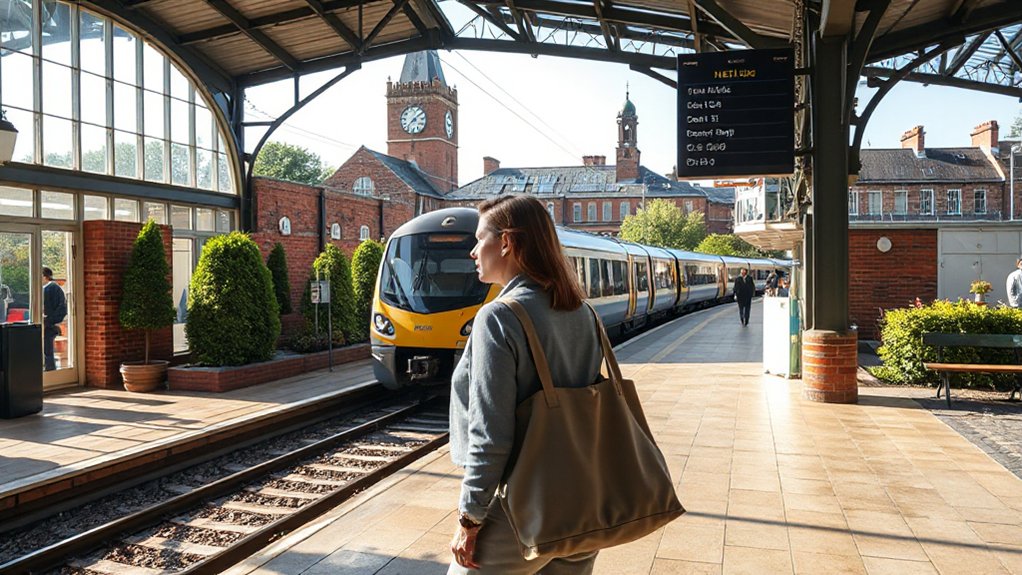
Real-life commuters reveal a mix of efficiencies and friction points that data alone can’t fully capture. You feel how schedules sync with peak London needs, yet signal gaps persist in off-peak windows. Remote work reshapes preferences, while local job markets shape choice more than distance alone.
- You gain flexibility when days align with home hubs, but lose predictable flows during disruptions.
- You value shorter commutes that still unlock advancement, yet many roles cluster away from your town.
- You notice cost trade-offs, balancing rail fares with housing affordability and remote options.
- You sense community belonging grows when employers acknowledge commuter realities and offer hybrid options.
Future Rail Upgrades That Could Change Your Commute
Future rail upgrades could redefine commuting options for London-bound patterns, even if your town sits outside the core network. You’ll notice trajectories toward faster cross-country links, more reliable tilting timetables, and better station integration, all supported by phased capital plans and projected ROI.
Data signals suggest shifts in peak flow volumes, creating predictable demand for alternative transportation options at key interchanges. As a commuter, you’ll benefit from expanded service windows and reduced transfer friction, improving overall total commute time.
Market intel points to strengthened local job markets around upgraded corridors, with suppliers and service roles expanding in adjacent towns. Stay alert to funding announcements, as these upgrades align with broader regional mobility strategies and your long-term belonging in a connected network.
Final Picks: Top 5 UK Towns for London Commuters
Here are the top five UK towns that best align with London-based commuter patterns, backed by current data on travel times, service frequency, and cost of living relative to earnings. You’ll see where efficiency meets affordability, with evidence-driven choices that foster belonging and confidence.
1) St Albans
2) Stratford-upon-Avon
3) Winchester
4) Guildford
5) Bromley
These towns balance quick rail and frequent services with reasonable housing costs, while preserving local character. You’ll notice Historical landmarks that deepen daily pride and Local cuisine that rewards your routines.
The data show solid off-peak reliability, rising but sensible price-to-income ratios, and improving journey times as upgrades roll out. Your commuter identity grows through community sentiment, long-term value, and practical, evidence-based choices that keep you connected to London without sacrificing quality.
Frequently Asked Questions
How Affordable Are Hidden Gem Commuter Towns for London Workdays?
Hidden gem commuter towns can be quite affordable when you weigh transport savings against higher housing costs, delivering cost effective living, with strong community amenities and data-driven value patterns that support your sense of belonging and smart decision-making.
Which Towns Offer the Most Reliable Off-Peak Services?
Public transport reliability tops the list, and you’ll notice it in which towns offer the most dependable off-peak services. You’ll value commuter town amenities, data-driven insights, and market-aware comparisons guiding your trusted, belonging-focused transport decisions.
Do Early-Morning Trains to London Vary by Season?
Early-morning trains to London do vary with seasonal travel patterns, driven by demand and maintenance windows; timetable adjustments occur accordingly, so you’ll see shifts in peak windows and reliability as seasonal patterns change your commute planning.
How Do School Policies Affect Housing Choices Near Stations?
How do school policies affect housing choices near stations? You’ll see school zoning and housing affordability shape demand, guiding you toward areas with stable catchments, predictable rents, and community fit—making station-adjacent living feel like belonging, not a gamble.
What Are the Best Personal Safety Considerations Near Rail Hubs?
Night security matters; you’ll benefit from well-lit paths, reliable CCTV, and active station staff. Public lighting improves visibility, reducing risk. You’ll feel safer when data shows consistent patrols, clear emergency alerts, and community trust around rail hubs.
Conclusion
You’ve seen the data: reliable rail links, housing value upside, and balanced lifestyles beat tunnel-vision cost alone. As markets shift, commuter towns near London offer tangible ROI, predictable demand, and resale upside. Think risk-reward like a steady climb. An old adage fits: slow and steady wins the race. Weigh travel minutes, rail reliability, and price growth in tandem, then pick towns with strong line upgrades, solid schools, and evolving amenities for sustainable, long-term gains.